

COMMAND AND CONTROLAT SEA: INSIGHTS ON NAVAL STRATEGY
Indian Naval Despatch Spring 2023 - Vol 4 No. 1 “Command of the Sea, Sea Control and Sea Denial in...
 C/O Naval War College, INS Mandovi, Verem, Goa, India. 403109



“If You Don’t Like Change, You’re Going to Like Irrelevance Even Less”
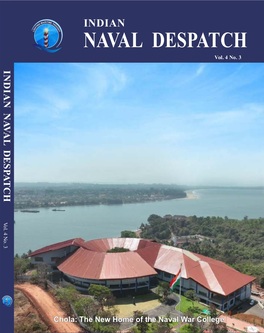
The cover photograph deserves some elaboration for our readers, especially those beyond the Indian Navy and spread globally. The Naval War College has a splendid and strikingly designed new home named “Chola,” after the ancient Indian dynasty of peninsular India. As an institution that, among its other vital duties, also hosts the IN Despatch Foundation (INDEF) and supports the publishing efforts required in myriad ways for each edition of the Despatch, Chola is our new home. With a proposed expanding ambit of the INDEF, the very modern facilities of the Chola building might serve such future activities as well. The educational contribution to military minds that the NWC makes through its core PME courses and other activities, will be much better served in this new home. It could be said that the Chola empire showed a sustained ability to have maritime and continental strategies that complemented each other and served their larger and longer-term interests. Some may recall an essay, Seapower and the Imperial Cholas in the Spring 2022 edition. In it Dr Sanu Kainikara traced the Chola period to its apogee and then its gradual decline with a few enduring lessons for seapower.
In continuation of analytical approaches to history, the lead essay in this edition is a usefully applied evaluation of grey zones by examining the works of Thucydides and Kautilya for points of reference and departure. Colonel Lokchandar, in Concept of Grey Zones: A Descriptive Framework, very intelligently considers the utility as well as jargon-riddled angles of grey zones without being overawed by either of the masters. Readers may find the deeper aspects of peace, conflict and the shades of grey in between of much value. The leveraging of these zones for advancing, protecting and furthering one’s interests while being cognizant of an adversary’s usage of grey zones to one’s possible detriment, remains important in statecraft.
The tagline for the editorial -- it is more than two decades old -- should be seen as more relevant than catchy; its author, General Eric Shinseki was a former US Army Chief of Staff. His warning itself has had a timelessness that has been seen in some epochs wherein conformist and traditionalist tendencies in armed forces have dampened the embrace of technology, tactical and operational doctrines and practices in reasonably quick time and even more so in anticipation. Towards that end we have Captain Nirmal Raghu looking to see if Cognitive Warfare is useful as a sixth—and new—dimension of warfare or a blend of earlier warfare areas in his paper, War on the Human Mind: Is it the Sixth Domain of Warfare? The way human minds think, react or can be influenced has often been the key to outcomes of statecraft and warcraft at all levels of warfare. Therefore, it may be necessary to look at these anew and see the role developing technologies, some still nascent, could play. In the same vein, Captain Gurpreet Khurana (Retd.), writes on Recent Trends and Legal Dimensions of Autonomous Maritime Systems in Peace and War. The IN Despatch team hopes that the amalgam of ‘people, ideas and things’ to paraphrase John Boyd, shall continue to be reflected in its pages as multi-dimensional strategies and operational warfare become more central than ever before.
Not many across our audience may be aware of a programme based on reading and reflection started by the Indian Air Force two years ago and now into its third iteration. In The Air Force’s Leap of Faith into Strategic Thinking: Warfare and Aerospace Strategy Programme, Group Captain Rajesh Chaudhary explains its rationale, impact, and challenges. In three months, the small group of officers, selected competitively after volunteering, are required to read a book a day on a wide range of themes which is then discussed the next day with a mentor. An aspect worth noting is the strength that a small number in a classroom bring, at a time when PME classes are growing into several dozen students at best to a few hundred in a single hall for a very significant time in each course, each day.
If the WASP dives deep (a mixed metaphor for the Air Force, I admit) into original works on statecraft in its DIME spectrum, Dr Sanu Kainikara spreads his historian and ex-air force wings wide to retrospect on the iconic Maratha ruler’s case study in Statecraft and Strategy of Shivaji Maharaj in Building a Progressive and Sustainable Empire. As in the Chola case, Shivaji’s statecraft involved much warfare. Warring states have never been a uniquely Chinese phenomenon as is sometimes believed, and his skills in smart fighting, his understanding of opportunities and his limitations, along with an inclusive socio-religious outlook, wise economic policies with the concurrent need to fund the expansion he aimed for, make it a worthwhile review to read. INDES hopes there will be other serious analyses of Maratha seapower including its rise, limitations, and fall.
Field Marshal Manekshaw remains an inspirational figure for Indian Armed Forces and in the larger public imagination as well. Lt Vishal Kunte highlights some angles of his leadership style, courage, both moral as well as physical and strategic achievements in Leading From the Front: The Manekshaw Way. Military top-brass in 1971 were of course indigenous unlike in 1947-1948, when British officers on secondment headed the armed forces, but military hardware was almost all imported. Much progress has been made towards self-reliance in the decades since the war that liberated East Pakistan and helped Bangladesh’s birth. Rear Admiral Abdul Sadiq provides many insights into the benefits and lacunae of policies and the gaps between actual and perceived indigenization. He explains how and why these gaps are unhelpful if a very high degree of self-reliance sometimes referred to as total atmanirbharta is to be actualized by 2047. This is the Navy’s stated goal. The paper would be very valuable for leadership at policy levels and within public and private sector manufacturers.
Two essays span geopolitics, albeit in different ways. Ms Uma Kabe and Captain Rath cast their gaze into the South-Western reaches of the Indian Ocean Region in a recap of India’s Naval Diplomacy in the Vanilla Islands. They look at the geopolitical significance of the region across vital SLOCs, for societal and historic connections with India and for the considerable role that India, and more specifically the IN, have played in mutually beneficial security and economic prosperity. The other paper, also spanning geopolitics and geostrategy is Captain Ritesh Suri’s, Leveraging Kautilya’s Arthashastra for Constructing Outer-Space Rajamandala. In his analysis, he uses Kautilya’s precepts to look at the space mandala on Earth and its characteristics, inferring that it may be useful to apply them to outer-space and the cooperative and competitive nature of space for commercial contestation alliances, competition and as an arena for conflict as well.
During the Goa Maritime Conclave hosted in October 2023, visiting heads of several IOR maritime services, political leaders and delegations discussed regional maritime security. As was done in the past GMC, the Despatch requested an interview with one of the heads. This year, the Seychelles Chief of Defence Forces, Brigadier Michael Rosette, shared his views on a wide range of subjects with authority and candour, while discussing the many problems that his nation has faced, faces and tries to solve in a combination of their own very considerable efforts and limited resources combined with cooperative assistance from a few regional partners, including India, for the larger global good.
After a gap, we are carrying another fine article from the March 2024 Naval Review edition of the USNI Proceedings. Professor Kevin McCranie’s Commanding the Red Sea: Mahan, Corbett, and the Houthi Threat, is most topical and yet timeless all at once, by combining fundamentals of naval strategy with the events currently taking place. His recent book on Corbett and Mahan is part of required reading at NWC here and elsewhere. Personally, I have had the pleasure of participating with him in two ‘Corbett@100’ conferences in 2022 and 2023.
Moving from the bouquet of the above four articles on regional, strategic and space issues, this Despatch carries four thoughtful comments on previous articles in the Both Watches section that forms the book-end for the lead essay. We have insightful views from Cdr Prakash Gopal (Retd.), Col Lokchandar, Cdr Rohan Kulkarni (an addendum to his own article and based on previous Both Watches contribution) and from Captain Akhilesh Menon who is the Defence Adviser in Australia. Despatch renews the call for contributions to Both Watches from our patrons on any of the current and earlier articles. A critical look, different point of view or additional thoughts shared in anywhere between 500 to about 1500 words add value to the effort by the author via the reflection it generates. The intent and purpose of the Despatch remains to rock the boat of naval thought.
The rear is brought up by two book reviews. Chip Wars is reviewed by Cmde Himadri Bose, Despatch author and reviewer, and Kaplan’s new book on the Adriatic by Mr Rama Rao, who is deeply interested in global and Indian security affairs from his roving station as a business leader in the US. Finally, we end with yours truly contributing to Rogues’ Yarn & Small Stu?, based on memories and some lessons from naval parade grounds and Divisions.
Before closing, a warm welcome to the new Commandant of the NWC, RAdm Arjun Dev Nair who brings much zeal to the job and renewed support for the Despatch. We also welcome Captain Anshuman Chatterjee (Retd.) as Sub-Editor. He may be seen on a page or two in this and perhaps subsequent issues with his sketches and water colours. We also bid farewell and acknowledge the contribution of his predecessor, Captain Rikeesh Sharma, who did wonderful work from the inception of the journal. Fair winds, Rikeesh.
To our readers and contributors, as always, Full Sails!

Indian Naval Despatch Spring 2023 - Vol 4 No. 1 “Command of the Sea, Sea Control and Sea Denial in...
Indian Naval Despatch, Vol. 4 No. 1 (Spring 2023). “Grey Zones in Blue Waters” by Cmde Himadri B...
Indian Naval Despatch, Vol. 4 No. 1 (Spring 2023) “Small May be More Lethal - Indian Naval Force S...
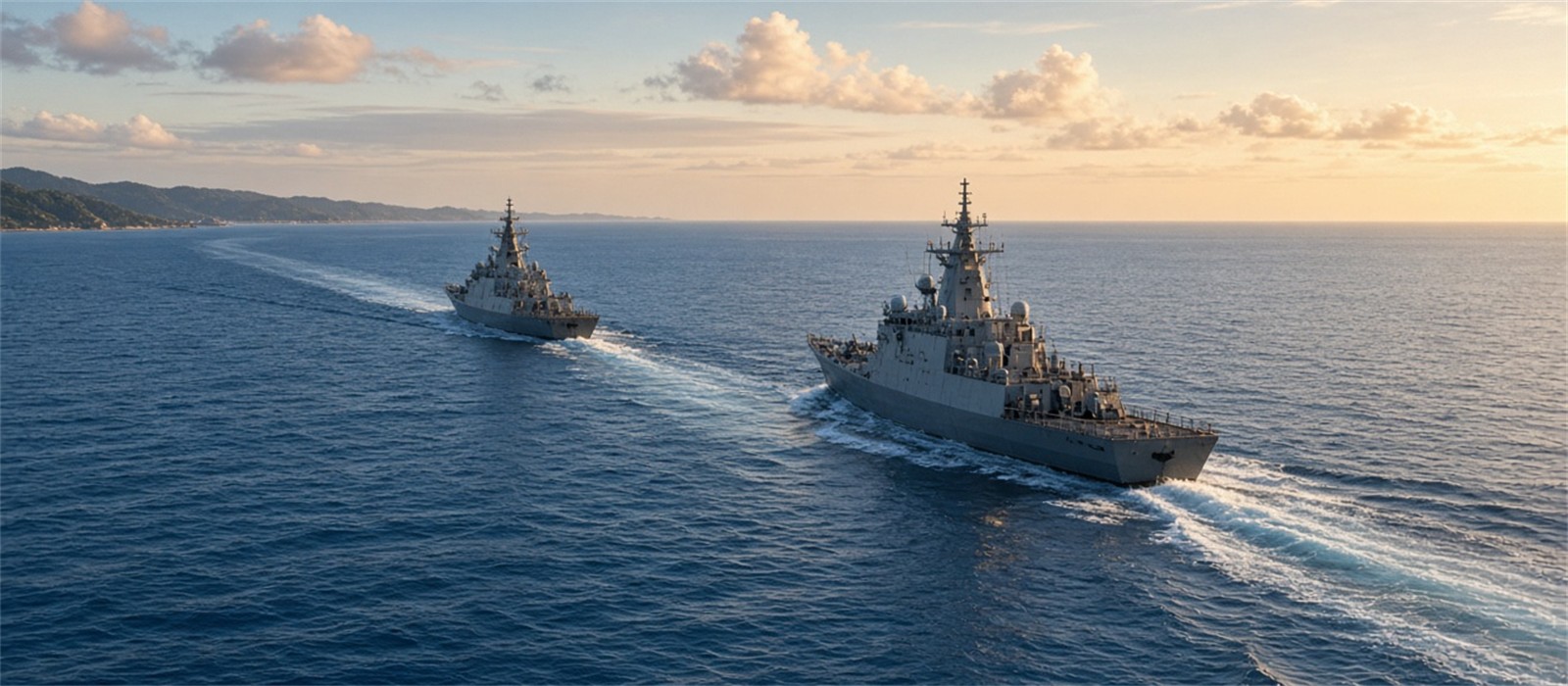
Indian Naval Despatch, Vol. 4 No. 2 (Monsoon 2023). “Understanding Each Other’s Education and Tr...
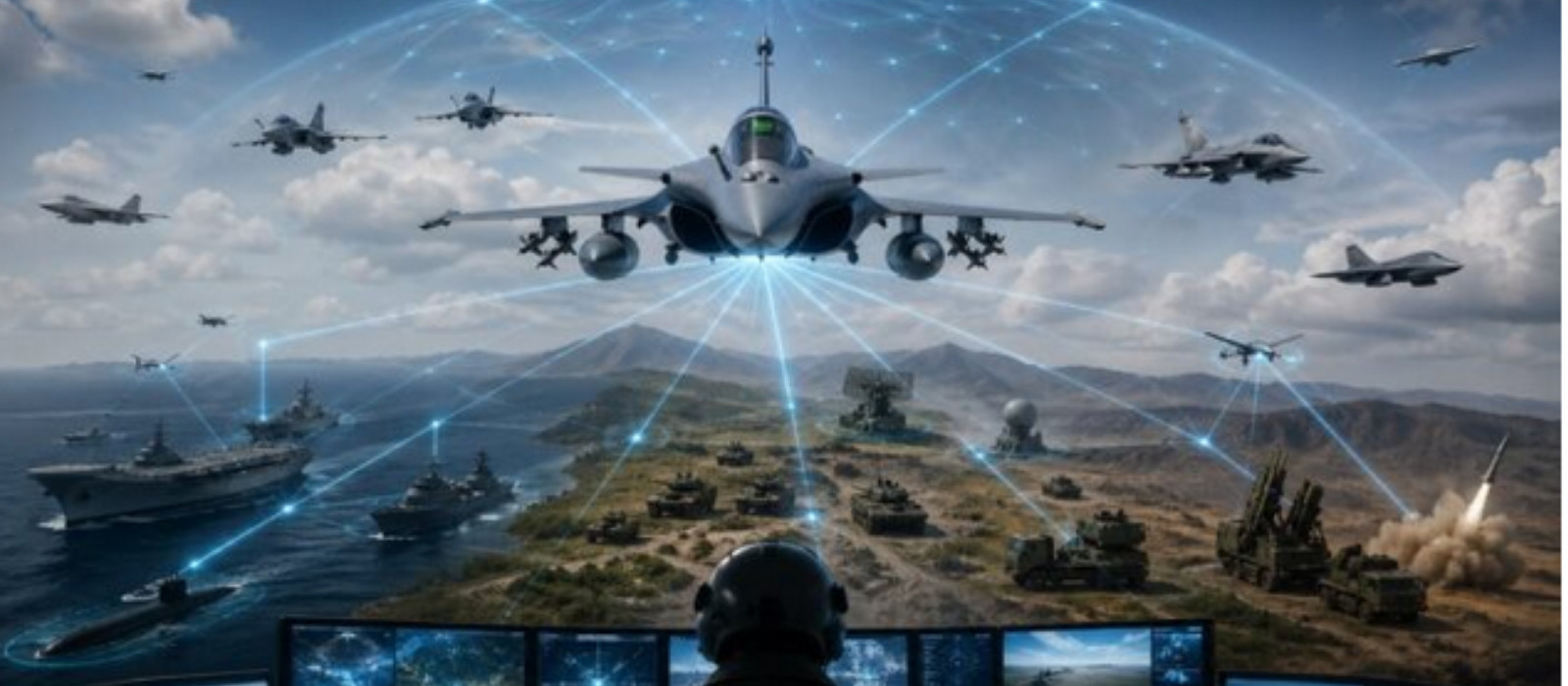
Editor’s note. This article has been written by the author as a member of the faculty of the Colle...

Editor’s note and abstract: This essay is the author’s distillation of one part of From Indus to...

Editor’s note. At the Goa Maritime Conclave in October 2023, on behalf of the Indian Naval Despatc...
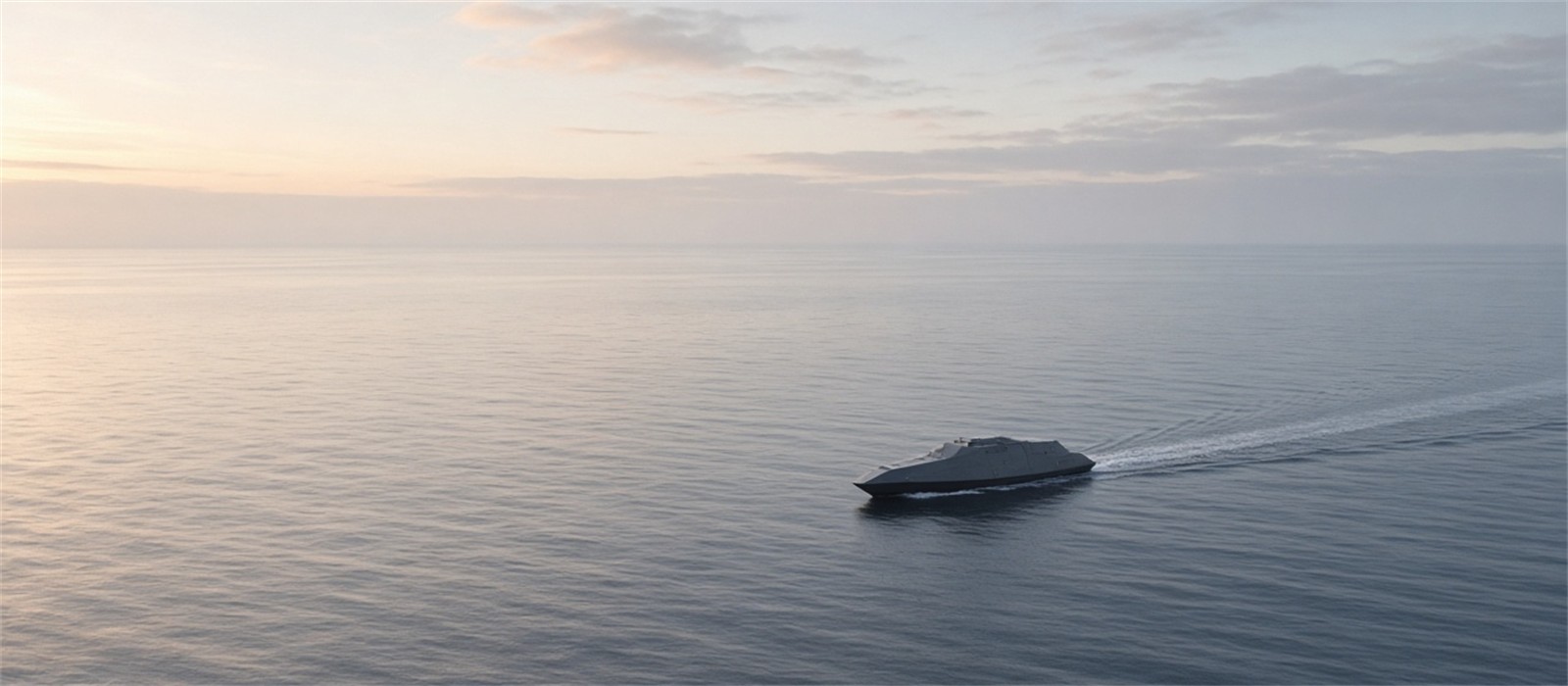
Editor’s note. In pursuit of examining ethical and operational issues of autonomous systems in the...
Abstract: The Indian Navy has been at the forefront of defence indigenisation in India. Most Indian ...

Abstract: Field Marshal Sam Manekshaw’s career exemplified exceptional leadership amidst historica...

Abstract: Outer space continues to propel, entice and catapult the human mind’s inquisitiveness an...

The Vanilla Islands comprise the states of Comoros, Madagascar, Mauritius and Seychelles, as also th...

Abstract: Warfare, classically, is expected to influence the domains of land, maritime, air, space a...

Editor’s note. Since Mahan and Corbett are seen as foundational maritime strategists in Indian pro...
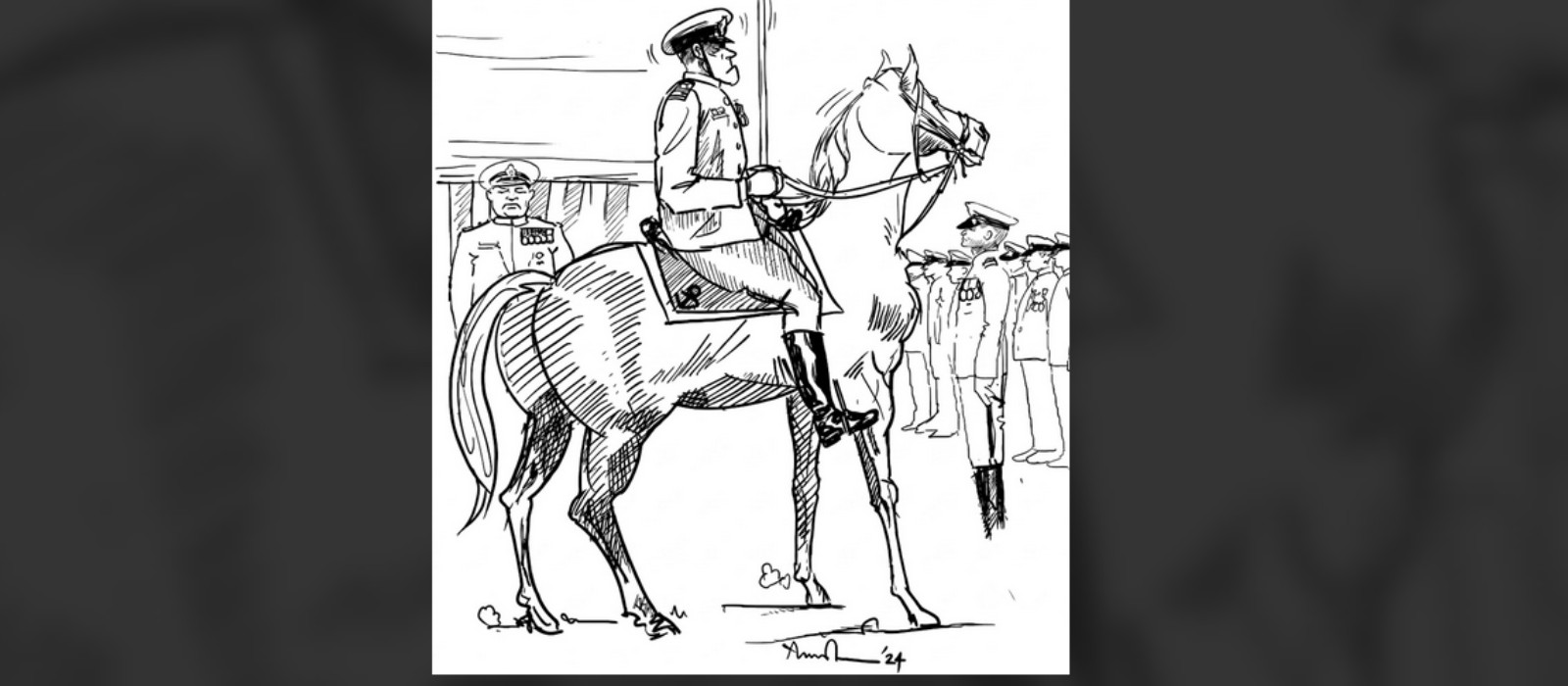
In the Navy, everyone’s familiar with the Parade Gunner’s booming command, “Praaade, Pay Tensh...