

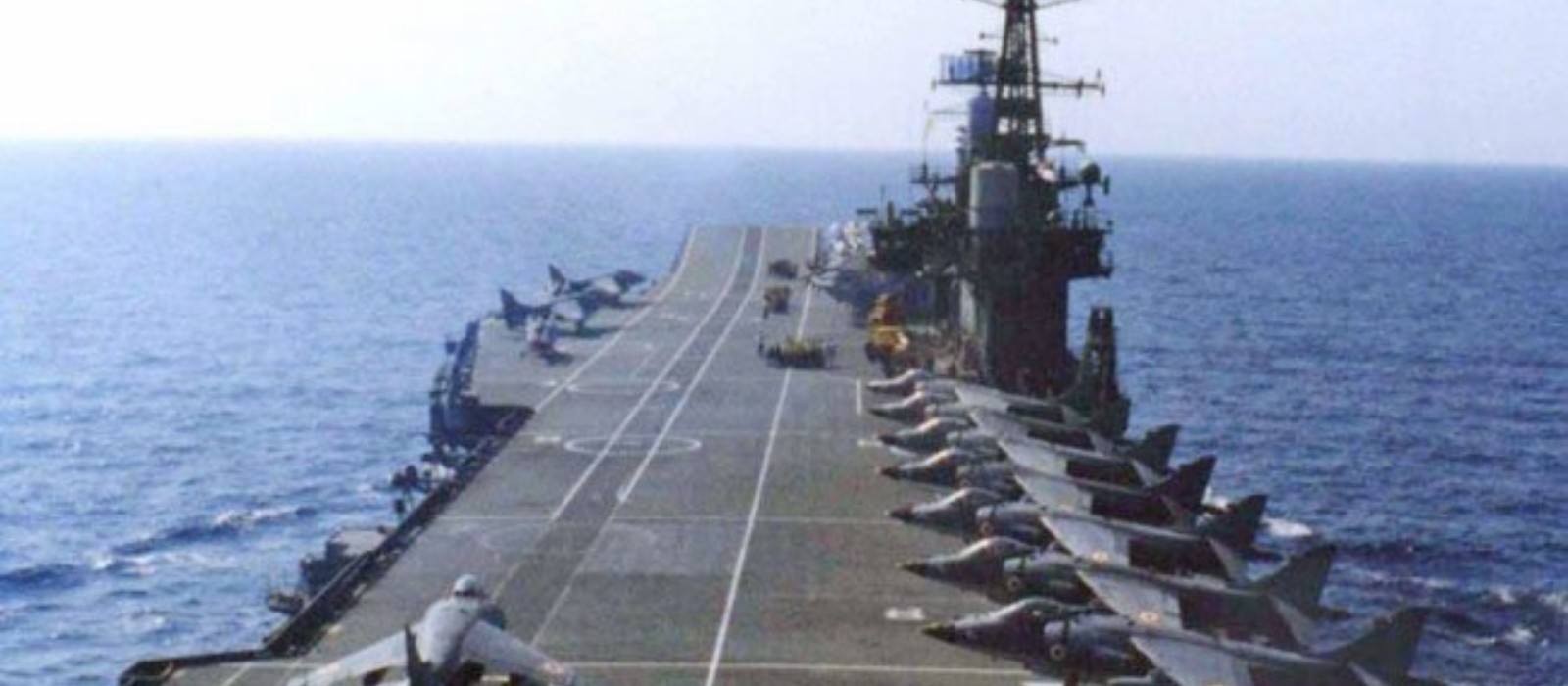

Analysing Vikrant’s Role in 1971 A Little Differently
This commentary by Dr Joshi counters some of the arguments put forth by Cdr Karthik Balaji in his ar...
 C/O Naval War College, INS Mandovi, Verem, Goa, India. 403109



Beware of Jargon, Be Aware of Fundamentals
It is with pleasure that I return to the very happy task of editing the Indian Naval Despatch (INDES). Yet, I must begin on a sombre note and pay a tribute to Rear Admiral James Goldrick, AO, CSC, RAN (Retd.), who slipped his moorings in March this year after an illness stoically borne and at an age where he still had many years more to contribute to thinking about seapower’s past, present and future. In a narrower sense we pay tribute to an INDES author who wrote a fine essay for us Command: A Historical Perspective in the Winter 2021 edition. Any reader who had read it closely, may have agreed with his cautions about the combination of pervasive communications, the “1000 mile screwdriver” and possibly zero errors mentality and absorbed his gentle exhortation to commanders to avoid being “in a state in which they would rather ask permission than seek forgiveness, (because) it will not end well.”
Second, more broadly, his passing – which has been globally noted and mourned – marks the loss of an agile mind, watchful eyes and elegant penmanship that marked him as a naval historian and analyst of international repute. That his article On Command underscored the importance of history and its interpretative utility in understanding the present and looking for measures and countermeasures, which might work even tomorrow, is no surprise. He was immersed in naval history and yet, he could raise his periscope to make it not only most interesting but relevant too.
Third, he was thorough in his research. His later books, Before Jutland and After Jutland are obvious testimony. But so was his first book, The King’s Ships Were at Sea, published in 1984, when he was still a Lieutenant. (I have omitted the full titles of these books here.) James knew the Indian Navy (IN) well. This was evident in his No Easy Answers: The Development of the Navies of India, Pakistan, Bangladesh and Sri Lanka 1945-1996. After his passing, while privately trying to remember him, I once again read his final chapter, Re?ections on Fifty Years. He examined the transitions made and more that were required in a previously colonial Navy. This is something we discussed often in the context of the RAN itself, still officially a Dominion Navy but with its own distinct character. James not only understood that character, but helped explain it and even advance it, while avoiding change for its own sake. His term mate and also a naval historian of repute, VAdm Peter Jones emotionally recounted James modestly summing up his life’s task just a few days before he died as “helping his Navy (the RAN) understand itself.”
A reader might wonder should this much space be devoted in an editorial to an author no more in our midst? It is a fair question and I may have a fair response to it. It was in 1996 that I met then Cdr Goldrick at a reception in USS Independence at Pearl Harbour during Exercise RIMPAC-96. He got talking about our Navy and the book he was writing and I realised that I had met a most insightful officer who knew about many navies and their “business on great waters.” Here is a photo of that occasion, which is now a valuable memory for me.
A few years later I did read No Easy Answers and found it to have an analytical quality missing in much of our own approaches to history. I may be wrong, but it still is one of the best – albeit relatively brief at about 225 pages – account of the development, operations and strengths and difficulties of sub-continental navies than anything else we ourselves may have written. His analysis of the IN combined sharpness with empathy and in later years we spent some time talking about impressions of each other’s armed forces. His life was devoted to reading, reflection and writing and all of this while being a regular sea-going officer, professional seaman, educator and leader. He provides a headmark to our readers and merits a longish mention here. Moreover, his writing and impact is cited in three articles in this issue, by Cdr Prakash Gopal, by Capt Puneet and by Cmde Bose. As such, they emphasise fundamentals and avoid jargon which is reflected in the theme of this editorial, Beware of jargon, be aware of fundamentals. Goldrick invested a lot in explaining the need to understand and remain close to fundamentals. He also lamented that not only scholars and commentators but even serving and retired flag officers were often confused about simple concepts like sea control or sea denial or jargon like “non-traditional security threats.”
Finally, this is one way for me to remember a scholar, sailor, colleague and friend who influenced many and through his example and considerable “word trail” will provide us useful tracks on the charts.
It is in this spirit that the lead essay is Command of the Sea, Sea Control and Sea Denial in Contemporary Naval Warfare by Cdr Prakash Gopal (Retd.). He questions some shibboleths about all three terms and the tendency to conflate naval instruments with purpose. A reader could think about his saying that “Arguably the most common misuse of the terms sea control and sea denial is in advocating for a particular country or a navy to have a ‘strategy’ of sea control or sea denial” and “While there is no doubt that strategy informs the type of naval operations undertaken in a theatre, to con?ate them is a critical misunderstanding of these concepts.”
A core tactical-operational issue is the theme of Lt Cdr Rohan Kulkarni’s Small May be More Lethal where he examines the Hughes Salvo equations and making a case for smaller and lethal ships in likely conditions in which warfare at sea may take place. The Indian Naval Despatch Foundation (INDEF) hopes that such debates will continue in the pages of the INDES and provide useful open-source policy advice to those who may profit from it. We provide a platform for robust debate without necessarily taking a position on any issue. Tactical, operational and strategic issues across DIME are increasingly covered in our editions and we would always look forward to thoughtfully written challenges that rock the boat of naval and national thought.
Cmde Himadri Bose writes once again for us. In Grey Zones in Blue Waters, he urges that grey zone warfare is an age-old reality even if national and international commentary often suggests that this is a new-fangled thing, because well, it is a new term! Grey zones are complex, may be used by the strong as well as the weak and have always had utility in the maritime environment. We would hope that this and other articles will be grist for comments via Both Watches and essays in future issues.
Victory Through Grand Ideals, is a volatile piece by Lt Col Brian Kerg, USMC and printed with the permission of the USNI where it appeared in the February 2023 issue. Using a fictional Captain Chen Liu, a professor at the PLA Navy’s Naval Command College circa 2030, he analyses why the US (and Taiwanese) were defeated in 2029 and how “We beat the US Navy without fighting it.” Invoking John Boyd – hardly studied in our PME institutions – he values him for having advised his own country to have ‘A grand ideal, overarching theme, or noble philosophy that represents a coherent paradigm within which individuals as well as societies can shape and adapt to unfolding circumstances – yet o?ers a way to expose ?aws of competing or adversary systems.’ Further in the article, he alludes to the ills of playing safe and playing ball at all levels of naval leadership observing that “A nation’s grand ideal must inform its government, its military, and its navy. It must inspire the consequential actions of naval leaders, who must put that vision ahead of themselves, their ambitions, and personal comforts... First, American personnel systems discouraged risk-taking in professional performance. Rocking the boat is not rewarded in the US military. The Japanese express this simply: “The nail that stands up gets hammered down.” It is not for us to say whether the author is right or biased about his own navy. Rather, it is to reflect on what he says and to ensure that our Navy (or indeed other Services) avoid similar pitfalls. Readers may reflect on the final provocation, “We live and die for our country. ‘Serve the People’ is our motto, and it echoes in our very bones.” Chen locked eyes with the student nearest him. “Can the US Navy say the same?”
We at Goa are happy to note that INDES is the boat that its readers and authors are exhorted to rock and help achieve the vision of the leadership that reignited the Despatch. There are early signs that this is happening and it can only make for robustness in deterrence, war and warfare.
Three other articles are broadly on operational issues. Capt Puneet brings up mission command in his paper and recommends that we need to practice it sincerely and imaginatively in our exercises; simulating the breakdown of communications, MDA feeds and not only training but also supporting leaders to seek forgiveness instead of getting used to asking for permission! Adm Goldrick would have been pleased to nod in approval! By examining legal aspects of maritime and aviation laws and regulations, Lt Cdr Pandey provides valuable guidance on the complexities, obstacles, gaps for exploitation that anyone could use. It is creditable that a relatively young officer shares his competence with operational law. Cdr Suraj Aiyappa looks at the utility of unmanned systems, focusing on the maritime domain while outlining the limitations that accompany their growing capabilities. Again, this is an area where commanders’ and operators’ imagination and competence could be vital and ought to receive all the attention it deserves.
An author, Lt Cdr Pradeep Singh Chauhan, who studied in the Philippines recently, analyses if that nation may get caught up in the ‘Thucydides trap.’ Such articles enable younger authors like him and readers to see elements of the intertwined DIME lines of statecraft, Corbettian major strategy and Chanakya’s advice on statecraft. In comparing Brazil and India’s Defence Industrial Base (DIB), Capt Rohit Mishra reviews the current state, achievements and challenges for both systems. There is a general feeling in Indian defence circles that Brazil's DIB is a very successful model, but Mishra’s nuanced analysis examines the problems they have had and recommends what one country could learn from the other.
This issue too starts off with Both Watches as usual. Relying on archival information he has referred to in earlier work, Dr Yogesh Joshi debates some points on Vikrant’s utilisation in the 1971 war as brought out by Cdr Balaji in the Winter 2022 issue. Lt Cdr Rajiv Lochan responds to earlier articles and comments on issues of ethics and leadership. We hope that these continue to receive space and attention of our readers everywhere, because leaders and ethical leadership shall always matter. In a year when the Navy observes the birth centenary of Admiral Ronnie Pereira, the point is being driven home Navy-wide. Cdr Sanjeev Kumar (Retd.) takes his cue from Cdr Rodrigues’ earlier article on Arun Khetrapal and Adm Arun Prakash’s commentary, to recall his own ‘man in the mirror’ churn after a helicopter accident early in his career.
In Rogues’ Yarn and Small Stu?, it is Sanjeev again who brings a delightful story about the XO and the lay apart store and the larger lesson we need to learn. VAdm Krishnan (Retd.) recounts in We Put the Screws On, his memories of the Engine Room department in the old Vikrant as a newly promoted Lieutenant in 1971.
Finally, on behalf of the editorial team I thank Cmde Nitin Kapoor (Retd.), who was a main mast of support for the INDEF for all that he did and wish him fair winds in his retirement. Cmde Prashant Chandrasekharan has relieved him and we shall count on his support as well. Capt SA Sharma slogged away behind the scenes in myriad ways for this journal and we thank him. Capt Himadri Das is well slotted into his station. The Naval War College’s involvement in bringing the INDES to you simply cannot be over-emphasised.
Full Sails!

This commentary by Dr Joshi counters some of the arguments put forth by Cdr Karthik Balaji in his ar...
In his outstanding article, Cdr Allan Rodrigues (Retd.) recounted the incident of a young Squadron C...

A series of articles in the Despatch have brought to the fore some difficult but essential conversat...
While to other countries, the Indian Ocean is only one of the important oceanic areas, to India it i...
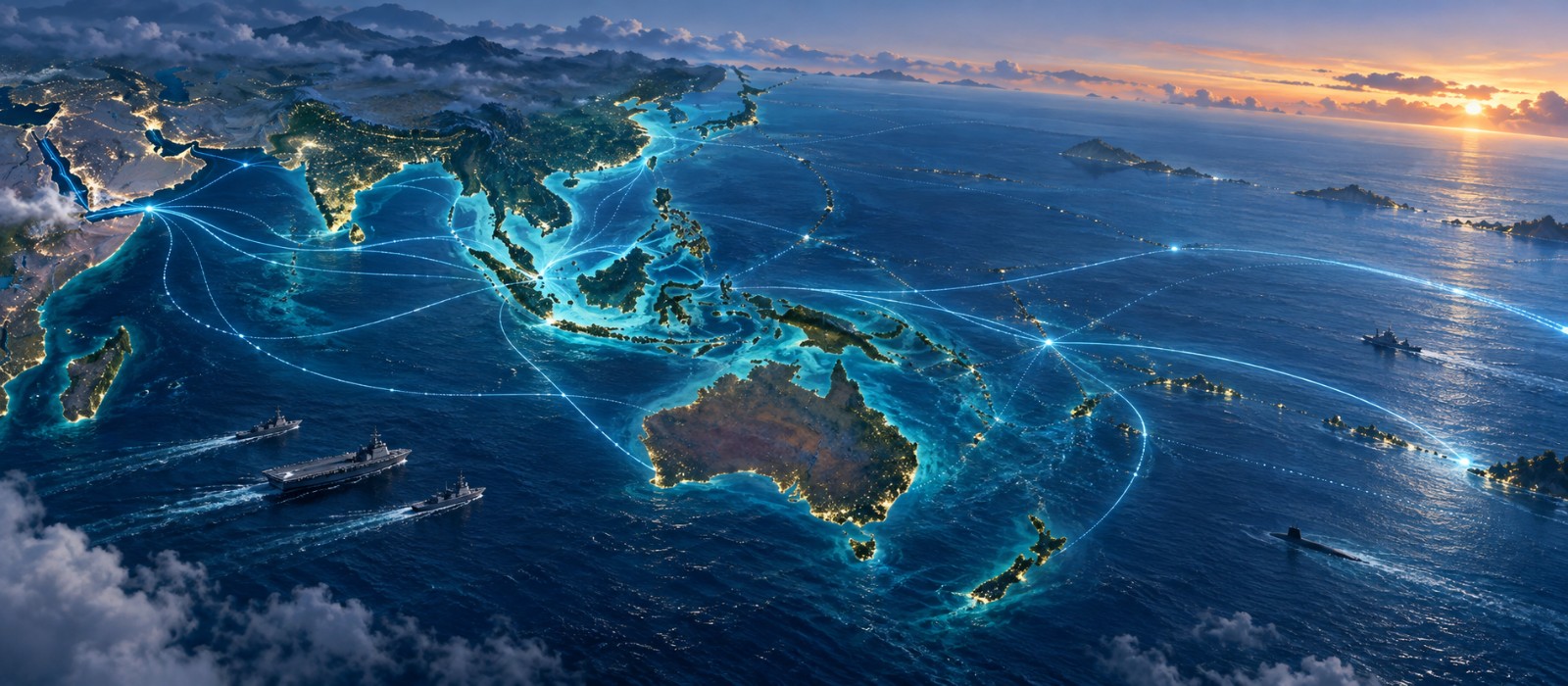
Introduction Background: History corroborates the close linkage between maritime power and the devel...

If the colours black and white are analogous with definitive choices at the opposite ends of the spe...

It is vital to maintain “freedom of navigation and [to] strengthen the international legal regime ...
To do great things is difficult, but to command great things is more difficult. - Friedrich Nietzsch...

A Nation with a strong defence industry will not only be more secure, but it will also reap rich eco...

Introduction The Peloponnesian War, documented by Greek general and historian Thucydides, has given ...
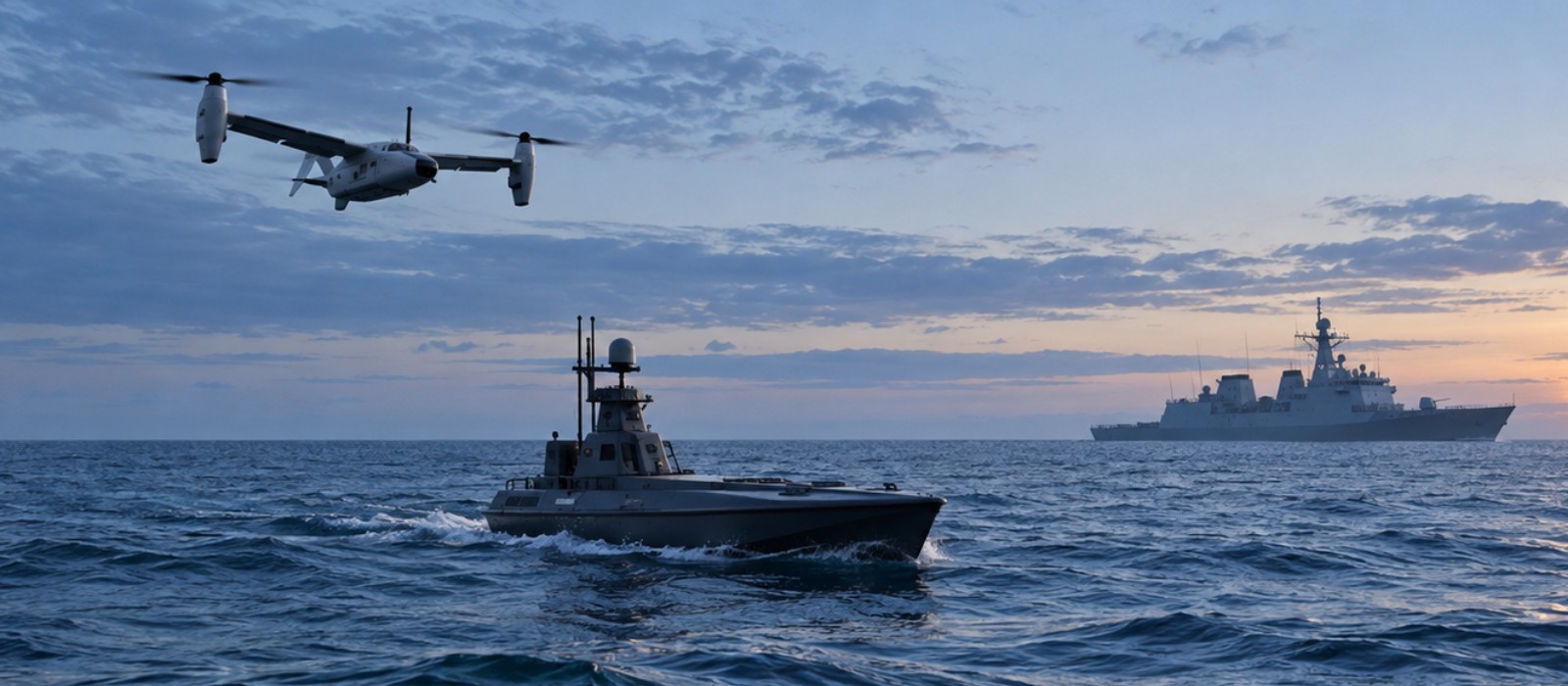
The introduction of unmanned systems to the battlefield doesn’t change simply how we fight, but ...
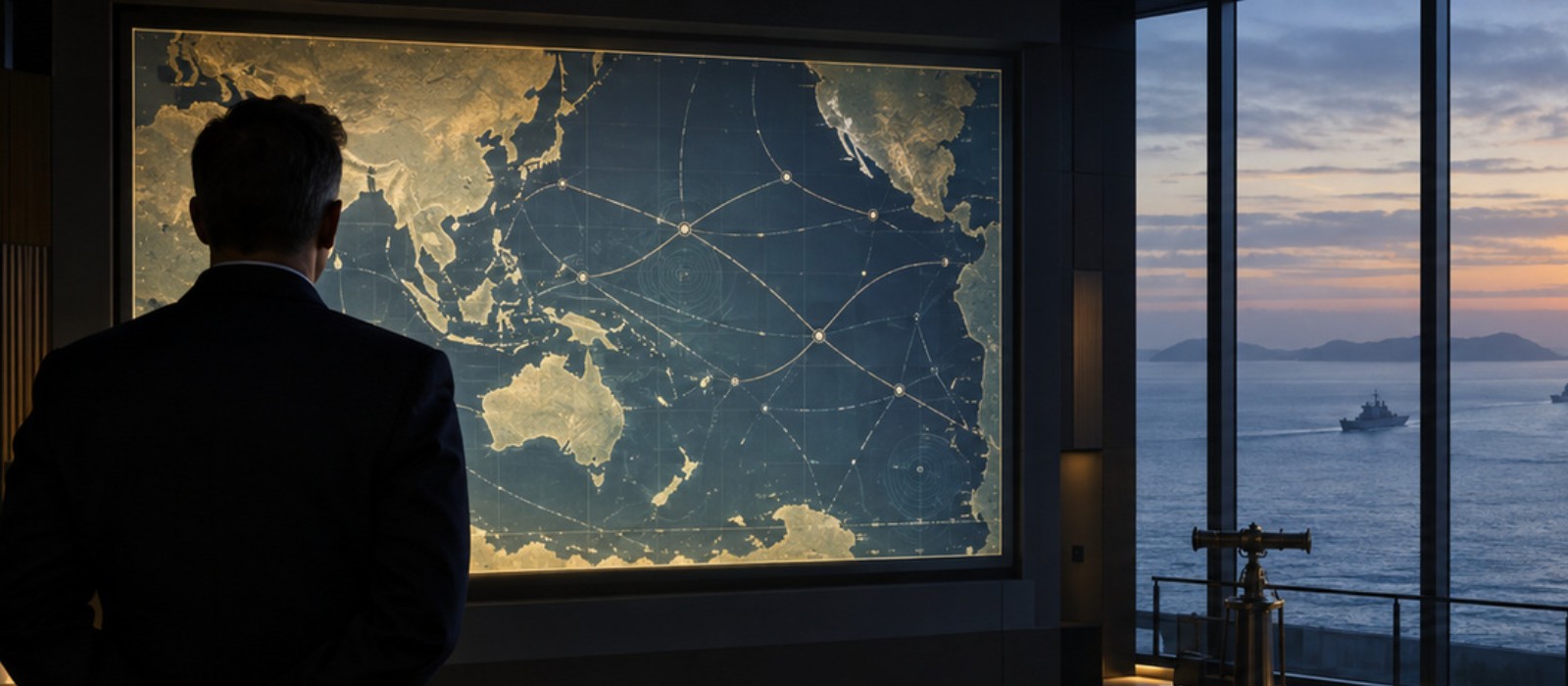
“Victory Through Grand Ideals” gives our readers something to think of. This article by Lt Col K...

Editor’s Note: This article is an adaptation by the author of a piece posted on his blog on 03 Mar...
Editor’s Note: This is an adapted version, with permission of the author, and DESA/NHQ since it wa...

While going through the editing cycle for the account of Vikrant’s engine room and the 1971 war, m...