

MIGHTY OAKS FROM LITTLE ACORNS GROW
It was obvious that few of the teenagers who entered the Academy had received the benefit of moral o...
 C/O Naval War College, INS Mandovi, Verem, Goa, India. 403109



Furthering Connections between Ethics and Warfare; Leadership and ‘Officership’
In the midst of the Monsoons in Goa, it has once again been a pleasure for us to bring a new issue to you. Recall that the Spring editorial had a tagline, Well Underway: Powered by Ethical Oars; Propelled by Thought. Naval leadership has supported us in seeking and publishing articles on ethics and leadership, so fundamental to warrior ethos as well as fighting effectiveness. The feedback that percolated to us suggests that contributions which discuss challenges and dilemmas of ethical issues and officership are being read with a fair bit of interest and have seeped into social media as well. Two of these have especially struck a chord. One was Lt Cdr Rajiv Lochan’s An Appetising Wrong or an Insipid Right, (Winter 2021) and the other was authored by Cdr Allan Rodrigues (Retd), Moral Courage, The Bedrock of Valour: A Retrieved Lesson. Both thoughtful and thought-provoking contributions brought out important connections between young-age incidents and examples and possible impact as cadets rise up the ladder to be officers and leaders. The illustrations were from different eras, different academies and with different dilemmas but vital nonetheless.
What makes the team of the Indian Naval Despatch (slowly gaining recognition as INDES), particularly pleased is to be able to begin the issue, as would a workday afloat, with Both Watches. We have fittingly brought it to the front of the INDES. Admiral Arun Prakash, a former CNS, takes on from Cdr Rodrigues’ excellent analysis of the 1970 “Khetrapal” episode. To reiterate a point in my previous editorial, he throws up the same question which we hope others will examine: “My cogitation was further stimulated by RAdm Shrikhande’s poignant editorial comment about 2nd Lt Khetrapal’s gallant conduct, as a tank-commander, in the 1971 Battle of Basantar: “what might we have thought of his moral courage as a cadet had he not fallen on a battlefield? Would he be less of a man if his hour had not come?” As Commandant of NDA, he had some difficulties trying to institute a very old proposal of an honour code for cadets which was opposed mainly by officers posted there. We now understand from Cdr Rodrigues’ recounting that Arun Khetrapal lived by the code even when it was unwritten; yet having a code that is enunciated and enforced, often by cadets themselves, could be beneficial overall.
Colonel Saunders, who retired from the Australian Army (a graduate of our Staff College at Wellington, by the way) in a commentary from “down under” brings readers a very nuanced examination of “winning at all costs” and the linkages that ethical leadership and training has with behaviour in combat. The two other comments are by a young scholar in the Maritime History Society, Dennard D’Souza and by the very experienced Prof Utham Kumar Jamdhagni from Madras University. They offer supplementary perspectives and some counter-arguments to Dr Sanu Kainikara’s essay on Chola Seapower in the Spring volume. Both Watches offers readers a platform to advance discussions through their insights and even counter-arguments. This is exactly what we hope for when we say that this journal ought to rock the boat of thought itself and “light maritime thought” as in the logo!
Quite appropriately, the lead essay delves into Ethical Friction in War… RAdm M Arjun Dev Nair presents a fine study of comparative literature, old and new, from across the world to reiterate the need to know the way laws of warfare evolved and suggests creating a framework in which armed forces should imbibe ethical behaviour and fight well. That Adm Nair begins his narrative with a few lines about VAdm M James Bond Stockdale seemed not only most appropriate but struck a personal chord. Firstly, as a student in the US Naval War College Class of 2003, I was very fortunate to have got a seat in the Stockdale Course, the better-known moniker for arguably the most sought-after elective properly called, at least then, The Philosophy of Moral Obligation. The second reason is far more recent. In April this year, I visited the US Naval Institute (USNI) – on the sidelines of a Track II dialogue – for discussions with their editorial board and the CEO. These were most fruitful not only to understand and figure out how the Indian Naval Despatch Foundation (INDEF) should and could evolve and grow but also for the opportunity to quietly stand by the grave of the famous stoic, Adm Stockdale and remember him for his valour and his deep contribution to studying and spreading the idea of a warrior’s moral obligation. The accompanying photo is on the campus of the US Naval Academy, and opposite Beach Hall, the renovated office of the USNI.
We at Goa echo the “admiralty’s” thinking that time spent on leadership and ethics training and education from the Academies to senior PME cannot but be helpful. Colonel Saunders concludes his commentary with this thought: “Education, training and importantly, inculcation of ethics from the very beginning of our military education are key. Modern warfare is increasingly complex and requires nuanced, proportionate and appropriate responses to achieve military and political objectives.” Adm Nair’s lead essay helps advance such thinking.
As such, this edition begins with a transcript of the valedictory address at the College of Defence Management by Admiral Hari Kumar, the current CNS. His theme was looking at our own ancient works and linking them to contemporary security imperatives. While the CNS draws lessons from an earlier millennium, Cdr Aiyappa looks at what more contemporary maritime strategists, have to say about the role of geography in command of the maritime commons. With the ongoing crises involving Ukraine and Taiwan, the theme is not ever likely to go out of fashion.
To reiterate, and in a manner somewhat different from a disclaimer, the INDES does not necessarily endorse any specific viewpoints expressed in its pages and neither do the Navy or the Naval War College that support us. We are, however, happy to carry well-conceived and presented articles that may rub against the grain or rock the boat with the hope that this helps policymakers as much as it helps younger generations. In that vein, Capt Harinderjit Singh (Retd) does well in highlighting areas for concern and improvement in PME. I hope we will have more articles on junior, mid and senior-level PME in future issues as well as counter-arguments in Both Watches.
With the permission of my opposite number, Captain Bill Hamblet, editor-in-chief of the Proceedings (remember his fine “Guestorial,” Proceeding with Despatch: From the Oldest to the Newest in the Winter 2021 volume?) I feel all levels of readers would find the USN’s Lt Cdr Andrew Odell’s The Navy Still Punishes Talented Risk Takers yields much to think about. A few aspects may, of course, not be contextual to our Navy, or even as big a problem as may be elsewhere, but quite of a few of his points could resonate. The essence of a Service giving second chances for some errors made, looking at choosing risk-takers to move upwards instead of sideways and not letting a zero-error syndrome creep into the minds of young or even senior leaders are necessary at all times but could be very critical in war itself. A larger hope, as penned in an editorial note at the head of Lt Cdr Andrew Odell’s contribution, is to have more of our own younger IN and Coast Guard officers and sailors and other international readers contribute similarly insightful and incisive articles.
Two campaign studies we bring to print could catch many eyes. The Dardanelles campaign, over a hundred years ago in 1915-1916, is looked at by Capt Jenish George and the ongoing conflict in Ukraine forms the basis for Maj Gen Dhanoa to examine whether decisive victory is achievable anymore. One hopes that some future essays would look at the possibilities and limitations that maritime warfare presents in the parameters of force, space and especially time factors and the relationships between decisive tactical victories (or losses) and ultimate maritime-strategic and national-strategic victory (or defeat).
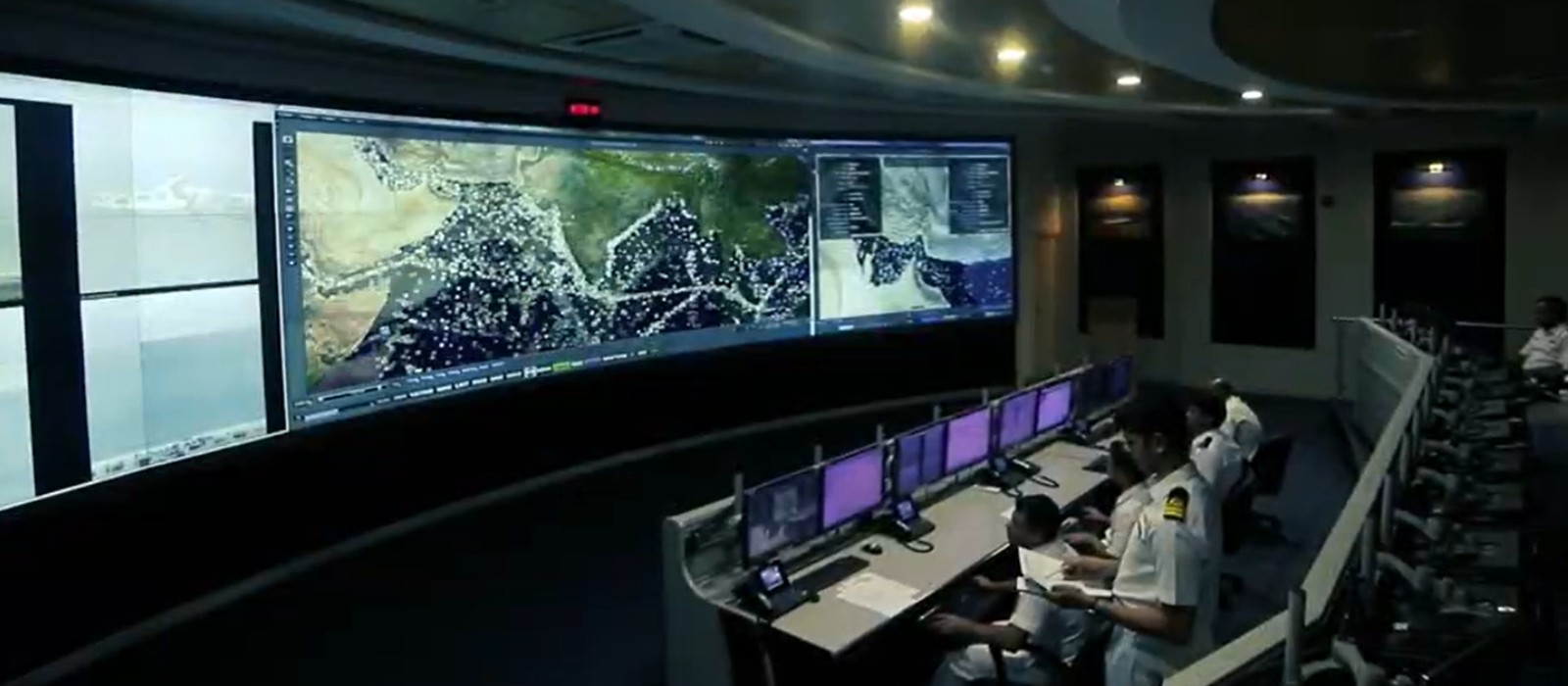
There are also some articles on regional and maritime security issues. Captain Sairam looks at countering China via cooperative information operations based on the work he recently did at the US National War College in information warfare. Undoubtedly there is much that the Quad and bilateral partnerships could achieve in years to come. Defensive and offensive information operations always have had a contribution to make even before these terms became part of war’s lexicon. Three security challenges, spread quite widely, have been considered by Cmde Sritanu Guru. (I may add that this was written well before either the start of the Ukraine conflict or the recent Taiwan tensions.) The three challenges he examines are: will America and China go to war as a consequence of the Thucydides’ trap; what about the ever-shifting contours of terrorism; and, do we have a climate crisis or a crisis of climate inequality? The third article of this type is the need for the IN to have a Regional Operations Coordination Centre. Cdr Ishan Pande recommends that it is time to leverage information into operational actions as and when required regionally for mutual security.
The Bangladesh-India relationship as maritime neighbours forms the basis for Lt Cdr Varun (having recently benefited as a graduate of the Bangladesh Command and Staff College) to analyse problems and successes and make recommendations so that both countries can build the partnership further.
Two papers deal with innovation and weapon development. Capt Ramraj looks into the future potential of an “internet of things” for naval applications making some specific proposals for areas in which to make beginnings to transition from networks to IoT. On the other hand, Captain Arun Peri advocates hypersonic weapons and examines their capabilities and limitations in maritime operations while concluding that the IN would need to allow for the reality of a possible impact on fleet structure and operations in a hypersonic combat environment.
Unfortunately, we do not have a book review section in this edition. Some reviews were for far older books when we do not normally include books that are older than 18-24 months. One failed plagiarism checks and plagiarism is simply not acceptable. We remain hopeful, nonetheless, to have reviewers for so many newer books of vital utility published in India and around the world. Read to lead and share insights through reviews.
Rogues’ Yarn and Small Stu? is a section that brings up the other book-end with lighter short pieces, anecdotes and humour interlaced with a lesson or two perhaps. Cmde MP Anil Kumar reminisces on an admiral’s harbour inspection. We hope to be able to include a few nautical anecdotes and humour in future issues.
Finally, with some regret, I would like to share that I have requested to be relieved as the editor-in-chief for bringing the forthcoming Winter issue to you. This has become necessary because I need time to complete my PhD thesis and submit it to the Naval War College, which is an independent Doctoral Research Centre under the University of Mumbai; and doing both seems to be very difficult. However, the Governing Board has permitted me this leeway and my able editorial team will take on the Winter 2022 Edition. I will be back with you for the Spring 2023 edition.
Lead on with full sails!

It was obvious that few of the teenagers who entered the Academy had received the benefit of moral o...
This comment has been received from Lt Col MD Saunders, Australian Army (Retd) on the article, ‘An...
This observation has been received from Mr Dennard H D’Souza, a Senior Research Associate at the M...

This viewpoint has been received from Prof (Dr) Utham Kumar Jamadhagni, HoD, Dept of Defence & Strat...

This disquisition is a transcript of the valedictory address delivered by the current Chief of the N...
You are a naval aviator, shot down over enemy territory, injured, abused and incarcerated. This is n...

History is replete with numerous contests between nations to control the maritime commons. Economic ...
Indian Naval Despatch Editor-in-Chief’s Note: This article is published here with the concurrence ...
Introduction Professional Military Education (PME) is the foundation on which the ability of militar...
Note: The title of this article is innovated from the quote ‘Cooperate to Dominate’mentioned in ...
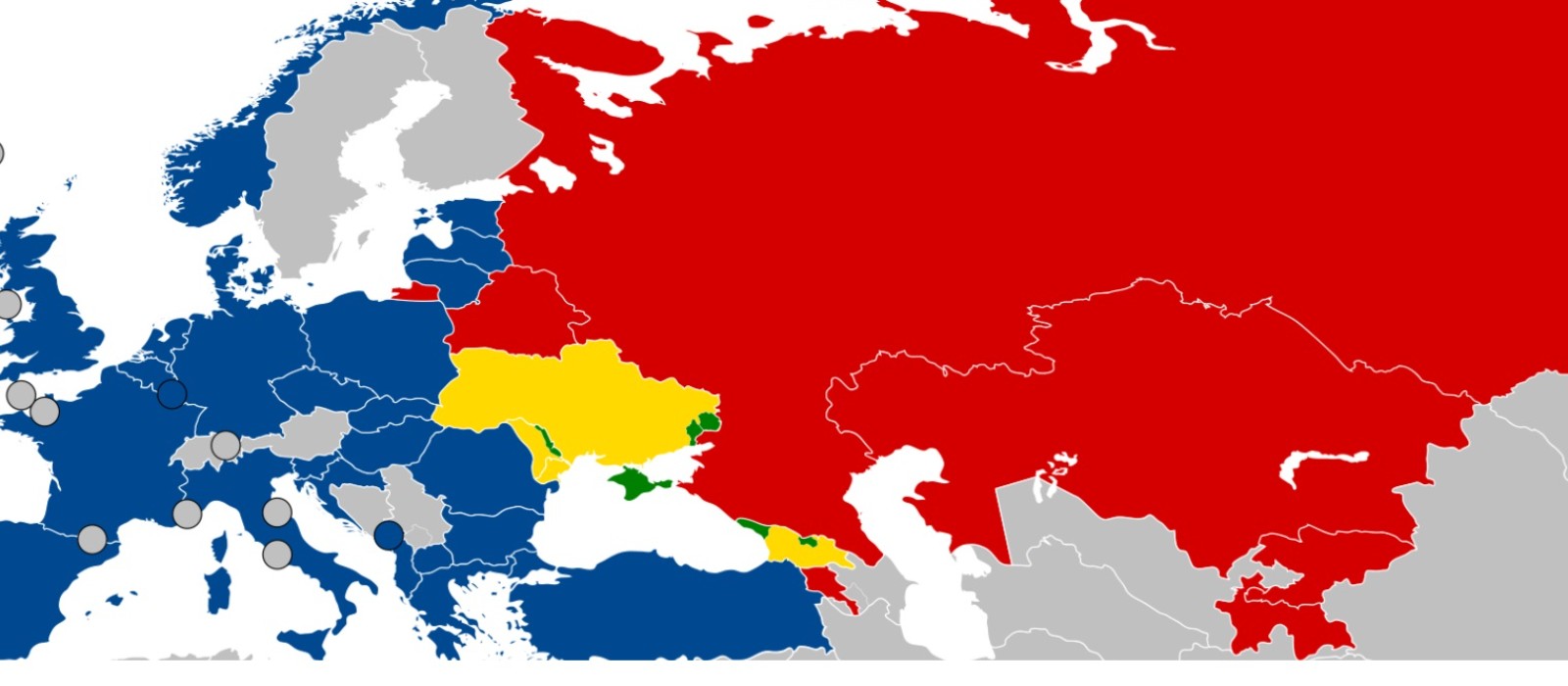
It was supposed to be a ‘special military operation’ by the Russian Armed Forces in Ukraine that...

Introduction World War I was a war of global proportions centered in Europe that began on 28 Jul 191...
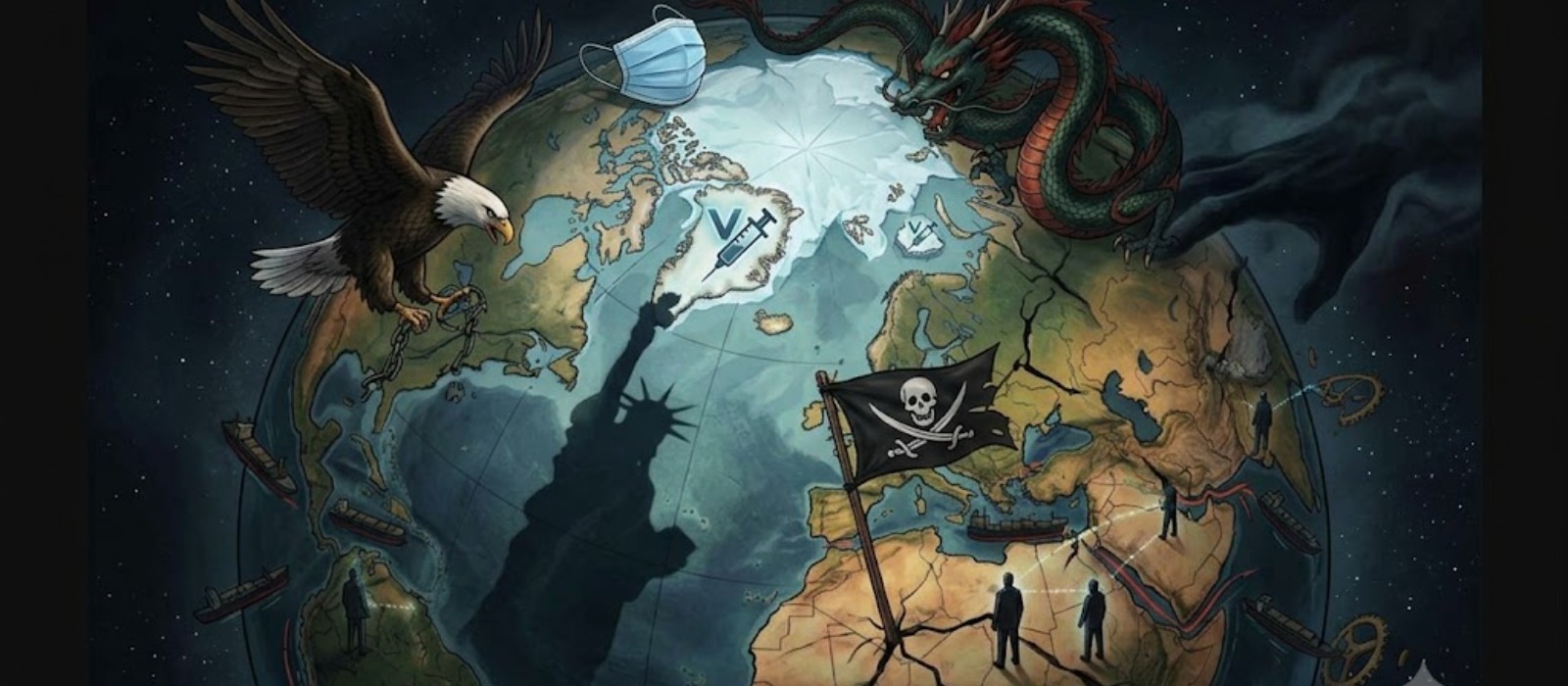
Introduction Nobody, not even the best-known scientists and epidemiologists of the world, seems to k...
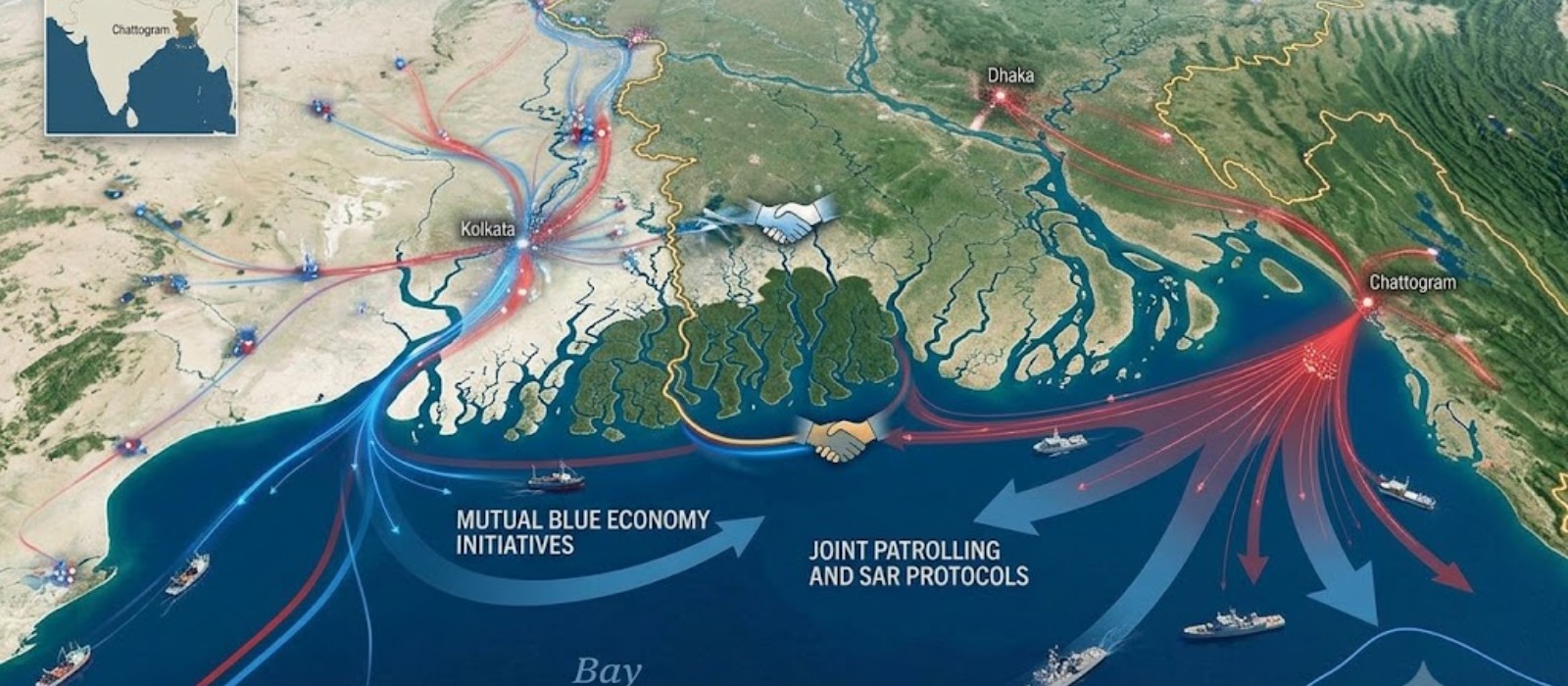
“If we offer something to Bangladesh, it's obvious that Bangladesh is offering something to us. ...
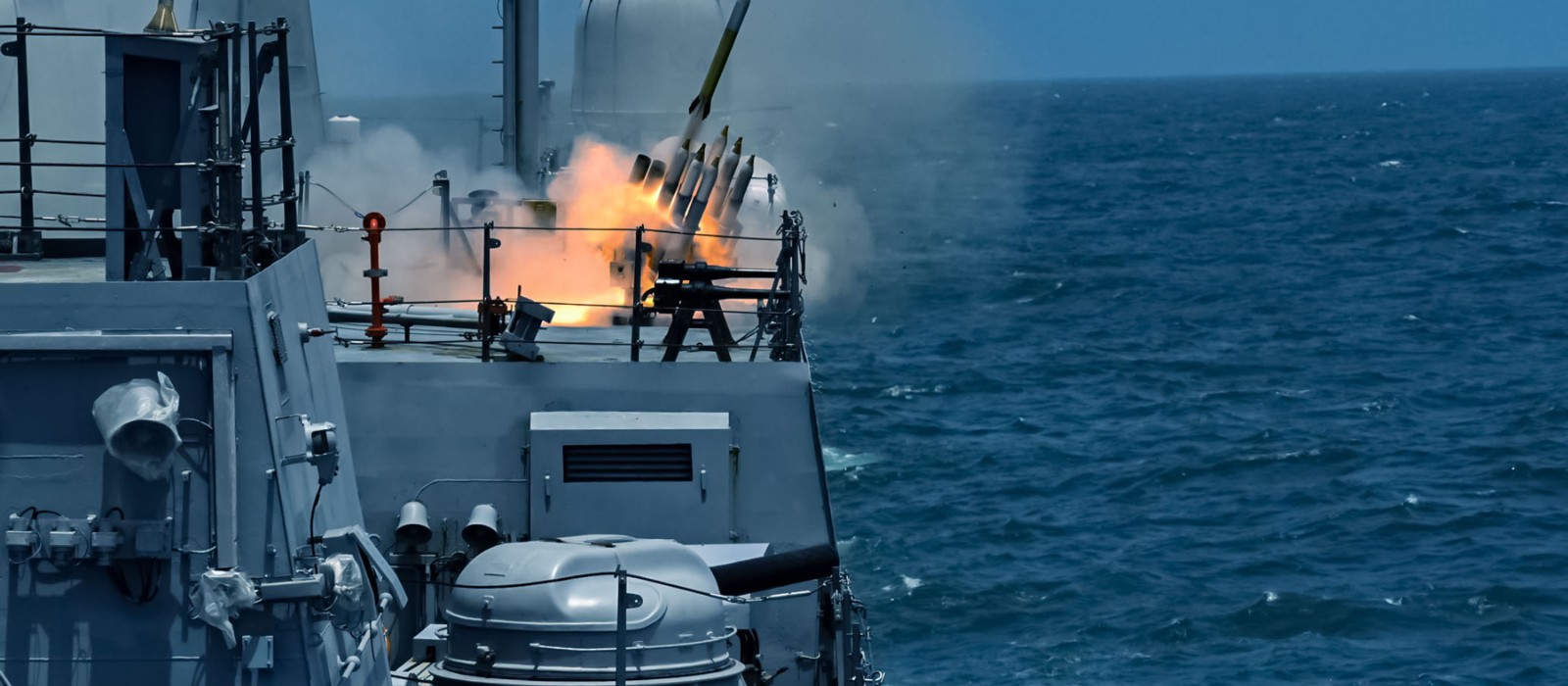
“The Internet of Things is not a concept; it is a network, the true technology-enabled Network of ...
Introduction Information is a vital instrument of National Power. Nations pursue Information Operati...
“…India’s ‘mission ready’ naval posture in the Indian Ocean isn’t sustainable” - Obser...
Time is a pivotal factor in warfare, which can be used to overturn other factors of space, force and...
It was eight thirty in the morning when I went to the gangway on the foc’sle. We were to have the ...