




Indian Naval Despatch, Vol. 4 No. 2 – ‘The Escalating Confrontation over India between President Xi and the PLA’ by Ambassador Prabhat P Shukla.
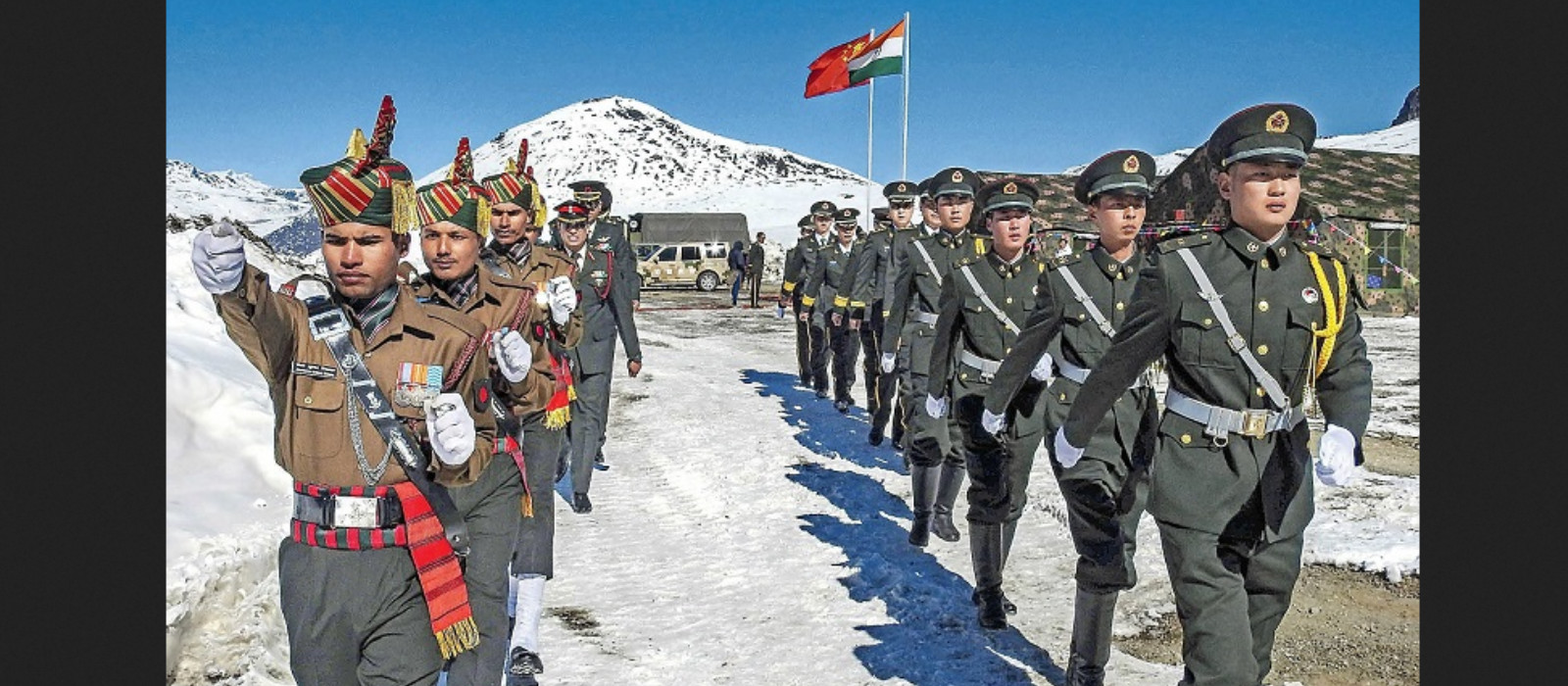
The principle of Occam’s razor states that if you have two competing ideas to explain a phenomenon, you should prefer the simpler one. In other words, the explanation that requires the fewest assumptions is usually the correct one. Ambassador Prabhat Shukla’s explanation for the tensions on the Line of Actual Control (LAC) between India and China in the last decade is that they are the result of friction between Communist Party of China (CPC) General Secretary and Chinese President, Xi Jinping on the one hand and the People’s Liberation Army (PLA) on the other arguing that “Xi would like to see an early settlement of the territorial dispute with India, whereas the PLA prefers to continue to put military pressure on India” (p.27). It is an explanation that requires many assumptions and inferences made on the basis of non-existent evidence or tenuous connections.
The Maoist dictum that “the Party commands the gun, and the gun must never be allowed to command the Party”1 is taken seriously in China. This is not to say that individual generals have not sought to influence politics or that the PLA is not an influential actor in the Chinese political system, but that the PLA as an institution has always answered to its political masters. The fact that Xi Jinping has now run his anti-corruption campaign in the PLA for over a decade suggests that he actually has a lot of support within the PLA and outside it for anyone within the organization to consider going against him without consequences. At the very least, even if there are several who might be unhappy or at the receiving end of the campaign, there are also certainly many who have benefitted. Fallen generals after all create vacancies that need to be filled.
There are several places where Shukla contradicts himself or simpler explanations are available. For instance, he notes that Xi “is regarded as all-powerful” but finds, that his having “to give guidance to his military is unusual” (p.30). First, there is nothing unusual about this; “strategic guidance” is a well-established concept in the lexicon of the CPC-PLA relationship. Second, if having to give “strategic guidance” is to be seen as a weakness or as suggesting friction in the Xi-PLA relationship, why cannot similar conclusions be drawn in a democracy like ours, with respect to the relationship between an Indian Prime Minister and the Indian Army? In both cases it was leaders who issued “strategic guidance” to their respective militaries after all.
Xi Jinping has, since coming to power, frequently stressed that the PLA enhance its combat capabilities2 and the easier explanation is to consider that his “strategic guidance” to the PLA after the 2018 Wuhan informal summit was not to stand down but to prepare for and scale up aggression on the LAC. To interpret either the Doklam road-building activity by the Chinese in Bhutanese territory in 2017 or the large-scale transgressions across the entire front of the Western Sector of the LAC in eastern Ladakh in 2020 as merely the actions of the PLA’s Western Theatre Command (WTC) leadership acting independently of Xi is to stretch an assumption into evidence and is a fundamental misreading of the workings of the Chinese Party-state.
While the section on the transfers, dismissals and posting of various generals is interesting, the connections to India’s troubles at the LAC are all rather heavily based on conjecture. Someone in as important a position as the PLA WTC commander, for example, cannot oppose Xi, get fired and then have a “soft landing” in whatever position. Similarly, it is not possible that Gen. Wu Shezhou, political commissar for the WTC, “oversaw” not one but “two major clashes with the Indian Army – at Doklam in 2017, and Galwan in 2020” in defiance of Xi’s supposed wish to build closer ties with India. In the Chinese system, repeated defiance at this scale is extremely unlikely. The more plausible explanation is that Gen. Zhao Zongqi, Gen. Wu and others were simply following orders from the highest echelons, namely from Xi himself. This is the only way that the contradictions in Shukla’s narrative can be reasonably ironed out.
That “the 20th Congress [of the CPC] opened with a video clip of the Galwan fighting, which thus gave the PLA Ground Force the imprimatur of the entire Congress, with some two thousand delegates” (p.39) and that Sr. Col. Qi Fabao – involved in a clash at Galwan – was a torchbearer at the 2022 Winter Olympics in Beijing3 actually suggest the opposite of the author’s central argument. These are examples not of the PLA expressing defiance but of the Chinese Party-state under Xi confirming that this is exactly what was expected of the PLA. Officers- in- charge were rewarded or held accountable according to their performance or if they escaped censure, might have done so based on personal connections or precisely because they were carrying out orders. This is not unique to the Chinese system in any case. There has, after all, been no public accountability exercise on the Indian side, consequent to the eastern Ladakh transgressions of 2020.
What Amb Shukla refers to as “the optimism” of Chinese analyst, Liu Zongyi’s, article should be understood as par for the course. It is the nature of the work that China’s analysts do to set the ground for their leaders’ foreign visits. If Xi is taking the trouble to visit India, it would not make sense at that point to write an article critical of India if the intention is to achieve something from the visit. In other words, Chinese government-employed analysts will talk positive, even if this has no connection to reality. The same logic applies to then Chinese foreign ministry spokesperson Hua Chunying declaring on the eve of the second informal summit that China saw Kashmir “as a bilateral issue between India and Pakistan” (p.32).
Liu’s articles in the Global Times are otherwise – and normally – full of opprobrium against India. And practically on every other occasion, especially after Art. 370, the Chinese have taken a position against India, something that Shukla himself points out. So, the more logical way of analysing a single positive article or remark is to think of it as a feint or as an exception that proves the rule.
There are multiple other statements presented as fact in his essay but without references provided. For instance, what exactly were the PLA’s “serious misgivings” about the relationship with India (p.33) and how exactly did the Pakistanis fan these? It is quite possible that the Pakistanis did so but there is no proof offered. It is also quite possible that there were “40 fatalities” on the Chinese side in the Galwan clash, but there is no way for the reader to access any of the “Indian, American and Russian intelligence assessments” that Shukla claims “are all agreed on this number” (p.34).
Meanwhile, there are other interesting aspects of the article that are worth highlighting by way of commentary on the conduct of China policy in India in the past decade. To use his own words about the 2018-19 informal summits, “[b]oth sides were careful to manage the information flow, and very little of substance has come out even years later” (p.29). This, in fact, is precisely the problem. The informal summits were an unaccountable exercise in which the Indian acquiescence perhaps suited the Chinese in trying to keep information and accountability out of the public domain and something they took advantage of in 2020.
On balance, it is difficult to agree with Shukla’s argument that “President Xi... was determined to take the relationship [with India] to a new, higher level” (p.33). If anything, it is the opposite that is actually proven. The essay misunderstands the nature of Chinese politics and its internecine attributes in the aftermath of Galwan as well as before it.
Endnotes
-
https://www.marxists.org/reference/archive/mao/selected-works/volume-2/mswv2_12.htm
-
https://edition.cnn.com/2024/04/27/china/china-xi-military-restructuring-information-support-force-intl-hnk/index.html;https://www.scmp.com/news/china/military/article/3116436/xi-jinping-orders-chinas-military-be-ready-war-any-second
-
https://indianexpress.com/article/sports/sport-others/qi-fabao-galwan-valley-border-soldier-torchbearer-beijing-2022-winter-olympics-7752996/
