


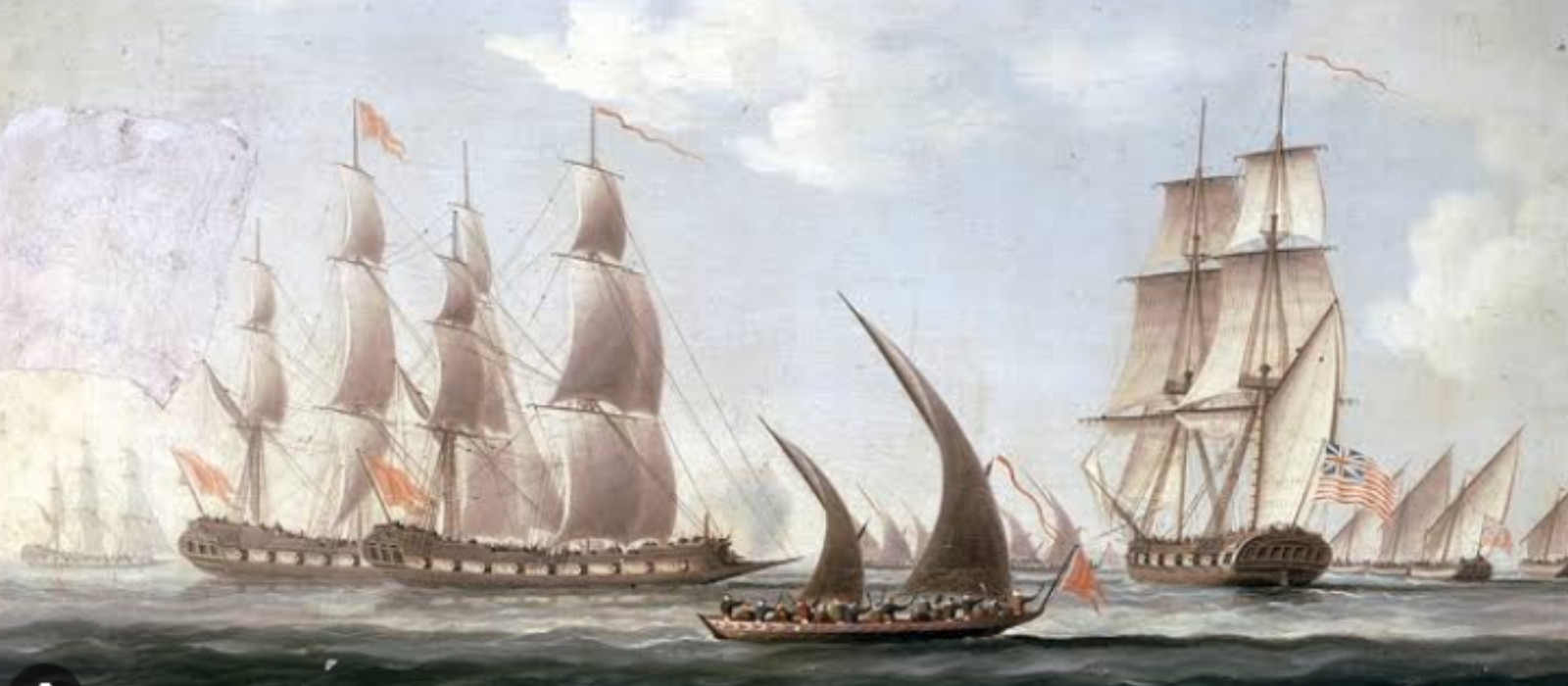


Abstract: This article explores one of the often-overlooked maritime triumphs of Chhatrapati Shivaji and the Maratha Navy during the 17th Century. While the Cholas left an indelible mark on India's naval history, Shivaji Maharaj's visionary approach to sea power marked the rebirth of Indian naval power, challenging western supremacy in exploiting the maritime domain. This article focuses on the strategic and tactical aspects of the Maratha Navy at large, and particularly its role in the less-documented naval raid also referred to as the Battle of Basrur. The naval raid, executed flawlessly in February 1665, not only questioned the Portuguese dominance along the western coast, but also gave an insight into the vision of Maratha Navy. The raid’s anniversary has been gaining some prominence in the current decade with the locals celebrating Basrur Swatantrata Diwas to increase awareness of the raid. The methodology behind the success of the naval raid is analysed, emphasising the importance of reconnaissance, accurate calculations, intelligence networks, and information warfare campaigns. The discussion also touches upon Shivaji's innovative approach to naval asset creation, employing skilled technicians from diverse backgrounds and the role of sagacious naval commanders.
Maritime Prowess of Medieval India
Indian maritime history is replete with several cases of naval expeditions and battles. Any research in this direction has two key waypoints, the Cholas and the Marathas. Our ancient as well as medieval Indian history speaks of flourishing trade through sea routes which brought wealth and cultural diversity into India and helped spread Indian culture and values, especially in parts of South and Southeast Asia under the flag of the Chola dynasty.1 The Chola emperors realised the value of naval power and created naval assets, primarily for trade but used the same vessels for transporting troops for operations.2 By the 13th Century the Cholas had declined and so did overseas trade and influence. However, the medieval era also saw the resurgence of naval power under Chhatrapati Shivaji during the second half of the 17th Century as an instrument of statecraft. and was based on the understanding that a kingdom with effective naval power would be able to expand its interests and influence quickly.3 He commenced his journey as a statesman by establishing a well-trained, organised army and focused on building a navy for the Maratha empire; he saw how one could complement the other. After a resounding success over Afzal Khan in 1659 which shocked the Adil Shahis and the Mughals, his naval construction at Kalyan in the same year, made the Portuguese and English anxious.4 At this period, it was the Portuguese who were dominating the western sea coast of India and harassing merchant ships of many other kingdoms. The western coast was controlled by the Portuguese up to the North Konkan coast and the southern part of the coast by the Siddis of Janjira.5 While the Portuguese were busy fighting the Dutch in Malabar, Shivaji Maharaj consolidated his gains to safeguard his northern provinces and completed the construction of the sea fort at Suvarnadurg and commenced the construction of the Sindhudurg fort in 1664.
Inception of the Maratha Navy
Although a small force, the Maratha Navy differed from the Chola Navy in its conception, envisaged role, vessels and their raison d'être. The Cholas constructed naval vessels primarily for trade and to increase the reach of their kingdom. Eventually, their maritime force was created by converting these trading vessels into fighting ships. However, the Marathas built their fleet, which was primarily battle-worthy and could also be used for trade. The purpose of rapidly building a Maratha Navy was to curb the influence of Western colonial powers of English, French, Dutch and Portuguese merchants.6 It also served the purpose of patrolling the Konkan coast and protecting their trade or interdicting that of others if required. The Marathas had initially created a flotilla of around 90 ships which increased rapidly under Sarkhel (Admiral) Kanhoji Angre in the early 18th Century. Conceptually, the Maratha Navy was divided into two squadrons comprising different classes of ships.7 They had different types of fighting ships Gurabs, Galbats or Gallivats, Pals and Manjhuas.8 The Ghurabs were known to carry up to sixteen guns and a hundred and fifty armed men, while the Gallivats had six guns and sixty fighters.9 The creation of naval assets was an ardent task and Shivaji Maharaj and his naval leaders, handpicked technicians who were skilled and ranged from Arabs, Portuguese, French and Dutch to build his ships followed by self-designing and construction.10 He is known to have employed Portuguese skilled workers for sea fort construction. The naval forces were led by a fair mix of locals as well as outsiders to train and undertake operations. Mayank Bhandari and Daulat Khan are known to be the most capable of his naval commanders.11 The exceptional intelligence setup and information campaign during the raids, battles and campaigns were planned and effected by Bahirji Naik, who was by far the best intelligence operative and commander of the Maratha Empire.12
A clear vision well supported by the thinkers, planners and the soldiers, both on land as well as sea, were key factors in the growth of the Maratha empire. Delving back to the 17th Century, after raiding the Mughals and sacking Surat in early 1664, Shivaji Maharaj is known to have transported all his winnings over the sea route leaving the Mughals clueless about its path making it a successful ‘sea transported operation.’13 In furtherance of his aim, he had intentions to expand his kingdom southwards and use the winnings of Surat for forts and ship construction for furtherance of this aim.
Brief History of Basrur
Basrur, a small town in today’s Udupi district of Karnataka was then a prosperous naval town under the dominance of the Portuguese and was the first target of Shivaji Maharaj for exploiting his naval assets. Arguably, this was the only naval raid which was conceptualised and personally led and fought by Shivaji Maharaj.14 The raid, as such, is a landmark event as it involved an approach from the sea and the use of disembarked infantry to attack, capture and seize the spoils. It also disrupted the monopoly on sea trade by the Western powers and was evidence of the strategic planning in further use of the navy for control of coastal waters in the interest of the coalescing Maratha kingdom. However, this naval raid on Basrur doesn’t have adequate recognition in historical writing and, therefore, deserves some more examination in this essay.
Basrur was an integral part of the erstwhile Keladi Nayak Empire,15 under the proficient Sivappa Nayak and his descendants, before the Portuguese influence in the coastal area. By the end of 1664 and early 1665, Basrur had seen change of hands from Sivappa Nayak to his brother Venkatappa succeeded by his son Bhadrappa and then to Mallappa.16 On the other hand, the Portuguese (after the loss at Ceylon to the Dutch) had allied themselves with Adil Shah, the Sultan of Bijapur for dominance in the region around the Kanara coast. In this period, Bahlol Khan, a vassal of Adil Shah, started nibbling on the Basrur territory and extorted a large sum of gold. After the death of Mallappa, even the Nayars of Malabar tried to seize territories in the regions of Mangalore adjoining the Basrur region. This forced the young Somashekhar Nayak, the appointed ruler of Basrur to cosy up with the Portuguese in exchange for large tracts of land and the consequent coastal dominance.17 The period was marred by chaos and despair for the locals who were being harassed and had lost much of their business to infiltrators who had captured the market. They were also being looted and exploited by troops who operated in the area. In this environment the same Somashekar Nayaka reached out to seek Maratha protection, offering to pay Shivaji Maharaj a yearly tribute. He sought his intervention to liberate the prosperous trading ports of Basrur and Gangolli from the clutches of the Portuguese.18

Fig 1: Source: Major Coastal Plains of India – Accessed on https://byjus.com/question-answer/name-the-major-coastal-plains-of-india-locate-and-label-them-on-an-outline-map on 08 January 2024
The Raid
By 1664, Shivaji Maharaj had commenced naval reconnaissance of the entire coastline of Kanara and its numerous creeks, estuaries, sand bars and their months of opening into the sea.19 The ever-watchful eyes and thinking minds of upcoming Maratha empire were seized by the prevailing issues and chaotic conditions in the region of Basrur which offered a perfect option for a swift naval expedition. An elaborate plan was made for a naval raid with the objectives of minimum collateral damage but with the sacking of the Portuguese and some other foreign merchants at Basrur as a main objective. This was expected to impact their further activities and enable Maratha dominance in their coastal region and coastal waters as well. In modern parlance, it could be said that an effective deception plan was also put in place. This mainly included disinformation that the Marathas were planning to raid Goa and take on both the Portuguese and Dutch in the region. However, the target was Basrur. The Marathas had gradually located their newly constructed ships in Malvan and had steadily increased the strength of their troops in the region. The plan was put into motion on 08 February 1665.20 It was the same day when the Portuguese gifted Bombay to King Charles II of England as the dowry of Catherine and both Western powers were busy celebrating the same.21 The port of assembly and embarkation for the amphibious operation, was Malvan along the Konkan coast. Likewise, the Kundapur Creek, in the Udupi region along the Kanara coast was chosen for the amphibious landings.
The Basrur port and town were about 5 miles from this place. The said date and time were chosen considering the high tide conditions which allowed the beach landings in the early hours of the morning.22 Theexpedition comprised of three large ships and 85 frigates, led by Shivaji Maharaj himself. The force passed ports of Goa, Karwar, Honavar and Bhatkal along the Kanara coast without raising any alarm and reached Kundapur Creek. A distance of nearly 200 miles was travelled in four to five days. Certain ships were left at the entrance of the creek to guard it and other frigates anchored upstream. The troops had landed on the late night of 13 February 1665 and the raid was executed in the early hours of 14 February 1665.23

Fig 2: Source: Lord of Royal Umbrella- Shivaji Triology by Gautam Pradhan Accessed on www.googleimages.com on 08 January 2024
The raid was executed unhindered, indicating that the coastal fort at the Kundapur estuary, as well as the Basrur fort, were absolutely taken by surprise. Only the Portuguese and other western merchants’ warehouses and treasuries were looted. No locals were harmed. The exact details of the quantum can’t be ascertained, but the lowest estimate of the booty is to the tune of one crore.24 Like many other kings of the period anywhere in the world, Maratha rulers did need to finance the expansion as well as consolidation of their empire and Shivaji was keenly aware of this in most of his campaigns. The lightning raid was executed flawlessly, indicating a close involvement of local guides and spies who ensured accurate targeting and swift exit to the sea with the winnings comprising cash, gold, spices, cloth and horses. Subsequently, the Marathas are known to have raided Honavar and Bhatkal ports too. However, no detailed records exist for these raids. On his way back Shivaji Maharaj is known to have divided the force into different groups with winnings directed safely to predesignated locations. He changed from sea to land route at Gokarna along with select soldiers. Thereafter he headed to Ankola and eventually reached Karwar by 22 February 1665.25 The entire execution of the raid was successfully concluded merely in a fortnight. Subsequently, Shivaji Maharaj was forced to focus on the north as his Purandhar fort was being seized by Mughal General, Jaysingh.26
The execution of the raid was based on extensive and detailed reconnaissance of the region, understanding the sea areas around it including tides and currents, accurate calculations for operations as well as for logistics, and the creation of an accurate intelligence network and a well-timed information warfare campaign. The naval raid sent shivers in the Western naval powers as well as in the Mughals and Adil Shahi of Bijapur. The monopoly of the Portuguese for rice and pepper trade as well as the writ of western merchants in the region was shaken and their invincibility was questioned. Basrur continued to flourish as a naval port and business town as hitherto fore.27 In fact, the day of raid ie 13th February is celebrated till date by the locals as the Basrur Swatantrata Diwas.28 Jadunath Sarkar has rightly opined that, “Nothing proves Shivaji’s genius as a born Statesman more clearly than his creation of a navy and naval bases.”29
Beyond the Raid
In March 1665, the victorious Maratha fleet was returning from its raid at Basrur. Enroute, in the euphoria of their victory over a western stronghold, they captured a Portuguese vessel. This was responded to swiftly and ferociously by the Portuguese who not only recovered their vessel but also captured a few Maratha vessels. The Marathas realised that the Portuguese were a strong naval power and the time wasn’t correct for a head-on collision. Tactful dealing with the intention of ‘hide your strength and bide your time,’ was the course of action adopted by the Marathas.30 As it happens, the growth of the Maratha Navy was punctuated with many such setbacks. Yet, each time their navy recovered. They focused on force preservation, improving design, incorporating new weapon systems, finding diplomatic solutions, and preparing for the opportune time to strike. In spite of the Maratha-Portuguese Treaty of 1669, Shivaji continued expanding his navy and building new fortifications. In addition, he continued to exact taxes for a safe passage for mercantile traffic between Goa and the uplands. However, what was even more noteworthy was that the Maratha leadership not only ensured that they were not directly attacked by the Portuguese, but also exacted from them an undertaking that they would not assist the Siddis.31 Subsequently, the Marathas took on the Siddis in 1670 followed by the British in 1672 at Khanderi.
Significance of the Raid
The naval raid on Basrur gave Shivaji Maharaj an insight into the nuances of seamanship and the imaginative use of the Navy as an instrument. The Marathas endeavoured to bring strategic and operational coherence to the extent they could in uniting the army and the navy. In this case, their usage of coastal forts—a major focus of Shivaji—was somewhat new and proved to be effective. He also invested most of his booty from raids and conquests into maintaining and building his military power in both dimensions.
The forts that were built were of two types. The first category was those built on rock islands, surrounded by sea on all sides and the second were coastal forts or the head-land forts, constructed on the sea-shore with their entrances from the landside and rear facing the sea.32 During that epoch, there were European technicians, smiths and others who were advisers and skilled workers in the service of several rajas and sultans and even the Marathas. In modern parlance, they were part of the “make in India” and “Atmanirbharta” effort. The raid challenged the authority of the western sea powers along the Konkan coast. While the Europeans did retain their naval supremacy, the Maratha Navy had started evolving their naval concept of operations. Adnyapatra, one of the pioneering documents written in the 18th century on the statesmanship of Shivaji Maharaj, has the largest section dedicated to naval aspects. It incorporates the takeaways of the naval expeditions and raids undertaken by Shivaji Maharaj and were incorporated in building the naval might. The Adnyapatra reflects upon the focus on construction of naval assets, organisation of naval forces and distinguishing between policy towards the merchants and rules for naval fights. These facets are indicative of how the Maratha Navy matured and evolved in due course of time.
While the entire Basrur raid was executed in a matter of 15 days, commencing from sailing out on 08 Feb 1665 to reaching safe havens by 22 February 1665, the reconnaissance, planning and preparation had commenced at the end of1664.33 Similar foresight and planning is essential to undertake operations in grey zone or actions short of war. The raid can be compared to the recent “surgical strikes” or the Balakote air strikes in terms of its impact and hence can act as a pointer for similar action as a naval option in the contemporary times.
Conclusion
Indian history is replete with myriad battles and operations which have been the defining moment in shaping the methodology of conduct of operations and war fighting. The Battle of Basrur was one such episode from Maratha history. It shaped the growth and future contours of naval prowess under Shivaji Maharaj. Analysing this Basrur naval raid also gives us a fair understanding into various aspects of planning, preparation and execution of maritime operations and hence merits studying. Irrespective of the shortcomings of the nascent Maratha Navy, 17th Century did mark the re-birth of maritime capability in India. In recent times, there is an ongoing debate amongst certain sections of scholars about the attributability of the honorary title of ‘Father of Indian Navy´ to Chhatrapati Shivaji Maharaj. Irrespective of which side has a better set of arguments, what merits attention as a military mind is not only the ability of Shivaji Maharaj to think differently, adapt to prevailing environment and incorporate technology to enhance his military prowess, but most importantly a vision and his determination to pursue it. The vision of Chhatrapati Shivaji Maharaj can be summed up by his famous Marathi saying – “Jyacha Dariya, Tyache Vaibhav – Jyache Aarmar, Tyache Samudra,” which can be literally translated as, “The one who controls the oceans is destined for glory and the one with a strong navy rules the ocean.
Endnotes
-
KA Nilkanta Sastri, A History of South India: From Prehistoric Times to the Fall of Vijayanagar (Chennai: Oxford,1955).
-
S Ramakrishnan, History and Culture of the Indian People, Volume 05, The Struggle For Empire (Mumbai: Bharatiya Vidya Bhavan, 2001).
-
Shashi Bhushan Poddar, “Shodh Prerak,” Shodh Prerak - A Multidisciplinary Quarterly International Refereed Research Journal I (03) (2011), 32-250, http://shodhprerak.blogspot.com.
-
Ranjit Desai, Shivaji: The Great Maratha (India: Harper Perennial, 2017)
-
TS Shejwalkar, "Shivaji's Raid on Basrur," Bulletin of the Deccan College Post-Graduate and Research Institute, vol. 4, No. 2 (December 1942), 135-146, https://www.jstor.org/stable/42929309.
-
Talk on The Inception of Maratha Navy by Vice Adm MS Pawar (Retd.) at Mulla Auditorium on17 May 2023 (45th Founder’s Day – Maritime History Society).
-
Nalini K Tembhekar, “Shivaji: The Architect of Maratha Navy,” International Journal of Multidisciplinary Research and Development, vol. 3 no. 10 (October 2016), 190-192.
-
Shashi Bhushan Poddar. 2011, "Shodh Prerak."
-
Nalini K Tembhekar, “Shivaji: The Architect of Maratha Navy,”
-
Manohar Malgonkar, The Sea Hawk: Life and Battles of Kanhoji Angrey (Harper Collins India, 1979).
-
Bal Krishna, Shivaji The Great (Kolhapur: The Arya Book Depot, 1940).
-
Raj Jadhav, Bahirji Naik (Mumbai: Navinya Prakashan, 2023).
-
Shreyas Bhave, The Legend of Bahirji-Naik: Raiders of Surat (Book I) (Noida: One Point Six Technologies Pvt Ltd, 2023).
-
Shinde, Yogesh. 2023. Organiser-Voice of the Nation. Feb 19; Lakshmi Subramanian, “On the history Trail: Maratha Navy and The Battle of Basrur” Sahasa, 26 February 2021, https://sahasa.in/2021/02/26/battle-of-basrur, accessed 05 January, 2024.
-
“Udupi Tourism Promotional Council ,” Udupi Tourism, www.udupitourism.com/Udupi-Keladi-Rulers, accessed 04 January 2024.
-
“Nayakas of Keladi,” Wikipedia, https://en.wikipedia.org/wiki/Nayakas_of_Keladi, accessed 04 January 2024.
-
“Nayakas of Keladi.”
-
Subramanian, “On the history Trail: Maratha Navy and The Battle of Basrur.”
-
Shejwalkar, “Shivaji's Raid on Basrur."
-
Shejwalkar, “Shivaji's Raid on Basrur."
-
Visit to Heritage Museum, Naval Dockyard. Mumbai, in January 2024.
-
Shejwalkar, “Shivaji's Raid on Basrur."
-
Subramanian, “On the history Trail: Maratha Navy and The Battle of Basrur.”
-
Shejwalkar, “Shivaji's Raid on Basrur."
-
Shejwalkar, “Shivaji's Raid on Basrur."
-
Amit Parolekar,“Shivaji's Escape From Agra.” Combat News, December 2023, Army War College, 22-24
-
Harsha Bhat, “Celebrating Shivaji’s First And Only Naval Expedition: Recapturing Indic Imagination, Recreating History One Anniversary At A Time,” #Swarjya, 12 February 2021, https://swarajyamag.com/culture/celebrating-shivajis-first-and-only-naval-expedition-recapturing-indic-imagination-recreating-history-one-anniversary-at-a-time, accessed 08 January 2024.
-
Harsha Bhat, “Celebrating Shivaji’s First And Only Naval Expedition:
-
Jadunath Sarkar, Shivaji and His Times (London: Longmans, Green and Company, 1920). https://en.wikisource.org/wiki/Shivaji_and_His_Times.
-
Hemantraje Gaikwad, Chatrapati Shivaji Maharaj: Father of Indian Navy ( New Delhi: Prabhat Prakashan, 2024), 64.
-
Gaikwad, Chatrapati Shivaji Maharaj: Father of Indian Navy, 69
-
Nalini K Tembhekar, “Shivaji: The Architect of Maratha Navy,” International Journal of Multidisciplinary Research and Development, vol. 3 no, 10 (October 2016), 190-192.
-
Shejwalkar, “Shivaji's Raid on Basrur.”
