


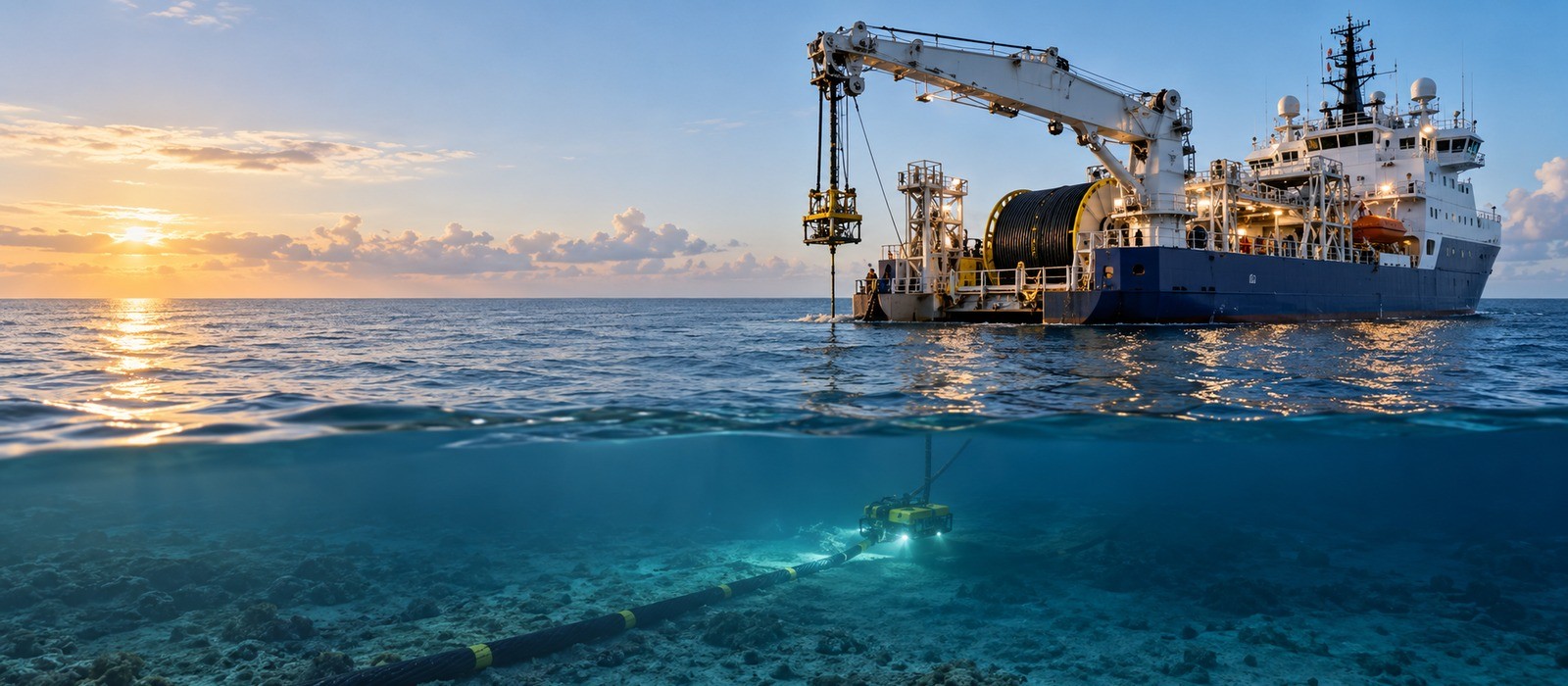


"India intends to invest in maintenance, repair and financing of undersea cables in the Indian Ocean, using trusted vendors"1
-Prime Minister Narendra Modi
Abstract: Submarine cables are the backbone of global digital communication, carrying around 95-99% of international data. Notwithstanding their criticality, cable repair and maintenance remain under-addressed despite growing vulnerabilities due to physical, environmental and geopolitical factors. The paper explores strategies for improving submarine cable infrastructure, with emphasis on India’s evolving role in this domain.
The paper briefly describes the types of cable faults from anchor damage to insulation failures and highlights global statistics with probable fault causes. The case studies in the paper covering issues faced by Taiwan, Vietnam, in the Red Sea, Tonga and India clearly highlight the challenges of delays in repair ship availability, regulatory bottlenecks and geopolitical restrictions in submarine cable repair infrastructure. It also examines the existing global cable repair mechanisms, including traditional maintenance agreements and specialized cable ships, of which only 63 operate worldwide. It also outlines the repair procedure along with tools and test equipment with photographs including broad costs involved in submarine cable repairs.
Focusing on India, the paper proposes a roadmap to reduce foreign dependency, improve response time and enhance regulatory clarity. Recommendations include retrofitting vessels, developing indigenous ROVs, streamlining permits and hosting dedicated cable depots.
With rising global data demand and India’s strategic location, the paper underscores the need for self-reliant, resilient submarine cable infrastructure vital for national security and digital sovereignty.
Introduction
As is generally well known, submarine cables are a critical component of global communication infrastructure, responsible for carrying over 99% of international traffic, including data, voice and video.2 Over 600 fibre optic cables spanning 1.2 million Km3 across oceans efficiently transmit data at Terabits per second 3 (Tbps) in a cost-effective manner. Satellite communication, which accounts for less than 1% of international data capacity and terrestrial fibre systems, cannot match the scale and efficiency of submarine cables especially the cost and latency part (under 80 ms Vs 800 ms for Satellites). Despite their importance, they remain largely unknown to many network engineers, particularly those outside the telecommunications and service provider sectors.4
Submarine cables have evolved from transmitting 6 to 8 words per minute via telegraphy in 1858 to handling over 1000 Tbps of data today, establishing themselves as the backbone of global telecommunications. Modern submarine cables use fibre optic technology with a glass optical core (no thicker than a human hair-125 microns)5 to transmit light signals. Dense Wavelength Division Multiplexing (DWDM) increases bandwidth by sending multiple data streams through different light wavelengths, while Coherent Optical Technology6 enhances efficiency using advanced modulation and digital signal processing, enabling long-distance transmission with minimal loss. Multiple fibre cores further boost data capacity, making these cables highly efficient for global data traffic.
In essential ways, the way data flows from devices (or a person wanting to send a telegram in earlier days), to the addressee is similar. The major difference is in the capacity, speed and technology in every segment. Data from an electronic device is wirelessly transmitted to the nearest cell tower via radio waves and processed by the Radio Access Network (RAN), which includes LTE (4G) and New Radio (5G). The signal is sent to a base station, then forwarded to the baseband unit and connected to the Core Network, which manages the RAN and routes data to external services like the internet and landlines.7 Depending on the destination, data travels through the terrestrial network to a Point of Presence (POP) and then to a Submarine Cable Landing Station (CLS).8 From here it is transferred to the local telecom infrastructure for final delivery. Fig 1 shows the complete communication flow from an electronic device to across the oceans through submarine cables, critical components and the rerouting process in case of a submarine cable cut. The submarine cable system consists of two parts:
- The Wet plant includes cable laid at sea with repeaters for signal boosting and branching units for multiple connections.
- The Dry plant routes the cable through a beach manhole, extends it via a ROADM (Reconfigurable Optical Add-Drop Multiplexer) to the landing station, and links it to terrestrial networks.

Fig 1: Data flow from electronic device to CLS and Submarine Cables9
Case Studies
A few case studies are briefly examined here to illustrate different circumstances and complexities of cable-cuts and complexity of the repairing processes.
Taiwan and Baltic Sea Cable Sabotage (2025). In February 2025, Taiwan’s Coast Guard seized the Togo-flagged Hong Tai 58 suspecting to be involved in allegedly severing an undersea communications cable linking Taiwan's main island to the Penghu islands, disrupting internet services. Taiwan contracted the specialized cable repair ship CS Responder to undertake the repair, which commenced on 28 February 2025 and was completed by 05 March 2025, a total of six days. It was relatively quick because of the quicker availability and proximity of a repair ship and supply depots. The repair was conducted under the escort of Taiwan's naval vessels to deter potential interference amid geopolitical tensions.
In Europe, similar incidents highlight the vulnerability of subsea infrastructure. In the Baltic Sea, the Chinese-flagged Yi Peng 3 was suspected of damaging undersea cables due to its suspicious movements near the site of the damage. Additionally, In December 2024, the Russianlinked tanker Eagle S was suspected of damaging subsea cables in the Gulf of Finland after reportedly dragging its anchor for 100 Km, leading Finnish authorities to impound the ship and investigate the incident. Whilst data was rerouted through redundant cables, The Baltic Sea's harsh winter conditions posed significant challenges to the repair efforts, including limited daylight and sub-zero temperatures. NATO increased patrols in the region to safeguard the repair operations and deter potential saboteurs.
Since 2023, at least 11 incidents of cable damage have occurred around Taiwan and the Baltic Sea, with China and Russia suspected in several cases. Accordingly, ships in vicinity of these cable cuts were investigated, amid geopolitical tensions. However, no definite cause was confirmed, even as such cases highlight the global vulnerability of submarine cables. Proving sabotage has been challenging due to plausible deniability and legal complexities under maritime law.
Vietnam’s Submarine Cable Outages and Strategic Expansion Plans. In June 2024, Vietnam faced a major internet disruption when three of its five undersea cables, the Asia Pacific Gateway (APG), the Intra Asia (IA) connection to Singapore and the Asia-Africa-Europe-1 (AAE-1) connection suffered outages, severely affecting internet speeds and connectivity nationwide. The two remaining operational cables, the AsiaAmerica Gateway (AAG) and Southeast Asia-Middle East-Western Europe (SMW-3), were unable to handle the increased traffic load. Notably, at one point, issues with all five cables resulted in a 60% loss of international bandwidth for nearly two months. Repair efforts were delayed due to a shortage of specialized cable repair ships, underscoring the vulnerability of Vietnam's internet infrastructure. Repairs on the IA and APG cables were completed by September 2024, while the AAE-1 cable's S1H5 branch repair was delayed until late November 2024. In response, Vietnam’s Ministry of Information and Communications (MIC) approved an ambitious plan to triple the number of subsea cables from five to 15 by 2030. Four new cables are expected to be operational by 2027, increasing capacity to 134 Tbps, while six more are planned between 2028 and 2030, boosting total capacity to 350 Tbps. The strategy aims to improve redundancy, prevent future disruptions and position Vietnam as a key data centre hub in Southeast Asia, with Singapore, Hong Kong and Japan serving as primary connection points.10
SEA-ME-WE 5 Cable Disruption (Apr 2024). In April 2024, the SEA-ME-WE 5 submarine cable suffered damage 440 Km from Singapore in the Straits of Malacca, causing a loss of 1.7 Tbps of international capacity and reducing Bangladesh’s internet capacity by about one-third. The damage, likely caused by a shunt fault from water penetration into the insulation, disrupted all traffic between Singapore and Bangladesh's Kuakata landing station. Despite the disruption, Bangladesh retained 100 Gbps of capacity from the cable’s western portion through the Red Sea and the Mediterranean. Repairs were expected within a few days due to the fault's proximity to supply depots and repair ships, contrasting with prolonged delays seen in the Red Sea due to regional instability, discussed below. However, the cable was fully repaired and operational by 28 June 2024, a repair duration of approximately two months and eight days. The extended repair time was primarily due to administrative delays and Indonesia's cabotage policy, which regulates foreign vessels operating in its waters. This incident significantly disrupted Bangladesh's internet services. Accordingly, to enhance redundancy, Bangladesh is set to receive its third submarine cable SEA-ME-WE 6 in 2025.
Red Sea Cable Disruption. In February 2024, Houthi rebels damaged four critical submarine cables SEACOM, TGN, AAE-1 and EIG near the Yemeni coast, disrupting approximately 25% of data traffic between Europe, Asia and Africa.11 The disruption impacted over 100 million people in United Kingdom, Spain, France, Portugal, India, West and North Africa. The damage was reportedly caused by the sinking of the British vessel Rubymar and its dragging anchor. Repair efforts were delayed due to geopolitical tensions, the shallow waters of the Red Sea and challenges in securing permits from the Houthi-controlled Yemeni government. The repair work on the cables was completed despite the conflict in Houthicontrolled waters. The repair ship CS Niwa (owned by E-Marine) carried out the repairs after initially suspending attempts due to security concerns. The Houthi rebels facilitated repairs by issuing the necessary permits and ensuring operational security. Industry experts noted that operators were initially reluctant due to the high-risk environment and dealing with a USdesignated terrorist group.12 The AAE-1 cable, for instance, was not repaired and restored until late July, resulting in an outage period of almost five months. The incident highlighted the vulnerability of global communication infrastructure in conflict zones. Three of the four damaged cables viz. AAE-1, EIG and TGN connect India to global telecom networks, forcing Indian telecom operators like Bharti Airtel, Reliance Jio and Tata Communications to reroute traffic through alternative cable systems to maintain service continuity.13 While India's robust communication infrastructure helped minimize the impact, the incident underscored the need for enhanced resilience and redundancy in critical global communication systems.
Tonga Submarine Cable Cut. On 15 January 2022, the Hunga TongaHunga Ha'apai volcanic eruption severely damaged Tonga’s submarine cables comprising the international Tonga-Fiji Cable (37 Km offshore) and the domestic extension (47 Km offshore). The eruption cut off communication with the outside world and within Tonga. The repair ship CS Reliance (owned by SubCom) reached Tonga on 01 February 2022. The international cable was repaired in about three weeks by 22 February 2022 due to favourable site conditions and proximity to supply depots. The domestic cable, however, was cut in two places, with a 110 Km gap between the broken ends buried under volcanic debris. This required ordering a new cable from ASN, which took 6–9 months to manufacture and deliver, delaying repairs until 12 July 2023; about 18 months after the eruption. Repair challenges included volcanic debris, seabed changes, deep water (1.6–1.8 Km) and logistical delays in manufacturing and delivery of new cable. High daily repair costs ($35,000–$50,000) added to the complexity. Tonga is considering rerouting or reinforcing the domestic cable to prevent future disruptions from volcanic activity.14
India's 2008 Submarine Cable Disruption. In January 2008, India faced a major disruption in IT, BPO and telecom services due to the simultaneous damage of three key undersea cables, SEA-ME-WE 4, FLAG Telecom and FALCON, near Palermo, Italy. This led to an 82% reduction in India's voice traffic and significantly slowed internet connectivity, severely affecting business operations. The disruption impacted India's connectivity with Europe and West Asia, forcing telecom providers like Bharti Airtel and Tata Communications to reroute traffic through alternate Pacific links, which increased congestion and reduced internet speeds. Bharti Airtel leveraged its i2i undersea cable to partially restore data services.15 However, repair efforts were delayed due to the unavailability of repair ships and the complexity of the damage, exposing India's heavy reliance on a few alternate cables and highlighting the urgent need for enhanced redundancyand faster repair mechanisms. The Indian government recognized the critical importance of securing its undersea communication infrastructure.
Inference from Cable Disruption Case Studies
The case studies underscore the growing vulnerability of global submarine cable networks due to technical failures, conflicts and sabotage, highlighting the urgent need for enhanced redundancy, expedited repairs and infrastructure expansion. Taiwan’s swift deployment of CS Responder with naval escort enabled repairs within six days, demonstrating the effectiveness of pre-positioned resources and security coordination. In contrast, Vietnam’s two-month outage, which led to a 60% bandwidth loss, exposed a critical shortage of repair ships, prompting plans to triple cable capacity by 2030. The SEA-ME-WE 5 disruption, despite its proximity to supply depots, faced a similar delay due to Indonesia’s cabotage policy and administrative hurdles. The Red Sea crisis reinforced the geopolitical risks associated with cable repairs, where security concerns and complex permit negotiations prolonged intervention, despite alternative routing mitigating immediate impact. Meanwhile, Tonga’s experience illustrated the challenges posed by natural disasters, with one cable repaired in weeks while another faced an 18-month delay due to manufacturing lead times and seabed conditions. India’s 2008 disruption, which reduced voice traffic by 82%, underscored the risks of over-reliance on a few strategic cables and the necessity for greater redundancy.
These cases emphasize the urgency of securing repair ship availability, reducing regulatory bottlenecks and strengthening infrastructure resilience. Swift permit approvals and geopolitical-technical cooperation, as demonstrated in the Red Sea repairs, are crucial for timely intervention. Improved real-time cable monitoring and enhanced shielding, as seen in the Baltic Sea and Taiwan incidents, can aid in early fault detection and protection against accidental or intentional damage. Investing in autonomous repair technologies and diversifying routing through landbased fibre links, as planned by Vietnam, will further bolster resilience. A coordinated global strategy to expand repair capacity, secure critical routes and enhance response times is essential to safeguarding the continuity of global digital traffic.
India’s Place in the Global Submarine Cable Network
India’s strategic geographical location makes it a key player in the global submarine cable market, serving as a vital hub for east-west connectivity with existing 400,000 Km network across 50 countries. The country hosts 17 international subsea cables across 14 distinct CLSs in Mumbai, Chennai, Cochin, Tuticorin and Thiruvananthapuram, with a total lit capacity of 138.606 Tbps and activated capacity of 111.111 Tbps (as of 2022).16 India’s internet connectivity received a major boost with the 16 completion of the 21,700 Km SEA-ME-WE 6 (SMW6) submarine cable in Feb 25 by Bharti Airtel, installed by SubCom, linking Singapore and France via Mumbai and Chennai CLS with a capacity of 220 Tbps.17
Traditionally owned by telecom consortiums, cable ownership is now shifting to tech giants like Meta, Google, Microsoft and Amazon for better performance, cost efficiency and their financial clout is a major factor as well. Meta’s Project Waterworth, a $10 billion, 50,000 Km subsea cable connecting the US, India, Brazil, South Africa and other key regions, will be the longest and highest-capacity cable once completed.18
However, India faces challenges in submarine cable maintenance due to the absence of even one indigenous repair ship, leading to delays in repair and increased vulnerability in maintaining India's strategic connectivity. As has been seen in some of the cases explained earlier, the process of effecting repairs requires resources, and especially cable repair ships and craft.
Submarine Cable Faults
Submarine cable faults that disrupt global data transmission arise from environmental factors, physical damage or equipment failures.19 The most common faults include:
- Breaks or Cable Cuts. Complete severing due to ship anchors, fishing or natural disasters.
- Shunt Faults. Damage to insulation allows water ingress, affecting electrical properties.
- Sheath Faults. Outer layer damage exposes inner components to further risks.
- Optical Fiber Faults. Bends, cracks or breaks in fibres disrupt light signal transmission.
- CLS Equipment Failures. Cable landing Power Feeding Equipment (PFE), repeater malfunctions, network/ hardware component defect etc. degrade or cut signals.
On average, approximately 200 cable faults are reported globally each year. Percentages of cable faults related to different causes, based on analysis of a global database kept since 1959 is shown in Fig 2 based on the ICPC report of 2021.

Fig 2: Causes of Defects20
Further, analysis was undertaken by ICPC based on the percentage of faults related to depth of cable laid and percentage of different causes of defects at depth of cable less than 1000 m, shown in Fig. 3 of ICPC report of 2024. The analysis clearly indicates that 90% of defects occur below 1000 m depth and 75% of faults in these waters is due to fishing and dragged anchors.21

Fig 3: Defect related to % depth and causes
Repair/ Maintenance Mechanism
Global Maintenance Framework. Submarine cable maintenance operates as a shared service, utilizing joint resources within designated operational areas. Two primary repair models exist as mentioned below. Globally, there are six traditional and four private maintenance agreements,22 each covering specific geographical regions with dedicated vessels and facilities indicated in Map 1 and 2 below.
- Traditional Club Agreements. This is via standardized conditions and pricing among multiple cable owners as indicated in Map 1. Southeast Asia and Indian Ocean Cable Maintenance Agreement (SEAIOCMA) is generally utilised in Bay of Bengal by Indian Cable operators

Map 1. Traditional Club Agreements23
- Private Maintenance Agreements. This is done via direct negotiations between individual cable owners and ship operators as indicated in Map 2. Maintenance agreement with M/s E Marine is generally utilised in Arabian sea by Indian Cable operators.

Map 2. Private Maintenance Agreements
Cable Laying and Maintenance Ships. Submarine cable-laying and repair ships are essential for maintaining the global fibre-optic network, using specialized equipment like remotely operated vehicles (ROVs), grapnels and splicing tools to locate, retrieve and repair damaged cables. However, the global supply of these ships is critically low, with only 63 operational vessels worldwide as on 04 Apr 25 indicated on ICPC website. Details of few cable ship owner/ operator along with their main Bases and key services is selectively tabulated at Table 1.

Table 1: Few cable ship owner/ operator along with their main Bases and key services24
We can easily infer from the tabulated information that global cable ship operations are dominated by major players like Global Marine Systems, SubCom LLC, Orange Marine, OMS Marine and E-marine, with vessels strategically based across Europe, USA, West Asia and Southeast Asia. Smaller operators, including LS Marine, Pirelli, Elettra Tlc S.p.A, Baltic Offshore and others, provide regional coverage, ensuring a resilient global undersea cable network. China owns three ships while India has none. Most of the fleet is 20 to 30 years old, with only a few under 18 years. The high cost and uncertain long-term demand have discouraged new investments, leading to a supply crunch and repair delays. Retrofitting older ships and long-term charters provide temporary relief, but long-term sustainability requires investing in next-generation ships to handle the growing demand for subsea cable infrastructure.25
Procedure for Submarine Cable Repairs
Submarine cable repairs are highly coordinated, requiring specialized 26 equipment and expertise. The key steps are shown in Fig 426 and briefly mentioned below:
- Fault Identification. Network disruptions trigger monitoring systems at CLS to pinpoint the defective cable including type and location of fault using techniques like Time-Domain Reflectometry (TDR) and power feeding equipment.
- Preparation & Route Analysis. Repair teams assess environmental data, cable routes, collate requisite spares including tools required for repair and determine the safest operating window for repairs.
- Fault Localisation. The repair ship sails to the defect location and lowers Remotely Operated Vehicles (ROVs) to scan the seabed using cameras including tonal detectors/ sensors to precisely pinpoint the location of defect.
- Cable Retrieval. The defective cable’s first end is cut and retrieved aboard using ROVs or grapnels post deployment of location marking buoys. It is highlighted that for retrieving the cable post cutting, the ships generally move at a distance twice that of the depth on one end of the cable to prevent the cable from slipping off the grapnel or specialized lifting tools. Similarly, the second end of the defective cable is also recovered.
- Defect Testing. The cut cable is again tested for identifying exact defect utilising electrical and optical test equipment before proceeding with repairs.
- Cable Splicing and Jointing. The defective cable is either repaired or defective section is replaced, ensuring mechanical and electrical integrity through controlled splicing and joining process using hydraulic holding and electrode techniques.
- Post-Repair Testing. X-ray imaging and functional tests verify the repair quality and signal restoration.
- Cable Laying. The repaired cable is carefully returned to its original position using specialized laying equipment, ensuring proper placement without disrupting marine ecosystems.

Fig 4: Cable Repair Procedure27
- Repair Equipment and Tools. Few of the important equipment and tools required for laying or repair of submarine cables at sea are shown at Fig 5. Brief function of these equipment and tools is as mentioned below:
- Flatfish Grapnel. It is used to cut the undersea cable.
- Lift Grapnel. It is used to lift the cable post cutting from seabed.
- Remotely Operated Vehicle (ROV). It is used to inspect, locate, and assist in the repair or installation of submarine cables on the seafloor.
- Cable Hoist. It is used to lift, lower or handle submarine cables during installation or repair operations.
- Linear Cable Engine. A linear cable engine controls the speed and tension of submarine cable during laying or retrieval to ensure smooth and safe operations
- Cable Drum. It stores and smoothly dispenses submarine cable during laying or retrieval operations.
- Repair Bay. In repair bay the damaged cable section is precisely tested for faults, repaired through splicing and electrode joining, then retested and prepared for redeployment.


Fig 5: Repair Equipment and Tools
- Test Equipment. Images of few important test equipment onboard a cable repair ship are shown at Fig 6. Brief function of these test equipment is as mentioned below:
- OTDR (Optical Time Domain Reflectometer). Locates faults and measures loss in optical fibres by analysing backscattered light.
- TDR (Time Domain Reflectometer). Detects faults in metallic conductors by sending electrical pulses and analysing reflections.
- IR Meter (Insulation Resistance Meter). Measures the insulation resistance of cable conductors to detect insulation degradation or water ingress.
- CR Meter (Conductor Resistance Meter). Measures the electrical resistance of cable conductors to assess continuity and conductor integrity.
- Power Feeding Equipment (PFE). Supplies and monitors constant high-voltage current to power repeaters and test continuity along the cable.

Fig 6: Test Equipment 28
Cost of a Submarine Cable Vessel
The cost of submarine cable repair and installation vessels is substantial, with new repair ships costing over $100 million and advanced installation vessels like Prysmian’s Leonardo Da Vinci reaching around $200 million to build. The Leonardo Da Vinci features 21MW of power, a 180-ton lifting capacity and can lay cables at 2.1 km per hour in depths up to 3,000 meters using a highly stable DP3 positioning system. Repair operations cost between $1 million and $3 million per incident, depending on complexity and location, with specialised cable ships costing tens of thousands of dollars per day to operate. Installation costs vary, inter-cabling at offshore is approximately $0.5 million/Km, offshore interconnectors range from $1 million to $2 million/km and complex seabed projects can reach $3 million to $5 million/Km. Despite advancements in vessel power, lifting capacity and lay rates, installation costs have remained relatively stable.29 In India cost of one cable repair approximately costs Rs. 10-20 Crore based on discussions with cable owners.
Tasks for India: Enhance Submarine Cable Infrastructure as well as for Repair, Regulation and Self-Reliance
Currently, India lacks indigenous cable repair ships, leading to delays and dependency on foreign vessels based in Singapore and Dubai. With 17 submarine cables landing in major cities such as Mumbai, Chennai, Kochi, Tuticorin and Thiruvananthapuram, repair costs are significant, each operation costing around ₹15 crore, with an estimated over 5 repairs annually. Additionally, government-funded projects like the ChennaiAndaman & Nicobar Islands (CANI) and Kochi-Lakshadweep Islands (KLI) subsea connections incur maintenance costs of ₹7–14 crore.30
The absence of domestic cable repair ships in India is worsened by bureaucratic inefficiencies, particularly a complex clearance process. Repair operations require approvals from multiple agencies like the MHA, MoD, Indian Navy, Coast Guard, ONGC, Coastal authorities including customs and port authorities, often resulting in delays lasting weeks. Unlike nations with pre-approved rapid repair protocols, India lacks an emergency response framework, further extending service disruptions. Details of the required permissions and tentative timelines based on discussions with a few Indian cable operators are outlined below:

Table 3: Tentative timelines for various official permissions31
To ensure faster repairs, TRAI has emphasized the need for Indianflagged vessels and domestic repair capabilities. India's growing dependence on submarine cables for global digital connectivity necessitates a robust repair and regulatory framework to ensure efficient maintenance and security. The Department of Telecommunications (DoT) and Telecom Regulatory Authority of India (TRAI) are working towards reducing reliance on foreign repair services while improving India's submarine cable infrastructure. Some of their recommendations are as mentioned below:32
Ramping up Submarine Cable Maintenance
- Indian-Flagged Repair Vessels. A high-level committee should assess the financial feasibility of Indian-flagged repair ships and propose incentives. The report has been submitted and is being evaluated. Meanwhile, reflagging and relocating foreign repair vessels to Indian ports should be pursued as an interim solution in lines with the Union Budget 2021-22. This introduced a ₹1,624 crore scheme to promote Indian-flagged ships, offering subsidies and 72-hour online registration, facilitating faster vessel acquisition and boosting domestic tonnage.
- Establishment of Cable Depots. Cable depots on India's east andwest coasts should be set up for storing spare cables and repair equipment which can assist in faster repairs as observed during the Taiwan cable cut in Feb 25 elaborated ibid. SEZ benefits, and land incentives should encourage private investment.
- Regulatory Simplifications
i) Crew Mobilization. Exempt work-permitted repair crew from repeated clearances.
ii) Customs & GST Exemptions. Waive duties and customs bond requirements for essential repair equipment.
iii) Streamlined Approvals. Expedite EIA and CRZ clearances via the Saral Sanchar portal.
- Essential Service Recognition. Submarine cable maintenance should be classified as an Essential Service, with CLS and cables designated as Critical Information Infrastructure (CII) under National Critical Information Infrastructure Protection Centre (NCIIPC) for enhanced efficiency and security.
Regulatory Enhancements
- Licensing for Cable Landing Stations (CLS). TRAI proposes two categories:
i) Main CLS. Requires security and regulatory approvals.
ii) CLS Point of Presence (CLS-PoP). Extensions with simplified compliance. International Long Distance (ILD)/ Internet Service Provider (ISP) Category ‘A’ licensees may extend their leased/owned dark fibre to CLS-PoPs.
- Ownership & Regulation. Applicants for Main CLS must prove ownership or agreements with cable owners. Domestic submarine cables linking Indian coastal cities should be allowed under the National Long Distance (NLD) license with safeguards to prevent routing via foreign networks.
- Terrestrial Connectivity Between CLSs. TRAI recommends allowing terrestrial links between different CLSs to improve network flexibility.
- Introduction of Stub-Cables. Licensees should be allowed to prelay dark fibre stub-cables from CLS through Beach Manholes (BMH) into territorial waters, subject to regulatory oversight.
Quadrilateral Security Dialogue (Quad)
The Quadrilateral Security Dialogue (Quad) comprising India, Australia, Japan and the United States has launched the Quad Partnership for Cable Connectivity and Resilience to strengthen submarine cable infrastructure in the Indo-Pacific. This initiative focuses on enhancing security, improving maintenance capabilities and ensuring rapid response to cable disruptions. Australia’s Indo-Pacific Cable Connectivity and Resilience Program shares best practices and technical expertise, while India, as a key exporter of optical fibres, can leverage this partnership to develop indigenous cable repair capabilities and reduce reliance on foreign vessels for maintenance. Strengthening cooperation within the Quad offers India a strategic opportunity to enhance the resilience and security of its submarine cable network.33
Way Ahead
Building on this study, insights from open-source data, research papers and discussions with few Indian submarine cable owners this paper proposes measures for long-term strategic benefits to bridge existing gaps and enhance India’s self-reliance in submarine cable repair and maintenance. The following steps for improved repair and maintenance aim to establish a robust and efficient submarine cable infrastructure, ensuring faster response times, reduced dependency on foreign resources and strengthened digital connectivity: -
Cable Repair Vessel, Tools and Spares
- Conversion of Tugboats for Cable Repairs. Conduct a feasibility study to retrofit tugboats for dual use, enabling them to handle basic cable repairs alongside conventional maritime operations.
- Retrofitting Existing Ships. Retrofit approximate 6,000-ton vessels like CS Fu Tai34 with cable-handling equipment, dynamic positioning systems and specialised repair tools for cost-effective repair and laying solutions. Retrofitting could serve as a quicker and more cost-effective solution compared to building new ships from scratch.
- Procurement via Public-Private Partnership (PPP). Adopt a PPP model like those in the US and EU where private firms invest in and manage repair ships under government oversight, ensuring strategic control and operational efficiency. This model would leverage privatesector expertise while ensuring national security and strategic control over submarine cable repairs.
- Indigenous Cable Repair Ship(s). As a long- term solution, design and build a dedicated cable repair vessel in Indian shipyards. Developing indigenous expertise in cable repair vessel construction would strengthen India’s maritime and digital infrastructure capabilities.
- Leveraging the Quad Partnership. Collaborate with Quad nations for joint investments, technology sharing and co-ownership of repair vessels in the Indo-Pacific.
- Establishment of Cable Depots. Cable depots on India's east and west coasts should be set up for storing spare cables and repair equipment. SEZ benefits and land incentives should encourage private investment.
- Development of Indigenous ROVs. Encourage Indian companies to develop Remotely Operated Vehicles (ROVs) for deep-sea cable inspection, fault detection and repairs, reducing reliance on foreign technology.
Regulatory Simplifications
- TRAI Recommendations. Recommendations outlined by TRAI in Jun 23 on ‘Licensing Framework and Regulatory Mechanism for Submarine Cable Landing in India’ elaborated ibid represent a significant step toward enhancing regulatory clarity, security and operational efficiency in submarine cable infrastructure. Timely implementation and notification of these recommendations will be essential in ensuring efficient repair operations, improved connectivity and strengthened national security while creating a conducive environment for investment and innovation in the sector.
- Single-Window Online Permit System. A streamlined single window online portal should be introduced for obtaining all necessary approvals related to submarine cable repairs, ensuring faster processing.
- Customs Notification Reversal. The recent customs notification on EEZ importation may be examined to align with international practices, simplifying cable repair logistics.
- Fisheries Department Coordination. Periodic awareness programs should be conducted to educate fishermen on submarine cables zones, reducing accidental damage and ensuring smoother operations.
- Uniform & Reduced ROW Charges. Right of Way (ROW) charges for landing and laying fiber optic submarine cables should be incentivised and standardized across all states to promote uniformity.
Conclusion
A resilient and efficient submarine cable infrastructure is essential for India’s digital economy, national security and global connectivity. With rising data demands and India's key role as an East-West connectivity hub, strengthening repair capabilities should be both a national priority and a regional necessity.
By implementing a comprehensive mix of short-term solutions like reflagging foreign vessels and retrofitting existing ships, alongside longterm strategies such as developing indigenous repair ships and advanced ROVs, India can significantly reduce repair turnaround times and dependence on foreign operators. Additionally, streamlining regulatory approvals, modernizing licensing frameworks and establishing dedicated cable depots will further enhance operational efficiency.
Recognizing the importance of submarine cables, India’s first-ever International Subsea Cable Systems Conference was hosted by the Broadband India Forum (BIF) in New Delhi on 25 March 2025. This initiative highlights India’s commitment to strengthening its subsea cable ecosystem.
With the global cable-laying vessel market set to grow from $1.41 billion in 2024 to $2.97 billion by 2032,36 India has a unique opportunity to not only secure its own networks but also emerge as a key player in submarine cable repair and shipbuilding. Developing indigenous repair capabilities will minimize downtime, lower costs and strengthen India’s position in the global digital infrastructure ecosystem, ensuring a futureready and self-reliant approach to submarine cable maintenance
Endnotes
1 “India – U.S. Joint Statement during the Visit of Prime Minister of India to US,” accessed March 06, 2025, https: www.pmindia.gov.in/en/news_updates/india-u-s-joint-statement-during- the-visit-of-prime-minister-of-india-to-us/.
2 Orhan Ergun, “Submarine Cable Basics,” accessed February 17, 2025, https://orhanergun.net/submarine-cable basics.
3 Daniel F. Runde, Erin L. Murphy, and Thomas Bryja, “Safeguarding Subsea Cables: Protecting Cyber Infrastructure amid Great Power Competition,” August 16, 2024, https://www.csis.org/analysis/safeguarding-subsea-cables protecting-cyber-infrastructure- amid-great-power-competition.
4 “The Battle for Bandwidth: Submarine Cable and Broadband Satellite Data,” New Space Economy, August 14, 2023, https://newspaceeconomy.ca/2023/08/13/the-battle-for-bandwidth-submarine-cable-and-broadband-satellite-data/.
4 Ergun, “Submarine Cable Basics.”
5 “The Gold Standard of Network Cabling: Fiber Optic Cables Keep Improving,” accessed February 27, 2025, https:/ hexatronicdatacenter.com/en/knowledge/the-gold-standard-of-network-cabling-fiber-optic-cables-keep-improving.
6 “Ciena - What Is Coherent Optics? - Ciena,” accessed March 02, 2025, https://www.ciena.com/insights/what-is What-Is-Coherent-Optics.html.
7 “Simplified Architecture for a Cellular Network,” Moniem-Tech (blog), June 8, 2021, https://moniem tech.com/2021/06/08/simplified-architecture-for-a-cellular-network/.
8 “Subsea Terrestrial Networks | Nokia,” accessed February 20, 2025, https://www.nokia.com/optical-networks/subsea-terrestrial-networks/.
9 The Author has formulated the Figure 6 by merging two pics from “Simplified Architecture for a Cellular Network.” and “Subsea Terrestrial Networks | Nokia”,
11 Erin Hale, “As Undersea Cables Break off Europe and Taiwan, Proving Sabotage Is Tough,” Al Jazeera, accessed March 13, 2025, https://www.aljazeera.com/news/2025/3/10/as-undersea-ables-break-down-proving-sabotage-a-difficult-task.
12 Paul Lipscombe Have your say, “Three Subsea Cables Go down in Vietnam, Leading to Mass Internet Outages,” June 18, 2024, https://www.datacenterdynamics.com/en/news/three-subsea-cables-go-down-in-vietnam-leading-to-widespread-internet-outages/.
10 “Vietnam Seeks to Triple the Number of Subsea Cables by 2030,” accessed March 13, 2025, https:/www.lightreading.com/cable-technology/vietnam-seeks-to-triple-the-number-of-subsea- cables-by-2030.
14 “What Caused the Damage to SEA-ME-WE 5?,” Capacity Media, April 22, 2024, https://www.capacitymedia.com article/2d503illeaa4vmiw0f9xc/news/what-caused-the- damage-to-sea-me-we-5.
11 “Undersea Chokepoints: The Red Sea Cable Disruptions,” orfonline.org, accessed April 10, 2025,https:/ www.orfonline.org/expert-speak/undersea-chokepoints-the-red-sea-cable-disruptions.
12 Dan Swinhoe Have your say, “Subsea Cable Repairs in Houthi-Controlled Waters in the Red Sea Completed,” July 25, 2024, https://www.datacenterdynamics.com/en/news/subsea-cable-repairs-in-houthi-controlled-waters-in-the-red sea-completed/.
13 “MC Explains | How Does the Damage to Undersea Cables in Red Sea Impact India?,” Moneycontrol, March 5, 2024, https://www.moneycontrol.com/news/business/mc-explains-how-does-the-damage-to-undersea-cables-in-red sea-impact-india-12404611.html.
14 “Tonga Cables Cut after Volcano Eruption, at Least Four Weeks to Restore - Submarine Networks,” accessed March 19, 2025, https://www.submarinenetworks.com/en/systems/australia-usa/tonga-cable/tonga-cable-cuts-after volcano-eruption.
15 “Undersea Cable Cut Hits ISD, Net Traffic,” The Economic Times, December 21, 2008, https:/ economictimes.indiatimes.com/tech/internet/undersea-cable-cut-hits-isd-net-traffic/articleshow/3867824.cms utm_source=chatgpt.com&from=mdr.
20 Soham Agarwal, “UNDERWATER COMMUNICATION CABLES: VULNERABILITIES AND PROTECTIVE MEASURES RELEVANT TO INDIA PART-,” n.d. “Both Part 1 and 2”.
16 “India Can Become Global Hub for Submarine Telecom Cable Network,” accessed March 13, 2025, https:/ www.angelone.in/news/india-can-become-global-hub-for-submarine-telecom- cable-network.
17 Nishtha Anushree, “After Mumbai, Airtel Connects Chennai With 21,700 Km-Long Rapid-Speed Submarine Cable For Enhanced Internet Connectivity,” Swarajyamag, accessed March 19, 2025, https://swarajyamag.com/news-brief after-mumbai-airtel-connects-chennai-with-21700-km-long-rapid-speed-submarine-cable-for-enhanced-internet-connectivity.
18 Business Standard, “Meta to Build 50,000 Km Subsea Cable to Connect US, India, Brazil, S Africa,” February 14, 2025, https://www.business-standard.com/industry/news/meta-to-build-50-000-km-subsea-cable-to-connect-us-india brazil-s-africa-125021402027_1.html.
19 “Effective Subsea Repairs v1.2,” n.d.
20 “ICPC_Public_EU_March 2021.Pdf,” accessed March 08, 2025, https://www.iscpc.org/publications/submarine cable-protection-and-the-environment/ICPC_Public_EU_March%202021.pdf.
21 “Report of ICPC Public EU March 2021 and Report of the International Cable Protection Committee Docs: HSSC16-07.10A , Tokyo, Japan May 24”
27 “HSSC16_2024_07.10A_EN_ICPC Activities Affecting HSSC.Pdf,” accessed March 08, 2025, https://iho.int uploads/user/Services%20and%20Standards/HSSC/HSSC16HSSC16_2024_07.10A_EN_ICPC%20activities%20affecting%20HSSC.pdf.
22 “Soham-Repair-through-International-Cooperation-,” n.d.
23 “Soham-Repair-through-International-Cooperation-.”
30 “Soham-Repair-through-International-Cooperation-.”
24 “Cableships of the World,” accessed April 14, 2025, https://www.iscpc.org/information/cableships-of-the-world/?items=0.
25 Dan Swinhoe Have your say, “The Cable Ship Capacity Crunch,” December 06, 2022, https://www.datacenterdynamics.com/en/analysis/the-cable-ship-capacity-crunch/.
26 jack, “Submarine Cables – The Ultimate FAQ Guide,” Jiangsu Honest Cable Co.,Ltd., January 04, 2021, https://honestcable.com/submarine-cables/.
27 jack.
35 Pics of repair equipment and tools from open source.
28 Pics of test equipment from open source.
29 “Database of Cable Installation Vessels, Costs,” Thunder Said Energy, accessed March 20, 2025, https://thundersaidenergy.com/downloads/cable-installation-vessels-costs-and-operating- parameters/.
30 Bharatnet, “DoT Plans Framework for Undersea Cable Repair and Maintenance in India,” Bharatnet (blog), December 23, 2024, https://bharatnet.in/dot-plans-framework-for-undersea-cable-repair-and-maintenance-in-india/.
31 Tentative timelines based on interaction with various Indian submarine cable operators.
32 “TRAI Releases Recommendations on ‘Licensing Framework and Regulatory Mechanism for Submarine Cable Landing in India,’” accessed March 21, 2025, https://pib.gov.in/pib.gov.in/ Pressreleaseshare.aspx?PRID=1933678.
41 “Cabinet Approves Scheme for Promotion of Flagging of Merchant Ships in India by Providing Subsidy Support to Indian Shipping Companies in Global Tenders Floated by Ministries and CPSEs,” accessed March 21, 2025, https://pib.gov.in/pib.gov.in/ Pressreleaseshare.aspx?PRID=1735373.
33 Brendon J Cannon and Pooja Bhatt, “The Quad and Submarine Cable Protection in the Indo- Pacific: Policy Recommendations,” n.d.
34 Bloomberg, “EU In Talks To Fund Fleet To Repair Damaged Subsea Cables,” gCaptain, February 15, 2025, https://gcaptain.com/eu-in-talks-to-fund-fleet-to-repair-damaged-subsea- cables/.
35 Bloomberg, “EU In Talks To Fund Fleet To Repair Damaged Subsea Cables,” gCaptain, February 15, 2025, https://gcaptain.com/eu-in-talks-to-fund-fleet-to-repair-damaged-subsea- cables/.
36 “Cable Laying Vessel Market Size, Growth & Trends Report | 2032,” accessed March 14, 2025, https://www.skyquestt.com/report/cable-laying-vessel-market.
