




“If India desires to be a naval power it is not sufficient to create a navy, however efficient and well-manned. It must create a naval tradition in the public, a sustained interest in oceanic problems and a conviction that India’s future greatness lies on the sea.”
- K. M. Panikkar, “India and the Indian Ocean: An Essay on the influence of Sea Power on Indian History”.
On the fateful day of 23 Mar 2021, a 400-metre-long container ship, the Ever Given, owned by the Taiwanese shipping firm Evergreen Marine, got stuck sideways in the Suez Canal. It is likely that this happened in a sandstorm, but the causative factors are not yet clear. It completely blocked traffic in both directions. As the Suez Canal's average daily traffic totals 40 to 55 ships, about 200 vessels were stranded on either side of the canal. Prior to the inauguration of the Suez Canal in 1869, ships bound for the East from Europe and the Americas used to navigate the Cape of Good Hope and through the Mozambique Channel to reach South Asia and further onto East Asia (Map 1). Since then, the Suez Canal has been a vital waterway connecting Europe to Asia. As per the records of the Suez Canal Authority (SCA), 19000 vessels, averaging 52 vessels per day transited through this Canal in 2020.1 The important items shipped are consumer goods, grains and oil. As per the Lloyd's List, per day loss of disruption to trade amounts to $9 billion.2 After the Ever Given jam was cleared six days later, there came another challenge. The sudden influx of over 200 ships, which were waiting on either side of the canal, caused tremendous congestion at European ports, which negatively affected subsequent supply chains.3
Approximately 80% of global merchandise traffic is transported by sea since it is the cheapest means of transportation. However, using sea for trade has never been free of obstacles and choke points have often posed risks to trade. There could be structural risks, which result in traffic jams like the Suez Canal blockage. There could also be geopolitical risks which could be triggered by political developments when there comes a need for alternative shipping routes.

Map 1: The Mozambique Channel4
The Mozambique Channel
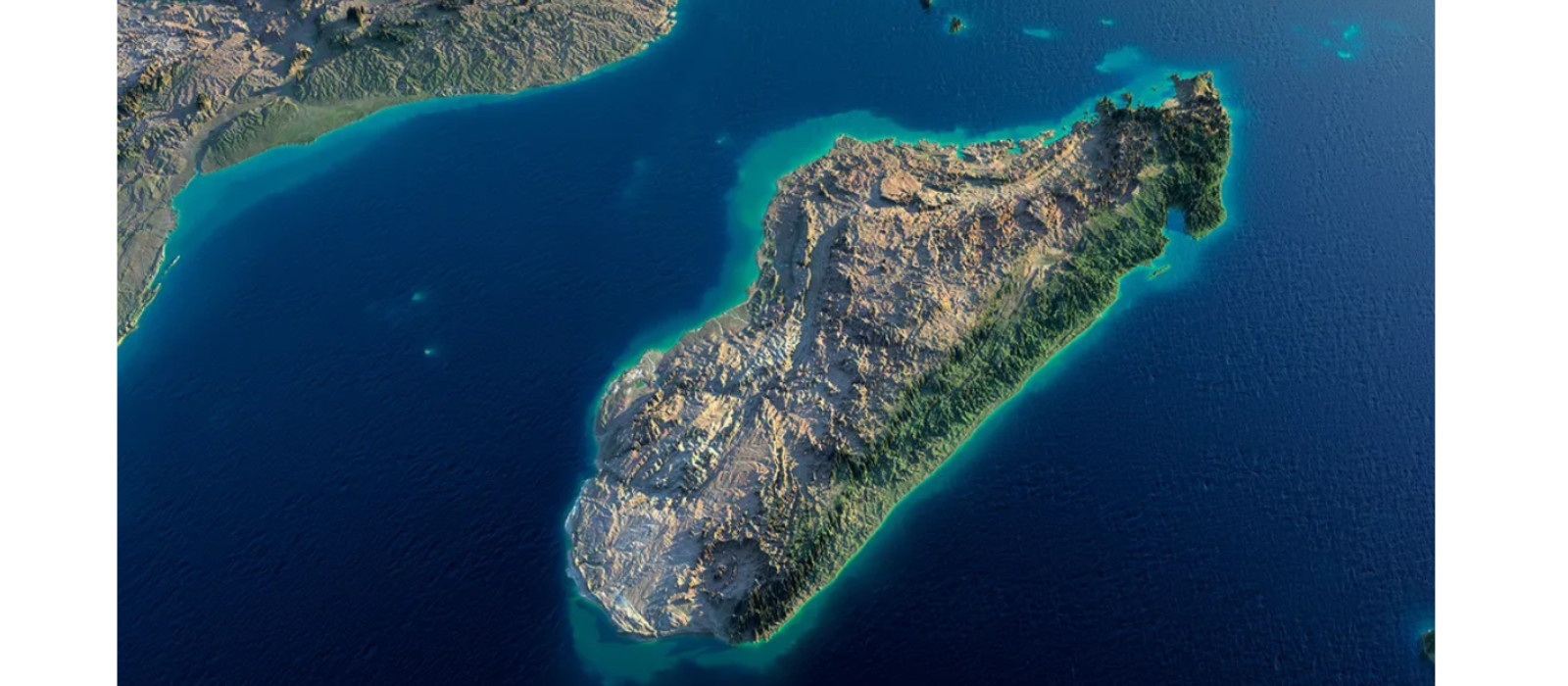
In the event of the closure of the Suez Canal for any reason, one of the options for trade is to route via the Cape of Good Hope and through the Mozambique Channel. The Mozambique Channel is approximately 1000 nautical miles long and 250 nautical miles wide at its narrowest point. It is situated between Madagascar in the East and East Africa on the West and carries 30% of global tanker traffic. Further, the discovery of a commercially viable gas reserve in the Rovuma Gas Basin in northern Mozambique, has considerably increased the strategic and commercial significance of the Channel and the region. Mozambique could dominate/ disrupt/ assist in ensuring freedom of navigation up to the South of Madagascar, even for those who do not use the Channel.
Rovuma Gas Basin and the Stakeholders
As already brought out, East Africa has emerged as the next global supplier of LNG. The Rovuma Basin offshore region, straddling north eastern Mozambique and south eastern Tanzania, contains over 100 trillion cubic feet of recoverable natural gas, making it one of the largest gas finds in the world.5 To tap the gas reserve, US energy giant Anadarko and the Italian energy giant ENI have invested heavily in the offshore gas fields in north east Mozambique. Thus, Mozambique will elicit more interest from the right quarters, and perhaps interference from the wrong quarters, geo- strategically speaking.
Growing Indian Interests
At present, Qatar is India’s largest source of Liquefied Natural Gas (LNG) contributing to 60% of India’s import.6 However, as the Strait of Hormuz is fraught with instability and there is always a fear of security of energy, the Rovuma Gas Basin provides India an alternate option. The other suppliers of LNG to India are Nigeria (12%) and Australia (5.3%).7 The Mozambique Channel is at present, free of piracy related issues and there are no choke points for the transition of gas to India with tankers taking seven days of transit from Mozambique to the ports of western India.
The Oil and Natural Gas Corporation Videsh Limited (OVL), Bharat Petroleum Corporation Limited (BPCL) and Oil India have purchased a 30% stake in Area 1 of the Rovuma Gas Basin (Map 2) from the Anadarko at a cost of more than $6.5 billion.8 Area 1 covers around 10,000 square kilometres and is situated at the northern most part of the Mozambique Rovuma Gas Basin. An additional $6 billion of investment is also in the pipeline.9 It is estimated that the Indian investment in the Mozambique energy sector constitutes one fourth of India’s foreign direct investment in Africa.10

Map 2: Rovuma Gas Basin11
China’s state-owned China National Petroleum Company (CNPC) has bought the Italian firm ENI’s Mozambique lease at a cost of $4.2 billion for a 28% stake.12 Total from France and USA’s ExxonMobil are also major investors. In order to avoid insurgency related disturbances in the region, Frances’ Total has shifted its logistical operations from North Mozambique to the French Territory of Mayotte Island, to the East of the Mozambique Channel. Japan and South Korea have also invested with USA’s Anadarko and Italian firm ENI’s holdings. Japanese energy major, Mitsui, holds a 25% stake with Anadarko and Korean Gas Corp (Kogas) has a 10% stake with ENI’s.13 The European Union has also shown interest in the region as it wants to have an alternative LNG source away from Russia.
Insurgency in Northern Mozambique
In recent years, Mozambique has turned into a major security concern. The Islamic insurgency in North Mozambique has the potential to disrupt traffic in the Channel. On 24 Mar 2021, Islamic State (IS) militants were involved in an ambush in Palma, a coastal town near the French petrochemical giant Total’s Mozambique LNG offshore gas project. The mode of operation and the resultant damage caused by the IS militants has showcased their growing sophistication and capability.14 Subsequent analysis has established that the insurgents attacked Total’s Palma site soon after the company resumed work after a two-month security reshuffle. The ambush also indicated an intelligence failure on the part of the Mozambique government.
Insurgency in North Mozambique started in 2017, within a few Muslim communities on the East African coast called the ‘Swahili Coast.’15 Islamic insurgents in the Cabo Delgado province have shown an increasedcapability in amphibious warfare. On 12 August 2020, they had seized the strategic seaport of Mocimboa da Praia, which is a port town in North Mozambique. This attack on Mocimboa da Praia may subsequently lead to piracy, as seen along the Horn of Africa, especially since 30 percent of the world’s tanker traffic transits through the Mozambique Channel. These insurgents have launched around 800 attacks in North Mozambique since 2017. This has resulted in displacing around 600,000 people and around 2,600 people have been killed in violent attacks. The region is now very unstable. There are indications that the command and control of the insurgents in Mozambique is from Puntland in Somalia.16 In 2020, these groups increased their activities, which also spilled over to neighbouring Tanzania.
Smack Track
The chief source of revenue for the insurgents comes from maritime drug smuggling. The infamous ‘Smack Track’ brings the heroin produced in Afghanistan to North Mozambique. From here, it gets transported to East African states, Europe and other destinations.17
State Response Status
The government in Maputo seems unable to address this issue adequately. Its debt-ridden economy finds itself in a military-funding deficit and consequent difficulties in countering the insurgency.18 A South Africa based think-tank, Institute for Strategic Studies (ISS), has commented that Mozambique is adopting the African playbook in responding to the insurgent attacks. It gives the analogy of Nigeria’s initial approach towards Boko Haram - initially denying that the threat existed, but whenever it went out of control, approaching the African Union (AU) for help.19 Due to the paucity of adequate resources, Mozambique has turned to foreign assistance. One such is Russia, which seeks a stake for Gazprom and Rosneft in the gas fields.20 Therefore, Russia provided private security contractors to address the problem of insurgency in Mozambique. In September 2019, up to 200 private security guards from the Russian Wagnor group were deployed to Mozambique with equipment and logistical support from the Russian Air Force and possibly, the Russian Navy as well.21 However, the mission could not be accomplished as it was ill-coordinated. The Wagner group operated in the Cabo Delgado Province and targeted the Ansar al-Sunnah insurgents from 2019, having access to UAVs and high-end military data analysis equipment. But owing to the environmental and climatic conditions prevailing in the region, the group had to change its tactics of operations.22
Other nations eyeing their gas reserves have also started assisting the government in tackling the insurgency. France is an Indian Ocean power with La Reunion and Mayotte islands in the South West Indian Ocean as its dominions. It operates two frigates and patrol boats from Reunion. However, it does not operate maritime patrol aircraft in the region and thus, has inadequate Maritime Domain Awareness (MDA). Portugal, the erstwhile colonial ruler of Mozambique, has agreed to send 1400 troops for training Mozambican forces. As President of the European Union, Portugal is also lobbying for deployment of an EU military mission in the region. USA has also shown interest in the region, but as yet nothing concrete has happened. In the fitness of things, it would be better to involve the organisations of Africa itself like AU, as they appreciate the ground realities better.
India is a security partner of Mozambique. It has conducted joint patrols in association with the French Navy in the Mozambique Channel since 09 December 2019, staging a P8I maritime reconnaissance aircraft through Reunion. India is also reportedly in the process of constructing an airstrip in the Agalega islands of Mauritius, which is situated in the northern end of the Mozambique Channel, which could facilitate MDA and reactive measures.23
Additionally, the South African Navy has been patrolling the Mozambique Channel since 2011. It has shown intent to set up a forward operating base at Richards Bay in northern South Africa. This would offer South Africa easy access to the Mozambique Channel. But as of April 2021, no specific progress has been reported about this.
As a part of soft diplomatic outreach, India has signed an MoU with Mozambique in 2016 for the production of pigeon peas with technical know-how being provided by India. India has committed to procuring 200,000 tonnes of pigeon peas in 2020-21, twice the amount ordered in 2016-17. Mozambique’s neighbour, Kenya too, has been a traditional partner of India and is home to an Indian diaspora of 80,000. India has actively engaged with several African nations, but must adopt a more future-oriented foreign policy in East Africa. The region as a whole has an increasing importance for India due to its economic, political and geo-strategic attributes. Within this canvas, the Mozambique Channel becomes even more relevant.
Need for Greater Activism from SADC, AU and Quad-Plus
For a long-term solution to the problem of insurgency, the Southern African Development Community (SADC) and the AU should take active part as these are the organisations who know and understand the problem better. They must address local grievances, which militants tend to leverage to radicalise youth. The present need is to help the government in Maputo to regain control of the security situation. Therefore, the AU’s Peace and Security Council (PSC), through SADC, should be a critical player. SADC has 16 member countries, including South Africa, which can be mobilised appropriately for ground, air and naval surveillance. Further, the Quadrilateral Security Dialogue Plus (Quad-plus) countries, Japan, USA, India, Australia and France, could take steps to roll back insurgent groups, like the Al-Sunnah, from converting Mozambique and its Channel into another Somalia. India’s operational bandwidth could be enhanced with the logistical arrangements with France. India and France could agree to provide support to Indian ships operating in the Western Indian Ocean and along the Eastern coast of Africa through bases in the Reunion and Mayotte islands.
During the visit of the US Secretary of Defence, Lloyd Austin, to India on 20 March 2021, India’s defence minister remarked that India and USA must “pursue enhanced cooperation between the Indian military and the US Indo-Pacific Command, Central Command and Africa Command.”24 Mr Austin also advocated greater collaboration in the Western IOR in addition to the Indo-Pacific region as a whole. This signals the importance being given by both the countries to the Western Indian Ocean Region.
Although India has established an Indian Ocean Division in the Ministry of External Affairs in 2016, insufficient importance was given to the Western IOR and Eastern Africa. It was only in 2019, that Madagascar and Comoros were included in the Indian Ocean Division. To put the matter in perspective, China has steadily charted a path for engaging the Western Indian Ocean and East Africa by opening a naval base in Djibouti in 2017 and consistently engaging with Sri Lanka in the East, to the Comoros Islands in the West thereby, spanning the entire Indian Ocean Region. Therefore, it is incumbent upon India to leverage her association with USA and France, and play a more constructive role in the Mozambique Channel.
Conclusion
The recent closure of the Suez Canal brought to light the susceptibility of the regular international shipping lanes and the alternative significance of the Mozambique Channel to carry on with trade. However, the Mozambique Channel may itself not remain free from potential disturbances. The region is fraught with Islamic insurgency, possible piracy and drug peddling on a large scale. Since India has invested heavily in the Rovuma Gas Basin, the Indian Navy, as the ‘first responder’ and a ‘preferred security partner’ in the region, can ill afford to be a mere spectator to the developments in the region. As has been discussed earlier, India has played its cards quite well and the need now is to play them more vigorously and emphatically. India has tremendous geo-strategic and geo-economic stakes in the Mozambique Channel and must work in that direction.
Endnotes
-
“Navigation Statistics,” Suez Canal Authority. https://www.suezcanal.gov.eg/English/Navigation/Pages/NavigationStatistics.aspx, accessed 07 April 2021.
-
Llyod’s List. https://lloydslist.maritimeintelligence.informa.com/, accessed 07 April 2021.
-
Samy Magd, “Maritime Traffic Jam Grows Outside Blocked Suez Canal,” The Denver Post, 26 March 2021. https://www.denverpost.com/2021/03/26/maritime-traffic-jam-blocked-suez-canal/, accessed 03 June 2021.
-
“Mozambique Channel and the African Continent,” Research Gate, https://www.researchgate.net/figure/Mozambique-Channel-and-the-African-continent-Location-of-the-study-area-is-shown-by-a_fig1_248976103, accessed 03 June 2021.
-
Louis Bergeron, “The Forgotten Chokepoint: The Mozambique Channel’s Rich Past and Bright but Insecure Future,” Center For International Maritime Security, 25 December 2014. https://cimsec.org/forgotten-chokepoint-mozambique-channels-rich-past-bright-insecure-future/, accessed 01 March 2021.
-
Dipanjan Roy Chaudhury, “Qatar Envoy Sums up his Country's Deepening Ties with India,” The Economic Times, 28 March 2021. https://economictimes.indiatimes.com/opinion/interviews/qatar-envoy-sums-up-his-countrys-deepening-ties-with-india/articleshow/81734812.cms?utm_source=contentofinterest &utm_medium=text&utm_campaign=cppst, accessed 14 April 2021.
-
Gatwiri M’mbijiwe, “India Makes Multi-Billion Dollar Gas Investment in Mozambique,” Indian Ocean SWA Articles, 01 November 2017. https://www.futuredirections.org.au/publication/india-makes-multi-billion-dollar-gas-investment-mozambique/, accessed 14 April 2021.
-
Ibid.
-
M’mbijiwe, Op Cit., n.7.
-
M’mbijiwe, Op Cit., n.7.
-
Rovuma Gas Basin, The Telegraph Online. https://www.telegraphindia.com/business/psu-trio-bet-big-on-african-gas/cid/1451316, accessed 14 April 2021.
-
Arijit Barman, “India, China Battle it Out in Mozambique Gas Fields to Secure Energy Assets,” The Economic Times, 15 March 2013. https://economictimes.indiatimes.com/industry/energy/oil-gas/india-china-battle-it-out-in-mozambique-gas-fields-to-secure-energy-assets/articleshow/18979790.cms?from=mdr, accessed 14 April 2021.
-
Bergeron, Op Cit., n.5.
-
Brian Gicheru Kinyua, “Mozambique's Growing Insurgency May Pose Threat to Shipping,” The Maritime Executive, 04 May 2021. https://www.maritime-executive.com/article/ mozambique-s-growing-insurgency-may-pose-threat-to-shipping, accessed 14 April 2021.
-
David Brewster, “The Mozambique Channel May Become the Next Maritime Security Hotspot,” The Maritime Executive, 26 March 2021. https://www.maritime-executive.com/ editorials/the-mozambique-channel-may-become-the-next-maritime-security-hotspot, accessed 03 June 2021.
-
David Brewster, “The Mozambique Channel is the Next Security Hotspot,” The Interpreter, 19 March 2021. https://www.lowyinstitute.org/the-interpreter/mozambique-channel-next-security-hotspot, accessed 14 April 2021.
-
Ibid.
-
Brian Gicheru Kinyua, “Mozambique's Growing Insurgency May Pose Threat to Shipping,” The Maritime Executive, 04 May 2021.https://www.maritime-executive.com/article/mozambique-s-growing-insurgency-may-pose-threat-to-shipping, accessed 14 April 2021.
-
Seun Bamidele, “Regional Approaches to Crisis Response, the African Union (AU)Intervention in African States: How Viable Is It?,” India Quarterly vol. 73, no. 1 (2017), 114-128.www.jstor.org/stable/48505534, accessed 03 June 2021.
-
Francisco Almeida dos Santos, “War in Resource-rich Northern Mozambique-Six Scenarios,” CMI Insight no. 2, May 2020. https://www.cmi.no/publications/file/7231-war-in-resource-rich-northern-mozambique-six-scenarios.pdf, accessed 03 June 2021.
-
Brewster, Op Cit., n.16.
-
Mustapha Dalaa and Halime Afra Aksoy, “Russia's Wagner Group Reportedly Deployed in Africa,” Anadolu Agency Report, 05 March 2021. https://www.aa.com.tr/en/world/russias-wagner-group-reportedly-deployed-in-africa/2165414, accessed 03 June 2021.
-
“India to Help Develop Airstrip in Agaléga,” The Economist (Intelligence Unit) Mauritius, 31 October 2018.http://country.eiu.com/article.aspx?articleid=1647290148&Country=M auritius&topic=Politics &subtopi_1, accessed 03 June 2021.
-
Darshana M Baruah, “It is Time to Reimagine the Indian Ocean,” Hindustan Times, 30 March 2021. https://www.hindustantimes.com/opinion/it-is-time-to-reimagine-the-indian-ocean-101617111891839.html, accessed 15 April 2021.
