


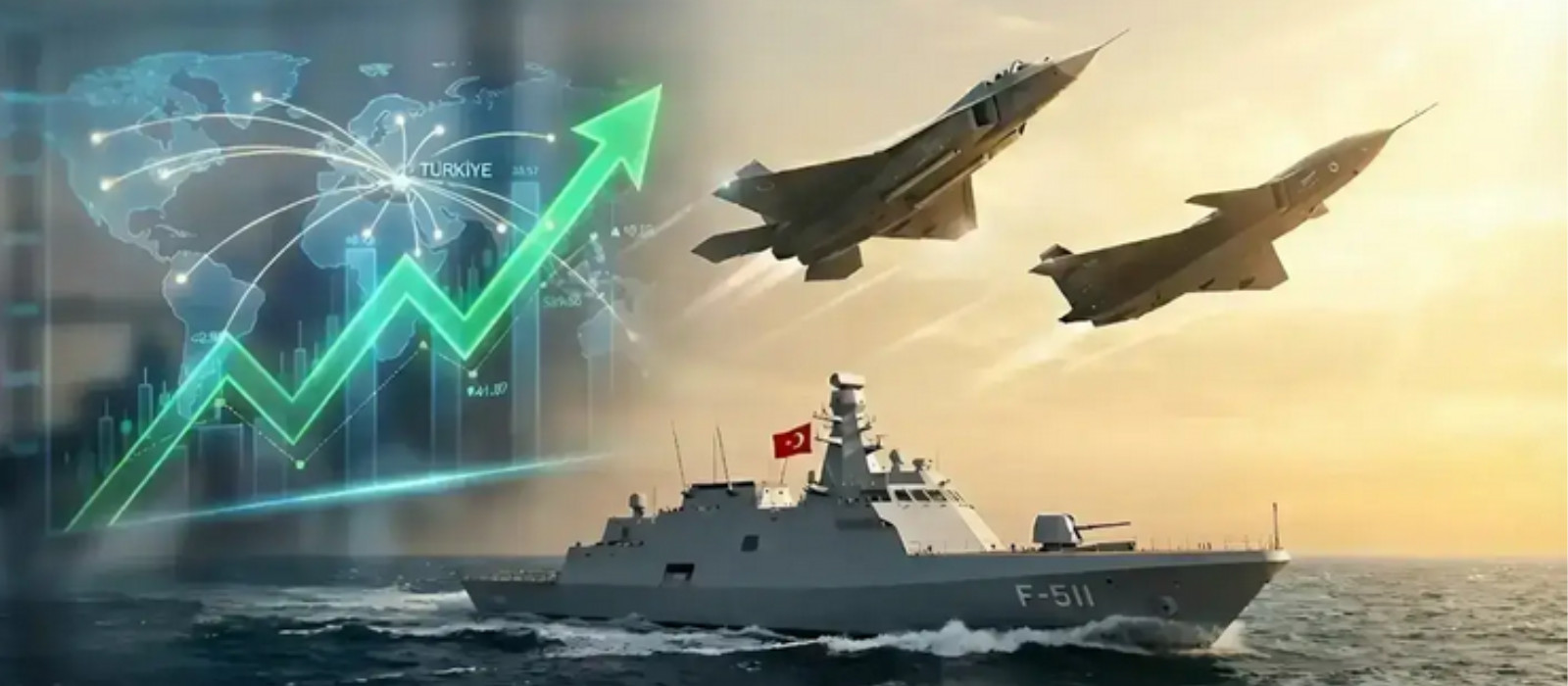


Abstract:This paper dissects the remarkable ascension of Turkiye as a prominent player in the international defence market. By weaving a historical tapestry that connects the medieval past to the contemporary geopolitical landscape, the analysis sheds light on the intricate relationship between India and Turkiye. Despite flourishing bilateral trade, the relationship is not without its occasional geopolitical strains. A central pillar of Turkiye's defence export success story is its prowess in naval shipbuilding, exemplified by the widely admired MILGEM Warship. This paper delves into the multifaceted factors propelling Turkiye's defence exports to unprecedented heights. Leading companies like ASELSAN, TAI, and Roketsan have carved a niche for themselves, with the Bayraktar TB2 drone emerging as a potent symbol of this achievement. Turkiye's defence exports are lauded for their marriage of affordability, technological innovation, combat effectiveness, and a strategic utilization of mainstream and social media. As India strives to amplify its own defence exports, a nuanced analysis of Turkiye's trajectory offers valuable insights. The paper underscores the importance of fostering collaboration, prioritizing a robust defence strategy, and embracing sustainable practices. The meteoric rise of Turkiye's defence exports serves as a potent beacon for India's burgeoning defence industry, illuminating the path towards achieving greater global prominence .
Introduction
India and Turkiye are two republics that have made significant advancements in technology and economy in the 20th Century. They also share a historical connection dating back to the medieval era.1 The history of India and Anatolia (modern-day Turkey) boasts a rich tapestry woven over millennia. Economic and cultural threads connect these regions as far back as the Vedic age, predating 1500 BCE. Trade flourished, with the Chola Emperor of Tamilakam even gifting a colony to the Seljuk Sultanate of Rum in 1212. Diplomatic ties continued to strengthen, with exchanges of missions between Ottoman Sultans and the Muslim rulers of the Indian subcontinent. This enduring connection extended into the religious sphere, with Indian Dervishes establishing Sufi lodges (tekkes) throughout the Ottoman Empire from the 15th to 19th centuries.
During the Cold War, India and Turkiye had different alignments in international politics. India adopted a stance of non-alignment and maintained close relations with the Soviet Union, while Turkiye pursued a policy of Westernization2 and aligned itself with the United States and Western European states. In recent years, the global political landscape has changed and India's relations with Turkiye have become more complex.3 India is now concerned about the growing proximity and cooperation between Turkiye, Azerbaijan and Pakistan. India has decided to provide weapons to Armenia, which is engaged in a prolonged armed conflict with Azerbaijan.4 This is a significant development, as it marks a shift in India's foreign policy in the region. India is also wary of Türkiye’s opposition to the proposed India-Middle East Economic Corridor (IMEC) within the framework of the G20. The corridor aims to promote economic cooperation and integration between India, Middle East and Europe, but Turkiye has concerns about the potential impact on its own economic interests and geopolitical influence in the region.5
Economic & Trade Relations. Bilateral trade between India and Turkiye has grown steadily in the past decade, reaching US$10.71 billion in 2022. India's exports to Turkiye amounted to US$5.44 billion, while its imports from Turkiye stood at US$5.27 billion. The main commodities exported by India to Turkiye include gems and jewellery, machinery, iron and steel, and chemicals. The main commodities imported by India from Turkiye include machinery, transport equipment, iron and steel, and plastics. Indian investment in Turkiye has increased from US$50 million in 2012 to US$126 million in 2022.6 The main sectors attracting Turkish investment in India are infrastructure, energy, and manufacturing. The Indian investments in Turkiye are mainly automotive, textiles, and food processing sectors. India and Turkiye have also been cooperating in a number of other areas, such as tourism, education, and culture. In 2018, the two countries signed a Comprehensive Economic Partnership Agreement (CEPA) which is expected to boost trade and investment.7 Economic and trade relations between India and Turkiye are expected to continue to grow in the coming years. This is due to the strong economic fundamentals of both countries, the growing connectivity between them, and the increasing interest of companies from both countries investing in each other's markets.8 However, underlying geopolitical issues and friction between New Delhi and Ankara lead to certain events which mar the relations in certain areas. Turkish naval shipbuilding company TAIS and its Anadolu Shipyard eventually were removed from the contract as design collaborator in building the five Fleet Support Ships (FSS) for the Indian Navy as a signal to Ankara for its regressive stance towards India’s geopolitical issues.9
Economy vs Defence Exports - A Paradox. Despite India’s larger economy than Turkiye, it is observed that India's defence exports are relatively minuscule in comparison as shown in the table below. This disparity raises concerns and prompts an examination of the underlying factors that contribute to India's limited success in defence exports. India, as the world's fifth-largest economy, possesses a robust industrial base and capabilities but lacks the same in terms of defence complex. It has a diverse range of defence products, including aircraft, naval vessels, missiles, and small arms, along with research and development infrastructure. However, despite this potential, India's defence exports have not reached the same scale as that of Turkiye.
-
Economy. India is the world's 3rd largest economy by nominal GDP and the 4th largest by purchasing power parity. The Indian economy is growing at a rapid pace, with an average growth rate of 7% per year over the past decade except during the COVID period. Turkiye is the world's 19th largest economy by nominal GDP and the 18th largest by purchasing power parity. The Turkish economy is also growing, with an average growth rate of 5% per year over the past decade.10
-
Defence Exports. India’s defence exports have seen relatively modest figures, amounting to approximately $172 million in 2022. In stark contrast, India has a significant defence budget, surpassing $70 billion in 2022. On the other hand, Turkiye has achieved greater success in defence exports, generating over $4.4 billion in 2022.11 The factors contributing to this discrepancy can be attributed to various aspects, which will be examined further.
Comparison of Defence Exports
The status of defence exports in the past of the two countries are compared in the table below.

Table 1: Comparison of Defence Exports
(Source. Trends in International Arms Transfers, 2023 report by SIPRI)
Turkiye’s much greater defence hardware exports could be due to several factors, including Turkiye's membership in NATO, its long history of exporting defence products, and its diversified defence industry, strengthening diplomatic ties, exploring collaborative ventures with foreign firms, and leveraging economic strength.12 By investing in its defence industry and developing a more diversified product range, enhancing defence diplomacy and regional influence, India could increase its defence exports and become a more competitive player in the global defence market commensurate with its GDP standing.
Furthermore, Turkiye has successfully forged strong defence partnerships and collaborations with various countries, enabling it to penetrate international defence markets more effectively. These partnerships, along with Turkiye's strategic location, have played a crucial role in enhancing its defence exports. India, on the other hand, may need to strengthen its diplomatic ties and explore more collaborative opportunities to increase its defence exports.
Indian Defence Exports Target
India has set a goal of exporting $5 billion worth of defence products by 2025 and $10 billion by 2030.13 To achieve this goal, India may need to emulate the Turkish military industrial complex. The challenges that India needs to overcome could be resolved by exploring the origins and rise of the Turkish military-industrial complex (MIC). The article aims to throw light on the Turkish MIC to provide guidelines for India in accelerating its defence exports.
Macro Causes for Growth of Turkish MIC and Defence Exports
-
Geopolitical Concerns. Türkiye is located in a strategically important region, with bordering to Syria, Iraq, Iran, and the Black Sea. It has also been involved in a number of conflicts in recent years, including the Syrian Civil War and the fight against ISIS and Kurds. This has led to a growing demand for military hardware and technology, which the Turkish defence industry is increasingly able to provide. The rise of China and Russia as military powers as both are rapidly modernizing their militaries, and this is creating new challenges for Turkiye. Turkiye is seeking to develop its own military capabilities in order to hedge its bets.
-
National Security Concerns. The Middle East is a region that is constantly in turmoil, and there is a growing demand for defence products in the region. It has long been an attractive market for defence exports over the past few decades, in fact. Turkiye is well-positioned to capitalize on this demand, given its strategic location and its growing defence industry. The growth of Turkiye's military-industrial complex has a number of implications for the country and the region. It is likely to lead to increased military spending by Turkiye, which could strain the country's economy. It could also lead to increased tensions between Turkiye and its neighbours, as Turkiye seeks to assert its military power in the region.
-
Economic Incentives. The Turkish government has been providing generous subsidies and tax breaks to the defence industry, in order to boost its growth and create jobs. This has made it more attractive for foreign companies to invest in Turkiye, and has helped to create a more competitive and innovative defence industry. The Turkish defence industry is a major employer and source of export revenue.
-
National Pride. There is a strong sense of national pride in Turkiye, and the development of a strong defence industry which is seen as a way to boost the country's image and status in the world. The Turkish government has also been using the defence industry to promote its own political and economic interests.
-
R & D. The Turkish defence industry's significant investment in research and development has resulted in the creation of innovative products like the Bayraktar TB2 drone. This advanced drone has been effectively utilized in recent conflicts, showcasing Turkiye's technological prowess. The graph below is testimony to the direct relation of R&D expenditure to higher defence innovation and exports.

Fig 1: Defence and Aviation Sector R&D Expenditure (Million $)
(Source. “An Economic-Political Map of the Turkish Defense Industry” 2022 report by İsmet Akça and Barış Alp Özden)
Turkiye’s Defence Industry Capabilities by Domain
Air & UAVs. The country's aerospace capabilities are focused on areas such as the design and production of aerospace structural components, manufacturing services (including whole platforms under license), and the development of satellite systems and UCAVs. However, Turkiye still relies on foreign suppliers for technologies related to propulsion systems. The Turkish aerospace sector has been shaped by joint ventures with foreign partners. Turkish Aerospace Industries and TEI were established as joint ventures with Lockheed Martin to meet local participation requirements forthe F-16 program. Alp Aviation was formed as a joint venture between Sikorsky and Alpata Group of Turkiye. Kale Kalip has joint ventures with Pratt & Whitney and Rolls-Royce to produce engine components for the F-35 and TF-X fighter aircraft.14
Turkish companies have also been involved in offset obligations for military and commercial aircraft programs. However, Turkiye's acquisition of the Russian S-400 air defence system led to the suspension of F-35 deliveries and its removal from the F-35 supply chain.15 In the UAV sector, Turkish companies have developed armed variants of UAVs, such as the Akinci, a 4.5-tonne turboprop UAV capable of carrying missiles. Baykar Technologies has also achieved success with the domestically produced Bayraktar TB2 UCAV, selling it to 16 countries and accumulating 420,000 flying hours. This UCAV has been effective in combat situations, destroying advanced anti-aircraft systems, artillery systems, and armoured vehicles.16

Fig 3: Defence and Aviation Exports Turkiye17 (Source. SSB, 2019-2023 Stratejik Plan [Strategic Plan], 2020)
Land. Turkish land systems capabilities are relatively advanced, particularly the wheeled armoured vehicles they make. The country has secured many direct platform exports in recent years, including the Otokar Arma AFV and the FNSS Pars III. Turkish companies are also developing new weaponry and collaborating with foreign companies to integrate Turkish technologies onto foreign platforms. Turkiye is a major exporter of armoured vehicles to regions such as the Middle East, Africa, Asia, and Latin America. Turkiye has historically relied on foreign sources for heavy tracked vehicles. Its near-term strategy is to procure all land platforms through local industry and further develop system integration competencies in this domain.18
Sea. The Turks have long prioritized the development of indigenous ship construction and repair capabilities. Key shipbuilding yards in Turkiye include Dearsan, Istanbul Denizcilik, RMK Marine, and SEDEF. Some yards, like Naval Forces Command Izmir Naval Shipyard, Golcuk Naval Shipyard, and Istanbul Naval Shipyard, are under direct military control, while others, such as Dearsan and RMK Marine, are privately owned. Turkiye has a roadmap in place that covers naval construction programs until 2020-25. While RMK and Dearsan yards were chosen to meet complex warship requirements, the other five yards were expected to compete for the construction of afloat support and amphibious vessels. The ultimate goal for Turkiye is to be capable of performing the design and system integration of all naval ships in local shipyards using indigenous capabilities. In October 2019, Turkiye unveiled a domestic consortium to build six new MiLDEN submarines by 2040, based on a German design. The export variant of MILGEM corvettes is discussed subsequently in this paper.
C4ISR. Turkiye has made significant progress in developing its C4ISR (Command, Control, Communications, Computers, Intelligence, Surveillance, and Reconnaissance) capabilities. This has been achieved through offset-related joint ventures with international partners, a focus on niche areas with export potential, and domestic research and development initiatives. Many Turkish companies have emerged through offset-related joint ventures, such as Ayesas (40% owned by L3 Technologies, USA and 60% by Vestel) and Havelsan Teknoloji Radar Sanayi ve Ticaret (initially a joint venture between Thales, France and Havelsan).19 These companies have a range of competencies in various C4ISR domains, including electro-optical systems, UAV technologies, wireless sensor systems, software, data communication interfaces, radar systems, and modelling and simulation systems.
Turkiye Aerospace & Defence Market Leaders. Seven Turkish defence companies – ASELSAN, Turkish Aerospace Industries (TAI), BMC, Roketsan, Defence Technologies Engineering and Trade Inc. (STM), FNSS and Havelsan are in 48th, 53rd, 89th, 91st, 92nd, 98th and 99th place on the World’s Top 100 Defence Companies list.20 The two most important defence export which bring a large chunk of revenue include the following.
-
Bayraktar TB2 Drone. This drone manufactured by the Turkish firm Baykar has been lauded as a grand success after its use in Ukraine. Baykar is now developing a new air-to-air combat drone, the Kizilelma.21 Turkiye’s offerings to the UAV sector are emerging as challengers to the existing advanced western players in the market.
-
MILGEM Warship. The class, which incorporates a number of variations from Turkiye’s ‘Ada’ variant, is known as the Babur class in Pakistan Navy. Also, a December 2020 contract specified the construction of two MILGEM (‘Ada’) class corvettes for Ukraine, along with unmanned combat aerial vehicles (UCAVs), in a deal worth a reported USD 1 Billion. STM is the prime contractor, with the lead unit to be built in Turkiye and the second unit at Okean Shipyard in the Ukraine.22,23 Both corvettes are scheduled to be delivered in 2025, if shipyard operations are not interrupted by the ongoing war with Russia.
-
From the export perspective, Turkiye’s choice of the corvette as an entry offering is a considered one. The corvette typifies a smaller and simpler ‘starter’ surface combatant that is particularly suitable to many prospective buyers on three counts.
-
Corvettes of 3000tonnes represent an evolutionary rather than revolutionary step for navies expanding fleet structures up from local postures to coastal and longer reach.
-
Corvettes are a suitable first step for local yards to secure workshare and delivery for a parent design requirement, and
-
Corvettes are more accessible (in cost, sustainability and future resource commitments) for budget-constrained customers such as Ukraine, or Pakistan. This list can be expanded to include other countries for developing potential customers by Indian MIC. India should aggressively pitch its Kamorta class corvette and the Arnala class SWC to emerging navies around the world.
-
Factors Driving Turkish Weaponry Success
-
Technological Innovation. Turkish defence companies have been investing heavily in research and development and are now producing some of the most advanced weapon’s systems in the world. For example, Companies like ASELSAN (Aselsan Elektronik Sanayi veTicaret A.Ş.) are developing advanced electronic warfare suites that can disrupt enemy communications and radars. These systems are often more cost-effective than Western counterparts, making them attractive to budget-conscious militaries.
-
Affordability. Turkish weapons are often more affordable than those produced by other major defence powers. This makes them attractive to countries that are looking to modernize their militaries without breaking the bank.
-
Partnership and Reliability. Turkish defence companies have been very successful in exporting their products to countries around the world. This is due in part to the high quality of Turkish weapons, but also to the fact that Turkiye is seen as a reliable partner.
-
Performance in Combat. Turkish weapons have proven to be effective in combat. This has been demonstrated in a number of recent conflicts such as Armenia-Azerbaijan, Syrian conflict, Libyan conflict, Russia – Ukraine war etc., and has helped to boost the reputation of Turkish defence companies.
-
Social Media Influence. Turkish defence manufacturers use social media to go viral and reach a global audience via YouTube channels, Twitter (X) etc. They create visually appealing content that highlights the capabilities of their weapons, partner with social media influencers, and run contests and giveaways to generate excitement and interest. For example, BMC, a Turkish defence company that produces armoured vehicles, partnered with military bloggers and YouTubers to promote its products. These influencers shared videos and photos of themselves testing and reviewing BMC's vehicles, which helped to generate excitement and interest among their followers all over the world. These activities have helped to create a sense of community around Turkish defence products and make them more appealing to potential customers in foreign nations.
External Catalysts for Rising Defence Exports
The external factors which have catalysed the rising defence exports are elaborated below.
-
Promotion and Trust. Türkiye actively promotes its defence products to international buyers through participation in defence trade fairs and the establishment of defence export offices worldwide. Turkiye's close ties with NATO have provided an advantage to its defence industry. NATO countries trust the quality of Turkish defence products, as they meet NATO standards. Additionally, NATO nations are open to technology transfer deals with Turkiye, enabling collaboration and the development of new defence products.
-
Middle East Demand. The political instability in the Middle East has created a demand for reliable defence partners, leading to heightened interest in Turkish defence products. Countries in the region are actively seeking defence equipment, and Turkiye has emerged as a leading option due to its proven capabilities and strategic location.
-
Defence Offsets. The impact of offset demands on Turkiye's defence industrial base cannot be overstated. For instance, Turkish Aerospace began as a joint venture attached to the F-16 program. Turkiye has pursued a policy of maximizing local involvement, leading to a steady increase in the percentage of defence construction and development carried out domestically. Turkiye's ability to compete internationally without the support of foreign contractors is limited to areas such as land systems and naval patrol craft.24
-
Exports Facilitation. Turkey's defence industry benefits significantly from offset programs. These programs require foreign contractors, winning defence contracts, to invest in Turkish companies (61% of 2020 exports) and promote Turkish defence exports.25 This policy aims to:
-
Boost Exports. Reduce reliance on foreign imports and develop lower-tier Turkish suppliers.
-
Increase Local Participation. Raise domestic content in defence projects (minimum offset quota and local contractor obligations).26
-
Reduce Bureaucracy. Streamline processes for foreign companies.27
-
However, integrating numerous small Turkish firms (SMEs) into supply chains has been challenging for foreign contractors due to their developing capabilities. On the other hand, Russian investments in Turkish defence companies (e.g., BMC, RMK Marine, Aselsan) have bolstered Turkey's military capabilities in areas like armoured vehicles, naval vessels, and electronics. Additionally, Russian investment has strengthened Çolakoğlu Metalurji, a key steel supplier to the Turkish defence industry.
Recommendations for Indian MIC
The Turkish military industrial complex provides valuable takeaways for India in terms of developing a self-reliant defence industry. India can learn from Turkiye's focus on improving systems, fostering partnerships with foreign companies, and prioritizing the development of its indigenous defence industry. Some actionable points which emerge from studying the Turkish MIC have been elaborated below:
-
Transfer of Technology Clause. Encouraging joint projects with a commitment for technology transfer would facilitate independent and indigenous production in the future. By partnering with foreign companies that specialize in defence manufacturing, India can gain access to advanced technologies and expertise. This collaboration would not only enhance the capabilities of defence manufacturers but also promote knowledge sharing and transfer, leading to self-reliance in production. For instance, joint projects with technology transfer agreements could focus on areas such as aerospace manufacturing or naval shipbuilding. With the west engulfed in economic recession, this is an opportune time to work out Transfer of Technology (ToT) deals on certain products which may not normally be accommodated as the western economies are desperate to export defence products. The close relations between India and USA should be utilized to gain collaborative/ joint ventures with US giants such as Lockheed Martin, Grumman Raytheon, L3, Northrop etc.
-
Sub-components and Subsystems. Western nations might be more willing to offer ToT deals on specific sub-components or subsystems related to jet engines and submarine propulsion. This could involve things like advanced materials for turbine blades, specialized control systems, or improved sensor technologies.
-
Non-Core Military Technologies. There might be opportunities for ToT deals on technologies with both military and civilian applications. For example, deals on advanced manufacturing techniques or encryption software could be more realistic.
-
-
Core jet engine and submarine propulsion technology.
-
Advanced Materials. Armor technology, composite materials for aircraft construction, and specialized materials for extreme environments are all crucial for modern defence. ToT deals could involve knowledge transfer on production methods or material properties.
-
Directed Energy Weapons. While still in their early stages, directed energy weapons like lasers have the potential to revolutionize warfare. ToT deals could involve high-powered laser components, targeting systems, or beam control technology.
-
Cybersecurity. Cyberwarfare is a growing threat, and robust cybersecurity is essential for national defence. ToT deals could involve secure communication protocols, intrusion detection systems, or advanced encryption technologies.
-
International Standards and Certification. The success of the "Made in India" brand requires rigorous testing and trials of Indian defence products as per international standards. To achieve this, an independent nodal body should be created to meet the wide-ranging requirements of trials, testing, and certification. This body can coordinate with defence laboratories and research organizations to ensure indigenous products are thoroughly tested and qualified. The nodal body could collaborate with international testing agencies to certify the quality and performance of Indian defence equipment. Here are some specific examples of organizations involved in defence equipment testing, although they might not directly certify any weapon for anyone.
-
NATO Standardization Agency (NSA). Develops and maintains standards for interoperability of military equipment among NATO member states. They wouldn't directly certify weapons, but their standards play a crucial role in equipment evaluation.
-
American Society for Testing and Materials (ASTM). Develops technical standards for various materials, products, systems, and services, including some relevant to defence applications. While not specific to weapons, their standards contribute to the quality and performance of military equipment.
-
International Organization for Standardization (ISO).
-
-
Finance and Contracts. India should take steps to encourage private sector participation in defence manufacturing. This can be done by establishing a Special Purpose Vehicle (SPV) to facilitate collaboration between the government and private enterprises, and by providing a robust framework and support to the private sector.
-
Production Linked Incentives. Under the PLI scheme, the government provides financial incentives to companies (Indian or Foreign) that set up manufacturing units in India and meet certain production targets. This has helped to attract significant investment in the microchip industry and is expected to lead to a significant increase in domestic production of microchips in the coming years. The same approach could be applied to the defence production sector. The government could offer PLI incentives to companies that manufacture defence equipment in India, such as next generation aircraft engines, warship gas turbines, UCAVs advanced submarines tech, and missiles. This would help to attract investment from both domestic and foreign companies and would lead to a significant increase in domestic production of defence equipment and encourage foreign buyers to show interest in importing such hardware.
-
Media. Utilizing news media and social media platforms to promote Indian weapons in global information channels could generate positive exposure. Conflict zones could be provided with weapons on subsidized rates, enabling field testing and garnering publicity. This approach would not only contribute to the strategic goals of indigenous defence production and self-reliance, but also establish a strong reputation for Indian defence systems internationally. Promoting success stories and highlighting the effectiveness of Indian weapons through media platforms would enhance their marketability.
-
Foreign Investment. Attracting Foreign Direct Investment (FDI) and Foreign Institutional Investment (FII) in the defence sector can be accomplished by making it a lucrative and desirable investment option. The government can offer incentives such as tax benefits, streamlined regulatory processes, and relaxed FDI/FII norms specifically tailored for the defence sector. By creating an investor-friendly environment and showcasing the potential for returns on investment, India can attract international investors.
-
MRO Sector. The Indian Maintenance, Repair, and Overhaul (MRO) industry faces challenges in breaking into existing value chains involving Original Equipment Manufacturers (OEMs), globally established MROs, and foreign operators. To overcome these obstacles, incremental steps can be taken, such as focusing on lower Intellectual Property control MRO segments through joint ventures. Gradually shifting towards higher-end value chains in aviation and naval ships will enhance the competitiveness and capabilities of the Indian MRO industry. L&T signing agreement with USN for voyage repair of ships is a good breakthrough.28 The naval industry needs to become a leader in MRO in IOR by sustained efforts.
-
Exploring New Markets. Conflicts in Africa are not limited to Ethiopia and Sudan. Several other countries are currently caught in conflict traps, including South Sudan, Burundi, Cameroon, Chad, the Democratic Republic of Congo, Somalia, the Central African Republic, Burkina Faso, Niger, and Nigeria etc. The Indian Defence market should look to provide its arms exports to non-traditional markets which are in perpetual conflict zones like Syria, Yemen, Iraq and African states which are mentioned above. Another untapped market is South American countries like Brazil, Columbia, Peru, Chile etc which are emerging economies looking to improve their militaries. Also, countries of Eastern Europe could also be looked as potential customers such as Slovakia, Hungary, Georgia, Serbia and Bulgaria. Inter alia, it could further peace through improving stability in some of these states.
-
Supply Gap Opportunity. Turkish defence manufacturers have confirmed that they are booked for the next several years with orders to help replenish NATO stockpiles. Indian industries should focus on manufacturing of these products to fulfil the supply gap and use this opportunity to make inroads into the Europe and Eurasian markets.
-
Developing and Tapping Expertise. Individuals like Abraham Karem, who played a key role in developing the Predator drone for the US, and Selçuk Bayraktar, co-founder of Baykar and a leading figure behind Turkey's TB2 drone program, demonstrate the transformative power of individual talent in defence innovation. To cultivate such talent in India, it's crucial to identify promising engineers from premier institutions and invest in their advanced studies, particularly in fields relevant to defence technology development and production.
-
Training as an Export. Training as an export is a concept that involves providing training and simulation services to other countries in the defence sector. India has a large pool of skilled professionals in the defence sector, who can offer their expertise and experience to train the defence personnel of other countries. India can export its training and simulation services to other countries to enhance their capabilities, skills, and readiness in various domains of defence. This can be done through a variety of channels, such as setting up training centres in other countries, providing online training courses, or offering consultancy services. By expanding the range of courses and increasing the number of trainees, India could position itself as a leader in defence training to countries who do not have the requisite infrastructure and experience to train their personnel.
Conclusion
India has made significant efforts to develop its defence industry since independence. In recent years, the industry has developed at a rapid pace, and the country is now closely following global technological developments. A strong defence manufacturing sector is becoming a strategic necessity for India, given the increasing geopolitical risks and unstable neighbourhood. It will also have added benefits of providing jobs to the growing young population and leading the structural transformation of the labour market. The government must take all necessary steps to support the defence manufacturing sector and realize the dream of "Made in India for the World."
Endnotes
-
N. Akmal Ayyubi, “A Proposal for Research on Indo - Turkish Relations,” Belleten 46, no. 181 (January 1, 1982) . 67–72, https .//doi.org/10.37879/belleten.1982.67.
-
Anadolu Agency, “History of Turkey-India Ties Goes Back to Middle Ages, Envoy Says,” Daily Sabah, 16 August 2021, https .//www.dailysabah.com/politics/diplomacy/history-of-turkey-india-ties-goes-back-to-middle-ages-envoy-says.
-
Ayyubi, “A Proposal for Research on Indo - Turkish Relations.”
-
“Armenia’s New Indian Weaponry November 10, 2023, 15 .43 GMT Https .//Www.Rferl.Org/a/Armenia-India-Weapons-Anti-Drone/32679654.Html,” n.d. “Armenia’s New Indian Weaponry.”
-
ANI, “India, Turkey Commercial Ties Rising, Bilateral Trade Exceeds USD 10 Billion,” The Print (blog), June 1 IANS, “Pakistan Trying to Make Case for India’s ‘Support to Terrorism’ in Armenia,” The Statesman, 03 July 2023. https .//www.thestatesman.com/world/pakistan-trying-to-make-case-for-indias-support-to-terrorism-in-armenia-1503196572.html.
-
ANI, “India, Turkey Commercial Ties Rising, Bilateral Trade Exceeds USD 10 Billion,” The Print, 11 June 2022. https://theprint.in/world/india-turkey-commercial-ties-rising-bilateral-trade-exceeds-usd-10-billion/992553/.
-
PTI, “Turkey Keen to Initiate Talks with India on Comprehensive Economic Partnership Agreement,” The Indian Express, 22 August 2016. https .//www.bilaterals.org/?turkey-keen-to-initiate-talks-with, accessed 06 September 2023.
-
“New Opportunities for India-Turkey Relations,” The Financial Express, 05 December 2021. https .//www.financialexpress.com/business/defence-new-opportunities-for-india-turkey-relations-2376544/, accessed 06 September 2023.
-
Parth Satam, “Turkish Firm Out of Multi-Billion Dollar Project to Build Support & Refuelling Vessels for Indian Navy?,” The Eur Asian Times, 28 August 2023, https .//www.eurasian times.com/turkish-firm-out-of-multi-billion-dollar-project-to-build-support/.
-
“World Bank Open Data,” World Bank Open Data. https .//data.worldbank.org, accessed 07 September 2023.
-
“The State of Major Arms Transfers in 8 Graphics,” SIPRI, 22 February 2017. https .//www. Sipri. Org/commentary/blog/2017/state-major-arms-transfers-8-graphics, accessed 07 September 2023.
-
“TURKEY. Benefits of NATO Membership Outweigh – Drawbacks,” ProQuest. https .// www.proquest.com/docview/1324416892/141CC570458708361E6/4?ac, accessed 07 September 2023.
-
“Decoding the $5 Billion Defence Exports Target, Which PM Modi Spoke of at Aero India 2023 Wednesday, 05 June 2024. https.//Indianexpress.Com/Article/Explained/Decoding-the-5-Billion-Defence-Exports-Target-8466734/.
-
“Rolls-Royce, Turkey’s Kale Group to Set up Aircraft Engine JV,” Reuter, 08 May 2017. https .// www.Reuters.Com/Article/Uk-Turkey-Kale-Rollsroyce-idUKKBN1840MV/.
-
“US, Turkey Continue Talks to Settle F-35 Dispute,” Janes, 24 January 2024. https .// www.janes.com/defence-news/news-detail/us-turkey-continue-talks-to-settle-f-35-dispute, accessed 07 September 2023. SSB, 2019-2023 Stratejik Plan, https://www.ssb.gov.tr/WebSite/contentlist.aspx?PageID=43&LangID=2, accessed 07 September 2023.
-
“Aerospace and Defence Industry of Turkey Market Size,” Mordor Intelligence. https.//www.mordor intelligence.com/industry-reports/aerospace-and-defence-industry-of-turkey, accessed 18 September 2023.
-
smet Akça and Barış Alp Özden, “An Economic-Political Map of the Turkish Defence Industry,” n.d.
-
İsmet Akça and Barış Alp Özden, “An Political-Economic Map of the Turkish Defence Industry,” https://tr.boell.org/en/2022/05/23/political-economic-map-turkish-defense-industry.
-
“Top Aerospace & Defence Companies in Istanbul, Turkey,” Glassdoor. https.//www. Glass door.co.in/Explore/top-aerospace-and-defence-companies_II.4,25 _IIND200003 _ IM1 160. html, accessed 07 September 2023.
-
https://www.stm.com.tr/en/media/press-releases/turkish-defense-firms-ink-deal-pakistan-project
-
https://www.reuters.com/business/aerospace-defense/turkeys-drone-maker-baykar-begins-build-plant-ukraine-2024-02-06/
-
Bob Nugent, “The MILGEM Programme - Turkish Naval Procurement and Exports,” European Security & Defence, 31 May 2023. https .//euro-sd.com/2023/05/articles/31367/the-milgem-programme-turkish-naval-procurement-and-exports/, accessed 07 September 2023.
-
“Outline Of Turkey’s New Military Offset Guideline - Terrorism, Homeland Security & Defence – Turkey.” https . / / www. mondaq. com/ turkey/ t errorism- homeland-security—defence/1307394/outline-of-turkeys-new-military-offset-guideline, accessed 07 September 2023.
-
Habib Zorluoglu, Fahrettin Tezcan and Turker Cakir, “Offset Implementations for Turkey’s International Defence Acquisitions,” Research Gate, 01 December 2008. https://www. researchgate.net/publication/235188647_Offset_Implementations_for_Turkey%27s_Internatio nal_Defense_Acquisitions 128.
-
Kadir Alpaslan Demir, Ebru Caymaz, and Fahri Erenel, “Defence Industry Clusters in Turkey,” Journal of Defence Resources Management vol. 7, no. 1(12) (June 2016), 7–20.
-
Akça and Özden, “An Political-Economic Map of the Turkish Defence Industry.”
-
PTI, “L&T Signs Master Ship Repair Agreement with US Navy,” BusinessLine, 12 July 2023. https.//www.thehindubusinessline.com/companies/lt-signs-master-ship-repair-agreement-with-us-navy/article67070313.ece.
