


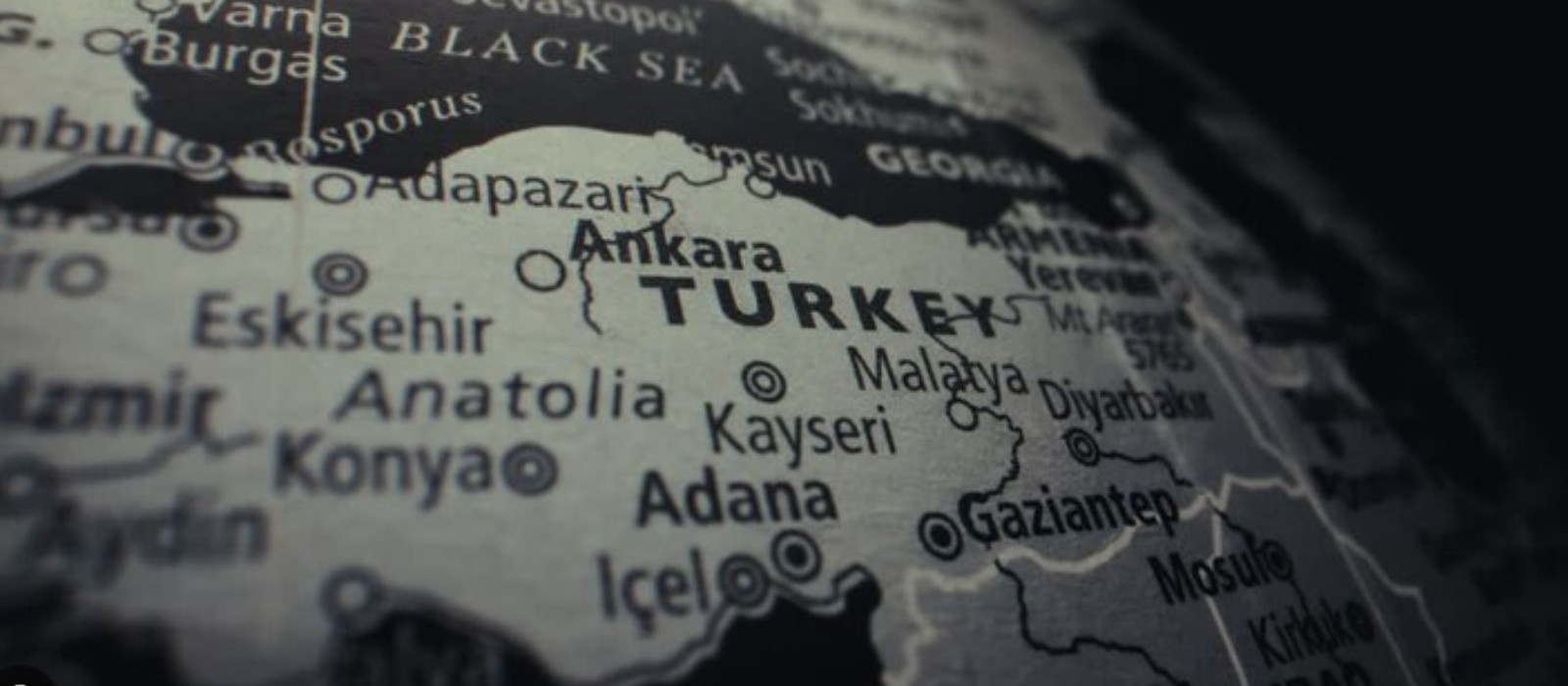


In Samuel Huntington’s 1993 book, Clash of Civilizations and the Making of the World Order, he posits that in the post-Cold War world order, countries would start ‘rallying to those with similar ancestry [cultures], religion, language, values and institutions, and distance themselves from those with different ones. He also predicted likely clashes between a coalition or cooperation between Islamic and the Sinic cultures (read China) to work against a common enemy, the West. Coincidently, the world has begun to witness an assertive China in the East and a similar rise of Turkey in West Asia, both with uneasy relations with the Western Powers and slowly gyrating towards each other. This article examines the implications of this on the Indian geopolitics.
Introduction
The Ottoman Empire grew to be one of the most powerful states in the world during the 15 th and 16 th Centuries. This period spanned more than 600 years and came to an end in 1922, when it was replaced by the Turkish Republic. At its height, the empire encompassed most of South-East Europe which included present-day Hungary, the Balkans, Greece and parts of Ukraine. In West Asia, the empire covered present day Iraq, Syria, Israel and Egypt and in North Africa, areas as far West as Algeria and large parts of the Arabian Peninsula. (Fig 1)

Fig1: The Ottoman Empire.
Source:https://www.history.com/.image/t_share/MTY5NjUyNzc3NzM0MTIwNzA2/ottoman-empire-gettyimages-5
The collapse of the Ottomans created the Turkey shaped by Kemal Attaturk. In turn, it had its own phases of upheavals. In Turkey’s 2002 elections, the Justice and Development Party [Adaletve Kalkınma Partisi (AKP)], a conservative party with Islamic roots became the single largest winner with its leader, Recep Tayyip Erdoğan. The AKP was re-elected in 2011 for another term for Erdogan as Prime Minister. In 2016, a small faction within the Turkish army launched a coup to usurp control from the government. Erdogan rallied support, using social media since official communications were blocked.1 The coup was however, crushed and the government regained control. The next year saw a wide purge and investigation of many Turkish citizens over suspicions of involvement in the coup. Turkey also faced serious economic and social consequences of the COVID-19 pandemic in 2020. However, it is during this period, under President Erdogan, that the world also began to witness an assertive Turkey.2 Some scholars believe that Ankara plans to exploit opportunities presented by changing geopolitical dynamics to establish primacy amongst an otherwise seemingly fractured Islamic fraternity. The many events that Erdogan may be countering or leveraging include the realignment of relationships between Israel and the neighbouring Arab nations under the ‘Abraham Accord’ and the ongoing Syrian and the Libyan crises. Although a NATO member, Turkey watched with nuance, the discrediting of the US with its chaotic withdrawal from Afghanistan. We may also include the economic upheaval caused due to the COVID-19 pandemic, and of course, the rise of an assertive China under the leadership of President Xi.
Turkey’s posturing in West Asia, its active intervention in Syria and Iraq, open support for Azerbaijan against Armenia during their conflict for Nagorno-Karabakh, intervention in Libya, muscling its way through Greece when exploring for oil in the East Mediterranean are but a few examples of Erdogan’s assertive policies. He seems intent on announcing Turkey’s arrival on the world stage. Erdogan’s actions over the years demonstrate his unapologetic authoritarian personality. Additionally, some of Turkey's actions also appear to be focussed on unseating Saudi Arabia as the leader of the Muslim world.3 Turkey wants to project itself as a country not too concerned with the Shia-Sunni divide. Based on these trends, this paper endeavours to examine how an assertive Turkey’s foreign policy is likely to impact the security and stability of the region as also on Indian geopolitics.
Muscle Flexing by Turkey
The present Turkish leadership seems to be developing its vision of making the country into aregional power and one of the centres of an emerging multi-polar global order. The world has begun to witness Turkey enhancinh its military activism and capabilities by establishing several additional military bases in neighbouring regions, especially in the Middle East and Africa as seen in Fig 2. Other dimensions of Turkish foreign policy activism include attempts to gain high levels of visibility within regional and international organisations, reinforcing economic andsocial ties with neighbours, and providing large-scale development aid programmes that increase Turkey’s global and regional standing.

Fig 2: Turkey’s Military Presence in the Region. Source: Excursus: Turkey’s Military Engagement Abroad – Centre for Applied Turkey Studies(cats-network.eu)”,https://www.catsnetworktopics/visu alising-turkeys-foreign-policyactivism-excursus-turkey’s-military-engagements-abroad
Turkey’s Military Engagements Abroad.4
Some of Turkey’s military engagements abroad are tabulated below:


Turkey’s Military Expenditure
As per official data from the World Bank, Turkey’s Gross Domestic Product (GDP) in 2020 was US$ 720.10 billion. Also, as per Stockholm International Peace Research Institute (SIPR ), Turkey witnessed a sharp increase in its military expenditure from US$ 15.669 billion in the year 2015 to US$ 20.448 billion for the year 2019. (Fig 3). The military expenditure in the year 2019 was about 2.7 percent of its GDP.

Fig 3
Ankara’s defence industry is a significant means of conducting diplomacy and enhancing ties with other nations. Presidency of Defence Industries (SSB) Chairperson Ismail Demir said that the industry is also away of introducing Turkey to the world. He added that, although it is a closed area, sometimes it can open doors or can be an important power for discussions on the table. In recent years, Turkey’s defence industry has proven itself capable of designing and manufacturing a variety of increasingly sophisticated weapon systems. (Fig 4). President Erdogan declared that Turkey plans to eliminate all dependency on foreign suppliers for its defence industry by 2023, the centennial of the foundation of the Turkish republic.11 In other words, “atmanirbharta” (self-reliance in Hindi) for Turkey, something that India has been talking about for decades, is important for him.

Fig 4
Turkey and the Mediterranean
Turkey has signed two maritime boundary delimitation agreements.
-
21 September 2011 - Continental Shelf Delimitation Agreement Between Turkey and “TRNC” (internationally non-recognized Turkish Republic of Northern Cyprus)
-
27 November 2019 -Turkey-Libya Memorandum of Understanding on Delimitation of the Maritime Jurisdiction Areas in the Mediterranean (signed between the Government of the Republic of Turkey and the Government of National-Accord State of Libya).
Commencing 2019, however, Ankara was repeatedly seen to challenge its neighbours with regard to international law and the delimitation of their Exclusive Economic Zones (EEZs) thereby destabilising the whole region through its illegal drilling and military interventions. Ankara resorted to use of military force and intimidation, including repeated violations of territorial waters and airspaces of neighbouring countries. The Turkey-Libya Mo U effectively drew a dividing line between the eastern and western parts of the Mediterranean. (Fig 5). This agreement has been de facto threatening maritime security, natural gas exploration and new infrastructure such as the East Med pipeline. Turkey’s behaviour, beyond its geo-economic interests, has begun to reflect a more ambitiousagenda intent on remodelling the whole region by spreading the country's influence from northern Iraq and Syria to Libya and leaving behind the Kemalist tradition of secularism and regional neutrality.12

Fig 5: Dispute in the eastern Mediterranean Sea Source: The Economist, 20 August 2020, https://www.economist.com/international/2020/08/20/a-row-between-turkey-and-greece-over-gas-is-geopolitical ‘neo-Ottoman’ raising-tension-in-the-eastern-mediterranean
Ankara has granted a number of licenses to the Turkish Petroleum Corporation (TPAO) to search for offshore energy resources in large parts of its claimed continental shelf - including disputed areas. In May 2018, TPAO started with offshore drilling activities in the East Mediterranean and since May 2019, has also been drilling in the Exclusive Economic Zone (EEZ) of the Republic of Cyprus. Ankara’s unilateral offshore drilling activities in the disputed areas of the eastern Mediterranean have begun to fuel growing hostilities between Turkey, Greece and Cyprus, adding another layer of tension to the already contested EU-Turkey relationship. Turkeys’ claimed continental shelf partly overlaps with the EEZ of the Republic of Cyprus, as it was defined via bilateral agreements between Nicosia and Cairo as well as Nicosia and Tel Aviv. However, Turkey is conducting research and drilling in the areas that Greece has declared to be part of its own EEZ. Turkey is proactively challenging the legitimacy of Greece’s EEZ, as defined in bilateral agreements between Athens and Rome, and Athens and Cairo. TPAO’s drilling activities include areas inside the EEZ of the Republic of Cyprus in areas that have been awarded to ENI (Italy) and TOTAL (France).13
Tensions in the Aegean Sea and the eastern Mediterranean have not been conducive to good neighbourly relations. The international community has strongly condemned Turkey's behaviour. Taking into account Turkey's poor track record in upholding human rights and the rule of law, the European Union has suspended accession negotiations and all pre-accession funds under the planned new multiannual financial framework for 2021 to 2027.14 The European Parliament has condemned Turkey's illegal drilling activities as well as its military interventions in the region.
Turkey -Pakistan Relations
Pakistan and Turkey enjoy close cultural, historical and military relations which are now expanding into deepening economic relations as both countries seek to develop their economies. Turkey supports Pakistan's position of holding a plebiscite under the UN to decide if Kashmir wants to join Pakistan, a position which President Erdogan reaffirmed in a joint address to the Pakistani parliament and which was attended by Pakistan's military high command. He is quoted as saying ,“I pray that Allah (God) makes the solidarity between us strong and permanent” and “As in the past, we will continue to stand by Pakistan in the future.”15 Turkey supports Pakistan's membership of the Nuclear Suppliers Group.
Both countries announced dual citizenship under the citizenship initiative, in which the citizens of Pakistan and Turkey would be able to hold joint citizenship and dual passports.16 Some observers have noted that with Pakistan’s relationship with Saudi Arabia and UAE witnessing a dip, Turkey is trying to project itself in the Middle East as the counterbalance and hence Pakistan’s growing closeness to it is part of that larger game that is being played out.
In July 2018 Pakistan’s Navy signed a contract for the acquisition of four MILGEM-class ships from Turkey worth US$1.5 billion.17 Pakistan Naval Chief Admiral Zafar Mahmood Abbasi and Erdogan cut the first metal plate of the first of the four MILGEM Ada class corvette during a ceremony held on 29 September 2019. Turkey is also undertaking the upgrade of Pakistan’s three Agosta 90B diesel-electric attack submarines and designing and constructing new corvettes and oil tankers for Pakistan. Additionally, over the last decade, nearly 1,500 Pakistani military officers
have received training in Turkey. The two countries are already collaborating on drone production. Turkish and Pakistani troops held joint counter-terror exercises with Uzbek forces in Uzbekistan in April 2019. Both could soon join forces to develop and co-produce their own fighter jet after which they could go in together on a stealth fighter. Turkey helped upgrade a batch of F-16 fighter jets for the Pakistan Air Force, manufacturing engines as well as spare parts. Both countries have also drawn closer militarily due to their strained relations with the US. Navies of both countries have been participating in Joint exercises in the Mediterranean and Arabian Sea regularly.
If Pakistan manages to get the Turkish drones, Bayraktar TB-2, which had helped Azerbaijan defeat Armenia in November 2020, it will significantly improve the country’s capabilities. Azerbaijan relied heavily on drones, especially the Bayraktar TB-2, and loitering munitions. The TB-2 has been combat tested not just in Azerbaijan, but also in Turkey’s conflict with the Kurds and in Libya and Syria.18
Gen. Ümit Dündar of the Turkish Land Forces was conferred with the Nishan-e-Imtiaz or Order of Excellence - a highly prestigious military award by Pakistan's President Arif Alvi on July 5, 2021 at the President’s House in the capital, Islamabad.19 According to a statement issued from the Presidency, General Dundar has also served as the Commander of the Multinational Brigade in Afghanistan, during the period 2004-05.20
Turkey is equally keen on enhancing its relations with Pakistan. Islamabad, through Beijing, has the technology for missiles, both conventional and nuclear besides fighter aircraft, something which Turkey seeks.21 Lt Gen P.R. Shankar (Retd), Indian Army’s former Director General of Artillery, writes that, while Turkey has managed to get its hands on a fair amount of technology, its NATO membership prevents it from running amok as western countries will not allow Turkey, China and Pakistan to come together as one block. Turkey’s removal from the F-35 programme, because of its S- 400 purchase from Russia, has been a setback for the country’s aircraft industry. Turkey’s aviation experience includes the licensed production of F-16 Fighting Falcon jets, CASA CN-235 light transport aircraft, apart from helicopters and a variety of UAVs. Therefore, while Pakistan eyes drones, Turkey needs fighter aircraft systems and missile technology from Islamabad that is basically of Chinese origin. Pakistan’s 30 T-129 Atak helicopter deal signed with Turkey in July 2018 for a US$1.5 billion has also been stuck due to the US’s refusal to issue export licenses for engines and other parts made by American firms.
Turkey-China Relations
Turkey and the PRC celebrated fifty years of diplomatic relations which were established on August 4, 1971. China watchers have remarked that while Sino-Turkish relations have witnessed ebbs and flow, the leadership of both countries have realised the importance of their symbiotic relationship.22 During the year 2010 the bilateral relationship was raised to the level of strategic cooperation.
During the initial outbreak of the Covid-19 pandemic, Turkey was one of the first countries to provide much-needed medical supplies to China. Similarly, when the pandemic spread to Turkey in mid-2020, China reciprocated in kind by providing Turkey with the COVID-19 vaccine CoronaVac, which was used all across the country as part of the national inoculation campaign.
The Bilateral trade between them witnessed a record high - approximately US$26 billion in 2020 with China becoming Turkey’s second biggest trading partner. Turkey’s large trade deficit with China remains a concern. However, both agreed to encourage more Chinese investment in Turkey and more Turkish exports to China with a hope that this would eventually lead to more balanced economics in the coming years.
During a high-level diplomatic meet conducted in the early months of 2021, the delegates termed the relationship between the two countries to be more than merely a government-to-government relationship, calling it an indispensable exchange between two ancient civilisations acting as the westernmost and easternmost gateways to Asia. Thereby, labelling this an “Asia Anew” initiative aimed at deepening Turkey’s engagement with Asian countries and contributing to economic integration across the continent.23 As can be seen, Turkey and China see themselves as natural heirs to the ancient ‘silk road’ which can reunite the Eurasian landmass with ambitious connectivity projects, namely Turkey’s Middle Corridor and China’s Belt and Road Initiative. As part of this shared vision, the first export cargo train service from Turkey to China was initiated in December 2020. The train followed the Trans Caspian East-West Middle Corridor via Kars-Tbilisi-Baku railway and travelled from Istanbul to Xi’an in just 12 days. The number of these freight trains have been on the rise during the year 2021.24
Turkish-Chinese relations include political and security dimensions. Both have skirted the Uighur issue and Turkey has actually toned down its harsh rhetoric against Beijing over this. It is estimated that there are about 45,000 Uighur refugees in Turkey making it one of the largest displaced communities.25 The Syrian war is another area where the two countries seem to have patched up. In one of his statements, Erdogan remarked that he wouldn’t allow anyone to drive a wedge into his relations with China. He also indicated his willingness to join the Shanghai Cooperation Organisation (SCO), a regional security body where China plays an active and important role.
In September 2010, Turkish and Chinese Air Forces conducted joint military exercises at Konya Airbase in Turkey. This was the first time that any NATO state had cooperated militarily with the Chinese on its own territory. Turkey assured NATO partners that none of NATO’s F-16s took part in the exercises.26 In 2013, China Precision Machinery Import-Export Corporation won a US$4 billion tender for the co-production of long-range missiles in Turkey. Turkey rejected competing offers from the American, European and Russian companies and chose a partner that was on the US sanctions list.27 Ankara made this decision for two main reasons: prices and the ability to share Chinese technology. This led to outrage among NATO states. Chinese systems would be able to “learn” how NATO’s defence technology operates and study its details. Strong opposition from NATO member states forced Turkey to postpone the project’s start date five times and eventually to withdraw from the agreement with the Chinese in 2015. Although the project failed, it was an important lesson for the Alliance. First, Chinese systems are at a technological level high enough to enable them to compete with the West. Secondly, the situation has shown that Turkey is not afraid to seek partners outside its traditional NATO allies.
Currently, Turkey and China continue to conduct military consultations and cooperate on cyber security and intelligence. The Turkish ballistic missile Bora, based on the Chinese B-611 missile, was used in Turkish clashes with the Kurdistan Workers’ Party (PKK) in 2019.28 The production of the missile together with the presence of officers of the Chinese army at the “Ephesus” military exercises in 2016 constitute evidence of the continuation of good military and diplomatic relations.
Despite the fact that China-Turkey cooperation seems good on many levels, there are differences too. One such difference is the Syrian issue. Beijing has been a votary of a diplomatic solution to the Syrian dispute and supports the independence and sovereignty of the Syrian Arab Republic.29 Additionally, Turkey and China have become competitors in the production of armed UAVs.30 The quality and effectiveness of Turkish drones were tested during the Nagorno-Karabakh conflict. However, the Chinese drones have to yet prove their efficacy in the battle-field.
India- Turkey Relations
Dr Burak Akcapar, the Turkish Ambassador to India, while speaking at the United Services Institute, New Delhi on 27 Oct 2014 said that a strong historical connection between India and Turkey exists right from the medieval era with the first exchange of diplomatic missions between Ottoman Sultan and the Muslim rulers of the sub-continent dating back to the years 1481- 82.31However, after the16th Century, Ottoman relations with India became infrequent and of relatively minor importance since the two great Sunni Muslim rulers were too remote to be of interest to one another either as allies or as rivals. More recent historical contacts between India and Turkey were reflected in the medical mission led by renowned Indian freedom fighter, Dr MA Ansari, to Turkey in 1912 during the Balkan Wars. One of his companions, Abdur Rahman stayed on in Turkey and was later Kemal Ataturk’s envoy to Kabul. India also extended support in 1920s to Turkey’s War of Independence and formation of the republic. Indeed, an amount of £106,400 were sent by India for the biggest bank of Turkey, Turkiye Is Bankasi and then used for emergency needs of the Turkish army, for reconstruction of the city of Izmir (after it was burnt down by the Greek army), and for buying land and developing food and beverage factories on the forest farm of Kemal Ataturk.32

Eighteenth Century Turkey remained a force to reckon with. In 1784, Tipu Sultan fighting the expansion of the British in India sent an ambassador to Constantinople. The purpose was to conclude a political and military treaty against the English. In his letter to Sultan Abdul Hameed, Tipu wrote about the excesses the British had committed in India and sought military support. The proposed treaty spoke of military cooperation between Mysore and Turkey.33 This treaty has five clauses, one of which referred to trade facilities in Basra in exchange for similar facilities in Mysore. Yet another clause stipulated that Turkey was to spare as many technicians as possible to assist Tipu in gun and cannon-making. Tipu said that neglect of commerce and industry was the main cause of their decline in the East. The envoys were treated with great courtesy in Constantinople, but the main issue of the treaty was evaded. Sultan Abdul Hameed said that the Russians had set their eyes on the Ottoman Empire, and he was engaged in resisting their menace. The British had shrewdly exploited this weakness of Turkey to keep it on their side, and the Turks would not alienate the English at a time when Russia was at their door. So, the ambassadors returned empty handed to India.34
During the First World War, many Indian soldiers died in Gallipoli fighting for the Imperial British and were buried in Turkey.35 Similarly, thousands of Turkish soldiers who were brought as prisoners of war in POW camps in India, died in captivity. One such camp was in Sumerpur, Rajasthan.
During 21-24 Nov 2008 visit of the Turkish Prime Minister Recep Tayyip Erdogan to India, India-Turkey Business Forum was jointly organised by FICCI and Turkish Union of Chambers of Commerce and Commodity Exchanges (TOBB) in New Delhi.36 In October 2013, Turkey and India signed 11 agreements to enhance bilateral cooperation during a visit by Indian President Pranab Mukherjee to Ankara. Mukherjee, met with top Turkish officials, including President Abdullah Gul and Prime Minister Recep Tayyip Erdogan. Turkish and Indian officials signed a few cooperation agreements after the talks. Others were signed by the state broadcasters of Turkey and India, as well as the Scientific and Technological Research Council of Turkey (TUBİTAK) and India's Ministry of Science and Technology.
In Defence Cooperation/bilateral visits regular exchanges and engagements took place. Some of the important defence cooperation/ engagements in the last decade include bilateral ship visits, participation in joint “Passage Exercise” in the Mediterranean (2009), participation in International Defence Exhibitions organised at Ankara, visit by HAL delegation to Turkish Aerospace Industries etc. An Indian Army Motor Cycle Expedition visited the War memorial at Gallipoli in August 2010 and laid wreath. In December 2012, one officer and two cadets of the Turkish Navy participated in the ‘Admiral’s Cup Sailing Regatta organised by the Indian Naval Academy Ezhimala, Kerala. In May 2019, TAIS consortium, which is a member of Turkey's largest industrial group comprising Anadolu Shipyard (ADiK, lead developer of the project), Istanbul Shipyard, Sedef Shipyard and Selah Shipyard, and HSL concluded an agreement for designing and building five Fleet Support Ships (FSS) for the Indian Navy. The value of the contract signed in February 2020 was for Rupees 160 billion (about US $2.1 billion). The construction of the first FSS was to begin at HSL in Visakhapatnam at the end of 2020 with delivery to the Indian fleet in 2024, with the remaining four units to be delivered at 10-month intervals.37
India-Turkey Relations Post 2017
The above details of Indo-Turkish military interaction serve to contrast with what came next. The overall relationship began to experience strain when President Erdogan visited New Delhi from April 30 - May 1, 2017. He suggested holding of ‘multi-lateral dialogue’ to resolve the Kashmir issue.38 Significantly, Turkey has in the past also issued statements supportive of Pakistan on the Kashmir issue reiterating their longstanding friendly relations. President Erdogan also spoke openly against India removing Article 370 in Kashmir. While all these have been seen as diplomatic provocations, India remained poised in its response. This was not the first time that Turkey has raised the Kashmir issue or issued statements that contradicted the Indian position. Turkey has been instrumental in issuing statements on Kashmir from the Organisation of Islamic Cooperation (OIC) forum. In August 2016, for instance, Turkish Foreign Minister Mevlüt Çavuşoğlu said in that ‘Turkey fully supports Pakistan’s position on Jammu and Kashmir’ and that India should allow the OIC fact-finding team to visit Jammu and Kashmir.39 This was followed by the visit of OIC Secretary General Iyad Ameen Madani’s visit to Islamabad and Pakistan Occupied Kashmir (PoK) the same month. In a statement, the OIC raised the issue of ‘human rights violations’ and ‘excessive violence’ in ‘Indian-held’ Kashmir.40
Turkey has been backing the trilateral process - Pakistan, China and Afghanistan over a peace deal in Kabul following the withdrawal of US troops from the region. As per media reports, the construction of Fleet Support Ships at HSL, Vishakhapatnam, in partnership with the Turkish firm has run into rough weather due to the political equation between the two nations.41
Conclusion
India and Turkey have enjoyed strong historical relations right from the medieval era. In its zeal to garner support from other Muslim nations, it seems to be playing the Islamic card. Many of its actions have also riled the nations of European Union. Despite being a member of the NATO, Turkey has been seen to violate many of the tenets of alliance by overtly entering into dealings with other nations, which are seen to openly challenge other partners. India has maintained a level of poise in its response to provocations. Today, India enjoys good relations with major players at bilateral as well as multi-lateral fora. An assertive Turkey’s actions have the potential to negatively impact relations with India. Turkey’s closeness to Pakistan and now aligning with China and Taliban in Afghanistan are seen as destabilising factors for regional peace and tranquillity.
Endnotes
-
WION Report, “Turkey Under Erdogan: Caught Between Democracy and Dictatorship,” 07 October 2020. https://www.wionews.com/world/turkey-under-erdogan-caught-between- democracy-and-dictatorship-333285, accessed 30 July 2021.
-
Ibid.
-
WION Report, Op Cit., n.1.
-
“Excursus: Turkey’s Military Engagement Abroad - Centre for Applied Turkey Studies (cats-network.eu),” Centre for Applied Turkey Studies. https://www.Catsn etworktopics/visualising-turkeys-foreign-policyactivism/excursus-turkey’s-military -engagements-abroad, accessed 30 July 21.
-
“Turkey’s Erdogan Rules out Concessions on Cyprus Visit.” https://timesofindia.indiatimes.com/world/rest-of-world/turkeys-erdogan-rules-out-concessions-on-cyprus-visit/articleshow/84559897.cms, accessed 20 August 2021.
-
“Iraqi Kurds Flee as Turkey Beefs up Military Clout in the Border Zone.” https://thearabweekly.com/iraqi-kurds-flee-turkey-beefs-military-clout-border-zone, accessed 20 August 2021.
-
The Daily Sabah, 28 May 2021.
-
“Turkey Courts Biden with Offer to Protect Kabul Airport,” The Hindu, 29 July 2021. https://www.thehindu.com/news/international/turkey-courts-biden-with-offer-to-protect-kabul-airport/article35615116.ece, accessed 01 August 2021.
-
Umer Karim, “Turkey’s Transforming Political and Security Relationship with Afghanistan,” Newlines Institute strategies and Policies, 12 August 2021, https://newlinesinstitute.org/afghanistan/turkeys-transforming-political-and-security-relationship-with-afghanistan/, accessed 22 August 2021.
-
Ibid.
-
Iddon Paul, “Turkey’s Defense Industry Has Come a Long Way, but Ankara Still Relies Heavily on Foreign Suppliers.” https://www.forbes.com/sites/pauliddon/2020/07/25/turkeys-defense-industry-has-come-a-long-way-but-anka ra-still-relies-heavily-on-foreign-suppliers/?sh=13fc7b257953, accessed 30 July 2021.
-
“Turkey: Remodelling the Eastern Mediterranean.” https://www.europarl.u ropa.eu/RegData/etudes/BRIE/2020/652048/EPRS_BRI (2020)652048_EN.pdf, accessed 30 July 2021.
-
https://www.offshore-energy.biz/cyprus-cries-foul-as-turkey-deploys-second-drillship/,accessed 15 August 2021.
-
Ibid.
-
Javed Hussain, “No Difference Between Gallipoli and Occupied Kashmir: Erdogan Stands by Pakistan in Parliament Speech,” DAWN, 14 February 2020. https;//dawn.com/news/1534429.
-
"Turkey-Pakistan Friendship: From Past to Present," Daily Sabah, 13 February 2020. https://en.wikipedia.org/wiki/Pakistan%E2%80%93Turkey_relations, accessed 20 August 2021.
-
Ibid.
-
Philip and Snehesh Alex, “Pakistan Eyes Drones and Deeper Ties with Turkey, Concerns in D e l h i w i t h D e e p e r T r i a d w i t h C h i n a , ” T h e P r i n t , 0 7 J u l y 2 0 2 1 . https://theprint.in/diplomacy/pakistan-eyes-drones-deeper-ties-with-turkey-concerns-in-delhi-of-possible-triad-with-china/690986/, accessed 20 August 2021.
-
Daily Sabah, Op Cit., n.16.
-
Daily Sabah, Op Cit., n.16.
-
Philip and Alex, Op Cit., n.18.
-
Cenciz Sinem, “Turkey, China Place Economic Ties Ahead of Ideology,” Arab News, 26 March 2021. https://www.arabnews.com/node/1832516, accessed 22 August 2021.
-
Abdulkadir Onen, “Fifty Years of Turkey-China Relations: Fifty Years of Respect and Friendship,” 04 August 2021. https://news.cgtn.com/news/2021-08-04/Turkey-China-relations-Fifty-years-of-respect-and-friendship-12qygBzSNGM /index.html, accessed 22 August 2021.
-
Ibid.
-
Onen, Op Cit., n.23.
-
“ China Mounts Air Exercise with Turkey,” Reuters , 09 October 2010 . https://www.reuters.com/article/us-china-turkey-usa-idUSTRE6975HC20101008, accessed 22 August 2021.
-
Soylemez M., Turkey and China: An Account of a Bilateral Relations Evolution (Hong Kong: Asia Centre, 2017).
-
“Erdogan is Turning Turkey into a Chinese Client State,” Foreign Policy. https://foreignpolicy.com/2020/09/16/erdogan-is-turning-turkey-into-a-chinese-client-state/, accessed 20 August 2021.
-
“Turkish Troops Push Deeper into Syria,” China Daily. https://www.chinadaily. com.cn/a/201910/11/WS5d9fc34aa310cf3e3556fcdd.html accessed 21 August 2021.
-
“ Turkey Begins to Rival China in Military Drones, ” Nikkei Asia , https://asia.nikkei.com/Politics/International-relations/Turkey-begins-to-rival-China-in-military-drones, accessed 20 August 2021.
-
Burak Akcapar, “Building Turkish-Indian Cooperation amidst a World in Turmoil,” Journal of the USI, vol. CXLIV, no. 598 (2014, October-December).
-
The Indian Legislative Council, Published by the Authority of the Governor General, vol. LVIII, (1920, March), 9-22.
-
Abroo Aman Andrabi, “Indo-Turkish Relations: A Historical Overview and Analysis.” fi l e : / / / E : / TA K S H A S H I L A % 2 0 A U G - D E C % 2 0 2 0 2 0 / D O W N L O A D S / Ta kshashila%20reading%20material%20Dec20/Indo-TurkishRelationsAHistoricalOv ervie wandAnalysis.pdf, accessed 20 August 2021.
-
Ibid.
-
Akcapar, Op Cit., n.31.
-
Andrabi, Op Cit., n.33.
-
“Hindustan Shipyard to Build 5 Naval Support Vessels with Turkish help,” Hindustan Times, 22 February 2021. https://www.hindustantimes.com/india-news/hindustan-shipyard-to-build-5-naval-support-vessels-with-turkish-help-1016 14007642406.html, accessed 16 March 2022.
-
Ahead of His Arrival in India on 30 April 2017, Speaking to WION News Channel in an Interview, Mr Erdogan Suggested a "Multi-Lateral Dialogue" on Kashmir, Offering to Mediate Between India and Pakistan. https://www.ndtv. Com/india-news/turkish-president-recep-tayyip-erdogans-controversial-comment-on-kashmir-as-he-visits-india-1688095, accessed 03 August 2021.
-
“Turkey Backs Pakistan’s Stand on Jammu and Kashmir,” 02 August 2016, http://www.wionews.com/south-asia/turkey-backs-pakistans-stand-on-jammu-and-kashmir3985, accessed 25 August 2021.
-
Suhasini Haider, “In Mission Kashmir, Akbar Meets Assad,” The Hindu, 22 August 2016. h t t p : / / w w w. t h e h i n d u . c o m / n e w s / n a t i o n a l / I n - M i s s i o n - K a s h m i r - A k b a r - meetsAssad/article14583533.ece, accessed 26 August 2021.
-
Ryan White, “Hindustan Shipyard to build Naval Support Vessels with Turkish Anadolu Shipyard,” Naval Post, 24 February 2021. https://navalpost.com/indian-navy-fleet-support-vessel-turkish-anadolu-shipyard-hindustan-shipyard/, accessed 16 March 2022.
