


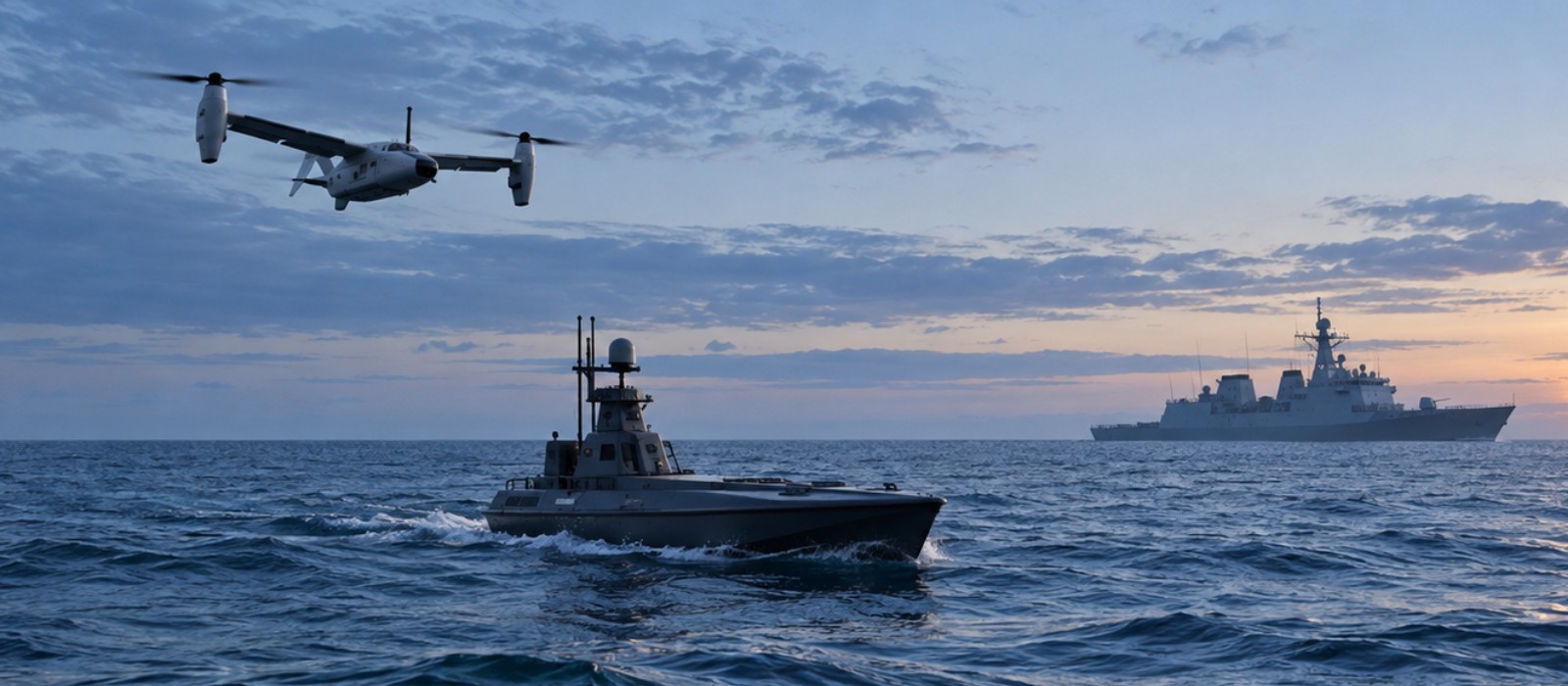


The introduction of unmanned systems to the battlefield doesn’t change simply how we fight, but for the first-time changes who fights at the most fundamental level. It transforms the very agent of war, rather than just its capabilities.
- Peter W Singer, Wired for War1
Introduction
While reflecting on the above lines from Peter Singer’s book Wired for War: The Robotics Revolution and Conflict in the 21st Century, the writings of the famous Prussian General and military theorist, Carl von Clausewitz come to mind. In his book On War, Clausewitz implicitly indicated that while the ‘nature of war’ is enduring (being violent and interactive), the ‘character of war’ may change in how it eventually manifests as a phenomenon across time and space in the real world.2 Although Peter Singer highlights that the employment of unmanned systems has transformed the very agent of war, in a broader Clausewitzian sense, it has also changed the character of war. The ongoing Russia-Ukraine War and the Second Nagorno-Karabakh War of 2020 between Armenia and Azerbaijan provide ample evidence of the impact of unmanned systems on battlefield transformation, thereby scripting a watershed moment in the history of warfare.
Over the last two decades, unmanned systems have attracted the attention of policymakers, military strategists, legal experts, scholars, and ethicists across the globe. Recognising the ‘revolution in military affairs’ brought about by unmanned systems, the Indian Navy formulated the “Integrated Unmanned Roadmap,” which was launched by Raksha Mantri (Defence Minister), Rajnath Singh, during the Naval Commanders’ Conference in October 2021.3 China, on the other hand, has made considerable headway in the development and use of unmanned systems as part of its push towards military modernisation and “Establishing a Modernised Weaponry and Equipment Systems,” outlined in its Defence White Paper of 2019.4 The niche capabilities offered by unmanned systems at relatively lower costs, coupled with their recent successes in the modern battlefield have sparked an international race, with States and Non-State Actors alike scurrying to induct them into their inventory.
Unmanned systems would be force multipliers across all types of warfare in decades ahead. They offer low human-risk, economically beneficial, and technologically superior solutions that India needs to leverage towards strengthening the military instrument of national power for credible deterrence in peacetime and success in any future conflict. First, unmanned systems reduce the risk to armed forces personnel with fewer ‘boots on the ground,’ while eliminating human parameters like size and limitations like fatigue, thereby enhancing the endurance of certain types of military platforms. Second, unmanned systems offer economically efficient solutions compared to manned systems, that could aid sustainable capability development of the Armed Forces. Finally, they provide an array of capability enhancement options that manned systems lack in relation to mission criteria to augment intelligence, surveillance, and reconnaissance (ISR); and standoff precision strike capabilities, even in contested or denied environments. A whole-of-government approach comprising certain Policy initiatives as well as Diplomatic, Informational, Military and Economic (DIME) measures would be essential for early induction and integration of unmanned systems into the Armed Forces’ inventory, strategy, and tactics to achieve success in 21st Century warfare.
Utility of Unmanned Systems Across Types of Wars and Warfare
Types of Wars. Although a universally accepted document defining types of wars does not currently exist, exploring the same in legal terms could set the foundation for further discussion on the subject. The US DoD Law of War Manual states that “traditionally, war has often been described as a legal condition between two or more States. However, certain laws of war rules apply to non-international armed conflicts (such as intra-State conflicts or conflicts between a State and a non-State armed group).”5 Therefore, wars could be viewed in terms of International Armed Conflicts (IACs) – also referred to as conventional or regular wars (between States), and Non-International Armed Conflicts (NIACs) – also referred to as irregular wars (intra-State or between States and non-State actors). While regular warfare is self-explanatory, irregular warfare includes counter-terrorism operations, counter-insurgency operations, Stability Operations (SO), Foreign Internal Defence (FID), unconventional warfare, and asymmetric warfare.6 In recent years, a new term – ‘hybrid warfare,’ has gained popularity in geopolitical discussions, which essentially involves the employment of a combination of regular and irregular forces, such as in grey zone operations. One may add that the term may be new, but hybrid warfare has always been part of wars.
Warfare in the 21st Century. The 21st Century has been characterised by increasing irregular and hybrid warfare, with non-State actors growing more powerful and disruptive technologies being leveraged by States to make incremental gains while remaining below the threshold of traditional armed conflict, thereby exacerbating geopolitical flux. Undoubtedly, globalisation, the proliferation of information through media and social media, stronger nuclear and conventional deterrence by countries, greater roles of the United Nations and other Inter-Governmental Organisations adding to international pressure, and an enhanced focus on the value of human life writ large and human rights therein, have made regular wars a rarer proposition in contemporary times. It is only in the last three years that the world has witnessed the first two regular wars of the 21st Century with the outbreak of the Second Nagorno-Karabakh War of 2020 between Armenia and Azerbaijan, and the Russia – Ukraine War which commenced in Feb 2022. Therefore, the Indian Armed Forces need to also prepare for irregular and hybrid warfare, towards achieving success across the spectrum of war and warfare.7
Need for Unmanned Systems. The utility of unmanned systems in regular and irregular wars and warfare cannot be overstated. The ongoing Russia-Ukraine War stands as a testament to the surveillance and targeting capabilities of unmanned systems on the modern battlefield. With hundreds of drones being launched by both sides daily since the start of the war in Feb 2022 – ranging from smaller drones doubling as loitering munitions, to larger drones carrying air-to-air and air-to-ground missiles, the Russia-Ukraine War is being referred to by some as “the first full-scale drone war in history.”8 Further, Ukraine’s extensive employment of drones has supposedly reduced its air power asymmetry with respect to the Russian Air Force.9 The Second Nagorno-Karabakh War also witnessed the unprecedented success of unmanned systems on the battlefield, with Azerbaijan having won the war “almost entirely on the strength of drone warfare.”10
The success of drones in irregular warfare was scripted much before Russia-Ukraine and Nagorno-Karabakh Wars, when the United States first deployed unmanned combat aerial vehicles (UCAVs) like the MQ-9 Reaper with resounding success during the Global War on Terror (GWOT) in 2001, providing the first glimpses of the capabilities of drones to the world. Ever since, drones have proven to be force multipliers in irregular warfare, especially in combating terrorism. In his book One Nation, Under Drones, Capt (Retd.) John E. Jackson, US Navy, noted that “drones have been cemented as the critical counterterrorism and counterinsurgency weapon.”11 Leading military powers like the United States and China also echo the utility of drones in future warfare. The United States considers that drones would be “a weapon of choice for future Presidents, future administrations, in future conflicts.”12 Whilst highlighting the need for a fleet of over 500 ships, Adm Mike Gilday, CNO US Navy, specified that about 150 of the 500 ships would be unmanned.13 The People’s Liberation Army (PLA), in its military doctrinal publication, The Science of Military Strategy, has also acknowledged that future warfare will be “unmanned, intangible, and silent.”14 Certainly, unmanned systems would prove to be force multipliers across all types of warfare.
The Human Factor
Unmanned Systems reduce the requirement of manned assets in the area of operations/conflict zone, thereby lowering the number of personnel on-scene. Unmanned aerial systems provide increased operational reach and operational endurance during ISR missions. They also offer extended time on task and deliver real-time intelligence, in addition to providing precision strike capabilities. These benefits reduce the requirement of having ‘boots on the ground’ considerably, as was seen with the increasing deployment of drones and the ever-reducing US troop presence in Afghanistan over the twenty years of the GWOT.15 Similar advantages would apply to the maritime domain, where unmanned systems could be deployed instead of (or to supplement) manned platforms for ISR and targeting missions.
Reduction in the number of manned platforms in a conflict zone would lower the probability of casualties amongst own/friendly forces. A study by the US Homeland Security Studies and Analysis Institute pointed out that the standoff capabilities of unmanned systems protect human operators, inter alia, from harmful exposures to nuclear radiations and improvised explosive devices.16 Most importantly, unmanned systems deprive the enemy of the one element they attempt to attack the most - a human target. Reduced human casualties among a country’s forces have a direct bearing on its Clausewitzian “Trinity of War” – the government, the military, and the people.17 It increases the country’s political, military and societal will to continue supporting the fight against the enemy, in both regular as well as irregular warfare, which is essential for sustained military operations to succeed.
Unmanned systems also eliminate human limitations such as fatigue, enabling longer operational endurance and greater efficiency with each platform. Also, with no requirement to fit a human into the platform, the size and shape of the platform reduce or change significantly, sometimes by magnitudes. Reduction of size and space limitations allows the development of smaller, more agile, and more covert systems, like nano-Unmanned Aerial Systems (nano-UASs), which could be leveraged to update target information in real-time, while being discrete. These nano-systems could enter confined spaces like those in buildings or onboard ships, without being tracked and could play a vital role in ISR missions.
For example, smaller UAS equipped with pre-programmed identification software could assist Marine Commandos (MARCOS) in distinguishing between the crew and terrorists of a hijacked ship. Nano-UAS are excellent platforms to maintain stealth while sanitising the entry and exit points onboard vessels holding terrorists before the insertion of MARCOS. ‘Optionally-manned’ Unmanned Underwater Vehicles (UUVs) could also be used as swimmer delivery vehicles to insert MARCOS onto target platforms without being detected. Reducing the exposure of SF personnel/MARCOS to direct line of fire from terrorists, especially during the observe, orient, and decide phases of the OODA loop could lower the casualty rate among SF personnel considerably, without compromising real-time situational awareness. Drones and other unmanned systems reduce human operator requirements in the conflict zone, thereby lowering the risk to personnel, and improving the efficiency of Special Forces/MARCOS.
Further, integrating Artificial Intelligence (AI) technology with unmanned systems would provide full autonomy for navigation, decision-making in changing operational scenarios, target selection and target execution/destruction, thereby obviating the need for human operators to be present in the conflict zone even for remote control of the unmanned systems. However, certain ethical concerns concerning empowering unmanned systems with autonomy for the ‘decision to kill’ need to be comprehensively discussed and addressed before employing Lethal Autonomous Weapon Systems (LAWS).
The Financial Factor
Much scholarly attention has been devoted to highlighting the fiscal advantages that unmanned systems offer in comparison to manned systems. For example, a report named Five Priorities for the US Air Force’s Future Combat Air Force by the US Centre for Strategic and Budgetary Assessments (CSBA) reveals that UAVs have lower procurement and operating costs than manned aircraft. The report highlights that the average unit cost of an MQ-9 Reaper is about US $20 million – 25 per cent of the cost of an A-10 aircraft – while an F16C fighter jet costs about US $70 million. A medium UAS on the other hand costs less than US $1 million. The report goes on to state that “the Operational Cost Per Flying Hour (OCPFH) of a UAS is far less than the least expensive Air Force manned aircraft OCPFH,” as tabulated in Table 1.18 It presents a case favouring greater use of the MQ-9 Reaper, being “one of the least costly aircraft to operate in the entire US Air Force.”
| UAS | UAS Group | Range and Endurance | Payload in pounds | Launch and Recovery Modes | Average Unit Cost | Cost per flying Hour relative to an A-10 |
|---|---|---|---|---|---|---|
| Gremlins Attritable Small-Medium UAS | 2/3 | About 250+ nm, about 1.3 hours | About 100 | Aerial launched and recovered | $700,000 or less estimated | Less than 10% |
| Attritable Medium UAS | 3 | 1,400 nm, about 3 hours | About 500 internal and external | RATO, parachute recovery; may use 5,000-ft or shorter runways in peacetime | $1 million or less estimated | Less than 10% excluding cost of equipment to launch & recover the UAS |
| LCAAT Attritable Medium-Large UAS (Valkyrie) | 4 | 3,000 nm, endurance information not available | 600+ internally, external payload information not available | RATO, parachute recovery; may use 5,000 ft or shorter runways in peacetime | $2-3 million | Less than 10% excluding cost of equipment to launch & recover the UAS |
| MQ-9 | 5 | 1,150 nm, 34-plus hours | 3,000 internal and external | Uses approximately 5,000-ft runways | About $20 million | About 25% |
| Avenger ER | 6 | 6,000 nm, about 20 hours | 6,500 internal and external | Uses approximately 6,000-ft runways | About $25 million | Not available |
| F-16C fighter | N/A | Air Refuellable | 16,000 external carriage | Improved runways | About $70 million | About 1.06 times the A-10's flying hour cost |
Table 1: US Fighter Aircraft, UAS, and Emerging Attritable UAS Comparisons. Source: Five Priorities for the Air Force’s Future Combat Air Force, CSBA.
It goes on to recommend a UAS induction roadmap for the US Air Force till FY 2030, as highlighted in Table 2.19 Another article indicates that training traditional combat aviators is ten times costlier than training UCAV controllers.20 In the long term, the costs of catering to the medical requirements of uniformed personnel and pensions of Veterans would further exacerbate the economic divide between manned and unmanned systems. The US government spent roughly $2.1 million on each soldier deployed in Afghanistan since 2012, while future medical expenses of Veterans who participated in the GWOT are estimated to be about $836 billion.21 Unmanned systems are far more profitable, in both medium and long term, with lower procurement, operating, and training costs compared to manned systems.
| System | 2020 | 2021 | 2022 | 2023 | 2024 | 2025 | 2026 | 2027 | 2028 | 2029 | 2030 |
|---|---|---|---|---|---|---|---|---|---|---|---|
| MQ-9-UAS for traditional ISR and light strike missions (illustrative inventory) | 252 | 246 | 240 | 234 | 228 | 222 | 222 | 222 | 222 | 222 | 222 |
| MQ-9-UAS for airbase defense and gray zone operations (illustrative procurement) | 0 | 6 | 12 | 18 | 24 | 30 | 30 | 30 | 30 | 30 | 30 |
| Fighter-sized UAS (illustrative procurement) | 0 | 2 | 6 | 12 | 18 | 24 | 30 | 36 | 42 | 48 | 54 |
| LCAAT/Medium UAS Squadrons (illustrative Procurement) | 0 | 0 | 0 | 1 | 1 | 2 | 4 | 6 | 8 | 10 | 12 |
| Future “MQ-X” stealth UAS (illustrative procurement) | 0 | 0 | 0 | 0 | 0 | 0 | 0 | 6 | 0 | 1 | 5 |
Table 2: CSBA Recommended UAS Induction Plan for US Air Force till 2030. Source: Five Priorities for the Air Force’s Future Combat Air Force, CSBA.
India’s Defence Budget, as a percentage of GDP, was just 2.1% in Financial Year (FY) 2020-21, the lowest since the 1960s, as shown in Figure 1.22 Further, the share of Capital outlay for Defence meant for the modernisation of the Armed Forces was reduced from 41% of the total government capital expenditure in FY 2011-12 to 23% in FY 2021-22.23 The disparity between the growth of the Defence Budget vis-à-vis the growth of the Central Govt Expenditure (CGE) over the last decade has led to budgetary shortfalls, further exacerbating issues of force-level adequacy, modernisation, and capability development. Armed Forces should include unmanned systems as part of capability development plans for maintaining operational readiness and mitigating critical capability gaps in the short term while achieving sustainable and predictable capability development in the long term.

Fig 1: India’s Defence Budget as a Percentage of GDP (1960 – 2020). Source: The Times of India.
Relatively low-cost UAS would prove to be more economical than manned aircraft in undertaking ISR missions over land and at sea. The cost of deploying a manned warship with a manned aircraft; or a manned submarine for less human-intensive missions such as harbour patrols, mine laying/sweeping, and coastal surveillance, coupled with the need to cater to personnel and logistical requirements, make unmanned systems more financially suitable for undertaking these operations. The profit generated by reduced spending through the procurement and operation of unmanned systems could flow into infrastructure development as well as the development of more Information Fusion Centres (like IFC-IOR) in the country and the IOR. It would enhance information superiority, aid better command and control, and strengthen India’s status as ‘first responder’ and ‘preferred-security partner’ in the IOR, which is in line with the vision of Security and Growth for All in the Region (SAGAR). Undoubtedly, unmanned systems provide low-cost solutions that need to be leveraged for maintaining operational preparedness across all types of warfare in the future and achieving a level of predictability in capability development amidst a challenging fiscal envelope.
The Capability Enhancement Factor
Unmanned systems are force multipliers that provide enhanced payload and precision strike capabilities to improve the efficiency and effectiveness of military operations while yielding other benefits already mentioned. With their greater endurance and range, more loiter time over targets, live streaming, miniaturisation, and additional payload carrying capacity unmanned systems have proven to be effective surveillance, reconnaissance, and precision strike platforms. The MQ-9 Reaper has an operational range of 1150 nm and an endurance of 34-plus hours.24 In contrast, the endurance and loiter time of a manned aircraft are limited by human fatigue, higher fuel consumption, etc, which lead to critical gaps in domain awareness and real-time intelligence updates if an adequate number of platforms are not available. These limitations of manned systems directly impact the swiftness and effectiveness of military operations. Unmanned systems provide multi-mission capabilities and enhance command and control (C2 ISR) through better situational awareness.
Future military operations, in most cases, could, and most likely would, include the use of miniaturised unmanned systems. Miniaturised systems like the nano-UAS provide options to detect, track, classify and build real-time intelligence while remaining covert. They also retain the ability to enter confined spaces like those on ships and camouflage as other objects. Hypothetically, a nano-UAS similar to the flying insect-disguised Remotely Piloted Aircraft (RPA) in the movie Eye in the Sky or the eagle-disguised RPA in the movie Uri: The Surgical Strike could determine the number of terrorists holed up in buildings or onboard hijacked merchant ships/passenger ferries to aid in planning for the targeting phase. Small Vertical Take-off and Landing (VTOL) UAVs like the V-BAT from Martin UAV eliminate the need for flight decks onboard ships to operate UAVs during mid-ocean deployments.25 UAVs like the V-BAT could also operate from smaller boats like FACs or FICs, which would be better suited for undertaking ISR missions outside ports, in the littorals, and in situations that do not warrant the deployment of larger warships, further reducing the economic burden.
Unmanned systems also offer greater operational flexibility to Commanders. The development of reusable and expendable low-cost UASs provides Commanders with adequate numbers for the mission with deployment flexibility. Reusable UASs, like the US Defence Advanced Research Projects Agency’s (DARPA) Gremlins unmanned systems, could be retrieved for reuse while airborne, providing increased operational flexibility to Commanders.26 Over land, UAVs can be operated from remote locations without runways thereby affording basing flexibility. Similarly, smaller and equally capable Unmanned Surface Vessels (USVs) and Unmanned Underwater Vehicles (UUVs) could be launched from surface ships or ashore, providing options of swift deployment, longer time in station, and greater payload-carrying capacities vis-a-vis manned vessels of the same size. India could deploy USVs for Mine Counter Measure (MCM), ISR, force protection, and coastal defence missions; and UUVs for MCM, Explosive Ordnance Disposal (EOD), and shallow water operations. For larger unmanned systems, the freed space of a human operator could be utilised to carry additional payloads, thereby enhancing mission capabilities.
Unmanned systems, when combined, with the accuracy of modern weapons, also provide precision strike capabilities against the full spectrum of potential targets, while operating in contested or denied environments. Further, ‘swarm drones’ provide unique offensive capabilities of saturating enemy air defences at extremely low cost, allowing subsequent deployment of strike aircraft. DARPA’s Collaborative Operations in Denied Environment (CODE) Program aims to operationalise unmanned platforms that are “resilient to bandwidth limitations and communication disruptions” and be capable of enhancing capabilities beyond those available with legacy manned systems.27 Similar programmes could be undertaken by India’s Defence R&D industry. Given the multidimensional capabilities that unmanned systems offer, it is essential to develop these force multipliers indigenously, integrate them efficiently into the Armed Forces, and deploy them effectively during operations in the future.
Counter-arguments
Some would argue that unmanned systems alone cannot win future conflicts and their capabilities should not be exaggerated. For example, the Turkish TB-2 Bayraktar drones which saw initial success in the Russia-Ukraine War eventually become easy targets for Russian air defence systems considering their noisy and low-speed approaches. The same Azerbaijani drones used during the Second Nagorno-Karabakh War had little impact when used in a piecemeal or standalone fashion during clashes in 2016.28 Further, Armenia unwittingly eased targeting due to poor military tactics like non-adherence to Emission Control (EMCON) and remaining static. However, while drones or any other weapon system alone may not win wars, they could surely contribute to victory when deployed with a sound military strategy and superior tactics. Ukraine’s Turkish TB-2 Bayraktar drones are believed to have played a pivotal role in the sinking of the Moskva, by locating/illuminating the target whilst also adding to deception and diverting the warship’s focus away from the incoming Neptune missiles.29 Azerbaijani drones successfully undertook Suppression of Enemy Air Defence (SEAD) by first forcing Armenian air defence systems to transmit and expose their locations, followed by precision strikes to take them out, after which Azerbaijan achieved air dominance and laid the foundation for victory. Further, High Altitude Long Endurance (HALE) UAVs are not easy to detect and would require sophisticated air defence systems for targeting them. Notwithstanding this, coordinating drone operations with manned aircraft, naval vessels and ground forces would be essential to achieving synergy of Lines of Operations (LOOs) to ensure victory.
Others would argue that unmanned systems reduce the threshold for the use of lethal force, which could result in miscalculations and indiscriminate attacks. For example, US drone strikes in Afghanistan resulted in several civilian casualties.30 However, concluding that unmanned systems reduce the threshold for lethal force based on certain instances of collateral damage alone is premature. Rosa Brooks of the Georgetown University Law Centre stated that “drone strikes kill civilians at no higher a rate, and almost certainly at a lower rate, than most other common means of warfare. Drones actually permit far greater precision in targeting.”31 Unmanned systems offer precision strike capabilities and are force multipliers for ISR missions. Also, in the maritime environment, the relatively vast open spaces with lesser human presence than the densely populated urban areas further reduce the possibility of civilian casualties. Nonetheless, the scope for miscalculation still exists. The Indian Armed Forces are highly professional and capable and could be relied upon to follow rules of engagement and detailed ethical evaluation procedures to augment the precision strike capabilities of unmanned systems. Adequate focus on Rules of Engagement (ROE) and risk mitigation measures would reduce the chances of collateral damage while leveraging the niche capabilities that unmanned systems offer.
Others could also argue that operating unmanned systems in harsh weather conditions of the maritime environment would be more challenging compared to operations in the terrestrial environment. For example, the US National Centre for Atmospheric Research highlights the adverse effects of weather on UAS operations.32 Strong wind speed, high sea state, and swell would make operating conditions for smaller UASs, USVs, and UUVs inconducive. However, it is essential to note that technological advancements have made unmanned systems sturdier in withstanding hazardous weather. For example, the Martin V-Bat UAV has been proven in strong crosswinds, high sea states and heavy ship roll and pitch conditions.33 Also, hazardous weather limitations apply to manned systems too, albeit with more significant concerns for personnel safety. Nonetheless, a greater focus on the research and development of more durable unmanned systems could mitigate the limitations of adverse weather conditions. In the interim, smaller unmanned systems could ‘piggyback’ on larger unmanned systems that can withstand the prevailing weather conditions, from which they could deploy when weather is favourable.
Recommendations
Policy. The Government recently introduced new drone rules towards “making India a leading country in drone technology.”34 However, India’s stance on the use of fully autonomous and Lethal Autonomous Weapon Systems (LAWS) is still blurred, most probably for strategic flexibility.35 Clear policy guidelines that provide a vision for the integration of unmanned systems, including LAWS, into the Armed Forces are essential. The roadmap could include the Government’s stance on fully autonomous systems and could remain classified to maintain India’s neutral stance on LAWS at the international level.
Diplomatic. The United States and Israel have pioneered the development and use of modern drones over the last two decades. Accordingly, the Indian Navy inducted the Israeli Heron and Searcher UAVs, and more recently, leased the U.S Sea Guardian HALE UAVs to plug shortfalls in domain awareness.36 However, in line with the Government’s Atmanirbhar Bharat Initiative, India needs to start developing drones and other unmanned systems indigenously, to achieve strategic independence in the long term. Towards this, adequate diplomatic efforts for the early conclusion of the Transfer of Technology (ToT) from American and Israeli companies to Indian firms could be pursued.
Informational. To ensure that India fully leverages the unique capabilities offered by unmanned systems, a mechanism for information sharing between the Services and intelligence agencies needs to be worked out to achieve information superiority and fasten the OODA loop process. Creation of Joint Operations and C2 Centres for data fusion of drone missions being conducted by all future Theatre Commands should be undertaken as part of Unified Theatre Commands (UTC).
Military. To efficiently integrate unmanned systems into the Armed Forces, a Joint Unmanned Roadmap for the Services needs to be formulated. Further, achieving a balance between manned and unmanned platforms as part of capability development plans, formulating joint doctrines and developing combined tactics for the deployment of unmanned systems in conjunction with manned assets for various types of missions, and institutionalising training of unmanned system operators should be pursued on priority by the Services.
Economic. Considering that India needs to play catch up vis-à-vis China with respect to drones and unmanned systems, additional budgetary allocations to the Services, specifically for the induction of drones, could be undertaken as an immediate line of effort. As a subsequent line of effort, substantial investment in the domestic Defence R&D sector to achieve self-sufficiency in the production of unmanned systems and inclusion of private firms/MSMEs for competitive development of smaller unmanned systems could be pursued.
Conclusion
Unmanned systems have proven to be force multipliers during military operations in the last decade, sparking an international pursuit by States and Non-State Actors to acquire and employ them. The efficacy of these systems across all types of warfare in the future viz., regular, irregular and hybrid warfare cannot be overstated. Unmanned systems obviate human limitations such as size and fatigue while reducing the risk to human operators and resulting in lower casualties, thereby having a positive impact on the Clausewitzian Trinity of War. Unmanned systems also offer low-cost solutions to plug capability gaps, proving to be more economical than manned systems and affording sustainable capability development amidst budgetary shortfalls. These systems provide niche capabilities such as precision striking, longer endurance and range, enhanced payload, miniaturisation, live streaming, vertical take-off and landing, swarming, and resilience to bandwidth limitations and communication disruptions.
A whole-of-government approach consisting of certain policy initiatives as well as diplomatic, informational, military and economic lines of effort needs to be pursued towards integrating unmanned systems into the Armed Forces’ inventory, strategy, and tactics. It is time for India to ride the unmanned tide to ensure adequate military superiority for success in all types of future warfare across the competition continuum in the 21st Century.
Endnotes
-
Peter W. Singer, Wired For War: The Robotics Revolution and Conflict in the 21st Century (New York: Penguin Press, 2009), 194.
-
Carl Von Clausewitz, On War, trans. and ed. Michael Howard and Peter Paret (Princeton: Princeton University Press, 1976), 89.
-
“Integrated Unmanned Roadmap for Navy Launched,” The Hindu, 18 October 2021. https://www.thehindu.com/news/national/integrated-unmanned-road-map-for-navy-launched/article37056568.ece.
-
The State Council Information Office of the People’s Republic of China, China’s National Defense in the New Era (Beijing: Foreign Languages Press Co. Ltd., 2019), 21.
-
US Department of Defense, Department of Defense Law of War Manual (Washington DC: Office of General Counsel Department of Defense, June 2015), 19. https://dod.defense.gov/Portals/1/Documents/pubs/DoD%20Law%20of%20War%20Manual%20-%20June%202015%20Updated%20Dec%202016.pdf.
-
Kanchana Ramanujam, “Understanding Some Prominent Types of Warfare,” Centre for Land Warfare Studies (CLAWS) no. 187, (2019, July), 2-5. https://www.claws.in/static/IB187_Understanding-Some-Prominent-Types-of-Warfare.pdf.
-
US Office of the Joint Chiefs of Staff, Joint Doctrine Note 1-19: Competition Continuum (Washington, DC: Joint Chiefs of Staff, 03 June 2019), 1.
-
Kristin Huang, “Drones are changing the course of the Ukraine War. China is Watching,” South China Morning Post, 06 March 2023. https://www.scmp.com/news/china/military/article/3212502/drones-are-changing-course-ukraine-war-china-watching.
-
Ibid.
-
Shekhar Gupta, “How Drones Helped Azerbaijan Defeat Armenia, and the Implications for Future Modern Warfare,” The Print, 14 November 2020. https://theprint.in/opinion/how-drones-helped-azerbaijan-defeat-armenia-and-the-implications-for-future-modern-warfare/544668/.
-
John E. Jackson, ed., One Nation, Under Drones: Legality, Morality, and Utility of Unmanned Combat Systems (Annapolis, MD: Naval Institute Press, 2018), 33.
-
Kenneth Anderson, “Rise of the Drones: Unmanned Systems and the Future of War,” Hearing Before the US Subcommittee on National Security and Foreign Affairs, 23 March 2010.
-
Sam LaGrone and Mallory Shelbourne, “CNO Gilday: We Need a Naval Force of Over 500 Ships,” USNI News, 18 February 2022. https://news.usni.org/2022/02/18/cno-gilday-we-need-a-naval-force-of-over-500-ships.
-
Academy of Military Science Military Strategy Research Department, The Science of Military Strategy (Beijing: Military Science Press, 2013), 97-98.
-
Josh Smith, “Exclusive: Afghan Drone War - Data Show Unmanned Flights Dominate Air Campaign,” Reuters, 20 April 2016. https://www.reuters.com/article/us-afghanistan-drones-exclusive/exclusive-afghan-drone-war-data-show-unmanned-flights-dominate-air-campaign-idUSKCN0XH2UZ.
-
Matthew H. Fleming, et al., Unmanned Systems in Homeland Security (Falls Church, VA: Homeland Security Studies and Analysis Institute, January 2015), 7.
-
Ibid., Note 2.
-
Mark Gunzinger et al, Five Priorities for the Air Force’s Future Combat Air Force (Washington, DC: Center for Strategic and Budgetary Assessments, 2020), 51.
-
Ibid., 52.
-
Alan W. Dowd, “Drone Wars: Risks and Warnings,” Parameters vol. 43, no. 1 (2013), 9. https://press.armywarcollege.edu/parameters/vol43/iss1/3.
-
Wayne McLean, “Drones are Cheap, Soldiers are Not - A Cost-Benefit Analysis of War,” The Conversation, 25 June 2014. https://theconversation.com/drones-are-cheap-soldiers-are-not-a-cost-benefit-analysis-of-war-27924.
-
Armaan Bhatnagar, “India’s Defence Spending in 7 Charts,” The Times of India, 30 January 2021. https://timesofindia.indiatimes.com/india/indias-defence-spending-in-7-charts/articleshow/80600625.cms.
-
“Demand for Grants 2021-22 Analysis: Defence,” PRS Legislative Research. https://prsindia.org/budgets/parliament/demand-for-grants-2021-22-analysis-defence.
-
Ibid., Note 15, 51.
-
“The VBAT 128 is a vertical take-off and landing UAS suitable for land-based and maritime operations.” https://martinuav.com/v-bat/.
-
Paul J. Calhoun, “Gremlins,” Defense Advanced Research Projects Agency (DARPA). https://www.darpa.mil/program/gremlins.
-
Scott Wierzbanowski, “Collaborative Operations in Denied Environment (CODE),” Defense Advanced Research Projects Agency (DARPA). https://www.darpa.mil/program/collaborative-operations-in-denied-environment.
-
Douglas Barrie and Niklas Ebert, “Armed UAVs: An Asset, But Not Alone All-Conquering,” International Institute of Strategic Studies (IISS), 05 July 2021. https://www.iiss.org/blogs/military-balance/2021/07/nagorno-karabakh-armed-uavs.
-
Sinan Tavsan, “Turkish-made Drones Likely Involved in Moskva Sinking,” Nikkei Asia, 18 April 2022. https://asia.nikkei.com/Spotlight/Most-read-in-2022/Turkish-made-drones-likely-involved-in-Moskva-sinking.
-
Reuters Staff, “Factbox: Civilian Deaths from Airstrikes in Afghanistan,” Reuters, 19 September 2019. https://www.reuters.com/article/us-afghanistan-attack-drones-factbox/factbox-civilian-deaths-from-air-strikes-in-afghanistan-idUSKBN1W42RV.
-
Rosa Brooks, “Drones and Cognitive Dissonance,” Georgetown University Law Center, 2013, 2. https://scholarship.law.georgetown.edu/cgi/viewcontent.cgi?article=2266&context=facpub.
-
US National Center for Atmospheric Research, “Weather Guidance for Unmanned Aircraft Systems (UAS),” NCAR Research Applications Laboratory. https://ral.ucar.edu/sites/default/files/public/uas-weather-broch-2017-10.pdf.
-
“Martin UAV Unveil V-BAT 128, Featuring Increased Payload, Endurance for Defense and Private-Sector Application,” Martin UAV, 30 March 2021. https://martinuav.com/applications/.
-
“New Drone Policy: PM Modi Asks Youth to Seize the New Opportunities,” The Hindu Business Line, 24 October 2021. https://www.thehindubusinessline.com/news/new-drone-policy-pm-modi-asks-youth-to-seize-the-new-opportunities/article37148066.ece.
-
Anoushka Soni and Elisabeth Dominic, Legal and Policy Implications of Autonomous Weapon Systems (Bengaluru: The Centre for Internet and Society, 31 October 2020), 17. https://cis-india.org/internet-governance/legal-and-policy-implications-of-autonomous-weapons-systems.
-
Sandeep Unnithan, “HALE and Hearty: What the Navy has been Doing with Its Newly Leased US Drones,” India Today, 03 December 2020. https://www.indiatoday.in/india-today-insight/story/-hale-and-hearty-what-the-navy-has-been-doing-with-its-newly-leased-us-drones-1746425-2020-12-03.
