




Dr Prakash Gopal has, indeed, written a well-researched article, Command of the Sea, Sea Control and Sea Denial in CContemporary Naval Warfare. Interestingly, he has shed light on many of the lesser-discussed aspects. In the process, he has also challenged and critiqued some of the oft-held opinions on these issues.
I wish to offer a few comments and thoughts on the article, some dilatory and some offering a differing perspective to further discussion and debate.
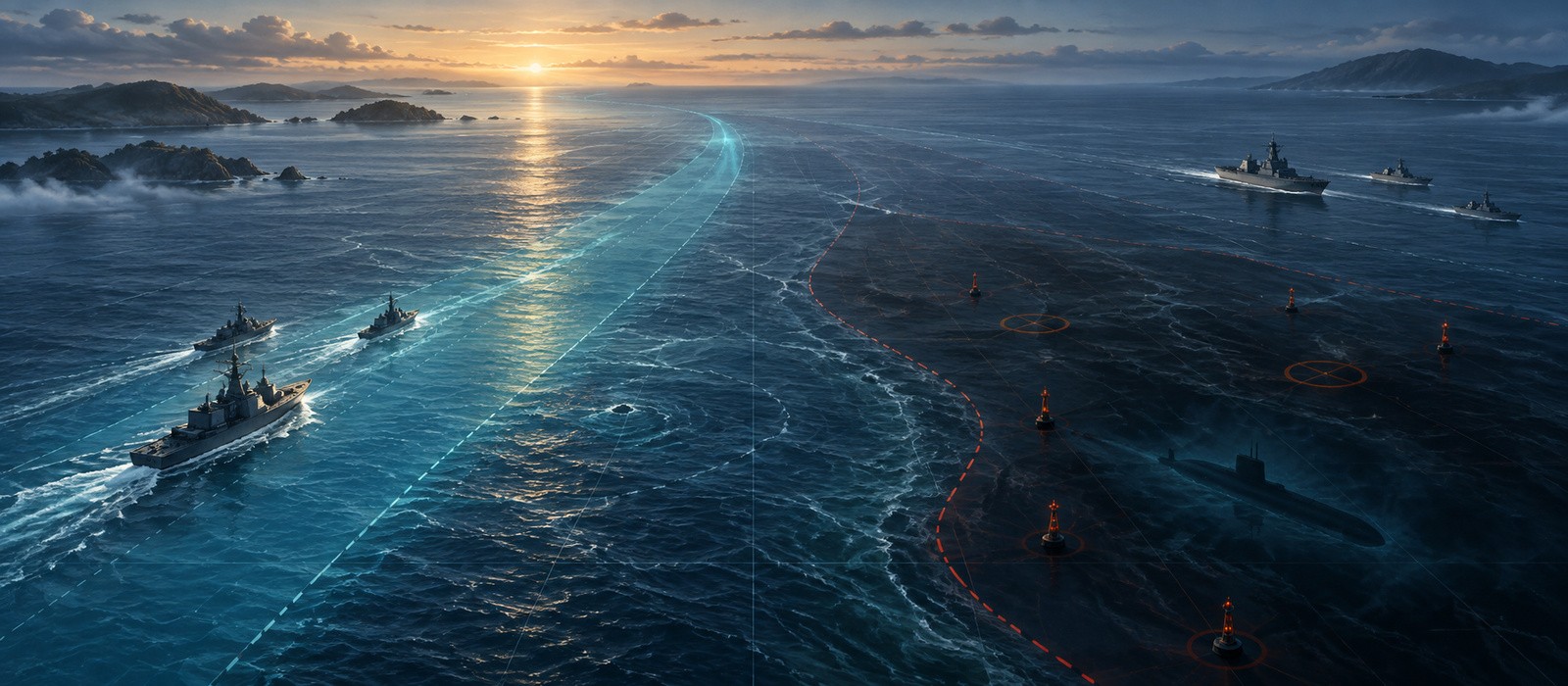
In my view, our theoretical and practical understanding of Sea Control as a concept would be better served if we were to expand beyond the key phrases of freedom of action circumscribed by spatial (particular geography) and temporal (defined duration) considerations as given in myriad definitions of Sea Control, which are essentially similar with minor syntax variations. The author is correct to posit that Sea Control is not an end but a means to an end. However, that brings us to the question, Sea Control serves what end? This is a question which more often than not, is inadequately discussed in planning processes because it is generally not discussed in classrooms deeply or during wargames. The end, or in other words, the purpose of Sea Control is two-fold: enable successful conduct of one’s operations while denying the same to the enemy (denial of freedom of action to the enemy and thus successful accomplishment of its envisaged operations). Therefore, Sea Control should be viewed as a contest involving two entities in a particular area for a particular duration, where both are seeking enhanced control from the existing levels because this enabling condition of a higher degree of control would allow them to progress with their planned operations.
The moot point highlighted here is that Sea Control need not be seen through a binary prism where one side has it and the other side doesn’t, as rightly postulated by Julian Corbett in his Some Principles of Maritime Strategy. Corbett went to great pains to repeatedly point out the relativity inherent in this concept. It may well be that one side has ascendancy (greater degree of sea control) over the other but the existing relative ascendancy may not be enough to progress its planned ops. Conversely, it is also possible that the side with a relatively lesser degree of control may be seeking to erode the ascendancy enjoyed by the superior side so that it could progress with its ops. An apt example would be the operations by the British Royal Navy (RN) and the German Kriegsmarine from mid-1940 to mid/late 1943 during the Second World War in the intervening waters between the two sides roughly stretching from the English Channel in the South to the North Sea.
The RN, with a marked numerical and qualitative advantage in terms of principal surface combatants and sea as well as shore-based aviation, which consequentially translated into a relatively higher degree of capacity for control, was involved in a contest for further ascendancy vis-a-vis the German Navy with lesser number of principal combatants, with shorter sea legs but higher armament throw weight augmented by more numerous high-speed torpedo/gunboats and submarines. Germans, with the above- mentioned naval assets, were seeking to reduce British naval ascendancy (higher degree of domain control) through a series of sharp short engagements through a Klienkreig (small war) approach.1 The essential point being made here is that Sea Control needs to be seen as a contest involving two sides where each is seeking a relatively higher degree of control for operational purposes.
This relativity inherent in the concept of Sea Control finds mention in the writings of Geoffrey Till where he ascribes strategic necessity as an important facet of Sea Control and obliquely mentions that the required degree of Sea Control would be dictated by the envisaged operations. He posits that the scope of operations in terms of time, space and force to establish and exercise the requisite degree of Sea Control would differ depending upon the future operational necessity. For example, any forcible entry of land forces onto a hostile shore by the medium of the sea defined as Amphibious Operations would require a much higher degree of domain control. However, this degree of control in terms of time, space and relative ascendancy would be much higher for an Amphibious Assault as compared to an Amphibious Raid, given the scale of forces, depth of objectives and time for which the hostile shore needs to be occupied/ controlled. Another example in support of the degree of Sea Control could be the British posture once Norway was under German control after the failed Allied expeditionary operation during the Second World War. The RN and the RAF now shifted to disrupting the higher degree of control enjoyed by the Germans instead of seeking preponderant ascendancy for themselves.
Sea Denial, on the other hand, essentially involves denial of a particular geography of maritime domain for a defined period to the enemy wherein no operations of our own are envisaged. Therefore, Sea Denial is essentially aimed at denial of operational use by own and the enemy by deliberate design, thus essentially aimed at a condition of operational parity. The concept of Sea Denial can be well understood by expanding the previously cited example of British and German Navies in the Second World War, wherein the German submarine campaign and episodic hit-and-run raids by principal combatants in the Western and Northern Approaches to the British Isles were a Sea Denial campaign as Germans wanted to deny the use of these seas to the British where they were not planning any operations. This essential difference between Sea Control where both sides seek relatively greater operational ascendance to one of non-use in the case of Sea Denial is neither well understood nor generally discussed even among naval audiences.2
Another point worth mentioning is that Sea Control and Sea Denial need not be seen as counters to each other always. They can be supplementary and complementary. For instance, the contest for Sea Control between the RN and the Kriegsmarine in the intervening waters was supplemented by Sea Denial campaigns using extensive defensive mining off their coasts and even more wide-ranging offensive mining using surface craft and aircraft laid barrages off enemy coasts.
The interpretation in the article that Command of the Seas is a peacetime concept is highly debatable. In my view, the Command of the Seas concept as articulated by Mahan in his writings and seen as unachievable by the great strategist himself should be seen as a condition of absolute Sea Control from a binary standpoint. In this, one side enjoys total dominance at sea with nil interference by the enemy and as a concept remains applicable only in times of conflict. It is another matter that this concept remains purely a theoretical proposition in contemporary times. The Command of the Seas concept lost its practical relevance, whatsoever little it had, with the advent of high-speed torpedo craft that resulted in the disruption of Capital Ship theory. No longer was an equivalent throw weight of shellfire by a comparable ship of matching dimensions and displacement needed and the same effect could be achieved by a small ship armed with torpedoes which could not be engaged by the then capital ships (Battleships) due to elevation limitations in gunnery armament of those times.3 The propositions offered by the author in support of Command of the Seas as a peacetime concept can be better explained by what Milan Vego posits as Misconceptions among many naval scholars and practitioners in what is meant by Sea Control, Sea Denial, Power Projection (essentially a capability and not an adjective) and the term, naval influence. The ability of a navy to shape events and perceptions in a region stems not only from its qualitative and quantitative indicators but also from its presence, inter alia, including reach and sustenance, politico-strategic congruence and operational compatibility in terms of functional interoperability and equipment compatibility.4
The author makes an excellent point in that we need not typecast platforms with concepts, like the frequently cited cliché of submarines being ideally suited for Sea Denial. It is the purpose or mission for which an asset is allocated that determines whether it is being employed for Sea Control or Sea Denial and not its nomenclature.
Endnotes
- The Kleinkrieg approach is explained in Wolfgang Wegener, Naval Strategy of the World War, trans by Holger Herwig (Annapolis: Naval Institute Press, 1989).
- This is a personal observation having been a faculty at the Staff and Naval War Colleges for over seven years.
- For an excellent expose on British gunnery armament spanning the two world wars, see, Andrew Boyd, The Royal Navy in Eastern Waters - Linchpin of Victory 1935-1942 (Annapolis: Naval Institute Press, 2017).
- Milan Vego, “Sea Control,” Maritime Strategy and Sea Control: Theory and Practice (United Kingdom: Taylor & Francis, 2016). In my view, this chapter should be an essential reading for all naval scholars and practitioners as it detangles many of the confusions that exist on of cited concepts like sea control and denial etc.
