




Introduction
The concept of credibility is central to nuclear deterrence. Unless nuclear signalling from one side is picked up by the other and deemed to be credible, there can be no deterrence. Hence, nations ensure that capability build-up and resolve to use that capability is effectively communicated to the adversary in a manner that he believes the message being conveyed. Through nuclear and missile testing, statements, doctrines, etc., countries strive to establish credibility of their deterrence. This, in fact, is critical if deterrence breakdown is to be avoided. The more the credibility of deterrence is doubted, the greater is the chance that it could tempt the other side to take steps that might cause it to breakdown. Therefore, deterrence is credible and stable not merely when the actions of one side do not sow seeds of doubt in the mind of the adversary, about what could follow in case he does something that is sought to be deterred, but rather when the message conveyed removes all doubt about what would follow that would negate any benefits hoped to be made by doing something that was being deterred.
In the case of India-Pakistan nuclear relationship, questions have been raised about the credibility of India’s doctrine of Massive Retaliation (MR) in relation to Pakistan’s use of Tactical Nuclear Weapons (TNWs).1 For almost a decade now, Pakistan has projected that it would use low-yield nuclear weapons against military targets, in order to stop India’s conventional offensive. It is surmised that such use would not cause much damage, especially to non-combatants. This quality of the TNWs is not only perceived to make their use more credible than larger nuclear weapons, but it is also believed to make it more difficult for India to act as per its nuclear doctrine of MR. Many express scepticism over the possibility of Indian leadership being able to attack Pakistani cities in retaliation for a ‘small’ first nuclear use against military targets. This is supposed to put the credibility of India’s nuclear deterrence into question and cannot be conducive to deterrence stability. But, is there really a credibility gap between projected use of TNWs and the promise of MR?
This paper examines the aforementioned question to critically assess whether MR makes for a credible nuclear strategy, especially against use of TNWs. Divided into two sections, it first looks at Pakistan’s rationale for TNWs and the message the projection of their use seeks to signal. The second section explores the concept of MR as ordained in India’s nuclear doctrine to assess its effectiveness for credible deterrence.
TNWs in Pakistan’s Nuclear Strategy
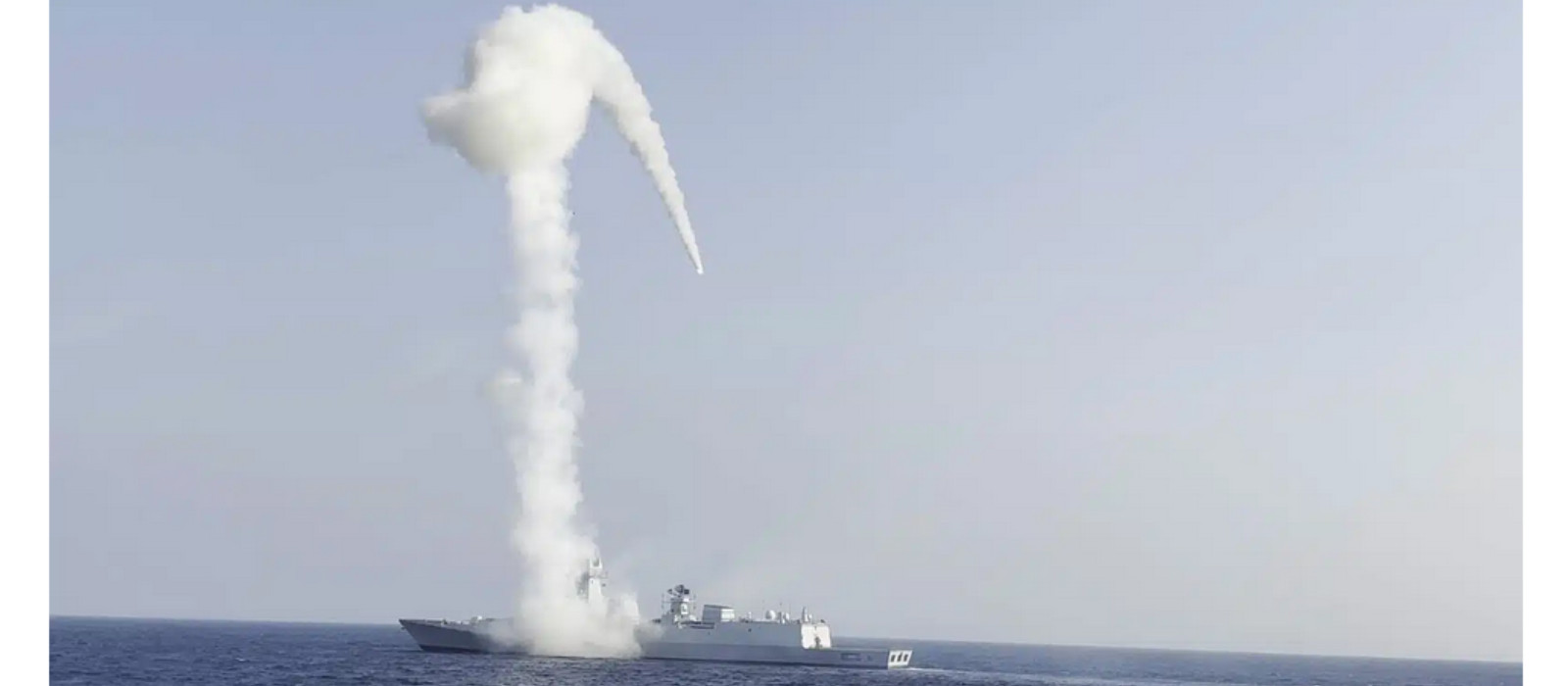
On 19 April 2011, when Pakistan first tested a very short-range ballistic missile, the Nasr, and declared it nuclear capable, its Inter-Services Public Relations Directorate (ISPR) lauded it for adding “deterrence value to Pakistan’s strategic weapons development programme at shorter ranges.” It was described as giving the country the option of a “quick response system” capable of carrying nuclear warheads of appropriate yield with high accuracy.2 Director General, Strategic Plans Division (SPD), witnessed the test and claimed that it had “consolidated Pakistan’s nuclear deterrence at all levels of threat spectrum.”3
The need for such a capability had been found imperative to compress the space for conventional military actions, which Rawalpindi feared New Delhi could exploit to carry out punitive action against it, in case acts of terrorism were traced to Pakistan. Given that the primary role of Pakistan’s nuclear weapons is to avoid having to engage with the Indian military capability, the suggestion of an inevitability of nuclear use through TNWs was meant to act as an insurance policy, even as its strategy of bleeding India through a thousand cuts with sub-conventional acts could continue undisturbed.
Nuclear brinksmanship behaviour is central to such a strategy and the threat of use of TNWs came to be considered an effective tool. In fact, Pakistan has no illusions about the military effectiveness of the low-yield weapon. It understands that these might destroy only a few troops or tanks in the battlefield. Several Pakistani strategists have admitted that, “the ability of low yield nuclear weapons to destroy Indian tanks is limited to the extent of being inconsequential, because to cause substantial damage to a well dispersed attacking armoured formation, a large number of 15-20 kiloton yield weapons would be required.”4 Another analyst makes a similar point when he states that “low yield weapons envisaged to be mounted atop Nasr are not likely to make much physical impact unless used in large numbers. Their psychological impact may be out of proportion to their capability…”5
Indeed, the value of the TNWs lies in the enormity of the threat of its use and the concomitant resolve it indicates to escalate the conflict. Rawalpindi perceives that such a threat would appear as more credible and effective than relying solely on large-scale, counter value nuclear strikes. As expressed by a Pakistani analyst, “a weapon that is small and usable possesses more deterrent value than a weapon which is big and has strategic value.”6 Maj Gen Qasim Qureshi, a retired officer of Pakistan Army, accepted this logic when he stated, “It is precisely this danger (that something goes wrong resulting in a nuclear exchange) and uncertainty that from Pakistan’s point of view will ensure stability of deterrence in the conventional domain.”7
Evidently then, Pakistan appears to be basing its TNW strategy on three assumptions. The first of these is that the threat of use of low-yield weapons on military targets is ‘more credible’ than that of using larger yield weapons in countervalue mode. Dr Adil Sultan, who was once with the SPD, explained this development as part of a “strategy of assured deterrence” since, in response to limited military incursions by the Indian forces, the threat to destroy New Delhi or Mumbai seemed incredible and disproportionate.8 Second, that such use would cause little damage of military significance, which India would prefer to absorb rather than escalate the situation through nuclear retaliation, since that would only beget more nuclear attacks. Third, that such a threat would get the international community rushing in to mount pressure on India to refrain from any conventional use of force against Pakistan. Even if Pakistan had to resort to use of TNWs, India would be pressurized by global powers to refrain from nuclear retaliation, thereby allowing Pakistan to get away with nuclear use and terminate the conflict with a supposedly upper hand.
Therefore, in Pakistan’s assessment, its threat of use of TNWs would create conditions that would make it unfeasible for India to execute military action, for fear of getting into a situation that would lead to further nuclear damage and invite international interference in what India considers a bilateral matter. Rawalpindi safely assumes, therefore, that its TNW strategy adds a further deterrence dimension to its overall nuclear strategy.
India’s Massive Retaliation and Perceived Credibility Gap
Many writings that have emerged ever since Pakistan tested the Nasr opine that India will not have the willingness or the courage to undertake MR if Pakistan were to use a low-yield nuclear warhead on Indian military targets. According to some Indian strategic analysts as well, the possibility of Pakistan’s use of TNWs would raise a ‘serious decision dilemma’ for India since “it could make it hard for Indian leaders to find justification for infliction of disproportionate damage to avenge against what limited damage the TNWs could inflict.”9 It is argued that the Indian leadership would find it difficult to “react by wiping out a few cities in Pakistan - besides opening up the escalatory ladder of nuclear exchange culminating into mutual destruction.”10 Based on such views, these analysts recommend that India should also build TNWs to counter the threat at the same level. Such arguments need to be thoroughly examined to assess whether they genuinely offer any advantages over India’s present nuclear doctrine.
The first point to emphasize in this assessment is that India has eschewed nuclear war-fighting doctrines, including the concept of ‘limited nuclear war’ with low-yield nuclear weapons. India believes that it would be difficult, if not impossible, to contain a situation once a nuclear weapon has been used. As put by a former National Security Advisory Board (NSAB) Chairman, “for India, the label on the weapon, tactical or strategic, is irrelevant, since the use of either would constitute a nuclear attack against India… This would invite a massive retaliatory strike. For Pakistan to think that a counterforce nuclear strike against military targets would enable it to escape a countervalue strike against its cities and population centres is a dangerous illusion.”11 The purpose of India’s nuclear weapons, therefore, is to stop these weapons from being used, not to bait their use through suggestion of being able to fight a war of attrition with them.
In India’s understanding, nuclear weapons best deter through the promise of ‘disproportionate response.’ Therefore, the idea of MR maximizes the fear of extreme nuclear escalation. Or, in other words, it promises the worst outcome by creating a mismatch between the political objective being sought to be achieved through the adversary’s first use of nuclear weapons and the promised consequences that it would invite. Through such a suggestion, India’s nuclear strategy seeks to make the possibility of use of nuclear weapons as remote as possible. Just as Pakistan claims it has only a ‘one rung escalation ladder,’ which it will be compelled to climb in case of an Indian conventional attack, India’s MR also signals a ‘one rung nuclear escalation ladder.’
Robert Jervis wrote in 1984 that, “states may be able to increase the chance of peace only by increasing the chance that war, if it comes, will be total. To decrease the probability of enormous destruction may increase the probability of aggression and limited wars.”12 India’s MR is seeking the same. It refuses to decrease the horrors of nuclear war in order to avoid any temptation to use nuclear weapons, under the mistaken assumption that the costs of the resulting war would be tolerable. Where the use of nuclear weapons is involved it cannot be so, and India’s MR is only underlining the obvious.
Secondly, to answer the argument that India must also build TNWs to respond to Pakistan with similar capability, because this would seemingly deter Pakistan better than the threat of MR, it only bears reminding that fighting a war with TNWs is not as easy as it is made to sound. To start with, making use of the TNW as a means of political signalling could be highly risky, since it would entail a certain delegation of Command and Control (C2) to lower echelons in order to make the strategy look credible. Such a loosening up of nuclear C2, however, has its challenges of ensuring that no accidental or mistaken use takes place. Conduct of limited war “would make special demands on strategic command and control systems, including sensors that tell the decision maker what is and has been happening.”13 This burden on C2 increases as the numbers, dispersal and mobility of strategic weapons increases. Not only is speedy processing of information a critical requirement, so is the need for the politico-military C2 to remain unified. Questions have been raised on whether “will it be at all possible, in this kind of war, to prevent unauthorized acts by military commanders, or to protect the entire structure from top to bottom, both civilian and military components, from interference by unauthorized persons?”14
In the case of India and Pakistan, some additional operational issues too need to be borne in mind. For instance, the use of TNWs for limited nuclear use would be complicated by the fact that in case of ground warfare, it is more likely that there will be several targets, known and unknown, in a theatre. With industrial facilities, ports and air bases located near fairly big cities, even a counterforce strike could get out of hand and amount to an all-out war.
Therefore, tactical nuclear war, by the very nature of the weapons involved, has an inbuilt escalation mechanism. TNWs may intend to cause minimum destruction. But, their use would certainly engender an unstable situation with a potential for enormous destruction. As Therese Delpech wrote, “limited wars without escalation may look attractive, but the guarantee that they will remain so is limited as well.”15 Therefore, there is a deep flaw in a strategy that believes that the use of limited amount of low-yield nuclear weapons makes for greater credibility because such a war can be kept limited. Actually, there is no guarantee that such a war would remain limited, since nuclear weapons are essentially weapons of mass destruction. Yet another argument made against India’s MR is that a suggestion of this kind heightens the possibility of inviting a large first strike on the country. It is argued that since India is threatening MR even in case of use of TNWs, the adversary could be tempted to launch a large first strike in the first instance, thereby imposing greater suffering on India. This argument presupposes an ease in making a decision to use nuclear weapons, which ignores a very important dimension of the current nuclear reality.
It cannot be dismissed that there is a sort of an international taboo against the use of nuclear weapons that has been in force since 1945. The unacceptability of nuclear weapons use has only strengthened over time and, while no legal restriction has been accepted by nuclear weapons possessing states on their use, the psychological weight of such a decision is not trivial. Even to approve the use of one weapon is unimaginable and to believe that a large scale, coordinated, pre-meditated nuclear strike could be ordered by a rational leader is even more remote. Especially when he is aware that it could not be a disarming and decapitating strike and, thus, sure to bring back nuclear retaliation on itself.
In such circumstances, India’s MR might actually be pushing away the possibility of nuclear use and thereby strengthening the case for deterrence, which is the stated objective of its nuclear weapons. India’s nuclear weapons are meant to deter the use of other such weapons. In following MR, India has signalled that it refuses to play the game of tactical/ limited nuclear war. Even if the adversary is threatening the use of ‘clean, counterforce, low-yield weapons,’ India should express that it would have no option but to respond with its ‘dirty, counter-value weapons.’ This makes for credible deterrence. Therefore, MR makes for a credible nuclear deterrence strategy.
Conclusion
The test of Nasr and its eventual deployment in Pakistan’s nuclear arsenal is obviously a move that the country has made in keeping with its own threat perceptions, and its consideration of how it can best address them. It seeks to deter India from launching even a limited conventional action by the suggestion of an inevitable escalation up the nuclear ladder. Therefore, in Pakistan’s perception, by holding out the prospect of use of TNWs, it is actually enhancing its deterrence and thereby meeting the objective of its nuclear strategy, which is to obviate the possibility of a conventional war with India.
From India’s perspective, however, nuclear weapons are all the same and Pakistan’s use of what it describes as TNWs would not earn any concessions on India’s doctrine of MR. In response to the Pakistani signal, therefore, there is no need for India to either make any material changes in its arsenal by way of developing TNWs itself, or any changes to its doctrine of MR. The focus needs to be on exposing the futility of first use of nuclear weapons, tactical or otherwise, to achieve any meaningful political or military objectives; and on communication of our own resolve to inflict unacceptable damage in case of unacceptable actions.
Endnotes
-
There is no universally accepted definition of Tactical Nuclear Weapons. Differences in geographical distance between adversaries, densities of population and technological capabilities of nations possessing nuclear weapons can variably define missiles of different ranges or yields as tactical or not.
-
ISPR Press Release No. PR94/2011, 19 April 2011, http://www.ispr.gov.pk/front/main.asp?o=t-press_release&id=1721, accessed 10 October 2020.
-
Ibid.
-
AH Nayyar and Zia Mian, “The Limited Military Utility of Pakistan’s Battlefield Use of Nuclear Weapons in Response to Large Scale Indian Conventional Attack,” Pakistan Security Research Unit Brief No.61, 11 November 2010.
-
Naeem Salik, Learning to Live with the Bomb, Pakistan 1998-2016 (Karachi: Oxford University Press, 2017), 122.
-
Rabia Akhtar, “NASR and Pakistan’s Nuclear Deterrence – Analysis,” Eurasia Review, 02 May 2011. https://www.eurasiareview.com/02052011-nasr-and-pakistans-nuclear-deterrence-analysis/, accessed 10 October 2020.
-
Qasim Qureshi, “Deterrence Stability in South Asia,” in Feroz H Khan and Nick M Masellis, US-Pakistan Strategic Partnership: A Track II Dialogue, sixth iteration, Phuket (Monterey, CA: Centre for Contemporary Conflict, US Naval Postgraduate School, January 2012), 10.
-
Adil Sultan, “Pakistan’s Emerging Nuclear Posture: Impact of Drivers and Technology on Nuclear Doctrine,” Strategic Studies vol.32-33, no.4 and 1 (Winter 2011 and Spring 2012). http://www.issi.org.pk/publication-files/1340000409_ 86108059.pdf, accessed 10 October 2020.
-
Gen NC Vij, “Strengthening India’s Nuclear Deterrence,” in Securing India, VIF Perspective: Issues and Trends, 2017 (New Delhi: Wisdom Trees, 2017), 7. Similar views may be found in Ajai Shukla, “After a Pakistani TNW Strike, India Can Go for Pakistan’s Nuclear Arsenal: Former NSA Shivshankar Menon,” Broadsword, 18 Mar 2017 and Arka Biswas, “Incredibility of India’s Massive Retaliation: An Appraisal on Capability, Cost and Intention,” Comparative Strategy, vol.36, no.5, 445-456.
-
Ibid., 7.
-
Shyam Saran, “Dealing with Pakistan’s Brinkmanship,” The Hindu, 07 December 2012.
-
Robert Jervis, The Illogic of American Nuclear Strategy (Ithaca: Cornell University Press, 1984).
-
Ibid., 25.
-
Ibid., 26.
-
Therese Delpech, Nuclear Deterrence in the 21st Century: Lessons from the Cold War for a New Era of Strategic Piracy (Santa Monica, CA: Rand, 2012), 50.
