




Editorial Note: (This is a sequel to an earlier article titled: Paper Seeking Missile)
Krepkiy Oboron was an aerospace and defence technology conglomerate, globally recognized as a leader in the development and production of weapon systems and equipment for defence markets.1 The Company offered unique solutions over a broad spectrum of requirements in space, air, land, sea and cyber, and for more than half a century had delivered and supported advanced systems for demanding customers worldwide.
Over the last one year, the mood at Krepkiy Oboron was particularly buoyant with its Raketa Division having revolutionised maritime warfare by its avant-garde Paper Seeking Missile.2 This had the cash registers ringing and the order books had a healthy back log with leading navies across the globe seeking to possibly arm every man-of-war with this highly accurate and lethal missile system against which there was no known countermeasure.
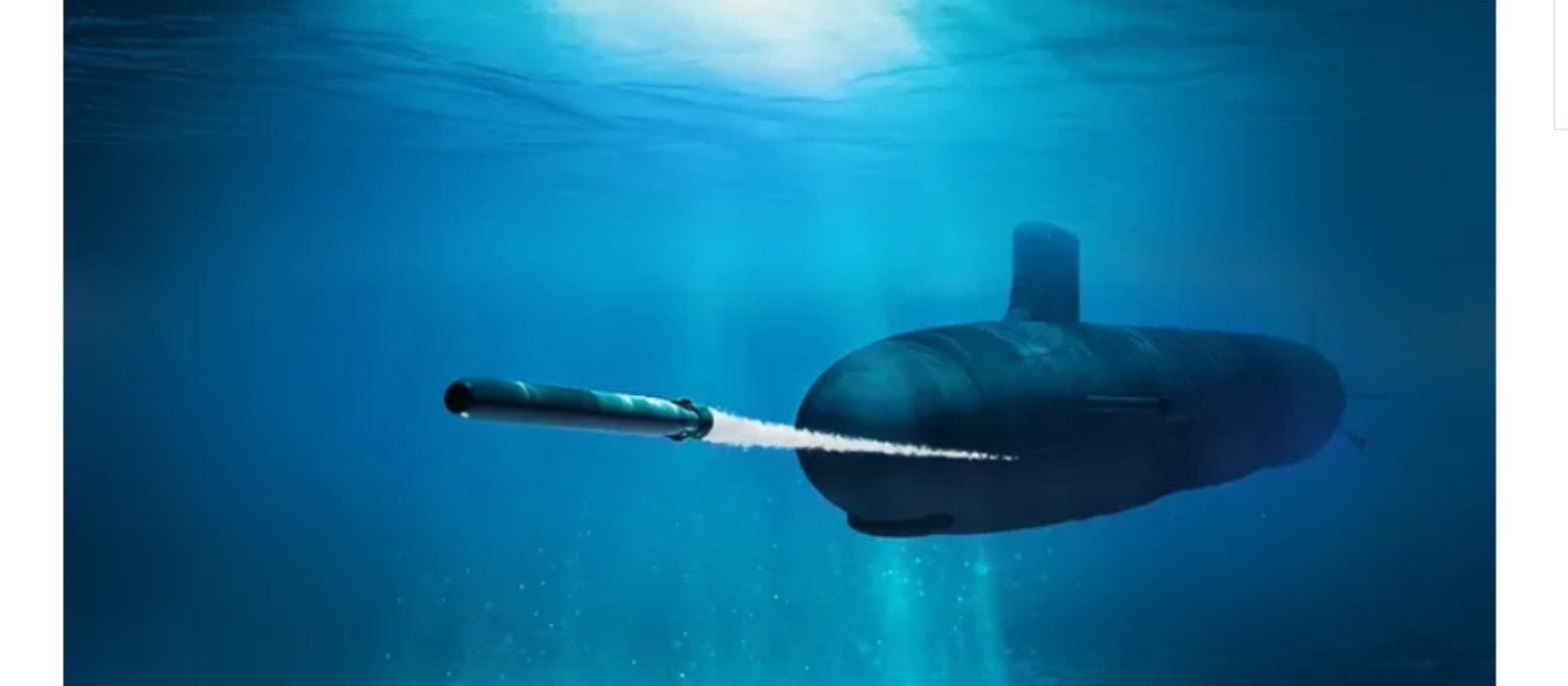
While for the rest of the company the sun was shining and spring was in the air, unfortunately for the Tarpeda Division the winter gloom continued to hang heavily in its corridors and hallways.3 This Division had long been acknowledged as the leading supplier of torpedoes across the globe, and had incorporated emerging technologies to make possible a new range of options for body design, rocket propulsion, seeker heads, guidance systems and precision ordnance as smart payloads.
Past glories were soon forgotten, and the present despondency at Tarpeda had been precipitated by what leading defence analysts were proclaiming as the final frontier in torpedo decoys, and had given it the moniker Bubbly. This new decoy had been conceptualised drawing from advances made in futuristic technologies such as the internet of everything, big data analytics, robotics and nano materials among others. So effective was the Bubbly that it could effectively neutralise any torpedo using any or all of the homing techniques known to science; even the state-of-the-art super cavitating, terminally guided torpedoes were rendered inert and impotent by it.
This spelt potential doom for the Tarpeda Division, unless it was somehow able to get round this dreaded decoy. The submarine community too was visibly shaken by the advent of Bubbly. Submarines had hitherto enjoyed hydrological advantage over surface ships and a stealthy torpedo attack from below the waves could break the back of a ship and despatch it rapidly to the Davy Jones Locker. Torpedoes were no longer going to be effective, making submarines vulnerable to counter attack. The hunter was in danger of becoming the hunted!
The war council of Tarpeda had been assembled in the conference hall. Gears inside the heads of the best brains in the business were whirring frenetically. Faces turned red, not so much by the high octane activity in the frontal lobes, but by the embarrassment that their collective IQ and experience had been defeated by the development of Bubbly. Unless they thought outside the box and came up with a new homing system hitherto unknown to the defence industry, the shares prices of Tarpeda were definitely going on a long trip South.
When the meeting went on well past lunch time, the Admin Officer came in and urged the scientists to restore their tissues with calorific intake. No one was listening. After his second attempt to persuade the geniuses to partake of lunch failed, in his third foray he began by jesting that they should develop a Paint Homing Torpedo (PHT). The force of such a maverick thought caught the brainy guys amidships and almost keeled them over in their chairs. The Admin Officer, although an ex-naval officer, was neither an anti-submarine warfare specialist nor had been involved in scientific research of any kind. He had in fact been a Logistics Officer and therefore, knew exactly of the vast quantities of paint that was consumed generously on board a warship.
The Admin Officer walked out of the conference hall for the third time without even realising the overwhelming impact his offhand remark had made. The brilliant scientists and engineers were triggered instantaneously by this refreshingly new idea and their thought process elevated to a different plane altogether. The sombre mood was quickly replaced by excited chatter and discussion. They broke off late evening having concluded that using highly advanced and super fast processing techniques, and by integrating genomics with bio-computing, it would be possible to develop a homing head that would sniff out the paint trail being left by any warship. Not surprisingly, the project got code named Sniffer.
Any self-respecting Chief Bosun’s Mate will reliably inform you that any flaky paint, bubbles, rust etc. needs to scraped down to bare metal immediately and painted over, first with primer followed by the top coat. Paint on a ship comes in a myriad of colours and textures, with interesting names such a battleship grey, japan black, lipstick red, yellow chromate etc. Being in a corrosive marine environment, seldom a day passes without fresh paint being applied abundantly somewhere on the ship. Even a single speck of rust on a gleaming warship is absolutely unacceptable to the Executive Officer. Such is the proclivity towards painting that, if anything on a ship does not move, it gets painted over. It is believed that on some of the older ships, the deck plating had got entirely corroded long before and was now being held together by successive layers of paint applied over the years! If a cross section were to be cut, it would resemble the annual rings of a tree!
There is always a spurt in painting activity before an Admiral’s visit and it reaches its crescendo just before the ship’s Annual Inspection. More time is spent in painting surfaces than in getting weapon systems, sensors, equipment and machinery ready for Sea and Action. It is amazing as to how several problem areas can be successfully concealed under a coat of paint! As a corollary, the flag ship is the greatest emitter of paint signature and therefore, offers the best target to the PHT!
The scientists and engineers at Tarpeda met a week after the idea of PHT first broke. They had researched and applied their minds vigorously on the potential of this exciting new technology. They were convinced of three things: first, the penchant for continuous painting on a warship would remain as solid as it ever was; secondly, the paint trail left by a warship was very strong and unmistakeable; and thirdly, Sniffer technology could be realised in a short time frame to make the PHT an operational reality.
At last there was light at the end of the tunnel, and the future suddenly began to look rosy. There was much banter and back slapping as the technical and marketing teams filed out of the conference hall. They now had a new focus and each one knew exactly what his or her contribution was going to be in making Sniffer a reality.
With research and development progressing at hypersonic speed, it was not long before Sniffer started to shape up. The initial breakthrough in developing a homing head that would lock on to the paint trail left by a ship proved to be a daunting task, but the team at Tarpeda was equal to any challenge. These brilliant minds ensured that the paint homing technology became effective in a short span of a few months. It was based on the genomics of the shark’s nose and could sense one part of paint in a million! Trials were an astonishing success and soon series production commenced against orders that were pouring in faster than the marketing team could ever imagine. They were no longer going to be run out of business by Bubbly!
Sniffer now posed a threat of a new dimension to warships. Fleets would have to find a way of going about their business by drastically reducing the use of paint on board, which would appear unthinkable considering the prevailing naval philosophy and mind set. At a future date, only history will stand in witness to who won the paint battle - warships or PHT? Or perhaps a rival has already started working on technology to counter Sniffer. Till then, PHT will remain the most dreaded weapon at sea, and Tarpeda’s Number One position is secure for several more years to come!
Endnotes
-
The name of the company is in some foreign language (and not English, certainly), of which the author only has an obscure idea!
-
Raketa probably means a rocket or missile in the same language.
-
Tarpeda, using similar guesswork, and a passing knowledge of the English language, the author thinks this word is likely to mean a torpedo!
