


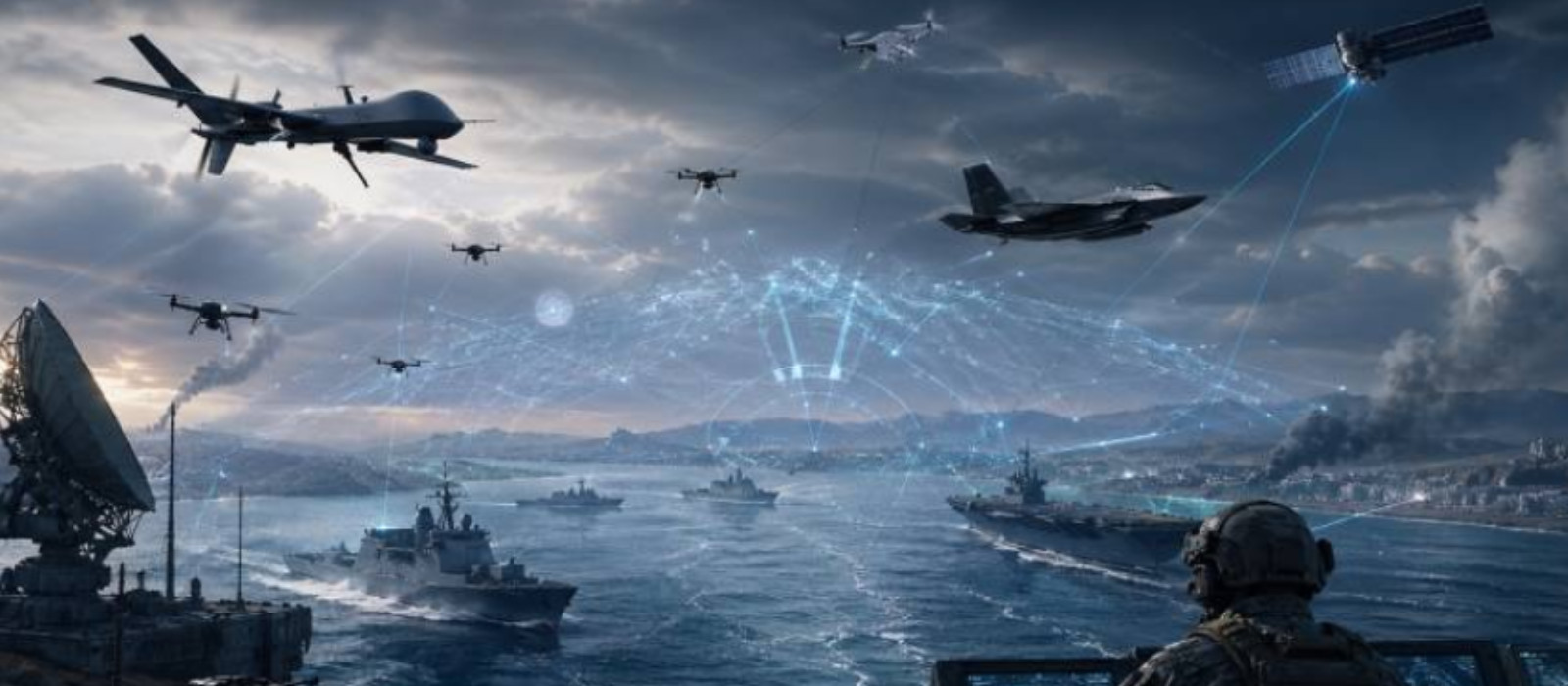


Abstract: The naval battlefield is evolving with the integration of cyber warfare into traditional maritime operations. This article examines the digital front in naval strategy, focusing on offensive cyber capabilities, communication security, and workforce development. Advanced technologies like AI, machine learning, and cloud systems are revolutionizing situational awareness and rapid response to cyber threats, as seen in initiatives like the U.S. Navy's "Project Overmatch" and the Royal Navy's "Project Wilton." Securing naval communications through systems like NAVICS ICS and S-MADNET, alongside cyber resilience strategies such as digital twins, has become critical for maintaining operational security and preparedness.
Cyber threats to critical infrastructures, including undersea cables, underline the silent but severe risks in this digital era. Efforts to enhance cyber defences, foster international cooperation, and establish norms for cyberspace operations are essential for naval security. Cyber diplomacy also emerges as a pivotal strategy to address maritime cyber threats. This shift from traditional physical engagements to a digital dimension highlights the urgent need for navies to adapt to the multifaceted challenges of modern cyber warfare.
Introduction
The naval battlefield is evolving with the integration of cyber warfare into traditional maritime operations, requiring a shift from physical engagements to a digital dimension. Offensive cyber capabilities, secure communication systems like NAVICS ICS and S-MADNET, and cyber resilience strategies such as digital twins are transforming naval strategies, enhancing situational awareness, and ensuring rapid threat response. Initiatives like the U.S. Navy's "Project Overmatch" and the Royal Navy's "Project Wilton" exemplify the critical role of advanced technologies, including AI and machine learning, in modern naval operations. Amid rising cyber threats to critical infrastructures like undersea cables, efforts to strengthen defences, establish international norms, and leverage cyber diplomacy are vital for operational security and dominance in this digital era.
India’s Joint Doctrine for Cyberspace Operations: A Leap in Digital Warfare
In today’s interconnected world, cyberspace has become a critical domain of warfare, as impactful as traditional battlefields. Recognizing this shift, Chief of Defence Staff General Anil Chauhan unveiled India’s Joint Doctrine for Cyberspace Operations on June 18, 2024, during the Chiefs of Staff Committee meeting. This landmark doctrine integrates cyberspace into India’s national security framework and military strategy, positioning it as an independent and integral battlefield alongside land, sea, air, and space. It emphasizes both offensive and defensive strategies, unifying the army, navy, and air force under a cohesive approach to address cyberspace’s borderless nature, while highlighting the need to pre-emptively neutralize threats and bolster digital defences. The doctrine acknowledges cyberspace’s global reach and its potential to disrupt critical infrastructure, from power grids to financial systems, underscoring its strategic importance in protecting economic stability, political integrity, and defence capabilities. However, its success depends on overcoming key challenges in implementation.
-
Resource Gaps: Modern cyber warfare demands advanced technology and skilled personnel, areas where India still lags behind adversaries.
-
Evolving Threats: The rapid evolution of cyber threats necessitates constant vigilance, adaptive strategies, and proactive defences.
-
Human Capital: Training cyber warriors requires a paradigm shift from conventional military training, focusing on specialized skills and continuous professional development1
Recognizing that cyber threats extend beyond the military, the doctrine emphasizes collaboration with civilian sectors. Public-private partnerships are encouraged to share threat intelligence, coordinate responses, and enhance resilience across critical infrastructure. The doctrine aligns cyber operations with national security objectives, advocating a seamless integration of cyberspace into operational environments. By bridging silos across military branches and fostering cross-sector collaboration, India aims to bolster its defence posture against sophisticated adversaries. India’s Joint Doctrine for Cyberspace Operations is a bold step toward preparing for the complexities of digital warfare. However, addressing resource gaps, fostering innovation, and developing a skilled cyber workforce will be crucial. As the battlefield shifts from physical to digital, this doctrine signals India’s readiness to defend its sovereignty in the age of cyber warfare.2
Global Trends in Naval Cyber Warfare
Developing offensive cyber operations strategies in naval forces across the world requires a multifaceted approach that balances technological advancements with strategic considerations.3 Naval forces must adapt to the evolving cyber landscape by integrating offensive cyber capabilities into their operational plans. This involves leveraging advanced technologies such as artificial intelligence, machine learning, and cloud computing to enhance situational awareness, improve decision-making, and facilitate rapid response to cyber threats. Real-world case studies illustrate the importance of this approach. For instance, the U.S. Navy's "Project Overmatch" aims to integrate advanced cyber capabilities into its fleet operations, enabling real-time threat detection and response.4 Similarly, the Royal Navy's "Project Wilton" focuses on developing offensive cyber capabilities to support its operational objectives. These initiatives underscore the need for naval forces to develop robust offensive cyber strategies that can effectively counter emerging cyber threats and enhance their overall operational effectiveness.
Navigating the Digital Seas
The Defence Cyber Agency (DCyA) was established in 2019 to address cyber threats, drawing personnel from the Army, Navy, and Air Force. As of 2021, it was fully operational with respective Cyber Emergency Response Teams (CERT) set up by each military branch5 The Defence Cyber Agency (DCyA) is central to enhancing India's cyber defence, by integrating cyber operations across the Army, Navy, and Air Force. This tri-service coordination allows the Indian Navy to align its strategies with global cyber trends, which is essential as modern naval warfare increasingly depends on advanced technologies. The DCyA's initiatives bolster the Navy's situational awareness and response capabilities against cyber threats, thereby protecting vital maritime assets and infrastructure.6
As naval operations evolve, the importance of robust cyber capabilities has become evident. The DCyA facilitates the implementation of secure communication protocols, such as NAVICS ICS and S-MADNET, which are critical for maintaining operational integrity in complex digital environments. By fostering collaboration among military branches and leveraging international best practices, the agency ensures that the Indian Navy can effectively counter emerging cyber threats while also participating in global cyber diplomacy to establish norms and agreements that enhance maritime security.7
Moreover, the DCyA prioritizes the development of a skilled cyber workforce within the Indian Navy. By investing in training programs and partnerships with academic institutions, it equips personnel with the necessary skills to defend against cyberattacks and conduct offensive operations when required. This focus on workforce development is vital for maintaining operational readiness in an era where cyber capabilities are integral to maritime strategy.8
The DCyA serves as a crucial element in India's naval strategy by harmonizing global cyber trends with national defence initiatives. Its comprehensive approach—encompassing coordination across services, securing communications, and cultivating a proficient cyber workforce—positions the Indian Navy to adeptly navigate both physical and digital domains. As cyber threats continue to evolve, the DCyA's role will be fundamental in ensuring India's maritime security and operational effectiveness in cyberspace.9
Naval Forces Bolster Security with Advanced Communication Systems and Protocols
Naval forces worldwide are implementing advanced strategies and technologies to secure their critical communication and data networks10 One key approach is the use of integrated communication systems like NAVICS ICS and SOVERON, which provide secure and interoperable voice and data connections for naval vessels.11 These systems utilise an all-IP architecture for maximum flexibility and can be customised for all classes of ships, offering reliable LOS and BLOS communications. To further enhance security, some navies are exploring the use of mobile ad-hoc/delay tolerant routing protocols over VHF equipment, leveraging existing systems like AIS for positioning and navigation. This allows sensory data from ships to be securely collected and transmitted to onshore sinks, enabling applications like marine cartography. Secure protocols like S-MADNET have been shown to outperform counterparts in terms of packet delivery and security while accommodating the unique characteristics of the marine environment.12 In one real-world case study, the Indian Navy has implemented an Integrated Communication Network System (ICNS) to provide enhanced satellite communications for operational and logistic support across its fleet. This system enhances the navy's ability to securely transmit critical data and communicate effectively, even in remote areas of operation.13
As the maritime sector faces an increasing number of cyber threats, secure communications have become absolutely critical.14 Ransomwareattacks targeting shipping companies have risen dramatically, with the average ransom paid by cyber-targeted shipowners now exceeding $3 million. To mitigate these risks, navies are investing in robust cybersecurity measures, including secure email systems and comprehensive training programs to educate personnel on best practices for identifying and preventing cyber-attacks.
US Navy Pioneering Digital Defences to Secure Ships from Cyber Attacks
The US Navy is leading the charge in safeguarding critical maritime infrastructure against sophisticated cyber threats.15 Drawing insights from real-world case studies, the Navy is pioneering an innovative approach that combines digital engineering, cloud computing, and advanced threat intelligence. By creating detailed digital twins of their ships and land-based systems, the Navy can simulate, analyse, and optimise the resilience of these complex systems before they are even built.16 This allows them to proactively identify and mitigate potential vulnerabilities, ensuring their vessels can "work hurt" and continue operations even in the face of physical or cyber-attacks.
The Navy is also leveraging cloud computing to dynamically scale up computational resources in response to denial-of-service attacks, without the need for hardware expansion.17 Additionally, they are automating the linkages between their digital twins and real-time cyber threat databases, enabling them to visualise how their systems would respond to actual attacks and deploy targeted defences. This comprehensive, data-driven approach has transformed the Navy's ability to train personnel through realistic cyber incident simulations, bolstering their readiness and response capabilities.
These innovative strategies have already proven effective in safeguarding critical naval infrastructure. In 2017, when the USS John S. McCain (DDG-56) faced a devastating collision, questions about potential cyber intrusions emerged.18 While officials denied conclusive evidence of a cyber-attack aboard the destroyer, they acknowledged the possibility that adversaries could exploit vulnerabilities in commercial vessels like the Alnic MC, which reportedly turned unexpectedly into the McCain’s path. Merchant ships, with their simpler radar systems and minimally staffed bridges, present easier targets for tampering.19 This incident highlighted critical maritime security risks, leading the Navy to incorporate cyber tampering investigations—under the Orion Hammer protocol—into its standard procedures. Such proactive measures reflect a deep commitment to safeguarding vital maritime assets while confronting emerging threats with unwavering vigilance.
U.S. Navy’s cyber workforce to defend critical networks
The U.S. Navy has actively advanced its cyber workforce to safeguard critical networks and infrastructure. A pivotal initiative is the Navy COOL (Credentialing Opportunities On-Line) program, which aligns Navy roles with civilian cybersecurity certifications and licenses.20 This empowers sailors to gain industry-recognized credentials, enriching their expertise and career prospects. Another significant effort is the ONR-UWF Cyber and Electronic Warfare Workforce Development Program, offering free cybersecurity training to eligible veterans, military-connected individuals, and ROTC cadets.21 It includes courses on industrial control systems security, threat intelligence, and CompTIA Security+, providing participants with essential knowledge and practical skills.
A compelling example is Operation CyberDragon, where the Navy's Tenth Fleet collaborated with SilverEdge-GS to train reservists in using commercial and open-source cyber tools to address vulnerabilities in unclassified Navy systems. This initiative cut unplanned mission outages by over 66%, underscoring the value of upskilling the workforce. The Navy plans to replicate this model at other reservist sites to enhance cyber defence capabilities. The Cyber Warfare Development Group (CWDG) also plays a vital role by equipping sailors with the expertise needed to counter cyber threats.22 It offers training programs such as the Cyber Security Specialist (CSS) certification, which prepares personnel to secure naval networks. Similarly, the UK’s Royal Navy has launched the Maritime Cyber Resilience Programme (MCRP), which trains personnel to identify, prevent, and respond to cyber threats.23 Countries like Australia and Japan are also investing in programs to strengthen their naval cyber capabilities.
These illustrates a global commitment to developing skilled cyber professionals to protect naval assets in an increasingly digital threat landscape.
Cyber Power and Maritime Dominance
Cyber capabilities have become a cornerstone of modern maritime power, reshaping global maritime dynamics. Nations are leveraging these technologies to redefine dominance, with China at the forefront.24 Its advancements in shipbuilding and the development of globally owned ports have bolstered its maritime trade, challenging U.S. economic and national security interests. The Maritime Silk Road (MSR), a critical Chinese initiative, enhances trade routes while bypassing chokepoints, reflecting its maritime ambitions outlined by former President Hu Jintao during the Chinese Communist Party’s 12th Congress in 2012. He emphasized exploiting marine resources and boosting the marine economy.25
The Indo-Pacific region, vital for global trade, remains a key arena for China's maritime pursuits. U.S. concerns about potential espionage from Chinese companies involved in undersea cable projects have driven efforts to reroute cables away from disputed areas, safeguarding telecommunications infrastructure from threats.26 China's growing role in undersea cable infrastructure, essential for global digital communications, amplifies concerns over espionage and sabotage. Consequently, the U.S. has restricted Chinese participation in strategic cable projects, emphasizing secure communication amidst geopolitical tensions.27
China's maritime trade dominance, shipbuilding expertise, and port infrastructure investments not only elevate its economic standing but also challenge international diplomacy and naval security, particularly in the context of U.S. interests.28
Similarly, Russia and Iran have demonstrated the disruptive potential of cyber operations in the maritime domain. In 2017, Russian hackers targeted navigation systems of ships in the Black Sea, exposing vulnerabilities in global shipping. Iran has disrupted oil tanker operations in the Strait of Hormuz, a crucial chokepoint, through cyber-attacks.29 These examples underscore the urgent need for robust cyber deterrence strategies to ensure maritime security and the freedom of navigation globally.
Cyber Diplomacy in Naval Operations
Cyber diplomacy has emerged as an essential strategy for nations to navigate the dynamic and challenging domain of cyberspace. In naval operations, it serves a pivotal role in fostering global cooperation and countering the escalating threats of cyber-attacks.30 A notable instance of cyber diplomacy in this arena is the United States' collaboration with allied nations. The U.S. Navy, through initiatives such as Cyber Command's "Cyber Flag" exercises, has worked closely with partners to establish shared norms and protocols for responsible cyberspace behaviour.31 These exercises, which simulate responses to cyber threats targeting naval assets, have significantly enhanced trust, information sharing, and the formulation of coordinated defence strategies. The United Kingdom's proactive stance in applying international law to cyberspace underscores its commitment to cyber diplomacy in maritime security. By advocating principles like sovereignty and prohibiting the use of force,32 the UK has actively participated in global forums such as the United Nations and NATO to shape norms and frameworks for responsible state behaviour in cyberspace.33
Similarly, China has embraced cyber diplomacy in the naval context, with the People’s Liberation Army Navy (PLAN) engaging in bilateral and multilateral dialogues. These efforts, which include information sharing, joint exercises, and confidence-building measures, aim to reduce risks, foster understanding, and promote stability in maritime operations.34 Through cyber diplomacy, nations are addressing the risks posed by cyber-attacks on naval operations and maritime infrastructure. By collaborating on best practices, establishing shared norms, and enhancing resilience, the global community is strengthening the security of naval cyber operations and contributing to a more stable maritime environment.35
Challenges in Crafting Cyberspace ROEs for Military Forces
Developing effective rules of engagement (ROEs) for cyberspace operations is a critical challenge for naval forces. As cyber weapons provide new operational choices, the military must carefully apply the same principles that govern the use of kinetic weapons while accounting for the unique characteristics of the cyber domain.
Many of the actual cyber capabilities and corresponding ROEs remain classified, but unclassified information indicates that the U.S. Department of Defence has sought to formulate ROEs for cyberspace operations that align with the principles of military necessity, distinction, proportionality, and the law of armed conflict. This has proven difficult due to the complexities of the cyber domain, such as the difficulty in attributing attacks and the potential for unintended consequences.
The Rise of Cyber in Naval Doctrine and Strategy
Integrating cyber capabilities into naval doctrine and strategy is vital for modern naval operations.36 Cyber considerations permeate all levels of planning and execution, from tactical to strategic missions, ensuring seamless functionality in the evolving security landscape. The Chinese People's Liberation Army Navy (PLAN) underscores the strategic significance of cyber operations by embedding them into its naval doctrine.37 Recognising the operational impact, PLAN integrates cyber, space, and electromagnetic operations to disrupt adversary decision-making and achieve strategic dominance. Globally, navies acknowledge the importance of cyber in maritime operations. The U.S. Navy's Cyberspace Superiority Vision emphasizes "secure, survive, and strike" as guiding principles for cyberspace dominance.38 Similarly, the Indian Navy's classified "Cyber Doctrine: Flag Officer Doctrines and Concepts" showcases its commitment to incorporating cyber into its strategies. Other navies are also advancing cyber integration. The Royal Navy has formed the Cyber and Electromagnetic Activities (CEMA) Command, while the Royal Australian Navy prioritises cyber defence within its fleet readiness initiatives. These developments signify a universal shift toward recognising cyber as a core operational domain. Achieving effective cyber integration requires technological upgrades, organisational reforms, and specialised training in cyber warfare. As the maritime security landscape evolves, mastering the cyber domain is crucial for maintaining naval superiority.39
Silent Threat: Cyberattacks on Undersea Cables
Beneath the ocean’s surface, an invisible battle threatens the backbone of global connectivity.40 While the physical vulnerabilities of submarine communication cables have been acknowledged for years, a new danger looms—cyber threats targeting these crucial infrastructures. Such assaults on undersea cables represent an underexplored yet critical aspect of cybersecurity with potentially devastating consequences.

Illustrative representation of global Submarine cable network
Source https://www.submarinecablemap.com/submarine-cable/marea
In one alarming instance from Hawaii (2022), US authorities thwarted a cyberattack aimed at an undersea cable integral to the state’s telecommunications and internet systems. This "international hacking group" gained access through stolen credentials, emphasizing the alarming ease with which critical systems can be infiltrated.41 Similarly, in 2021, researchers highlighted the risks of surveillance and signal manipulation, noting that even robustly secured digital systems remain vulnerable if the cables carrying their data are compromised.
The threat is not confined to isolated incidents. State actors are actively reshaping the internet's physical topology to serve strategic interests. Chinese companies are constructing more undersea cables globally, raising espionage concerns for dependent countries.42 Meanwhile, Russia's interest in mapping undersea cables likely indicates preparation for sabotage or disruption.
As global reliance on digital connectivity intensifies, securing these vital infrastructures becomes imperative. Tackling underwater cyber threats demands a collaborative, multinational approach that unites public and private sector expertise. By exposing this overlooked dimension of cybersecurity, we can strengthen the foundations of our global communication networks.
Cyber Warfare Reshapes Naval Battlespace
The modern era of naval warfare is witnessing a transformative evolution, fuelled by the rapid advancements in cyber technology. Naval supremacy, once measured primarily by the size and firepower of fleets, now hinges on the ability to navigate and dominate the digital battlefield. This shift has expanded the maritime domain into the cyber realm, with nations competing not only on the high seas but also in cyberspace.43
China and the United States: A Digital Chessboard
China has emerged as a formidable player, leveraging cyber capabilities to challenge the naval dominance of the United States. The People's Liberation Army (PLA) has been accused of launching sophisticated cyber-attacks targeting U.S. naval systems, aiming to disrupt communications and compromise sensitive data. In response, the United States has fortified its defences, establishing specialized cyber units within the Navy to counteract such threats. This digital duel underscores the critical role of cyber operations in modern naval strategy.44
Russia and NATO: Cyber Shadows in the Baltic
In the Baltic Sea region, cyber warfare has become a significant dimension of ongoing tensions between Russia and NATO allies. Reports of Russian cyber-attacks on the naval systems of Estonia, Latvia, and Lithuania have raised alarms, with disruptions to communication networks and simulated missile attack scenarios. These incidents have spotlighted the vulnerability of traditional naval operations to cyber threats, prompting NATO countries to enhance their cybersecurity frameworks and adopt innovative countermeasures.45
South China Sea: Navigating Cyber Disputes
The South China Sea, a hotspot of maritime contention, illustrates the intricate interplay between cyber capabilities and geopolitical interests. China, asserting extensive maritime claims, has been accused of employing cyber espionage to gather intelligence on rival naval activities. Additionally, advanced cyber weapons allegedly developed by China have sought to disrupt the operations of neighbouring nations. These developments have driven affected countries to invest in robust cyber defence mechanisms, safeguarding their strategic maritime assets.46
Evolving Naval Doctrine: The Global Cyber Imperative
As cyber threats redefine the naval battlefield, navies worldwide are integrating cyber considerations into their doctrines and strategies. China's PLA Navy recognizes cyber operations as a cornerstone of modern warfare, viewing them as essential for undermining adversaries' decision-making processes. Similarly, the U.S. Navy's "Cyberspace Superiority Vision" focuses on securing, surviving, and striking within the cyber domain, ensuring resilience and operational effectiveness.47 India, too, has recognized the significance of cyber integration. The Indian Navy’s classified "Cyber Doctrine" highlights its commitment to weaving cyber capabilities into its maritime strategy. Likewise, the Royal Navy has established a dedicated Cyber and Electromagnetic Activities (CEMA) Command, while the Royal Australian Navy incorporates cyber readiness into fleet operations. These efforts reflect a shared acknowledgment of the cyber domain's strategic importance in safeguarding national and maritime interests.48
A Path Forward: Strengthening Maritime Cyber Resilience
The successful integration of cyber capabilities into naval frameworks requires a multifaceted approach. Technological innovation, organizational restructuring, and the cultivation of specialized cyber warfare expertise are essential pillars of this transition. The transformation of naval warfare underscores the need for adaptive strategies that align with the evolving global security landscape.49 In this era of interconnected threats, the ability to operate effectively in cyberspace is not just an advantage but a necessity. As nations continue to navigate the challenges of cyber warfare, their collective efforts will shape the future of maritime security in the digital age, ensuring resilience, innovation, and enduring strategic superiority.
Cyber Tactics and Technologies in Naval Conflicts
In modern naval warfare, cyber tactics have evolved to become as critical as traditional military operations. Countries are deploying advanced tactics such as cyber espionage, ransomware, denial-of-service attacks, and malware targeting communication systems to compromise an adversary's strategic capabilities and disrupt essential naval functions.
Offensive Cyber Tactics
-
Advanced Persistent Threats (APTs). APT groups, often state-sponsored, target naval infrastructure, embedding themselves in systems to extract sensitive data over prolonged periods.50 Chinese and Russian APTs, such as APT41 and Fancy Bear (APT28), are known for sophisticated tactics that combine espionage with offensive disruptions against communication and navigation systems, significantly impacting situational awareness.
-
Ransomware and Data Wiping Malware. Recent ransomware strains like Ryuk and NotPetya have had severe implications on commercial and military shipping operations, especially in cases like the 2017 attacks in Ukraine.51 These cyberweapons target IT infrastructure, locking or wiping critical data, which can paralyze logistical operations and disrupt naval planning cycles.
-
Cyber-Enabled Information Warfare. Tactics like Deep Packet Inspection (DPI) and Phishing-as-a-Service (PaaS) facilitate the manipulation of information transmitted through naval networks. For instance, disrupting an adversary’s GPS through spoofing attacks can mislead navigation systems, as seen in cyber incidents affecting commercial vessels in the Black Sea.52
-
AI-Powered Botnets. Leveraging artificial intelligence, cyber operatives can coordinate botnet attacks that are more adaptable and harder to mitigate. In naval contexts, AI-enabled botnets are used to flood communication networks with traffic, creating signal jamming and interfering with command-and-control systems.53
Defensive Measures and International Responses
Naval forces worldwide are developing robust, multi-layered defences to counter these advanced cyber tactics. Here are notable defensive measures and responses:
-
Digital Twins for Threat Simulation. The U.S. Navy’s Digital Twin Technology allows them to simulate ship and system resilience against potential cyber-attacks.54 This digital engineering solution identifies vulnerabilities early, mitigating risks before systems are deployed in active operations, as highlighted in the response to the 2017 USS John S. McCain cyber incident.
-
Integrated Communication Protocols. Systems like NAVICS and SOVERON provide secure, interoperable communication channels crucial for naval operations.55 The Royal Navy and Indian Navy are integrating protocols such as S-MADNET, which enhances data packet delivery while minimizing security risks, providing protection against cyber disruptions during critical operations.
-
Cyber Resilience Programs. Programs like the UK's Maritime Cyber Resilience Programme (MCRP) and the U.S. Navy’s Cyberspace Superiority Vision are dedicated to enhancing the resilience of naval forces.56 These initiatives include cyber hygiene training, incident response drills, and real-time simulations to prepare personnel for cyber-attacks, thus reducing human error and fortifying networks.
-
International Cooperation in Cyber Defence. Countries are increasingly recognizing the importance of international cooperation to safeguard maritime assets. Cyber Flag exercises between the U.S. and allied nations foster trust and establish frameworks for coordinated responses to cyber threats.57 Additionally, the UN and NATO promote cyber diplomacy, facilitating intelligence-sharing and establishing guidelines for lawful state behaviour in cyberspace, as reflected in the UK's advocacy at NATO meetings.
-
Secure Data Routing and Encryption. Advanced encryption and delay-tolerant routing protocols, such as Quantum Key Distribution (QKD) and Mobile Ad-Hoc Networks (MANETs), are now being implemented to secure sensitive naval data even under extreme operational conditions.58 Japan and Australia have adopted similar protocols to secure communication in contested waters, enhancing data integrity and ensuring mission success.
Impact and Strategic Implications
The integration of these cyber tactics and defences has profound implications for naval dominance and global security. Offensive cyber capabilities enable nations to exert control over critical maritime domains by targeting infrastructure essential for freedom of navigation.59 Conversely, as navies fortify their networks and engage in cyber diplomacy, they reinforce stability and mitigate the risk of cyber escalation in maritime operations. By delving into these specific cyber tactics and international defensive responses, this analysis underscores the importance of cybersecurity resilience in modern naval strategies. As navies advance their defences, cyber supremacy in the maritime domain continues to redefine the balance of power, with nations vying to protect their critical assets against an evolving array of digital threats.
Naval Cybersecurity: Defensive Measures and International Cooperation
The digital ocean is no longer a metaphor; naval cybersecurity has become a critical domain where proactive defence, international cooperation, and technological innovation converge. The U.S. Navy's Digital Twin Technology enables predictive simulations to counter cyber threats before they materialize, while collaborative efforts like the Royal Navy's MCRP enhance information sharing and coordinated responses across nations. Advanced systems such as NAVICS ICS, SOVERON, and AI-powered tools in Project Overmatch are revolutionizing threat detection and real-time response, as evidenced by the U.S. Navy's Pacific operations. Exercises like Cyber Flag foster knowledge sharing and strategy development, while robust governance frameworks, including cyberspace Rules of Engagement (ROEs), ensure lawful and effective operations. Protecting critical infrastructure, especially undersea cables, has become paramount, as highlighted by successful defences against attacks, such as the case in Hawaii. Cyber diplomacy plays a vital role in conflict prevention, fostering trust and reducing risks while maintaining operational readiness. As technology and threats evolve, collaboration, innovation, and robust governance remain essential to securing maritime cybersecurity as a cornerstone of global naval operations.
Conclusion
Navies are no longer confined to the physical seas; they now navigate a complex digital domain where cyber threats permeate every aspect of operations. From AI-powered intelligence to quantum-secured communications, the future of naval warfare depends on embracing this digital revolution. Projects like Overmatch and Wilton showcase the transformative potential of AI, digital twins, and advanced analytics to enhance situational awareness, predict threats, and optimize real-time decision-making. However, this digital dominance brings inherent vulnerabilities, as nations like China, Russia, and the U.S. weaponize cyberspace to exploit critical infrastructure and disrupt operations in contested waters. Building resilient digital ecosystems is therefore crucial, requiring robust cybersecurity measures, secure communication systems like NAVICS and SOVERON, and a highly skilled cyber workforce. For India, embracing this digital transformation is not merely an option but a strategic imperative, essential for safeguarding maritime interests and achieving its ambitions as a global naval power in an era of unprecedented technological and geopolitical flux.
Endnotes
-
Antara Jha, “India’s Joint Doctrine for Cyberspace Operations Couldn’t Have Come a Day Sooner,” Cyber Frontier, https://forceindia.netfeature-report/cyber-frontier/.
-
Ananya Raj Kakoti and Gunwant Singh, “The New Cyberspace Doctrine’s Impact on India’s Security,” Hindustan Times, July 13, 2024, https://www.hindustant imes.com/ht-insight/future-tech/the-new-cyberspace-doctrine-s-impact-on-indias-security-101720843641057.html.
-
Adam P. Liff, “Cyberwar: A New ‘Absolute Weapon’? The Proliferation of Cyberwarfare Capabilities and Interstate War,” Journal of Strategic Studies, vol 35 no 3 (2012): 401-428.
-
U.S. Department of Defence, “Project Overmatch and Naval Cyber Capabilities: U.S. Navy's ‘Project Overmatch’ and the integration of cyber capabilities.”
-
Defence Cyber Command, “Indian Armed Forces Chiefs on our Relentlesss and Focused Publishing Efforts,” SP’S Naval Forces, https://www.spsnavalforces.com/experts-speak/?h=Defence-Cyber-Command&id=454.
-
Drishti Gupta, “Digital Defence: India’s Cybersecurity Landscape,” Defence Research and Studies, August 27, 2024, https://dras.in/digital-defence-indias-cybersecurity-landscape/.
-
Arindrajit Basu, “India’s International Cyber Operations: Tracing National Doctrine and Capabilities,” UNIDIR, https://unidir.org/files/ 2022-12/UNIDIR_ India_Internatio nal_Cyber_Operations.pdf.
-
Harsh V. Pant and Kartik Bommakanti, “Towards the Integration of Emerging Technologies in India’s Armed Forces,” ORF, (2023), https://www.orfonline.org/research/towards-the-integration-of-emerging-technologies-in-india-s-armed-forces.
-
Ministry of Defence, Government of India, “Cyber Warfare,” 03 December 2021, https://pib.gov.in/PressReleseDetailm.aspx?PRID=1777609®=3&lang=1.
-
Smith T. and Wang L. “Securing the Seas: Advanced Communication and Network Protocols in Naval Operations,” International Journal of Maritime Technology, 12(4), 256-272.
-
Rohde and Schwarz, “Integrated Communication Systems in Naval Forces: Information on the NAVICS ICS and SOVERON systems can be found in technical briefings by the systems' developers.”
-
Neermegha Mishra et al, “Marine Communication for Shipping: Using ad-hoc Networks at Sea,” Econstor, https://www.econstor.eu/bitstream/10419/267198/1/hicl-2021-33-523.pdf.
-
Shams AI Ajrawi and Bang Tran, “Mobile Wireless Ad-Hoc Network Routing Protocols Compariosion for Real-Time Military Application,” Spatial Information Research, 32, 119–129 (2024), https://link.springer.c om/article/10.1007/s41324-023-00535-z.
-
Real-World Impact of Cyberattacks on Ships and Ports: Analysis on the impact of Ransomware on Maritime Operations, including Ransom Trends, can be referenced in articles published by ‘Maritime Executive’ and reports from Allianz (2023) on shipping and cybersecurity.
-
Collins A, "Protecting Maritime Assets from Cyber Threats: The Role of Digital Twins in Naval Defence,” Defence Technology Review, 28(1), 97-114.
-
Digital Twins and U.S. Naval Cyber Defence Initiatives: Publications from the U.S. Naval Institute (2023).
-
Paloalto, “What is a Denail of Service (Dos) Attack?,” https://www.paloaltonetworks.com/ cybe rpedia/what-is-a-denial-of-service-attack-dos.
-
Sam Lagrone, “Navy ‘Orion Hammer’ Investigation into USS John McCain Collisio Has Turned Up No Evidence of Cyber Attack,” USNI, https://news.usni.org/2017/08/25/navy-orion-hammer-investigation-uss-john-mccain-collision-turned-no-evidence-cyber-attack.
-
Vijay Shankar, “The Strategist: The Curious Case of USS McCain,” IPCS, October 04, 2017, https://www.ipcs.org/comm_select.php?articleNo=5376.
-
Roulston P, “Developing a Cyber Workforce: The U.S. Navy’s Cyber Warfare Development Group and Training Programs,” Cybersecurity Education Quarterly, 9(2), 42–58.
-
University of West Florida, “ONR-UWF Cyber and Electronic Warfare Workforce Development Programe,” https://uwf.edu/centers/center-for-cybersecurity/workforce-development/onr-uwf-cyber-and-electronic-warfare-workforce-development-program/.
-
Department of the Navy, Cyberspace Superiority Vision. U.S. Navy Cyberspace Superiority Office.
-
UK Ministry of Defence, Royal Navy’s Cyber Resilience Programme: Strategies in Enhancing Cybersecurity in Naval Operations, Maritime Cyber Resilience Programme.
-
Daniel F. Runde, Austin Hardman and Clara Bonin, “Responding to China’s Growing Influence in Ports of the Global South,” CSIS, October 30, 2024, https://www.csis.org/analysis/ responding-chinas-growing-influence-ports-global-south.
-
China Power Team, "How Is China Influencing Global Maritime Connectivity?,” China Power, April 30, 2021, https://chinapower.csis.org/china-ports-connectivity/ accessed February 03, 2025.
-
Joshua T. White, “ China’s Indian Ocean Ambitions,” Brookings , ( 2020 ) , https://www.brooking s.edu/articles/chinas-indian-ocean-ambitions/.
-
Statista, “Shipping Ports in China – Statistics and Facts,” https://www.statista.com/topics/ 9943/s hipping-ports-in-china/.
-
China Power Team, “How Is China Influencing Global Maritime Connectivity?.
-
Lyle J. Goldstein, “Meeting China Halfway: How to Defuse the Emerging US-China Rivalry,” Georgetown University Press, http://www.jstor.org/stable/j.ctt14bs0cx.3.
-
Mitchell R. and Chen Z. "Cyber Diplomacy in Naval Operations: Building Alliances through Cybersecurity," Naval Cyber Defence Review, 6(3), 144–162.
-
Cyber Diplomacy and International Naval Collaboration: Cyber Command's "Cyber Flag" exercises, are documented in NATO (2022) and Cyber Defence Review publications.
-
Office of the United Nations High Commissioner for Human Rights (2015). Human Rights, International Law, and Cyberspace Security.
-
Congressional Research Service, “China Naval Modernization: Implications for U.S. Navy Capabilities—Background and Issues for Congress,” August 16, 2024, https://sgp.fas.org/crs/row/RL33153.pdf.
-
Adam Segal, “Chinese Cyber Diplomacy in a New Era of Uncertainity,” AEGIS, https://www.hoover.org/research/ch inese-cyber-diplomacy-new-era-uncertainty.
-
Ralph D. Thiele, “Game Changer – Cyber Security in the Naval Domain,” ISPSW Strategy Series: Focus on Defense and International Security, I no 530 (2018), https://css.ethz.ch/content/ dam/ethz/special-interest/gess/cis/center-for-securities-studies/resources/docs/ISPSW-530%20Thie le.pdf.
-
Garcia M, “Cyber Integration in Naval Doctrine: Global Perspectives and Strategic Shifts,” Journal of Naval Strategy and Operations, 17(2), pp. 199-214.
-
Tikk-Ringas E, Cybersecurity and International Relations: The US and China’s Race to Control Cyberspace. East-West Institute.
-
Department of the Navy, “Cyberspace Superiority Vision,” (October 2022), https://media.defence.gov/2023/Aug/15/2003281352/-1/-1/1/DON%20CYBERSPACE% 20SUPERIORITY%20VISION .PDF.
-
James Stavridis, “Cybersecurity’s Importance in Military Maritime Opertaions,” Fortinet, October 11, 2023, https://www.fortinet.com/blog/industry-trends/cybersecurity-in-military-maritime-operations.
-
Santos E. and Meyer J, “The Silent Threat: Cyber Attacks on Undersea Cables and Implications for Maritime Security,” Global Communications Review,11(3), 74-89.
-
Cyberattacks on Undersea Cables: The Maritime Executive and MIT Technology Review (2022), offering technical insights into vulnerabilities of undersea infrastructure.
-
Gallagher S and Muncaster P, “Undersea Cyber Warfare: An Emerging Dimension of Maritime Security,” Security Journal, 35(4), 515-533.
-
“Cyber/S&T,” NIWC Pacific, https://www.niwcpacific.navy.mil/About/Departments/Cyber-S-T/.
-
“Cyber and Innovation Policy Institute,” U. S. Naval War College, https://usnwc.edu/Research-and-Wargaming/Research-Centers/Cyber-and-Innovation-Policy-Institute.
-
“Emphasizing Baltic Sea’s Strategic Role in European Security: Chief of Staff Allied Joint Force Command Witnesses Inauguration of Commander Task Force Baltic in Rostock,” Nato, October 21, 2024, https://jfcbs.nato.int/page5964943/2024/emphasizing-baltic-seas-strategic-role-in-european-security-chief-of-staff-allied-joint-force-command-witnesses-inauguration-of-commander-task-force-baltic-in-rostock.
-
Angeline Tan, “China-affiliated Cyber Groups Spy on Countries with South China Sea claims,” Maritime Fairtrade, September 09, 2024, https://maritimefairtrade.org/china-affiliated-cyber-groups-spy-on-countries-with-south-china-sea-claims/.
-
https://www.defencenews.com/global/asia-pacific/2024/04/23/china-dissolves-strategic-support-force-focused-on-cyber-and-space/.
-
Simon Handler, “The 5x5- China’s Cyber Opertaions,” Atlantic Council, January 30, 2023, https://www.atlanticcouncil.org/content-series/the-5x5/the-5x5-chinas-cyber-operations/.
-
Cybersecurity Solutions for Naval Forces, “Navigating Towards Collaborative Naval Combat and Meeting needs at every decisive Moment,” Thales, https://www.thalesgroup.com/en/ cybersecurity-solutions-naval-forces.
-
“APT41: A Dual Espionage and Cyber Crime Operation,” FireEye Intelligence, (2021).
-
“Ransomware Trends and Impact on the Shipping Industry,” Allianz Global Corporate & Specialty, (2022).
-
“Information Warfare and Cyber-Enabled Operations in Naval Contexts,” U.S. Cyber Command, (2020).
-
“The Rise of AI-Driven Botnets in Cyber Warfare,” MIT Computer Science and Artificial Intelligence Lab, (2021).
-
“Digital Twin Technology in Naval Cyber Resilience,” U.S. Naval Institute, (2023).
-
“NAVICS ICS and Cyber Security in Naval Communications,” Rohde & Schwarz, (2022).
-
“Maritime Cyber Resilience Programme,” UK Ministry of Defence, (2021).
-
“Cyber Flag Exercises and NATO’s Role in Cyber Diplomacy,” NATO Communications and Information Agency, (2022).
-
“Quantum Encryption and MANETs in Naval Cybersecurity,” IEEE Transactions on Information Forensics and Security.
-
Center for Strategic and International Studies, "Cyber Warfare in Maritime Power,” Strategic Implications for Naval Forces, September 14, 2017, https://www.csis.org/analysis/cyber-warfare-maritime-domain.
