




Abstract: China, aiming to secure its national ambitions and status as a global power, has been at the forefront of modernising its military capabilities, leveraging the advancements of the fourth industrial revolution. The article highlights that military modernisation goes beyond technological upgrades and equipment procurement. The PLA’s modernisation stands out due to its unique drivers. Beyond conventional reasons for a credible military force, China’s modernisation is intricately tied to its aspiration for great-power status, internal stability and the perpetuation of the Communist regime. The factors driving military modernisation include emerging threats, historical experiences and innovative military culture. The article acknowledges the effectiveness of China’s modernisation efforts in terms of integrating joint operations, rebalancing forces and showcasing theoretical combat edge. The article underlines that military modernisation encompasses technological advancements, organisational reforms and strategic doctrines. PLA modernisation, driven by multifaceted factors, has led to substantial transformations. Yet its true operational effectiveness remains a subject of observation and analysis, as China seeks to solidify its role as a global military power.
Introduction
History illustrates that strong and powerful leaders, especially military leaders, have unleashed horror and pain on the weak with impunity to expand their political and economic interests. Though the era of militaristic expansion is over, every nation-state aspires to maintain a strong and effective military to act as a guarantor of security and to counter threats to its national interest. Consequently, to maintain the efficiency and reliability of its military, a state must modernise it from time to time in terms of equipment, force structure and tactics as technology and techniques evolve, to maintain its relevance. Overlooking this vital process can lead to a debilitating end, as happened to the Ottoman Empire. Among the reasons was its failure to modernise its army, despite setbacks in the 19th century, which led to its fall in the 20th century.1
Industrial Revolution
The Industrial Revolution in the 18th century brought in a radical transformation in warfare and led states to modernise their armies on an unprecedented scale with sophisticated equipment. It also forced militaries to radically reform the way conflicts were fought. In the late 20th century, advancements in long-range precision weapons, intelligence sensors and cutting-edge command-and-control capabilities were complemented by appropriate changes in tactics, which brought in a major Revolution in Military Affairs (RMA).2 Domination of the battlefield with superior technology and innovative new tactics in conventional warfare became a characteristic of the 1991 Gulf War and led many states, especially China, to progress the modernisation of their militaries to try and remain effective in changing conditions.3
The ongoing fourth industrial revolution is propelling the modernisation of 21st-century militaries through advancements in artificial intelligence (AI), robotics, the Internet of Things (IoT), Web3, blockchain, 3D printing, genetic engineering, quantum computing and various other technologies.4 These drivers in a state’s armed forces are comprehensive and notable advancements in technology and techniques that affect military modernisation. The case of military modernisation in China is a unique and distinct one, as the process is part of a broader national ambition to realise the status of a great power and is driven by a multitude of factors. They are not limited to just the conventional drivers of creating a credible force which is capable of safeguarding national interests and security. They are well beyond that and have certain distinct and unique features, like internal stability and survivability of the Communist regime, and therefore need greater analysis to better comprehend their transformation.
Military Modernisation
The first question that needs to be answered in understanding the drivers of a state’s military transformation process is “What does military modernisation mean?” Does it mean equipping the military with technologically advanced weapon systems and incorporating small amendments in tactics reflecting the additional capabilities of the new equipment, or does it mean much more than that? Dan Gouré, Vice President of the Lexington Institute and an analyst on national security and military issues, outlines that “the objectives of modernisation involve addressing a capability disparity, delivering a substantially enhanced capability, and/or cutting down costs. Modernisation involves substituting an existing military technology, typically a platform, weapon or system, with one that is notably more capable and often transformative. Modernisation extends beyond hardware; achieving a substantial improvement in military effectiveness requires aligning the new component with a suitable organisation, concept of operations, tactics, command and control system and supporting infrastructure.”5
One of the finest illustrations of the military transformation process is the introduction of Blitzkrieg — the term given to German combined-arms warfare by the British — in the Second World War. The Germans combined advancements in mechanised and aerial warfare equipment with a suitable organisation in the form of a highly mobile combined-arms manoeuvre group (Panzer divisions). It was further complemented by changes in tactics for hitting the adversary’s weak points rapidly, achieving surprise and disorienting him. The innovative transformation was not just about applying advancements in technology but the confluence of technology, revision in strategic assumptions for future conflict championed by a group of experienced military advocates from World War I, and modification in organisational structure. It is important to note that innovation was also driven by factors like the availability of limited trained manpower in Germany and the requirement to achieve quick success, necessitating a lethal force that is manoeuvrable and mobile.
The Case of the Dragon
The People’s Republic of China (PRC), led by an authoritarian regime with communist ideologies and powered by its economic progress, has been aggressive in enhancing military, diplomatic, economic and informational levers of power. The march to achieve the status of a great power, or its ‘rightful place under heaven,’ presumably like in the old times, is evident from President Xi Jinping’s rhetoric of the “great rejuvenation of the Chinese nation by 2049,” a stated objective of the state.6 An important prerequisite to restoring China to its past greatness is a credible and capable military that can not only fight and survive a modern war but also act as a guarantor of its national interest, economic progress, territorial integrity and, most importantly, ensure continuity of the regime. Therefore, one of the important milestones set by Xi for China to accomplish rejuvenation is to become a modernised military by 2035 and a world-class military by 2050.7
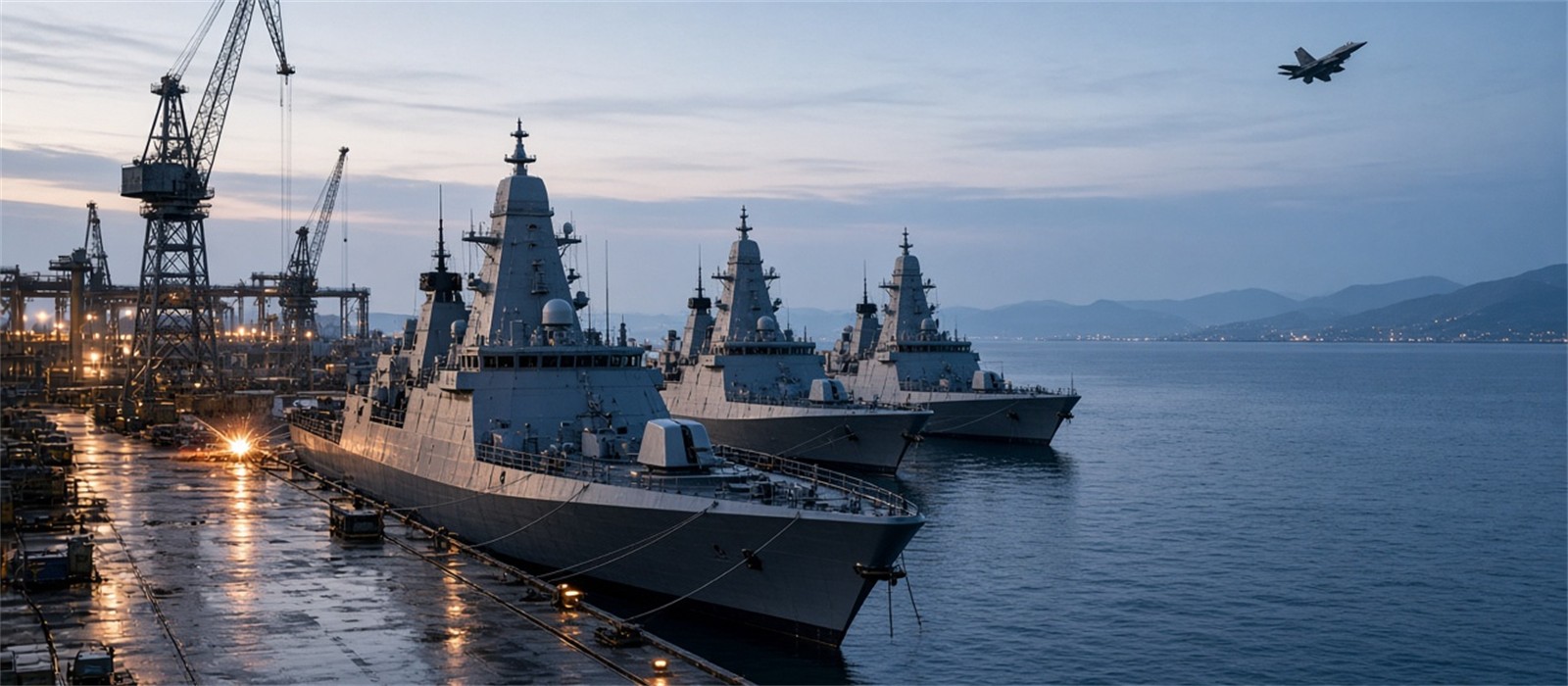
The People’s Liberation Army (PLA) is the principal military force of China. Its five main branches are the Ground Force (PLAGF), the Navy (PLAN), the Air Force (PLAAF), the Rocket Force (PLARF) and the Strategic Support Force (PLASSF). It also includes joint enablers like the Logistics Force (PLALF). Established in 1927 following the Nanchang uprising, the PLA has been a pivotal player in China’s domestic and international matters. Between 1952 and 2016, it has undergone 11 significant military modernisation and restructuring initiatives, experiencing substantial growth in military power and capabilities.8 It is being modernised with state-of-the-art equipment at breakneck speed to achieve parity with adversaries like the US, as is evident from the hypersonic missiles and fifth-generation fighter jets paraded publicly at events of national importance like the 70th anniversary of Communist China in 2019. The modernisation drive that has been undertaken is not only about inducting lethal and technologically advanced weapons systems but also includes organisational revamps, especially at the top decision-making bodies of the PLA like the Central Military Commission (CMC). Thus, the transformation is also reflected across the PLA through major changes in theatre and force-structure reorganisation, composition, recruitment, training and even the conduct of realistic war games as a joint force capable of integrated action leveraging information and technology. The modernisation process is further supported by state-of-the-art research and development sectors through the strategy of civil-military fusion to achieve parity in combat edge.9
Drivers of Military Modernisation
Military modernisation in a state can be driven by traditional capability factors to safeguard national interests far and near home, national security and threats at home and in the neighbourhood, necessitating a well-equipped and efficient military. Political scientist Barry Buzan contends that military modernisation is propelled by three factors: a reciprocal dynamic of action and reaction between the state and its presumed adversary, domestic structures within the state that may not be entirely aligned with the action-reaction dynamic with the adversary, and a technological imperative that encompasses the first two elements.10 Thus, a state’s reaction to its perceived adversary and the prevailing domestic structures requires it to maintain a military fit for purpose and are generally the primary drivers, with technology playing a crucial role in achieving the edge.
The factors of action-reaction dynamics, domestic structure and technology alone do not provide a complete answer to comprehending the drivers of modernisation in a state’s military. Various other factors like emerging threats, scenarios, history, past experiences, the culture of innovation within the military — either driven from the top or emerging from the lower ranks — futuristic thinking, state bureaucracy, or shifting national ambition fuelled by favourable economic and geopolitical conditions can also drive the process. The best illustration of such unique drivers of modernisation is the transformation of the Israel Defense Forces (IDF). Israel, a state lacking geographical depth with a small population, in addition to the conventional threat from states on its periphery, has been under constant attack by irregular forces supported by various state and non-state elements opposing its very existence. Thus, more than traditional threats, it is the threat from terror elements that has driven Israel to transform the IDF into a lean and mean fighting machine with doctrinal and structural changes, enabling swift pre-emptive precision strikes, offensive operations, initiative and use of modern cutting-edge technology in ensuring the security of the state.11
Drivers of Transformation: Threat-Based Strategic Guidance. One of the vital drivers of modernisation in the PLA has been the strategic guidance from the CPC ruling elite, influenced by the Chinese Dream, external events and military setbacks, necessitating transformation to field a credible force capable of asserting dominance in the Asia-Pacific region and achieving victory in global conflicts by the year 2049.12 The PLA has traditionally been focused on core effects through its ground forces, especially during the Civil War.13 Post-1949, it retained a similar structure, relying on its ability to recruit significant forces in a short time, as seen from human-wave tactics employed by the PLA during the Korean War, balancing inferior equipment with mass. This method of warfare, or People’s War, remained the same despite calls for a relook after the Korean War until Mao’s death in 1976. However, there were transformations in strategic military thinking during this period, like the acquisition of nuclear weapons in the 1960s to deter hostilities from the USSR. It became apparent after setbacks during the Sino-Vietnamese War in 1979 that the PLA had become outdated and was unfit to fight a seasoned force like the Vietnam People’s Army (VPA).14
In the 1980s, Deng Xiaoping initiated reforms in the national defence establishment and instructed the military to equip itself for conducting “local war under modern conditions.” The focus shifted to speed, mobility and lethality instead of the attrition and protraction associated with the People’s War. Consequently, this era of modernisation witnessed the most significant troop reductions in the history of the PLA, along with the incorporation of modern and imported weaponry.15 The CPC leadership became increasingly convinced of the PLA’s incapacity for modern warfare through experiences like the First Gulf War and the Taiwan Strait crises. Consequently, in the late 1990s, President Jiang Zemin introduced a new military strategy that called for the development of the capability to engage in “local wars under modern high-technology conditions.”16 The aim was to build a PLA with modern equipment, an emphasis on quality over quantity, and heavy investment by the state in capacity building. The military transformation strategy has undergone two revisions since 1993. The 2004 update, issued by Hu Jintao, emphasised the imperative of enhancing the PLA’s information capabilities, with a particular focus on establishing and enhancing joint operations among different service branches. The 2015 update, led by Xi under the theme of “winning informatised local wars,” reaffirms the 2004 strategy and introduces a new vision for rebalancing forces, including the expansion of China’s naval capacities.17
The ongoing modernisation efforts, initiated by Xi in 2016, with the commitment to complete defence modernisation by 2035 and transform the armed forces into world-class entities by the mid-21st century, have resulted in significant organisational restructuring. This includes the consolidation of the seven Military Regions (MRs) into five Theatre Commands to establish a force capable of joint operations.18 The Joint Logistics Support Force integrates the logistics functions, the Strategic Support Force consolidates intelligence, space, cyber and electronic-warfare functions, and the creation of the Rocket Force as a distinct service responsible for the nuclear triad collectively indicates organisational changes aimed at achieving a joint, integrated and networked force.
The transformation has also resulted in the army losing its prominence in the PLA, with air, rocket and naval forces gaining the upper hand in senior leadership positions and the quantum of funding, in line with Xi’s vision for developing a force capable of power projection, near and far. The transformation happening is a continuation of the process initiated in the 1980s under Deng. Therefore, the main drivers of modernisation since the start of the 21st century are a mere continuation of the strategic guidance initiated by the CPC and its ruling elite to equip and restructure the PLA to meet contemporary threat requirements influenced by external events and, most importantly since 2016 under the leadership of Xi, to realise the strategic ambition of great-power status without interference from power centres in the international arena like the US.
Drivers of Transformation: Securing China’s National Interests
The core of China’s national interests is centred on maintaining stability in political and social systems, safeguarding national sovereignty, ensuring national security, preserving territorial integrity, achieving national unification and fostering economic and social development.19 Chinese leaders frequently refer to three fundamental core interests, as outlined by Xi during a 2014 meeting with the PLA’s delegates to the National People’s Congress, encapsulated as “interests in national sovereignty, security, and development.”20 Security typically pertains to upholding CPC authority across the entirety of the Chinese state. Sovereignty encompasses concerns related to territorial integrity and the unification of the nation, with a specific emphasis on regions like Taiwan, Tibet and Xinjiang.21 Development refers to economic development at home and the protection of economic interests far from home. Therefore, a modernised PLA is an essential requirement for the Chinese state to achieve credible deterrence against threats to the above-mentioned national interests.
Protecting economic interests far from home has been a key driver of modernisation, especially in the naval forces. The PLAN, from being a coastal navy, has transformed itself into a blue-water navy capable of operating at long distances from home, ‘in the far seas,’ for a considerable time since the early 2000s. Under Xi, the process of expanding PLA activities further away from home has been driven by the requirement to protect the flow of energy supplies from the Gulf and finished goods from home to its markets, to maintain the speed of its economic engine. The acquisition of basing facilities in Djibouti and the active push for acquiring further facilities in various parts of the world indicates the push from Beijing for the PLA to operate further from home to protect its extensive economic interest being pursued through the Belt and Road Initiative (BRI).22 Further, China does not want to be left out of the economic prospects opening because of the ice melting in the Arctic region. China has declared itself a “near-Arctic state” and intends to establish a “Polar Silk Road” as part of its BRI, as brought out in a 2018 white paper.23 It has been building icebreakers and Arctic-focused military capabilities; therefore, it is unlikely to be a surprise when China employs the PLA soon to guard its interests there, given its close relationship with Russia, which covets most of the Arctic for itself.
Drivers of Transformation: Continuity of the Communist Regime
The CPC has used the PLA time and again to ensure its survivability in times of crisis since the end of the Civil War in 1949, and the best illustration of the same is the suppression of the Tiananmen Square protests of 1989. It led to not just military suppression and the loss of hundreds, if not thousands, of civilian protestors, particularly students advocating for democratic reforms, but it also allowed the CPC to endure and strengthen its governance.24 The ruling elite in the CPC considers the communist regime the best guarantor of a stable and prosperous Chinese state and therefore of the regime’s survivability. Consequently, one of the significant drivers of modernisation in the PLA is to ensure that it continues to remain a capable loyal guard for the CPC and its ruling elite. It can be summarised from Xi’s stated core expectations from the PLA that “the People’s Army is committed to resolutely supporting CPC leadership and our nation’s socialist system, protecting our national sovereignty, security and development interests, and promoting peace both regionally and globally.”25
Since 2014, mentions of the “Central Military Commission (CMC) Chairman Responsibility System” in Chinese media have strongly emphasised the extent to which Xi, in his capacity as the Chairman, directly oversees disciplinary, administrative and operational aspects of the PLA.26 The primary goal is to maintain unwavering loyalty from the PLA to the CMC Chairman, while the second objective is to establish a command-and-control structure across all levels of the PLA that facilitates joint operations in informatised local conflicts.27 To avert the emergence of alternative power hubs within the PLA, crucial adjustments involve restructuring the CMC and dismantling the influential four General Departments of the PLA. The responsibilities of these departments are now incorporated into 15 specialised organs directly under a restructured CMC, consolidating control of the PLA under the CMC and its Chairman.28 It is also imperative to note that a modernised PLA alone cannot ensure the CPC’s survivability unless it remains loyal to it, and therefore the focus of transformation has been ingraining loyalty through the inclusion of compulsory political indoctrination. The indoctrination of the armed forces served the dual purpose of not just establishing party control but also fostering a strong sense of unity and camaraderie among its members.29
Since the implementation of reforms in the organisational structure of the PLA under Xi in 2016, this indoctrination process has been given further prominence in the training of conscripts, which can be gauged from the fact that “recruit training spans 40 days, occurring annually from September to December. It encompasses fundamental training, instruction on saluting, marching, rifle handling, the history of the PLA, and a 16-day segment dedicated to political indoctrination.”30
Other Significant Drivers
Glorious History and Strategic Culture. Modern China is a civilisational state with a very long history, and deep-rooted beliefs and values. Thus, its culture and society seem to have acquired unique characteristics and a unique way of thinking. Symbolic historical ideas articulated by modern Chinese leaders, academics and the CPC provide clear evidence for the existence of a derived strategic culture in the Chinese thinking process and, therefore, seem to be one more driver of modernisation in the PLA. The narrative of the ‘Century of Humiliation,’ historical glory and the need to regain its place in the world order plays a very crucial role in shaping foreign and military policy and its actions on the international scene. Xi’s emphasis on the impact of a country’s military backwardness on its security is further clarified by his statement, “A nation’s vulnerability in military matters deeply affects its security. When I delve into the records of modern Chinese history, I’m saddened by the tragic instances of our defeat due to our lack of competence.”31 Thus, the historical perspective of China being a prominent power for a prolonged time and being forced into oblivion because of the failure to maintain a credible military forms a very important factor driving modernisation in modern China as it marches towards great-power status.
Sun Tzu and Xi’s Thoughts. Leaders of the PLA and CPC take considerable pride in China’s historical military heritage, asserting that it surpasses that of Western traditions. Recent publications from the PLA extensively leverage these traditions, particularly drawing from figures like Sun Tzu, to derive principles and lessons applicable to contemporary requirements, especially in terms of operations and strategy. Classical martial novels such as Romance of the Three Kingdoms are significant sources of strategic principles, showcasing models of heroism and loyalty, often framed within Confucian perspectives on relationships, guiding how members of the PLA should interact.32 Further, Sun Tzu’s teaching that “achieving victory in all your battles is not the ultimate excellence; true excellence lies in overcoming the enemy’s resistance without engaging in direct conflict,” highlighting the concept of “victory without war” through the employment of comprehensive means to reach the desired end-state, finds traction in modern China using diplomatic and economic means to influence in its foreign relations rather than its military.33 It is further complemented by the promotion of comprehensive warfare, or ‘multi-domain precision warfare,’ by the PLA as the strategy for winning modern wars.34 Thus, the military thought process expressed in ancient Chinese military classics like Sun Tzu’s Art of War also plays a significant part in driving the modernisation process in current times.
The ongoing military modernisation efforts initiated since early 2016 are considerably more ambitious, aiming to better align China’s military capabilities with its regional and global interests.35 The unprecedented pace stems from Xi’s consolidation of power without alternate power centres in the CPC and the PLA through anti-corruption purges, while positioning his associates in important positions in the CMC, Politburo, and so on. It also stems from the understanding of the current leadership that there is little point in grafting fancy weapons onto an old-fashioned force.36 Thus, “Xi Jinping’s Thought on Socialism with Chinese Characteristics for a New Era,” incorporated into the constitution of the CPC at the 19th National Congress of the CPC in 2017, is an unabashed programme of national revival backed up by increasing military power driving forward the military modernisation.37
Effectiveness of Chinese Military Modernisation
Having seen the drivers of military modernisation in the PLA, it is useful to examine if it has delivered effectively or not. Modernisation has delivered on multiple fronts, like integration of the PLA into an integrated joint force, rebalancing from a ground-heavy force to an expeditionary force capable of power projection in the Asia-Pacific region and, to a limited extent, far from home. It is armed with advanced and lethal equipment to be a force to be reckoned with in terms of its theoretical combat edge.
The modernisation drive has also led the PLA to become a force with huge quantities of advanced systems manned by an inferior and under-motivated workforce resulting from the failure to recruit and retain technically qualified personnel, since it is conscription-heavy.38 The issue has further been amplified by the “one-child policy” and the availability of additional employment avenues, preventing Chinese families from sending their children to the PLA beyond compulsory conscription time.39 Thus, the transformation process, driven by a multitude of factors and executed through a top-driven strategy with strict checks by the CPC ruling elite, combined with the absence of significant combat experience by the PLA for a considerable time, is likely to have delivered a hollow force with questionable effectiveness when faced with a battle-hardened force.40
Conclusion
Every nation-state aspires to maintain a strong and effective military to ensure security and counter threats to its national interest at home and far away. Military modernisation is the transformation of the existing forces of a nation-state with equipment improved in terms of technology, sophistication, lethality, and variations to the force structure providing better command and control. Further, this is complemented by upgraded doctrines meeting the rigours of modern-age warfare at all levels, enabling better readiness levels for effective employment. The process of transforming a state’s military can be a top- or bottom-driven process, generally determined by the factors shaping the drivers of modernisation. The drivers of military modernisation can be conventional factors like perceived threats to the national interest, security, or leveraging advancements in technology, and unconventional factors that are unique to each state, like future ambitions. Thus, to properly comprehend the transformation process in a state’s military, one must look through the prisms of both the above-mentioned factors.
The People’s Republic of China, buoyed by its sustained economic development, has modernised its military at an unprecedented pace since the start of the 21st century. The ongoing transformation within the PLA is a component of a larger initiative to achieve “the great rejuvenation of the Chinese nation by 2049.” This can be described as a resolute pursuit of political and social modernisation, encompassing extensive endeavours to enhance national influence, refine governance structures and reshape the international order. PLA modernisation is a process that has been underway progressively since the reforms of the 1980s under Deng, under the strategic guidance of the CPC’s ruling elite. The transformation has been put on an accelerated mode by Xi, with his unprecedented supremacy over the CPC and the PLA overcoming the hurdles of corruption, nepotism and rival power centres.
Certain additional unique factors that shaped PLA modernisation arose from the lessons learnt through conflict in Vietnam, adversary setbacks in the First Gulf War and during the Taiwan Strait crisis, coupled with the future vision charted by the CPC, with clearly spelt-out key milestone accomplishments, leading to the ultimate realisation of the “Chinese Dream.” The top-down modernisation initiative, conducted under rigorous control and guidance, has yielded significant progress on various fronts. This has empowered the PLA to evolve from a manpower-intensive and inadequately equipped military into a modernised force with increasing regional influence and expanding global capabilities.41 Though there has been limited evidence and reports regarding the efficacy of the PLA’s latest capabilities, the initial analysis suggests it should be regarded as a formidable force with a degree of caution. The ongoing advancement of the PLA towards achieving the status of a ‘world-class military’ capable of ‘engaging in and triumphing over conflicts’ is still a process that is underway.42
Endnotes
- Avigdor Levy, “Military Reform and the Problem of Centralization in the Ottoman Empire in the Eighteenth Century,” Middle Eastern Studies, vol. 18, no. 3 (July 1982), 227–49, https://www.jstor.org/stable/4282890.
- Anthony H. Cordesman, “The Real Revolution in Military Affairs,” CSIS, 2014, https://www.csis.org/analysis/real-revolution-military-affairs.
- Harlan W. Jencks, “Chinese Evaluations of ‘Desert Storm’: Implications for PRC Security,” The Journal of East Asian Affairs, vol. 6, no. 2 (Summer/Fall 1992), 447–77, https://www.jstor.org/stable/23253951.
- Devon McGinnis, “What Is the Fourth Industrial Revolution?” The 360 Blog, Salesforce, 2 February 2023, https://www.salesforce.com/blog/what-is-the-fourth-industrial-revolution-4ir/.
- Daniel Gouré, “Winning Future Wars: Modernization and a 21st Century Defense Industrial Base,” The Heritage Foundation, 4 October 2018, https://www.heritage.org/military-strength-topical-essays/2019-essays/winning-future-wars-modernization-and-21st-century.
- National goal put forth by Xi Jinping during the 18th National Congress of the Communist Party of China. The extract dates the congress to 2019; the 18th Congress was held in 2012.
- “Xi Jinping Wants China’s Armed Forces to Be ‘World-Class’ by 2050,” The Economist, 27 June 2019, https://www.economist.com/china/2019/06/27/xi-jinping-wants-chinas-armed-forces-to-be-world-class-by-2050.
- “China’s ‘World-Class’ Military Modernisation,” E-International Relations, 22 April 2022, https://www.e-ir.info/2022/04/22/chinas-world-class-military-modernisation/.
- “The Chinese Communist Party’s Military-Civil Fusion Policy,” United States Department of State, December 2020, https://2017-2021.state.gov/military-civil-fusion/.
- Barry Buzan, An Introduction to Strategic Studies: Military Technology and International Relations (Basingstoke: Macmillan, 1987). The extract prints the subtitle as “International Politics.”
- Seth J. Frantzman, “Israel Pushes Military Digital Transformation in the Age of Artificial Intelligence War,” C4ISRNET, 23 July 2021, https://www.c4isrnet.com/battlefield-tech/it-networks/2021/07/23/israel-pushes-military-digital-transformation-in-the-age-of-artificial-intelligence-war/.
- Lindsay Maizland, “China’s Modernizing Military,” Council on Foreign Relations, 5 February 2020, https://www.cfr.org/backgrounder/chinas-modernizing-military.
- Andrew Scobell and Alex Stephenson, “Five Things to Know About China’s Armed Forces,” United States Institute of Peace, 2 August 2023, https://www.usip.org/publications/2023/08/five-things-know-about-chinas-armed-forces.
- Miles Maochun Yu, “The 1979 Sino-Vietnamese War and Its Consequences,” Hoover Institution, 20 December 2022, https://www.hoover.org/research/1979-sino-vietnamese-war-and-its-consequences.
- European Foundation for South Asian Studies (EFSAS), “Drivers, Trajectories and Prospects of Military Modernization in China,” Amsterdam Study Paper No. 6, July 2022, https://www.efsas.org/publications/study-papers/drivers-trajectories-and-prospects-of-military-modernization-in-china/.
- M. Taylor Fravel, Strong Borders, Secure Nation: Cooperation and Conflict in China’s Territorial Disputes (Princeton: Princeton University Press, 2008).
- Cortez A. Cooper, PLA Military Modernization: Drivers, Force Restructuring, and Implications (Santa Monica: RAND Corporation, 2018). Testimony presented before the U.S.-China Economic and Security Review Commission.
- Wang Lei, “China in 2017: Building World-Class Military Forces,” CGTN, 21 December 2017, https://news.cgtn.com/news/7a4d6a4d33637a6333566d54/share_p.html.
- Edmund J. Burke et al., People’s Liberation Army Operational Concepts (Santa Monica: RAND Corporation, 2020). The extract dates the report to 2018.
- “Xi Jinping Attends PLA Delegation Plenary Meeting,” People’s Daily, 11 March 2014.
- “MND: Adjustments to Mainland Military Disposition Toward Taiwan Will Depend on the Situation,” Embassy of the People’s Republic of China in the United States of America, 20 January 2008.
- “China Wants to Increase Its Military Presence Abroad,” The Economist, 5 May 2022, https://www.economist.com/china/2022/05/05/china-wants-to-increase-its-military-presence-abroad.
- Jiang Yu, “Biden to Name Arctic Ambassador as China Eyes Region,” VOA, 1 September 2022, https://www.voanews.com/a/biden-to-name-arctic-ambassador-as-china-eyes-region-/6727979.html, accessed 18 March 2023.
- Jan Wong, Red China Blues: My Long March from Mao to Now (Toronto: Doubleday/Random House, 1996), 278. The extract prints the publication year as 1997.
- Xinhua, “Xi Focus: PLA Striving to Build World-Class Military under Xi’s Leadership,” 2 August 2022, https://english.news.cn/20220802/a1990d2381244c06899751bab3ce739d/c.html, accessed 18 March 2023.
- James Mulvenon, “The Yuan Stops Here: Xi Jinping and the ‘CMC Chairman Responsibility System,’” China Leadership Monitor, no. 47 (Summer 2015), https://www.hoover.org/research/yuan-stops-here-xi-jinping-and-cmc-chairman-responsibility-system.
- Cortez A. Cooper III, PLA Military Modernization: Drivers, Force Restructuring, and Implications.
- Chien-wen Kou, “Xi Jinping in Command: Solving the Principal–Agent Problem in CCP–PLA Relations?” The China Quarterly, no. 232 (December 2017), 866–85. The extract cites page 7.
- Juliette Genevaz, “Political Indoctrination in the Chinese Military: Towards a Post-Revolutionary PLA,” China Information, vol. 31, no. 1 (2017), 3–21, https://doi.org/10.1177/0920203X16682790. The extract prints a nearby DOI.
- Wang Shumei, The PLA and Student Recruits: Reforming China’s Conscription System, Institute for Security and Development Policy, Stockholm.
- Li Xuanliang and Wang Jingguo, “Focus the Building of Elite Forces on Winning in War,” Xinhua, 21 September 2017.
- “The Culture of the Chinese People’s Liberation Army,” Marine Corps Intelligence Activity, via Public Intelligence, https://info.publicintelligence.net/MCIA-ChinaPLA.pdf, accessed 18 March 2023.
- “Sun Tzu on the Art of War,” as cited in the extract, accessed 18 March 2023.
- Ryan D. Martinson and Conor M. Kennedy, “Using the Enemy to Train the Troops: Beijing’s New Approach to Prepare Its Navy for War,” China Brief, vol. 22, no. 6 (25 March 2022), https://jamestown.org/program/using-the-enemy-to-train-the-troops-beijings-new-approach-to-prepare-its-navy-for-war/.
- Cortez A. Cooper III, testimony before the U.S.-China Economic and Security Review Commission, 15 February 2018.
- Cortez A. Cooper III, PLA Military Modernization: Drivers, Force Restructuring, and Implications.
- Moritz Rudolf, “Xi Jinping Thought on Socialism with Chinese Characteristics for a New Era,” Agenda Pública, 24 April 2023, https://agendapublica.es/noticia/18553/xi-jinping-thought-socialism-with-chinese-characteristics-for-new-era.
- Subodh Kumar, “PLA a Paper Dragon? China Admits Shortage of Trained Troops in Hi-tech Ops,” India Today, 4 January 2023, https://www.indiatoday.in/world/story/pla-a-paper-dragon-china-admits-shortage-of-troops-trained-in-hi-tech-ops-2317298-2023-01-04. The extract also prints the date 1 August 2023.
- Taylor A. Lee and Peter W. Singer, “The PLA’s People Problem,” Defense One, 11 January 2023, https://www.defenseone.com/ideas/2023/01/plas-people-problem/381728/, accessed 18 March 2023.
- Meia Nouwens, “China’s Military Modernisation: Will the People’s Liberation Army Complete Its Reforms?” IISS, 7 December 2022, https://www.iiss.org/online-analysis/online-analysis/2022/12/strategic-survey-2022-chinas-military-modernisation/, accessed 18 March 2023.
- Meia Nouwens, “People’s Liberation Army Modernisation: From Drivers of Change to Strengths and Weaknesses,” Department of Politics and International Relations, University of Oxford, 22 February 2022, https://www.politics.ox.ac.uk/event/peoples-liberation-army-modernisation-drivers-change-strengths-and-weaknesses, accessed 13 April 2023.
- Meia Nouwens, “People’s Liberation Army Modernisation: From Drivers of Change to Strengths and Weaknesses.”
