


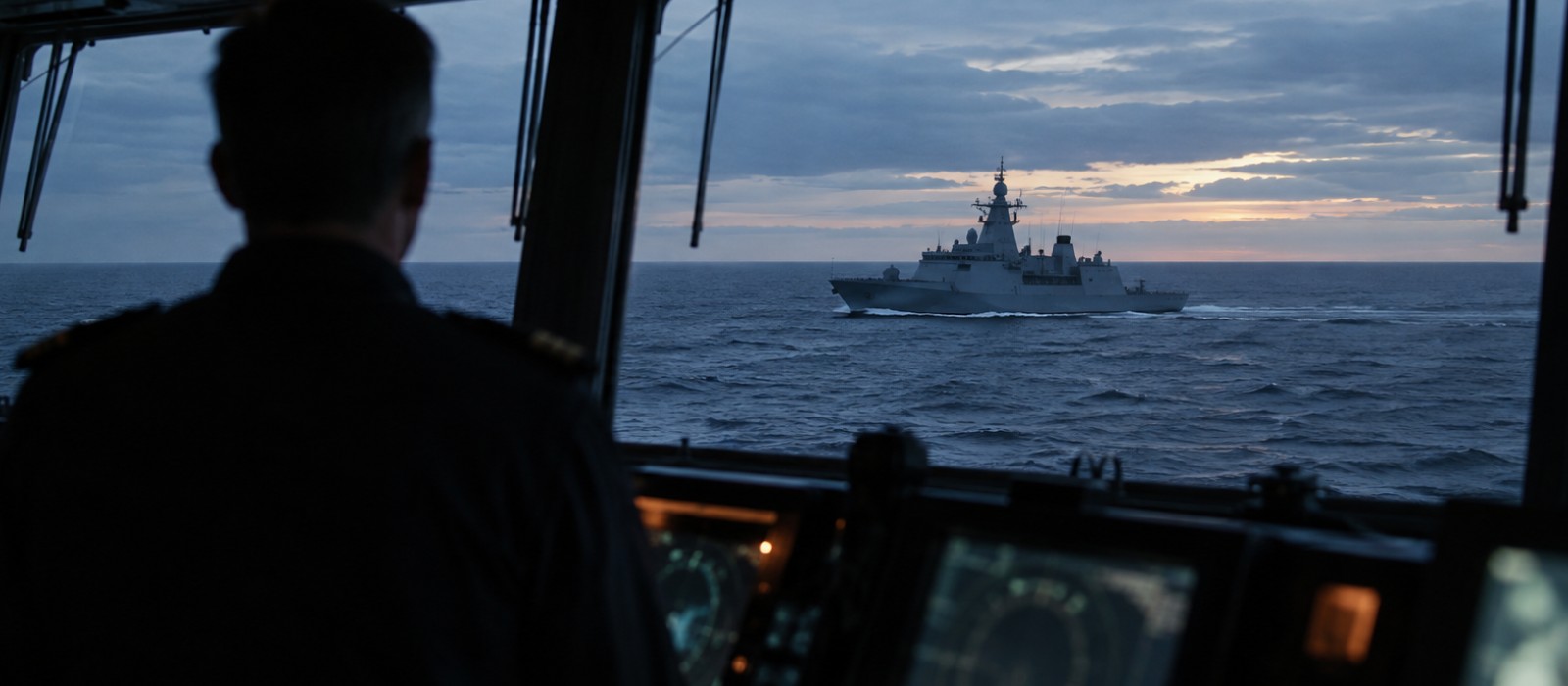


To do great things is difficult, but to command great things is more difficult.
- Friedrich Nietzsche1
Introduction
In his article titled ‘Command - A Historical Perspective’ published in the Winter 2021 edition of the Naval Despatch, the late Rear Admiral James Goldrick highlighted ‘leadership’ aspects of naval operations.2 He advised those in command positions to consider the lessons of history and develop leadership skills that prioritise seizing the initiative over seeking permission. Drawing a comparison to the “virtual unreality” problem faced by navies in World War I, he argued that modern military culture may also suffer from a similar challenge of excessive reliance on communication and a ‘zero defects’ mentality. He emphasised the importance of studying history and reflecting on the human experience to develop the leadership skills necessary to succeed in modern command positions. The article underscored the importance of mission command, as integral to naval operations, “when you are effectively on your own.”3
As a key concept in naval warfare, Mission Command emphasises the importance of decentralised decision-making and initiative at all levels of command.4 It aims to enable commanders to exercise their judgment and make decisions that are consistent with the overall mission objectives. By empowering and backing individual commanders to make decisions, mission command creates a more flexible and responsive command structure that is better able to adapt to changing conditions on the battlefield.5
Mission Command is also essential for building trust and cohesion among naval forces.6 By empowering commanders to make decisions and take risks, mission command encourages a culture of improvisation and creativity. In turn, this helps to build trust among commanders and their subordinates, which is critical for achieving success in complex operations.
Despite the changing nature of naval warfare, mission command remains an essential concept for achieving success in modern naval operations. While the demands of modern naval warfare have increased significantly, mission command provides a framework for addressing these challenges and achieving success at sea.
This essay aims to explore the concept of Mission Command in more detail and examine its importance in modern naval operations. It will also examine examples of successful and failed cases of mission command in naval operations and consider the demands of modern-day naval warfare. Finally, it will argue that mission command matters more than ever in naval warfare. Overall, the essay will discuss the continued relevance of mission command as an essential enabler for mission success in naval operations.
Historical Context of Mission Command
The concept of Mission Command as a term has its roots in the Prussian military philosophy of Auftragstaktik, which was developed in the mid-19th Century. However, it would be only right to say that commanders have exercised independence in decision-making, an ability to show initiative in the absence of continued orders for millennia across cultures and conflicts. The Prussian approach emphasised the importance of giving subordinate commanders the freedom to interpret orders and adapt to changing circumstances on the battlefield. Subsequently, through several successful campaigns, the Prussian and later German military developed a sophisticated understanding of mission command and its importance in achieving success in complex and dynamic operational environments.7
The Germans viewed the confusion of battle as a source of potential opportunities, and they built a Command and Control (C2) philosophy in which that potential could be realised through decentralised decision-making.8 Subordinate commanders, they believed, were better able than the higher commander to handle situations in which split-second decisions often are pivotal. To them, mission command brought other benefits, as well:9
-
It gave subordinate commanders more ownership of their actions, which stimulated greater determination in carrying out their mission.
-
It allowed greater flexibility in adapting rapidly to changing combat situations, dealing with unforeseen problems, and exploiting fleeting opportunities. It encouraged initiative and creativity on the part of subordinates.
The main reason for the Germans’ success with mission command was their unwavering focus on leadership and warfighting at all levels of command and the trust that underlined it. The higher commanders had confidence that their subordinates, in exercising initiative, would be successful. In turn, subordinates trusted that their superiors would support them in whatever actions they took in good faith. They were not afraid to give accurate, critical reports on the status and performance of their forces.10 The better commanders and subordinates knew and trusted each other, the shorter and less detailed orders could be.11
General Helmuth von Moltke, Chief of the Prussian General Staff during the Franco-Prussian War, defined Auftragstaktik as the actions a subordinate took in the absence of orders that supported the senior commander’s intent.12 While literally, the word Auftrag in German means order/instruction, the term implied both, orders to be executed but with the commander’s initiative to flexibly adapt them to achieving the mission. The use of mission tactics allowed subordinate commanders to interpret how best to achieve the commander’s intent based on their understanding of the tactical situation. Furthermore, the Prussian use of Auftragstaktik during the Franco-Prussian War acknowledged both the risk and the opportunity inherent in this method of decentralised command.
Over time, these principles have evolved with several navies adopting their definitions of it. For example, the US Navy defines mission command as “the conduct of military operations through decentralised execution based upon mission orders that are communicated clearly, contain the essential task elements, and specify the results to be achieved, but not necessarily how they are to be achieved.”13
The Australian Navy defines mission command as a “command philosophy that emphasises the delegation of authority and decision-making to the lowest appropriate level, within the context of a commander’s intent.”14 The concept emphasises the importance of empowering subordinates to take initiative, make decisions, and adapt to changing situations to achieve the Commander’s overall objectives.
Overall, a formal approach to mission command by these navies underscores the importance of creating a culture of decentralised decision-making, where subordinates are empowered to take appropriate actions in pursuit of the commander’s overall objectives. By providing a clear commander’s intent, delegating decision-making authority, establishing mutual trust, fostering a culture of initiative and adaptability, and ensuring effective communications and information sharing, commanders can create an environment where subordinates are empowered to take appropriate actions in pursuit of the Commander’s overall objectives.15
Historical Overview of Mission Command in Naval Operations & Lessons Learned
Mission Command has been integral to naval operations, long before the term was more formally adopted for land warfare.16 The concept has played a significant role in naval operations throughout history, with its principles and applications evolving to meet the changing nature of warfare. Dating back to the days of sail and continuing through to modern naval warfare, the principles of mission command have been applied with varying degrees of success from the Napoleonic Wars to the modern era.17 Examining the historical record of naval operations reveals numerous examples of the effective application of mission command principles as a vital concept for achieving success in complex and dynamic environments.
One notable example is Admiral Horatio Nelson, who famously said, “No captain can do very wrong if he places his ship alongside that of the enemy.”18 Nelson’s leadership style included a delegation of authority, trust in his subordinates, and a focus on the overall objective rather than strict adherence to predetermined plans and is often cited as a prime example of mission command principles in action.
Another sound example from World War II stands out in this context through the brief, yet crisply drafted Commander’s Intent of Admiral Chester W. Nimitz in the days leading up to the Battle of Midway.19 Though a rather short message, he unambiguously conveyed his exact intent to his subordinate commanders. Amongst the broader scheme of operations which he communicated through his message, the most important was the aspect of Calculated Risk. Whilst according his forces adequate freedom of action, he also made it clear to them, when it was appropriate for his subordinate commanders to commit their forces to action, which eventually played a key role in US success in the overall Pacific campaign.20

Admiral Chester Nimitz’s “letter of instruction” issued on the eve of the Battle of Midway21
Examining the historical record of naval operations, it is evident that the success of a mission can often hinge on the degree to which mission command principles are effectively applied. But, to gather a holistic view of the concept, it is important to analyse both ends of the spectrum. One such example is the Battle of Tsushima Straits, fought on 27-28 May 1905, during the Russo-Japanese War, which demonstrates both the successes and failures of mission command.22
The Imperial Japanese Navy (IJN), commanded by Admiral Togo Heihachiro, employed mission command principles to great effect in this battle, which resulted in a decisive victory for the Japanese. Admiral Togo's use of decentralised decision-making allowed his subordinate commanders to exercise their initiative and respond flexibly to evolving conditions on the battlefield. This gave the IJN a significant advantage over the Russian Navy, which operated under a more centralised command structure that limited its ability to respond to the dynamic and fluid nature of the battle.23
One notable example of the effectiveness of decentralised decision-making in the Battle of Tsushima Straits was the initiative taken by Vice Admiral Kataoka Shichiro. As the Japanese fleet approached the Russian fleet, Admiral Togo gave the order for his ships to execute a 180-degree turn to cross the T of the Russian fleet. However, due to poor visibility and rough seas, the execution of this manoeuvre was not uniform across the fleet. Some ships turned more quickly than others, causing a gap to form in the Japanese line. Recognising the danger of this gap, Vice Admiral Shichiro, commanding the 2nd Division, took the initiative to order his ships to turn back and fill the gap. This decision could not be immediately communicated to Admiral Togo, who became aware of the situation only later.24
Admiral Shichiro’s decision proved crucial to the success of the Japanese fleet. The gap was closed just as the Russian battleship Borodino, the flagship of the Russian fleet, attempted to pass through it. The concentrated fire of the Japanese fleet was able to inflict severe damage on the Borodino, ultimately leading to its sinking.25 During the battle, the Japanese fleet demonstrated numerous other instances of effective decentralised decision-making, leveraging the advantages of mission command in promoting flexibility, adaptability, and the ability to seize opportunities during a developing battle.26
However, it is also worth noting that the Russian Navy’s failure to effectively exercise mission command was a major contributing factor to their defeat. The Russian fleet commanded by Admiral Zinovy Rozhestvensky, was operating under a highly centralised command structure that limited its ability to make decisions in response to changing circumstances on the battlefield.27 This left the Russian fleet vulnerable to the IJN’s more agile and flexible tactics, ultimately leading to their defeat.
In conclusion, the Battle of Tsushima Straits was a significant naval engagement that demonstrated the importance of effective leadership and the concept of mission command in naval warfare. The battle exhibited the value of decentralised decision-making and rapid response to changing battlefield conditions, as well as the importance of effective communication and coordination. The lessons learned from the battle continue to be studied by naval strategists and historians today and have influenced the development of naval doctrine and tactics.
Why Mission Command Matters Now, More Than Ever?
Modern-day naval warfare has undergone significant changes, and the demands placed on naval forces have increased as a result. Importantly, the general tempo of warfare at sea may have gone up considerably and naval forces would need to operate at high levels of readiness to meet these challenges. This means that naval forces would also need to be able to respond quickly to emerging threats and opportunities, demanding a high degree of agility and responsiveness. Additionally, advances in technology, such as unmanned systems and artificial intelligence, also add another dimension to the decision-making calculus of the commander at sea.
Despite these new challenges, Mission Command remains as relevant as ever in enabling naval commanders to adapt and maintain operational effectiveness. First, modern naval operations require a high degree of flexibility and adaptability. A decentralised decision-making approach provides naval forces with the agility necessary to keep pace with the dynamics of the environment. It empowers subordinates to make decisions based on their expertise and situational awareness.28
Second, the increasing complexity of modern naval operations demands a common framework for decision-making that promotes collaboration and coordination between different units and services. Mission Command provides this framework by emphasising the importance of subordinate initiative and judgment while maintaining a clear chain of command.29 This approach also encourages creativity and innovative application of tactics, while ensuring that all decisions are aligned with the overall mission objectives.30
Finally, modern naval warfare is increasingly characterised by Joint and coalition operations involving forces from multiple nations and services.31 Mission Command provides a common language and framework for decision-making that facilitates coordination and cooperation between these forces. This is particularly important given the diverse cultural, organisational, and operational backgrounds of the various forces involved.
Recommended Way Ahead: Investing in Mission Command
Based on the above arguments, the recommended way ahead is to develop a framework, based on which Mission Command could be organisationally leveraged to its optimum value. And in doing so, three building blocks would play a key role in shaping the future trajectory in this direction. First, Mission Command requires combat-ready units, materially sound with high system redundancy, to go to sea and support sustained combat operations. Second, Mission Command requires competent crews - trained, cohesive, and eager to fight and prevail over a thinking adversary. Such crews may have had the opportunity to think, practice, and refine independent tactics before they are challenged by the adversary.32 And third, Mission command requires critical-thinking capable leaders who can demonstrate innovation, creativity, unpredictable plans and rapid learning, under the most challenging environments.33

Fig 1: Essentials of a ‘Mission Command’ Framework
The 3T Framework. Taking the concept forward from the three Building Blocks, Mission Command can be optimally leveraged when enabled through the 3Ts i.e. Technology, Tactics and Training. These three essential enablers form a mutually exhaustive framework to harness the best outcomes from this Op-philosophy. 34
-
Starting with Technology, there have been vast improvements in communications since the development of the concept of Mission Command. These 24/7, all-weather networks may provide some assurance of failure-proof C2 and superior situational understanding to shore-based Commanders.35 But we must also focus on the likelihood that the adversary may exploit the vulnerabilities of C2 networks, targeting critical communication links, eventually forcing the exercise of decentralised and independent decision-making. More so, the current and future operating environment requires decentralised command: modern communication technology, prudently applied, makes that possible. And therefore, technological advancements allow both, a greater degree of reach-back by subordinate commanders as well as the ability of seniors to use the proverbial ‘thousand-mile screwdriver’ usefully or badly.36
-
The Second Enabler pertains to Tactics, which are regularly exercised by units, through independent actions and decision-making, to achieve the higher commander’s intent. Deployed units are offered abundant opportunities for exercising initiative and should be given adequate space to demonstrate disciplined initiative through shared awareness.37 Considering the possibility that unit dispersal could be much greater than before, regular exercising of this concept would go a long way in achieving institutionally embracing this concept. Further, exercising Mission Command would be an operational imperative to preserve the Fleet’s ability to function, should the adversary target communication or reduce the efficacy of the other forms of C2. Therefore, a Mission Command exercised fleet is likely to be better placed under the increased tempo of maritime warfare and the perennial fog of war, both as composite operating groups or as dispersed forces.
-
Lastly, for a concept like Mission Command to succeed, it is important that the Training philosophy aims to make leaders professionally competent and operationally agile. Fleet training would need to promote a culture of decision-making, under limited communication conditions such as SATCOM and NCO holidays. Exercises conducted under network and communication holidays play a crucial role in preparing forces for scenarios where communication networks may be compromised or unavailable.38 By conducting these types of exercises, forces would be able to hone their skills and develop a mindset that prioritises critical thinking, flexibility, and adaptability. This form of training is essential in building resilience and preparing personnel to operate effectively in a variety of situations, even those that may be beyond their usual scope of experience. Training schools would also need to transform their curriculum to promote evidence-based and possibility-based approaches towards decision-making that will enable personnel to adapt quickly to the dynamic demands of warfare at sea.
Conclusion
Despite the changing character of naval warfare, Mission Command remains as relevant as ever. The evolving environment, technological advancements, and emerging threats have transformed the way navies operate. Today, navies are faced with an array of maritime security challenges, all under a high operational tempo at sea.
By decentralising decision-making and empowering subordinates, Mission Command enables naval forces to respond quickly and effectively to emerging threats and changing circumstances.39 In modern naval warfare, where the speed of decision-making can be the difference between success and failure, Mission Command allows for rapid and agile decision-making.
In conclusion, investing in mission command is not just about decentralised decision-making, but about cultivating leadership skills that prioritise initiative, adaptability, and critical thinking. It is about learning from the lessons of history and embracing the challenges of a complex and rapidly evolving conflict landscape. Finally, preserving the Fleet’s ability to function, should the adversary target communications or reduce the efficacy of the other forms of C2 would need to be exercised regularly and in this endeavour, exercising the Fleet to a Mission command standard should be on the regular exercise agenda. Lastly, while mission command may not by itself be a panacea for all Command and Control challenges, it surely can be an antidote for decision paralysis in the face of uncertainty, the fog of war, and stressed communications.
Endnotes
-
Jose Santiago, “47 Quotes on Leadership Worth Repeating,” World Economic Forum, 11 November 2015, https://www.weforum.org/agenda/2015/11/47-quotes-on-leadership-worth-repeating/, accessed 10 February 2023.
-
Rear Admiral James Goldrick (Retd.), “Command: A Historical Perspective,” Naval Despatch (Winter 2021), 34-48.
-
Ibid.
-
Niklas Nilsson, “Mission Command in a Modern Military Context,” Journal on Baltic Security vol. 7, no. 1 (2021).
-
Ibid.
-
Nilsson, Op Cit., n.4.
-
Andrew Hill and Niemi Heath, “The Trouble with Mission Command: Flexive Command and the Future of Command and Control,” Joint Force Quarterly vol. 86 (2017), 94-100.
-
Daniel Hughes, ed. Moltke on the Art of War: Selected Writings (Vietnam: Presidio Press, 2009), 175.
-
John T Nelsen II, “Auftragstaktik: A Case for Decentralized Battle,” The US Army War College Quarterly: Parameters vol. 17, no. 1 (1987), 22.
-
Milan Vego, “Mission Command and Zero Error Tolerance Cannot Coexist,” Proceedings: Journal of the US Naval Institute vol. 144, no. 7 (2018), 1385-1391.
-
Ibid.
-
Michael J. Gunther, “Auftragstaktik: The Basis for Modern Military Command?,” Army Command And General Staff College Fort Leavenworth KS School of Advanced Military Studies, (2012).
-
US Naval Warfare Publication (NWP) 5-01.1, Commander's Handbook on the Naval Operations Process. http://www.admiraltytrilogy.com/read/Naval_Op_Pln_NWP_5-01.pdf, accessed 10 March 2023.
-
Australian Defence Doctrine Publication 00.1, 2016, 3. https://www.defence.gov.au/publications/ADD/ADD_00_1_Command.pdf, accessed 18 March 2023.
-
Ibid.
-
Goldrick, Op Cit., n.2, 34-48.
-
Claudiu Valer Nistorescu, “Mission Command - An Essential Requirement to Accomplish the Mission,” in International Scientific Conference Strategies XXI, National Defence University, (2021), 198-206.
-
Michael A. Palmer, “Lord Nelson: Master of Command,” Naval War College Review vol. 41, no. 1 (1988), 105-116.
-
Robert C. Rubel, “Deconstructing Nimitz’s Principle of Calculated Risk: Lessons for Today,” Naval War College Review vol. 68, no. 1 (2015), 30-46.
-
Ibid.
-
Rubel, Op Cit., n.19.
-
Geoffrey Jukes, The Russo-Japanese War 1904–1905 (New York: Bloomsbury Publishing, 2014).
-
Ibid.
-
Denis Warner and Peggy Warner, The Tide at Sunrise: A History of the Russo-Japanese War, 1904-1905 (London: Psychology Press, 2002).
-
Ibid.
-
Warner and Warner, Op Cit., n.24.
-
Warner and Warner, Op Cit., n.24.
-
Anthony C. King, “Mission Command 2.0: From an Individualist to a Collective Model,” The US Army War College Quarterly: Parameters vol. 47, no. 1 (2017).
-
Ibid.
-
Goldrick, Op Cit., n.2, 34-48.
-
Steven Paget, The Dynamics of Coalition Naval Warfare: The Special Relationship at Sea (United Kingdom: Routledge, 2017).
-
Ryan P. Alexander, Mission Command: The Need for Disciplined Initiative (Fort Leavenworth KS: Army Command and General Staff College, 2020).
-
Michail Ploumis, “Mission Command and Philosophy for the 21st Century,” Comparative Strategy vol. 39, no. 2 (2020), 209-218.
-
King, Op Cit., n.28.
-
Hill and Heath, Op Cit., n.7.
-
Peter W. Singer, “Tactical Generals: Leaders, Technology and the Perils of Battlefield Micromanagement,” Air & Space Power Journal vol. 23, no. 2 (2009), 78.
-
Australian Defence Doctrine Publication 00.1, 2016, 3. https://www.defence.gov.au/publications/ADD/ADD_00_1_Command.pdf, accessed 18 March 2023.
-
Hill and Heath, Op Cit., n.7.
-
Kenneth J. Braithwaite et al., Advantage at Sea Prevailing with Integrated All-Domain Naval Power (Washington DC: Department of the Navy, 2020).
