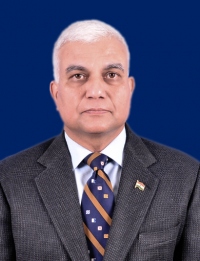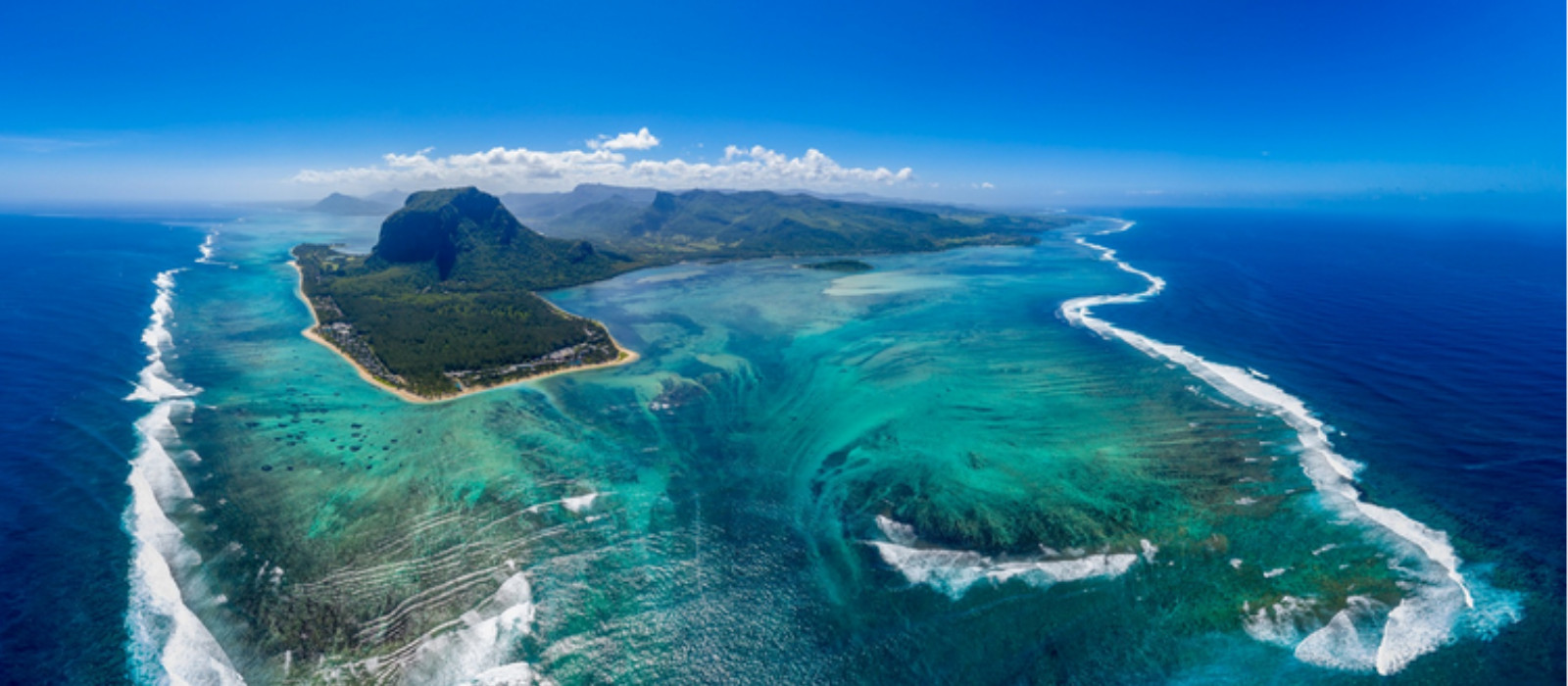


(This is a brief discussion on 09 Nov 2021, where the Police Commissioner of Mauritius, Mr Anil Kumarsing Dip, PMSM spoke with RAdm Sudarshan Y. Shrikhande, IN (Retd) the Editor-in-Chief of the Indian Naval Despatch on the sidelines of the Goa Maritime Conclave. Mr Dip attended it as the head of security forces of the Republic of Mauritius. This is a very slightly edited version of the transcript).

EiC: Commissioner, welcome to this interaction, with the Indian Naval Despatch. Thank you for your presence yesterday at the release of the current issue and for giving us the time for this interaction. We will carry the essence of the discussion in the next issue. May I begin by saying that the security relationship between India and Mauritius is greater by a few years than my own service in the Navy as well as your own rich contribution to the security of Mauritius through service in the Mauritian Police Force, in the Coast Guard and rising to the head of your services. Based on this decades’ old relationship as well as on the rich experience that Mauritius has gathered in terms of its own security challenges we would welcome your views. To begin, not many would quickly recognise that Mauritius has an EEZ larger than of India and one of the largest such zones in the world in comparison to its landmass. Would you like to take us through some of the challenges that Mauritius has faced, perhaps continues facing and what are the solutions you have found?
PC: First of all, thank you again for receiving me and giving me this opportunity to throw light on some of the issues and challenges Mauritius is facing in the maritime domain. We have a long-standing relationship with India. We are very grateful to the Government of India for all the institutional support extended to the Mauritius Police Force.
As you know Mauritius has an EEZ of 2.3 million square kilometres and policing this huge EEZ is not easy and we cannot do it alone. Therefore, we rely on support and collaboration of other friendly countries, including India.
Yesterday, we were discussing about conventional and non-conventional threats such as IUU fishing and the laws dealing with them. I would say that the challenges in our region are immense; first and foremost is the IUU fishing of which we have seen a lot of cases in the region. Another challenge in the region has been piracy, and Mauritius has been quite active in countering and prosecuting piracy. A recent experience has been the increasing use of maritime routes for drug trafficking, human trafficking and for other criminal activities. Right now, we see a lot of criminal activities happening in the area and this is where the help and collaboration of friendly countries like India is important in countering them. Policing this vast maritime region requires and demands extensive resources. Which is why we need to come together and that is exactly what I see as the purpose of this maritime conclave as well, which is to come up with a plan, map out the way forward for all the challenges we face, whether it is stamping out illegal fishing, or dealing with drug trafficking and human trafficking. We have to put our resources together, maximise their usage to achieve the best for our region. Of course, these are challenges that we have faced for quite some time, but are taking new forms now. We have to be more proactive, put our heads together, pool resources and address these challenges jointly.
You mentioned how Mauritius would find it difficult to do it alone and indeed India also, as a large country and one of the largest in the Indian Ocean region, would find it difficult to do it alone, so I think cooperation is an ever necessary principle and fundamental factor for effective execution. Mauritius, in my view has shown us the way with your cooperation especially with Seychelles and Madagascar to name two of your closer neighbours. I understand when we say closer neighbours, we are still talking about hundreds or thousands of nautical miles unlike what neighbours and neighbourhood may mean in the land domain. You rightly pointed out how threats from far, end up being close. So, what is the guidance that Mauritius can offer, not only to IOR countries but beyond, based on your experience and initiatives in terms of regional cooperation within the IOR?
Yes, we have adopted a collaborative and cooperative approach with Seychelles, Madagascar and other countries in the region, especially in terms of intelligence sharing and coordinating operations. We have been working together to identify common threats and pool resources to address these threats jointly. I think this approach is working positively and this is how it should be going forward in the future with other countries as well. This is exactly what we want, optimising on our resources together, to address common threats in the region. Let me give you an example. Let’s say we have a suspicion of drug smuggling at sea in one of the vessels and it is closer to a regional partner. The regional ops room passes the information to the agency best suited to act and allows for timely interdiction.
Now, we also have a database of vessels that we are already looking for and the moment we receive information, we can act jointly, provided we have a collaborative search and seizure procedure in place. I am sure if we extend this approach beyond our region, it will be difficult for criminals to escape. This is the way forward and concerned agencies need to adopt a collaborative process against illegal activities.
What are the specific steps that Mauritius has taken? You mentioned drug smuggling, that is why I am going to request your views on the narcotics trade and its direct impact and indirect impact in terms of possibly criminal, terrorist or even political fallout in nations across the world? It has happened in Central America; there are these so-called “drug triangles.” Would you like to explain to our wide readership more specifically about your concerns and seizures of narcotics and what steps is the Mauritian Coast Guard and the Mauritian Police as a whole is taking ?
We have a huge amount of drugs coming via the maritime route, and that’s exactly where our three international liaison officers in regional ops rooms come into picture. This setup has enabled timely sharing of information so that we can control and monitor our maritime routes, our EEZ and our territorial waters. Like I mentioned, we already have information sharing with Seychelles, Madagascar and Reunion. This cooperation helps us to get advance information to enable intervention. We have also moved one step further by sharing resources by conducting joint patrols that has helped us enormously.
We are of course not restricting ourselves to human intelligence, but also making use of technology. We are investing a lot in EEZ surveillance systems and our coastal surveillance system. Going forward, these systems will enable greater Maritime Domain Awareness.
Yes, those are vital points that you highlight in terms of resource-pooling and intelligence-sharing. The more we cooperate the better it would be and my mind, therefore, goes back to a final aspect on the Indo-Mauritian security cooperation. The relationship is old in terms of security started as a Navy to Coast Guard relationship in the mid-seventies and now nearly five decades on, what are your assessments of this cooperation? The current more officious term, IUU, was simply called “poaching” then (and still is really just that) was a concern for Mauritius in the 1960s and 70s as well. As such, you were losing the gifts of the seas even then at a time when EEZs were still not formally promulgated; UNCLOS was still a few years into the future. At that time India and Mauritius took-for those times - phenomenal steps to decide on a cooperative and collaborative partnership in terms of hardware and training. So, in five decades of this partnership, of which you have been an integral part yourself, what is your assessment of this relationship?
I find it difficult to find words to describe the depth of this relationship. I have been in service for close to 30 years now and I have seen this friendship growing. It’s a friendship that has only strengthened over the years. India has helped not only in the professional enhancement of our officers be it in the coast guard, or the helicopter squadron, but also in equipping us with state of the art assets. The recent refit of CGS Barracuda and lease of a passenger-variant Dornier aircraft, pending the actual acquisition, are symbolic of our cooperation. Of course, the cooperation has been multi-faceted, ranging from training, sharing of information, capacity building, to induction of assets. Our collaboration has played an instrumental role in helping Mauritius secure its seas, and in all the initiatives we are talking terms of maritime safety and security of our territorial waters.
Commissioner, thank you for a very profound description of our strong relationship; it couldn’t have been put better. It describes every facet of it in its deepest sense and I feel that this relationship will gather strength and not only in terms of a bilateral effects. Given what you have explained about your own sub-regional initiatives, the bilateral relationship between India and Mauritius has echoed in the model that Mauritius has helped create with Seychelles, Madagascar and others. The point you made about what Mauritius has done in terms of the expanding collaboration, is probably a good model to follow across the Indian Ocean region. So thank you very much, Sir, for your time. We hope the relationship between the Mauritian Coast Guard and the Indian Naval Despatch will continue through contributions from your own officers and sailors for the journal. We would really welcome that.