


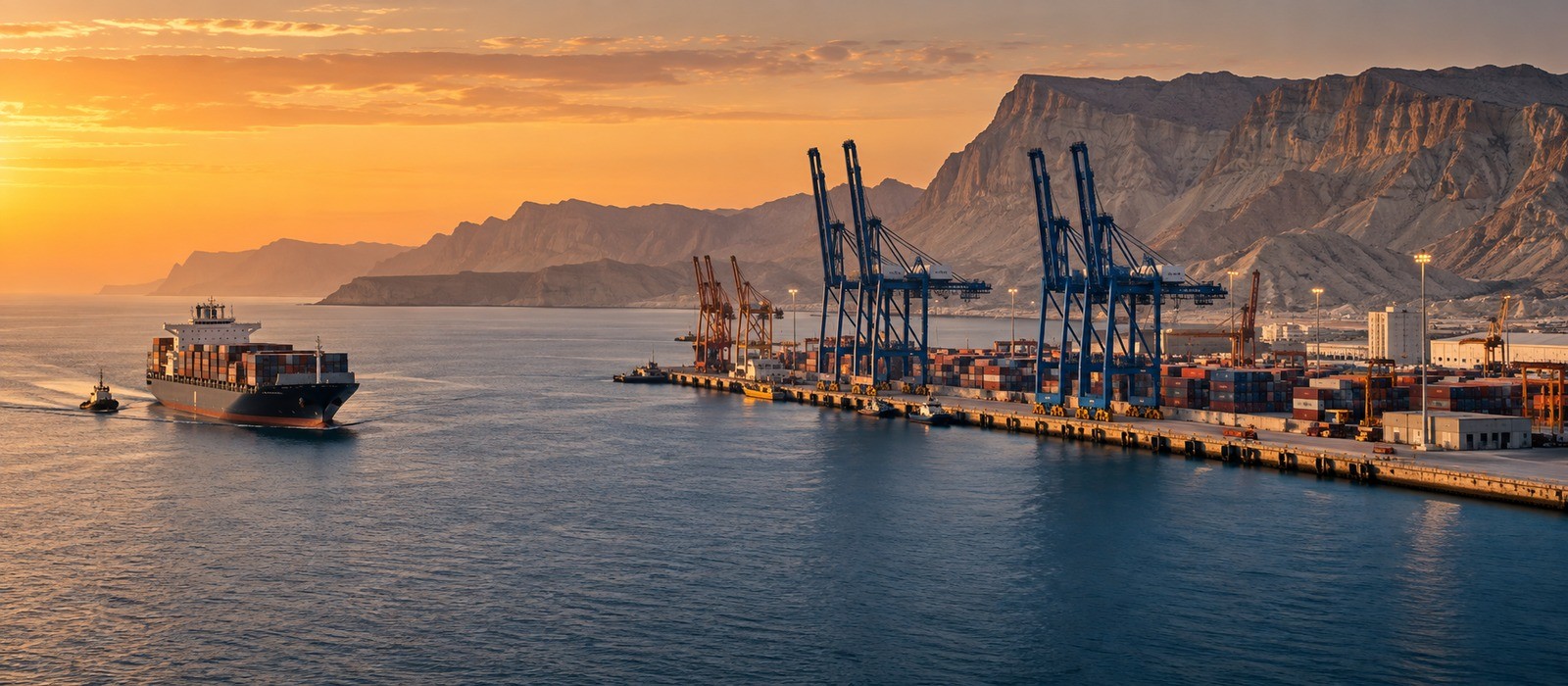


Abstract: Gwadar port, a flagship project of China's Belt and Road Initiative (BRI) and a cornerstone of the China-Pakistan Economic Corridor (CPEC), faces significant obstacles that threaten its long-term viability and success. China's economic slowdown, widespread corruption, and inadequate infrastructure have raised concerns about the project's viability. Local resistance, driven by political alienation, unfair resource distribution, and lack of transparency, has led to insurgency and terrorism in the region, undermining the port's potential for sustained economic growth and development. Despite decades of efforts and massive investment, the potential of Gwadar port to become a major regional trade hub remains uncertain, hindered by persistent gaps in critical infrastructure like water and power supply. Also, China's growing influence in Pakistan's politico-military spheres raises questions about the country's autonomy and sovereignty, further complicating the project's prospects. Amidst these challenges, it remains to be seen whether Gwadar port will be able to overcome these hurdles and deliver sustainable economic benefits to Pakistan, or if it will succumb under the weight of its own complexities.
Introduction
The Belt and Road Initiative (BRI) has sparked intense debate due to its potential to redefine global power dynamics by Tintegrating smaller states into China's economic and geopolitical sphere.1 At its core, this debate suggests that China seeks to reconfigure the global order, using infrastructure development and economic dependencies to expand its political influence, much like US Marshall Plan of 1948.2 While the initial perspectives centred on understanding China's motivations and strategic objectives behind BRI, the discussion has now shifted towards specific, grassroots implementation of the project and its resultant impact on concerned states.3
In the context of this debate, Pakistan serves as a prototypical case study as an early participant in BRI and home to the landmark China-Pakistan Economic Corridor (CPEC) project.4 With over $30 billion already invested and total costs expected to exceed $60 billion, Pakistan has attracted the largest volume of BRI investments.5 Launched during a period of economic turmoil, CPEC was hailed as a "game changer" promising industrial growth, prosperity, and reduced reliance on foreign aid, while also aiming to foster national unity and cohesion.6
Historical Background
CPEC's inception can be traced back to 1993 when the concept of the Port of Gwadar was formally conceived by the Government of Pakistan. The project was in principle approved by the Executive Committee of the Cabinet (ECC) in June 1994.7 In 2013, Pakistan's newly elected government, led by Prime Minister Nawaz Sharif, proposed an infrastructure development plan in collaboration with China aiming to capitalise on China's emerging BRI vision.8 China's Premier Li Keqiang quickly committed to the proposal, marking the beginning of a strategic partnership between China and Pakistan, with CPEC as the flagship project.
If CPEC was the flagship project of BRI, then Gwadar is the cornerstone of CPEC itself, at least for the infrastructure projects. Chinese President Xi Jinping had projected Gwadar as the focal point where “the Silk Road Economic Belt and the 21st Century Maritime Silk Road meet”.9 As per Chinese accounts, the development of Gwadar port and the proposed pipeline to the Chinese border was a strategic endeavour to mitigate reliance on the Malacca Strait.10 By establishing an alternative energy 10 corridor, China aimed to enhance its energy security and reduce the risks associated with potential disruptions to critical maritime choke points.11 Beijing also sought to capitalise on its relations with Islamabad to develop Pakistan's infrastructure, thereby boosting Pakistan's economy and creating a model which other BRI nations could follow. China's unspoken ambitions for CPEC likely included establishing a direct trade route to the Indian Ocean, fostering stability and prosperity in Pakistan, which would reduce extremism and in turn calm tensions in Xinjiang, and further hoping that a stronger Pakistan would be advantageous, to counterbalance its strategic competitor India as well as the United States.12 On the other hand, for Pakistan, the development of Gwadar was envisioned to have a dual impact. Not only would it promote national development but also foster greater unity and cohesion within Pakistan. By ensuring that all regions and communities got an equal share in the benefits of modernization and globalization, Gwadar's development was expected to enhance Pakistan’s GDP, help bridge existing socio-economic divides and promote a more equitable distribution of resources and opportunities.13 However, the overall purported objectives have not quite materialised as expected and have been impacted by numerous delays. The viability of the port as a transhipment hub is questionable and whether the port will someday develop to its potential needs to be reassessed.
Today, Gwadar faces significant operational challenges. Despite being functional, its economic viability is questionable due to infrastructural limitations, including inadequate channel depth, underdeveloped storage facilities, cargo handling equipment, and transportation networks. The lack of hinterland connectivity forces cargo to be transported overland to Karachi increasing costs, transit time, and risk. Insufficient investment in critical infrastructure, such as rail and road link, further exacerbates these challenges, hindering Gwadar's potential as a major trade hub. It is possible that given the politico economic situation in Pakistan, the sectarian divide and other internal/external factors, the jewel in the crown of CPEC might fail. To better comprehend the complexities surrounding Gwadar's development, we must delve into the challenges confronting the port city, exploring each obstacle in turn and examining its potential impact on Gwadar's long-term sustainability.
Slowdown of Chinese Economy
China's economic growth is expected to slow down from 4.8% in 2024 to 4.3% in 2025, primarily due to ongoing weaknesses in the property market and low consumer confidence.14 This decline is despite recent efforts to stimulate the economy through interest rate cuts and other fiscal measures and further exacerbated by the ongoing US-China trade and tariff wars.15 The World Bank emphasizes that sustainable growth will require deeper structural reforms; otherwise, China's economic outlook remains uncertain. Although this development may not necessarily imply a decline in China's economic prowess, it does suggest a potential plateauing of its economic growth trajectory, implying a period of stagnation rather than sustained expansion.
As a result of this slowdown, China's BRI has also experienced a sharp decline in investments, dropping by 54% since 2019.16 This decline is attributed to criticism over infrastructure debt and loan defaults, as well as a shift in China's approach to overseas lending, focusing on short and medium-term assistance instead of large-scale infrastructure projects. To illustrate, China's investment in CPEC, decreased by 74% in 2023 and Gwadar's share of CPEC investment also declined from 30% in 2020 to 15% in 2023. 17
Commercial Unviability of Gwadar
While detailed data on Gwadar's actual shipping traffic are not available from the port's website, some details are available from open sources.18 The following data highlights the limited commercial viability of Gwadar:
- From 2008 to 2014, the port only handled government imports of wheat, and later, fertilizers. From 2009 onward, it handled a few shipments from China and Afghanistan. However, after China Overseas Port Holding Company (COPHC) took over port operations in 2013, it has been mainly handling equipment pertaining to its own infrastructure development. 19
- Between 2008 and 2017, only 200 ships visited Gwadar Port, with an average annual traffic of about 20 ships, with most ships carrying construction material or equipment for the port.20
- Despite being completed in 2007, Gwadar has so far only logged 22 ships in its best year and failed to attract any scheduled deep-sea shipping lines.21
- In 2023, only 17 vessels docked at Gwadar, in stark contrast to the 441 ships that docked at Sri Lanka’s Hambantota Port, which is also run by a Chinese-ports managing company.22 In comparison, Karachi, Pakistan’s largest port and one of the three seaports in the country handled 1,767 ships during the 2023-2024 fiscal year. China's COSCO shipping lines also terminated its container services between Karachi and Gwadar in 2019 due to the slow construction of the Gwadar FTZ.23
- From 2019, a weekly feeder service was expected to start to Jebel Ali in the UAE by COSCO, but it has not yet commenced.24
- Only seven container ships arrived at the port in 2019 and there wasnegligible merchant ship traffic in 2020, though the CPEC authority reports on its website that the first import-cum-export cargo was moved from Gwadar FTZ Zone on April 7, 2021.25
- Overall, since its establishment, the port is reported to have handled only 70,000 tons of wheat grain and around 500,000 tons of fertilizer.26 Port authorities claim that up to 5,000 tons of LPG from Oman and Qatar, for Pakistan's domestic use, and 30 to 50 containers have been transhipped for Afghanistan through Gwadar every month. This is not enough to keep the port profitable.
Chinese Malacca Vulnerability
Importantly, one of the factors that led to China expressing interest in the development of Gwadar was the proposed construction of an oil refinery and strategic oil reserve facility near the port, from where oil could be transported to China through a pipeline, thereby reducing its dependence on the Malacca Strait.27 These projects, while discussed in the public domain, have not formed part of CPEC's ambit. Moreover, it has been estimated that while the cost of transporting a barrel of oil through the Malacca Strait is $0.90 per barrel, moving it overland from Gwadar to Kashgar would cost between $8 to $12.4 per barrel.28 In July 2023, four Pakistani state-owned petroleum companies signed a MoU with Saudi Arabia to build Pakistan's largest oil refinery at Gwadar with an investment of $10 billion and a production capacity of 300,000 barrels per day.29 Negotiations were reportedly ongoing between Pakistan and Saudi oil giant, ARAMCO, to execute the project. While no further updates are available, construction of the proposed pipeline from Gwadar to Kashi in Xinjiang has not started and "will not likely take place" due to the high cost and complicated geographic conditions.30
Also, Pakistan’s ambition to transport oil through Gwadar port will remain elusive until the port is upgraded to accommodate Very Large Crude Carriers (VLCCs) with a minimum capacity of 250,000 Deadweight Tonnage (DWT), a critical standard in global oil trade. Gwadar port requires a minimum depth of 18 metres to accommodate large crude carriers. Regrettably, despite its planned depth of 20 metres, the port authorities have failed to maintain the port's natural operational depth of 14.5 metres over the past 20 years.31 Another aspect is that Gwadar cannot ever be alternative for Chinas sea borne trade. Presently, Gwadar Port's handling capacity is a mere 11 million tons.32 This is a mere pittance compared to China’s total oil imports of over 564 million tons in 2023, casting doubt on Gwadar being able to mitigate Chinas Malacca vulnerability.33
Revenue Generation. In terms of revenue, Gwadar Port is far from being an asset and may be a liability for Pakistan for the foreseeable future because 91% of the revenues generated from Gwadar Port will go to Chinese companies during the 40-year concession period, with Gwadar Port Authority getting only 9%. Pakistan’s ministry of Planning and Development envisages that the overall contribution of Gwadar in Pakistan's economy amounting to $6 billion by 2025 and $24 billion in 2035. The ministry has forecast that Gwadar's smart port city will raise Pakistan's GDP by between $200 billion and $300 billion by 2050.34 It had also been projected that revenues from the port in the form of services and fees alone will be in the range of $7 billion to $12 billion annually. However, actual revenue and traffic have consistently fallen short of projections and expectations. For example, in March 2019, the Pakistani Senate was informed that between 2016 and 2019, the total gross revenue generated from Gwadar Port was only Pakistani Rupees (PKR) 358.151 million (about $2.40 million at 2019 exchange rates) of which the share going to the GPA was a mere PKR 32.324 million (about $0.216 million and just 9% of the total revenues earned by the port).35
Availability of Better Alternatives. Furthermore, there already are several established ports in the vicinity of Gwadar, such as Chahbahar and Bandar Abbas in Iran, Dubai, Khorfakkan and Fujairah in the UAE, and Salalah in Oman. All these ports already have well-established connectivity, infrastructure and a developed hinterland to support them. If we examine the northern part of the Gulf, Iran already has good road and railway connections from Chahbahar and Bandar Abbas to Central Asia and Afghanistan. In fact, Chahbahar in southwestern Iran is likely to become the strongest competitor of Gwadar for transit trade to Afghanistan, Central Asia, and China due to its location on the Oman Sea, outside the Strait of Hormuz. In the short term, it would appear Gwadar only has the potential to become a spoke port for other Pakistani ports like Karachi and Port Qasim.
Chronic Corruption. Corruption in Pakistan is a pervasive and deepseated issue that has permeated various aspects of the country's governance,neconomy, and society. According to Transparency International's Corruption Perceptions Index (CPI), Pakistan has consistently ranked among the most corrupt countries in the world, with a score of 29 out of 100 in 2024.36 The phenomenon of corruption in Pakistan is multifaceted, encompassing bribery, nepotism, embezzlement, and cronyism, among other forms. Corruption in Pakistan is not limited to the normal routine matters but also extends to national projects like the CPEC.37 In 2021, the Chinese ambassador to Pakistan complained that Pakistan has destroyed CPEC.38 In fact, Chinese authorities have voiced apprehensions that 38 approximately 80 percent of investments earmarked for CPEC are being siphoned off due to corrupt practices.39
Political Consensus and Alienation. While the threat of insurgency against CPEC has dominated headlines, a more subtle yet significant form of resistance has emerged in Pakistan's political landscape. This low intensity, non-violent opposition has been largely overlooked, but its impact could be far-reaching. This resistance primarily stems from the unfair distribution of resources between the provinces, alienation of local ethnic tribes and the lack of transparency. Initially, CPEC was envisioned as a game-changer for Pakistan's underdeveloped regions such as Balochistan and FATA, with the planned western corridor connecting Gwadar to the Chinese border through these provinces.40 However, during negotiations with China in 2014-2015, it became apparent that Beijing had little interest in this route due to the lack of existing infrastructure and the prevalent insurgency in the area. The plan was subsequently changed to include Punjab and Sindh as the preferred route for the project. The news that the central government was exploring an alternative "Eastern" route through more developed areas sparked intense opposition from constituencies along the original "Western" route.41
Another major concern surrounding CPEC is the lack of transparency in two critical areas: the underlying funding agreements and the project's ultimate scope. Despite being a flagship project of BRI, the funding agreements remain confidential. The master plan for CPEC was kept secret until it was leaked to the press in 2017.42 Even then, the plan was only shared in its entirety with authorities in the Punjab province, while other provinces received a heavily redacted version. This lack of transparency has eroded trust in the central authorities and fuelled concern and a feeling of alienation amongst other provinces, especially Balochistan.43
Baloch Insurgency
Regarding Balochistan, it is clear that there are dangerous levels of alienation in the province. This is partly due to the fact that the local populace in Gwadar has been displaced by Chinese workers and many of the local skilled and unskilled workers and fishermen have lost their livelihood due to the Chinese presence.44 The resulting protests, violence and attacks against Chinese personnel have been ruthlessly supressed. The attack on a luxury hotel frequented by business and leisure travellers in Gwadar by the Balochistan Liberation Army (BLA) in 2019, killing of paramilitary and naval personnel along the Balochistan highway, and many subsequent attacks are indicative of the unrest among the local populace. The recent train hijacking on March 11, 2025 in Bolan, highlights that the insurgency in Balochistan is likely to intensify as a new generation of Balochis continue the struggle against the Pakistani establishment.45 The situation is exacerbated by the instability in neighbouring Afghanistan and Iran, unrest in the Federally Administered Tribal Areas (FATA) and GilgitBaltistan, through which the Gwadar-Xinjiang Road has to traverse, the Islamic State-Khorasan, the presence of militant Uyghur groups opposed to China and other factors.46 This has adversely affected international participation in the project due to the significantly higher security related expenditure. This instability, which has been a part of Pakistan’s internal socio-political landscape for a very long time, is expected to continue in the near future as a quick solution doesn’t appear likely.
Another issue linked to the problem of insurgency, is that it is also not going to be easy to attract investors (local and foreign) to set up industries in the Gwadar FTZ because of high prospective operating costs. One reason for the higher costs, at least as far as manufacturing is concerned, is the fact that most of the work force will have to be imported from other provinces of Pakistan. Moreover, turmoil in Afghanistan and neighbouring Iran, and Pakistan's own internal problems in Balochistan, are disincentives for workers from outside the province to work in Gwadar, which suggests that higher pay than normal may have to be offered to incentivise workers. On top of this, local infrastructure and amenities are inadequate to attract external labourers. Hence, while official estimates optimistically forecast that CPEC will generate about 2.3 million new jobs, including at least 50,000 local jobs in Gwadar in reality, this is extremely unlikely.47
Lack of Critical Infrastructure. Before Gwadar becomes a regional transhipment hub and economic gateway for the region, it will need ample and reliable water and electricity supply. However, for years Gwadar has suffered chronic electricity and water shortages.48 Home to a population of about 90000, the city does not have adequate, clean drinking water, with the natives resorting to marches and protests against the government for provision of drinking water.49 For example, on 16 Oct 2023 demonstrators blocked Gwadar’s roads, protesting against severe water and electricity shortages.50 On the electricity aspect, government data reveals that between 2015 and 2020, nine new power plants were commissioned, adding approximately 5000MW capacity primarily from coal-based power generation.51 In theory, this increased capacity should have addressed Pakistan's previous nationwide energy deficit, which was caused by local energy providers’ inability to secure foreign financing for new projects. However, the benefits of this increased capacity are unevenly distributed.52 With one exception, all the completed plants are located in Punjab and Sindh, and the power generated is mainly supplied to urban areas in the well-developed eastern regions of Pakistan.53 In contrast, the transmission grids in the western regions of Pakistan are outdated, disconnected, and sparse, leaving local households with inadequate access to electricity.54
Underdeveloped Hinterland. One of the biggest challenges with respect to Gwadar is the lack of a developed hinterland.55 In fact, the area is itself dependent on external supplies for necessities such as food and water. Therefore, massive investment is needed to build a network of roads and railway links, power plants, airports, telecommunication links, and so on, all of which are still non-existent. Since the province of Balochistan and Pakistan itself are short of funds, it is not apparent which entity will supply this funding. Secondly, a hub port for transhipment of cargo requires low port charges and cargo handling costs to have a comparative cost advantage and induce shipping lines to bring their vessels to Gwadar. This would mean a large subsidy to development costs, which are already taken on loan, and hence, subsidies may not be feasible. Thirdly, there is insufficient power supply. The port and its ancillary establishments must rely on inadequate diesel-fed generators because the planned construction of two 150 MW coal-fired power plants at Karwat, about 40 km from Gwadar, has yet to start because of environment-related issues.56 The 19-km-long four-lane Eastbay Expressway, which will connect Gwadar to the main highway, was completed at a cost of $168 million. However, the expressway has led to local discontent as the road has blocked the access of the fishermen to the sea and also choked the area's drainage.
Vulnerability of the Karakoram Highway. Gwadar port has no meaning or purpose until the Karakoram highway is developed to transport crude oil from Gwadar to China. The Karakoram Highway passes through some of the most dangerous and rapidly rising mountain ranges, prone to intense geodynamic activity. Factors such as earthquakes, glacial erosion, river incision, and unpredictable monsoon rains frequently impact the region. Since its construction, the highway has been vulnerable to disruptions and damage caused by rockfalls, landslides, debris flows and other geological hazards.57 The highway is also prone to sabotage and blockages by local dissident groups.58 The Karakoram Highway's vulnerability to natural disasters, sabotage, and high maintenance costs makes it an unreliable solution to China's Malacca vulnerability.
Chinese Influence and Pak Army Push Back. While CPEC has the potential to generate substantial economic benefits for Pakistan, it can also create significant challenges for its sovereignty and autonomy. CPEC promises to catapult Pakistan's economy through unprecedented infrastructure development, enhanced trade, and increased investment. However, while Pakistan stands to gain significant economic benefits, it must navigate the concurrent challenges of preserving its autonomy and decision-making authority. The concerns surrounding economic dependence, military and security dynamics (for example, increase of Chinse military presence on Pakistan soil), infrastructure control (handing over of critical projects to Chinese firms), and the potential risks of debt diplomacy highlight the sovereignty implications inherent in CPEC.59
Chinese Military in Pakistan. A major development of concern for Pakistan has been the increase of Chinese influence in Pakistan politicomilitary spheres. China's private security contractors (PSCs) are making inroads in Pakistan, despite facing significant restrictions. Due to Pakistan's ban on foreigners carrying weapons, Chinese PSCs have been limited to training local personnel and offering consulting services.60 Despite stiff resistance from the Pakistan army and government, Chinese private security agencies have already been deployed in Pakistan to safeguard Chinese interests.61 Also, local experts reveal that Chinese officials have reportedly established contact with insurgent leaders in Balochistan. These interactions allegedly involve offering financial incentives to the insurgents in exchange for guarantees of safety and security for Chinese projects in the region.62 These are indicators of the substantial political clout that China holds over Pakistani authorities. These developments come up against the backdrop of deteriorating China-Pak relations over security of CPEC projects and Chinese nationals, with the Chinese ambassador calling the terror attacks and Pakistan’s response as “unacceptable” with similar retorts from Pakistan side.63 While Pakistan does reap substantial economic benefits from CPEC and Gwadar, the increase in Chinese influence and interference in security issues will someday cross a critical point wherein Pakistan Army, the hub of power in Pakistan, will start feeling insecure and pushback against China to wrest back control of the country.
Climate Change and Planning Flaws. Balochistan is disproportionately susceptible to climate-related catastrophes. A 2022 report by the World Weather Attribution revealed alarming findings. The intensity of 5-day maximum rainfall in Sindh and Balochistan has increased by approximately 75% due to the 1.2°C rise in global temperatures, exacerbating flood risks in the region.64 The recent floods in Gwadar 64 exposed the city's inadequate urban planning, which has exacerbated the impact on local communities. According to Younus Aziz Mengal, head of the provincial emergency operation centre of the Balochistan Disaster Management Authority, the destruction was largely due to the "lack of proper drainage systems" in the coastal town.65 Mengal noted that rapid population growth and encroachment on waterways have further compromised the drainage system, resulting in water accumulation in populated areas.
An Airport in the Middle of Nowhere. Gwadar International Airport was inaugurated on 14 Oct 2024 in a joint ceremony by Prime Minister Shahbaz Sharif and visiting Chinese Premier Li Qiang. Just like the seaport, as of now there is no evidence that there is any traffic moving in or out of the airport except one weekly flight to Karachi.66 For any airport to be utilised by airlines, there has to be a need for travel to and from the city which the airport serves. Presently, there is hardly any industry, medical facilities or tourism in Gwadar which would attract passengers. Similarly, local residents have minimal need or means to utilise the services that the airport provides. Furthermore, Gwadar's isolation from the hinterland, coupled with pervasive insurgency and terrorism, has created an environment of fear and uncertainty that is contrary to the ideal conditions required for an airport’s commercial sustainability. In the circumstances, at best, the airport can only serve the Chinese nationals working in the region and the Pakistan Air Force which is not sufficient to make the airport commercially viable.
Conclusion
The article has explored various structural, economic, and geopolitical challenges threatening Gwadar and CPEC. Most of these problems are either intractable or have solutions that are exceedingly difficult to implement. These formidable and complex problems pose significant obstacles to the project's viability. On the issue of commercial viability, there is little that Pakistan can do. Even if the inadequacies of port infrastructure are addressed, the hope of Gwadar turning into a major transhipment port is bleak. The Karakoram highway which is the vital artery for Gwadar, is vulnerable to natural and man-made challenges and incapable of supporting the volume of trade that would make the project commercially viable. The issues of corruption and insurgency are long standing, chronic problems for Pakistan and there is little reason to believe that Pakistan will be able to resolve these in the near future. The ethnocentric divide and political alienation is another chronic problem which, considering the domestic political landscape of Pakistan is here to remain and will most likely continue to plague Gwadar. The souring of Sino-Pak relations and the potential pushback by the Pakistan army to maintain control also threatens to “sink” Gwadar. Therefore, it appears that the problems are far too complex and the resolve of the state too weak for any quick solution. Under these circumstances it may be reasonable to conclude that the Gwadar project under CPEC appears doomed to fail.
Endnotes
- Jean-Marc F. Blanchard, “The Geopolitics of China’s Maritime Silk Road Initiative,” Geopolitics, 22 no. 2 (2017): 223-225.
- William A Callahan, “China’s “Asia Dream”: The Belt Road Initiative and the new regional order,” Asian Journal of Comparative Politics, 1 no. 3, (2016).
- Bruno Macaes, Belt and Road, A Chinese World Order, (Penguin Viking 2019), 129.
- Adnan Aamir et al., “Road to Nowhere: Chinese Belt and Road Initiative at Tipping Point,” Nikkei Asia, August 10, 2022.
- “CPEG Projects Garnered $25b Direct Investment,” The Express Tribune, https://tribune.com.pk/story/2425529/cpec-projects-garnered-25b-direct-investment.
- Peerzada Salman, “CPEG is a Game-Changer for Pakistan,” Dawn, December 22, 2016, https://www.dawn.com/news/1303725.
- K. Raffat Zaheer, “Development and Operations of the Port of Gwadar,” https://www.ifsma.org/te mpannounce/aga33/Gwadar.pdf.
- Shayan Rauf and Adam Zeidan, “China-Pakistan Economic Corridor,” Britannica, https://www.br itannica.com/topic/China-Pakistan-Economic-Corridor.
- Muhammad Ali Shaikh, “Development: Assessing A Decade of CPEG,” Dawn, February 18, https://www.dawn.com/news/1815062.
- Syed Fazl-e-Haider, “Will Pakistan’s Gwadar Port Resolve China’s Malaca Dilemma?,” Think China, November 30, 2023, https://www.thinkchina.sg/politics/will-pakistans-gwadar-portresolve-chinas-malacca-dilemma.
- Jeremy Garlick, Reconfiguring the China-Pakistan Economic Corridor, Geo-Economic Pipe Dreams Versus Geopolitical Realities (India; Routledge; 1st edition 2021); 2.
- David Sacks, “The China-Pakistan Economic Corridor Hard Reality Greets BRI;s Signature Initiative,” Council Foreign Relations, March 30, 2021, https://www.cfr.org/blog/china-pakistaneconomic-corridor-hard-reality-greets-bris-signature-initiative.
- Balochistan, “Gwadar’s Contribution to Surge to Over $200b by 2050,” The Express Tribune, December 28, 2019, https://tribune.com.pk/story/2126273/gwadars-contribution-surge-200b-
- Paul Cashin, Kamiar Mohaddes and Mehdi Raissi, “China’s Slowdown and Global Financial Market Volatility: Is World Growth Losing Out?,” IMF Working Paper, (2016), https://www.imf.org/external/pubs/ft/wp/2016/wp1663.pdf.
- “US Tariffs Seen as Far Worse Shock to China Than First Trade War,” Bloomberg, April 03, https://www.bloomberg.com/news/articles/2025-04-03/us-tariffs-seen-as-far-worseshock-to-china-than-first-trade-war. Shuhui An, “The Impact of Continuous Fed Rate Hikes on the Chinese Economy,” (Boston University, 2024).
- Asia Soceity, “Navigating Shared Future,” https://asiasociety.org/sites/default /files/inlinefiles/AS PI_CCA_EconSlowdown_EcoRdtablepaper%20rev.pdf.
- Abhinandan Mishra, “China-Pak Economic Corridor Flops, as BRI Investments Dip,” Sunday Gaurdian, June 30, 2024, https://sundayguardianlive.com/top-five/china-pak-economiccorridor-flops-as-bri-investments-dip#:~:text=Living%20*%20Education.%20*%20Food. Christoph Nedopil Wang, “China Belt & Road Initiative (BRI) Investment Report 2023 H1,” Greenfinance & Development Center, August 01, 2023, https://greenfdc.org/china-belt-and-roadinitiative-bri-investment-report-2023-h1/.
- Kardon, Isaac B. Kennedy, Conor M. and Dutton, Peter A., “China Maritime Report No. 7: Gwadar: China's Potential Strategic Strongpoint in Pakistan,” (2020). CMSI China Maritime Reports. 7. https://digital-commons.usnwc.edu/cmsi-maritime-reports/7/.
- https://lca.logcluster.org/print-preview-current-section/2196#:~:text=Gwadar%20Port%A%20so%20far%20has,infrastructure%20development%20and%20expansion%20projects.
- https://moma.gov.pk/SiteImage/Misc/files/YB_2017_18.pdf.
- Kira Schacht, “Pakistan’s Gwadar Port Shows China’s Belt and Road can Fail,” DW, May 13, Is Gwadar Doomed to Fail https://www.dw.com/en/pakistans-gwadar-port-shows-chinas-belt-and-road-can-fail/a-914.
- Mariyam Suleman Anees, “Can Gwadar Port Handle Half of Pakistan’s Cargo Shipments?,” The Diplomat, August 29, 2024, https://thediplomat.com/2024/08/can-gwadar-port-handle-halfof-pakistans-cargo-shipments/.
- Sharat Sabharwal, “Af-Pak Digest – September 2019,” Ananta Aspen Centre, October 04, https://anantaaspencentre.in/af-pak-digest-september-2019/#:~:text=According%20to%media%20reports%2C%20China's%20COSCO%20Shipping,envoy%20to%20Pakistan%20 denied%20that%20there%20was.
- Gregory W. Caskey, “The Political Economy of China’s Belt and Road Initiative,” Journal of Institutional Economics, vol. 20, (2024).
- Jean-Marc F. Blanchard, “Chinese Overseas Ports in Southeast and South Asia Cutting Through the Froth,” (Routledge; 1st Edition 2024), 122.
- https://lca.logcluster.org/print-preview-current-sub-section/912, accessed on 12 Nov 24
- “Saudi Arabia to Build Pakistan Largest Oil Refinery at $10 billion,” Business Standard, 28 July 2023, https://www.business-standard.com/world-news/saudi-arabia-to-build-pakistan-slargest-oil-refinery-at-10-billion-123072800929_1.html; Asif Khan, Congmei Shi and Fayyaz Ali, “An Integrated Approach to Strengthening Maritime Security: A Case Study of Gwadar Port of Pakistan,” Marine Development, vol. 2 no. 14 (2024) https://link.springer.com/article/10.100/s44312-024-00027-0#auth-Asif-khan-Aff1.
- “Corridor Calculus China Pakistan Economic Corridor & China’s Comprador Investment Model in Pakistan,” Vivekananda International Foundation, https://www.vifindia.org/sites/ default/files/corridor-calculus-china-pakistan-economic-corridor-and-china-s-compradorinvestment-model-in-pakistan.pdf.
- “Saudi Arabia Invests USD 10 billion to Build Pakistan’s Largest Oil Refinery in Gwadar,” The Economic Times, July 28, 2023, https://gulfif.org/timeline/saudi-arabia-invests-usd-10billion-to-build-pakistans-largest-oil-refinery/#:~:text=Four%20Pakistani%20state%Downed%20petroleum%20companies%20%E2%80%93%20OGDCL%2C%20PSO%2C,300 %2C000%20barrels%20per%20day%20capacity.
- Li Yan, “Gwadar Port Benefits to China Limited,” Ecns.cn, November 24, 2016, https://www.ecns.cn/business/2016/11-24/235164.shtml.
- Syed Fazl-e-Haider, “Will Paksiatn’s Gwadar Port Resolve China’s Malacca Dilemma?,” Think China, November 30, 2023, https://www.thinkchina.sg/politics/will-pakistans-gwadarport-resolve-chinas-malacca-dilemma.
- Mariyam Suleman Anees, “Can Gwadar Port Handle Half of Pakistan’s Cargo Shipments?,” The Diplomat, August 29, 2024, https://thediplomat.com/2024/08/can-gwadar-port-handle-halfof-pakistans-cargo-shipments/#:~:text=The%20meeting%20at%20the%20Gwadar,will%continue%20to%20be%20overlooked.
- “Import Volume of Crude Oil to China from 2010 to 2024,” Statista, https://www.statista.com/statistics/232196/import-volume-of-crude-oil-to-china/#:~:text=In%%2C%20China%20imported%20around,decade%2C%20doubling%20compared%20to %202013.
- “Gwadar ‘s Contribution to Surge to Over $200b by 2050, The Express Tribune, December 28, https://tribune.com.pk/story/2126273/gwadars-contribution-surge-200b-2050.
- https://customstoday.media/gwadar-port-generates-rs358-151m-revenue-during-last-threeyears-ali-haider-zaidi, Accessed on 10 Oct 2024.
- “Pakistan Ranked 133rd on Global Corruption Indes,” The Express Tribune, January 30, 2024, https://tribune.com.pk/story/2454916/pakistan-ranked-133rd-on-global-corruption-index.
- Ayjaz Wani, “Pakistan: Govt Report Uncovers Corruption in CPEC Projects,” ORF, May 27,https://www.orfonline.org/research/pakistan-govt-report-uncovers-corruption-in-cpecprojects-66801, accessed on 14 Nov 24; Siegfried O Wolf, The China-Pakistan Economic Corridor: An Assessment of its Feasibility and Impact on Regional Cooperation, 2015.
- Khaleeq Kiani, “Slow Pace of Work on CPEG Irks Chinese Companies,” DAWN, September 2021, https://www.dawn.com/news/1646793.
- Ruchika Sharma, “CPEC: Pakistan’s Gateway to Economic Growth or China’s Gateway to Control?,” Usanasfoundation, July 18, 2024, https://usanasfoundation.com/cpec-pakistansgateway-to-economic-growth-or-chinas-gateway-to-control.
- Arif Rafiq, “The China Pakistan Economic Corridor,” USIP, https://www.usip.org/sites/default/files/2017-10/pw135-the-china-pakistan-economiccorridor.pdf.
- Syde Ali Shah, “Economic Corridor: ANP denounces Change in route, Calls APC,” DAWN, May 01, 2025, https://www.dawn.com/news/1179361.
- Khurram Husain, “CPEC Master Plan Revealed,” DAWN, May 14, 2017, https://www.dawn.com/news/1333101.
- Sushant Sareen, “Pakistan: People’s Protestes Unnerves Deep State,” ORF, January 14, 2024, https://www.orfonline.org/expert-speak/pakistan-people-s-protests-unnerves-deep-state.
- Ayesha Siddiqa, “Chinese Influence is Growing in Pakistan’s Gwadar. No Access for Local Baloch People,” The Print, August 05, 2024, https://theprint.in/opinion/chinese-influence-isgrowing-in-pakistans-gwadar-no-access-for-local-baloch-people/2208069/.
- Farzana Shaikh, “The Highjacking of a Train Marks a Watershed in the Balochistan Insurgency,” Chatham House, March 21, 2025, https://www.chathamhouse.org/2025/03/ hijacking-train-marks-watershed-balochistan-insurgency.
- Siân Herbert and Iffat Idris, Effects of Pakistan-Afghanistan Borderlands Instability on Stability and Security in Pakistan, 2024.
- “CPEC to generate 2.3 Million jobs by 2030,” August 10, 2020, https://cpecinfo.com/cpec-togenerate-2-3-million-jobs-by-2030/.
- “Shortage of Water in Gwadar, the Port at the end of Corridor China/Pakistan,” Ej Atlas, May, 2022, https://ejatlas.org/print/shortage-of-water-in-gawadar.
- Mariyam Suleman Anees, “Gwadar’s Water Crises,” The Diplomat, May 01, 2018, https://thediplomat.com/2018/05/gwadars-water-crisis/.
- “Drinking Water Crises: Gwadar Port Residents Shut Down Pakistan City,” The Times of India, October 16, 2023, https://timesofindia.indiatimes.com/world/pakistan/drinking-watercrisis-gwadar-port-residents-shutdown-pakistancity/articleshow/104446464.cms#:~:text= Chinese%20engineers%20attacked%20near%20Pakistan's,officials%20of%20Public%20Healt h%20Engineering.
- http://cpec.gov.pk/energy, accessed on 12 Nov 24.
- Abdul Waheed Bhutto, “Pakistan’s Power Crises: A Perfect Storm of Policy Failures,” The Diplomat, August 20, 2024, https://thediplomat.com/2024/08/pakistans-power-crisis-a-perfectstorm-of-policy-failures/.
- Ijlal Naqvi, “The Interprovincial Unevenness of the Infrastructural State,” in Access to power: Electricity and the Infrastructural State in Pakistan,(Oxford University Press, 2022).
- Pascal Abb All geopolitics is local: the China–Pakistan Economic Corridor amidst overlapping centre–periphery relations, Third World Quarterly, (2023): 84.
- Jeremy A Garlick, “Deconstructing the China–Pakistan Economic Corridor: Pipe Dreams Versus Geopolitical Realities,” Journal of Contempopary China, vol. 27 (2018): 1-15.
- https://cpec.gov.pk/project-details/5, accessed on 12 Nov 24.
- Edward Derbyshire, Monique Fort and Lewis A. Owen, “Geomorphological Hazards along the Karakoram Highway: Khunjerab Pass to the Gilgit River, northernmost Pakistan,” (2001): 49-; Imtiaz Ali Taj, “Traffic on Karakoram Highway to remain Suspended till Tomorrow due to Landslides in GB,” DAWN, February 22, 2024, https://www.dawn.com/news/1816240.
- “Pak: Protesters Block Karakoram Highway, Demanding Compensation for Diamer Bhasha Dam as Promised,” ANI News, April 25, 2024, https://www.aninews.in/news/world/asia/pakIs Gwadar Doomed to Fail protesters-block-karakoram-highway-demanding-compensation-for-diamer-bhasha-dam-aspromised2024 0425063510/.
- Pradeep and Vivek Kumar Mishra, “China’s Control Over the China -Pakistan Economic Corridor: The Perspective of the Native Peoples of Pakistan,” Shodhkosh: Journal of Visaul and Performing Arts, vol. 6 no. 2 (2024): 513-518. https://www.granthaalayahpublication.org/ArtsJournal/ShodhKosh/article/view/2565/2309. Ankit Panda, “Chinese State Firm Takes Control of Strategically Vital Gwadar Port,” The Diplomat, November 13, 2015, https://thediplomat.com//11/chinese-state-firm-takes-control-of-strategically-vital-gwadar-port/.
- Sergery Sukhankin, “Chinese PSCs in South Asia: The Case of Pakistan,” The Jamestown, July 14, 2023, https://jamestown.org/program/chinese-pscs-in-south-asia-the-case-of-pakistan/.
- Huma Siddiqui, “China Deploys Private Security Firms to Safeguard Citizens in Pakistan Amid Rising Attacks,” Financial Express, November 22, 2024, https://www.financialexpress.com/world-news/china-deploys-private-security-firms-tosafeguard-citizens-in-pakistan-amid-rising-attacks/3673920/.
- Pascal Abb, “All Geopolitics is Local: The China–Pakistan Economic Corridor Amidst Overlapping Centre–Periphery Relations,” Third World Quarterly, vol. 44, no. 1 (2022): 83.
- “The Dragon at Odds with Long-Term Ally Pakistan? Chian Calls Terrorism ‘Unaccepttable’ in Rare Rebuke to Islamabad,” The Economic Times, November 02, 2024, https://economictimes.indiatimes.com/news/defence/the-dragon-at-odds-with-asian-allypakistan-china-calls-terrorism-unacceptable-in-rare-rebuke-to-islamabad/articleshow/.cms?from=mdr. https://www.business-standard.com/external-affairs-defencesecurity/news/pakistan-responds-to-china-after-a-public-scolding-what-is-going-on-_1.html.
- “Climate Change Likely Increased Extreme Monsoon Rainfall, Flooding Highly Vulnerable Communities in Pakistan,” World Weather Attribution, September 14, 2022, https://www.worldweatherattribution.org/climate-change-likely-increased-extreme-monsoonrainfall-flooding-highly-vulnerable-communities-in-pakistan/.
- “Gwadar Flooding a Man-Made Disaster,” DAWN, March 13, 2024, https://www.dawn.com/news/1821152. Sajid Aziz, “Analysis: Gwadar Floods Highlight Infrastructural Flaws in ‘Crown Jewel’ City,” Dialogue Earth, April 08, 2024, https://dialogue.earth/en/climate/analysis-gwadar-floods-highlight-infrastructural-flaws-incrown-jewel-city/.
- “Gwadar International Airport,” Flighttradar24, https://www.flightradar24.com/data/airpor ts/gwd, accessed November 14, 2024.
