


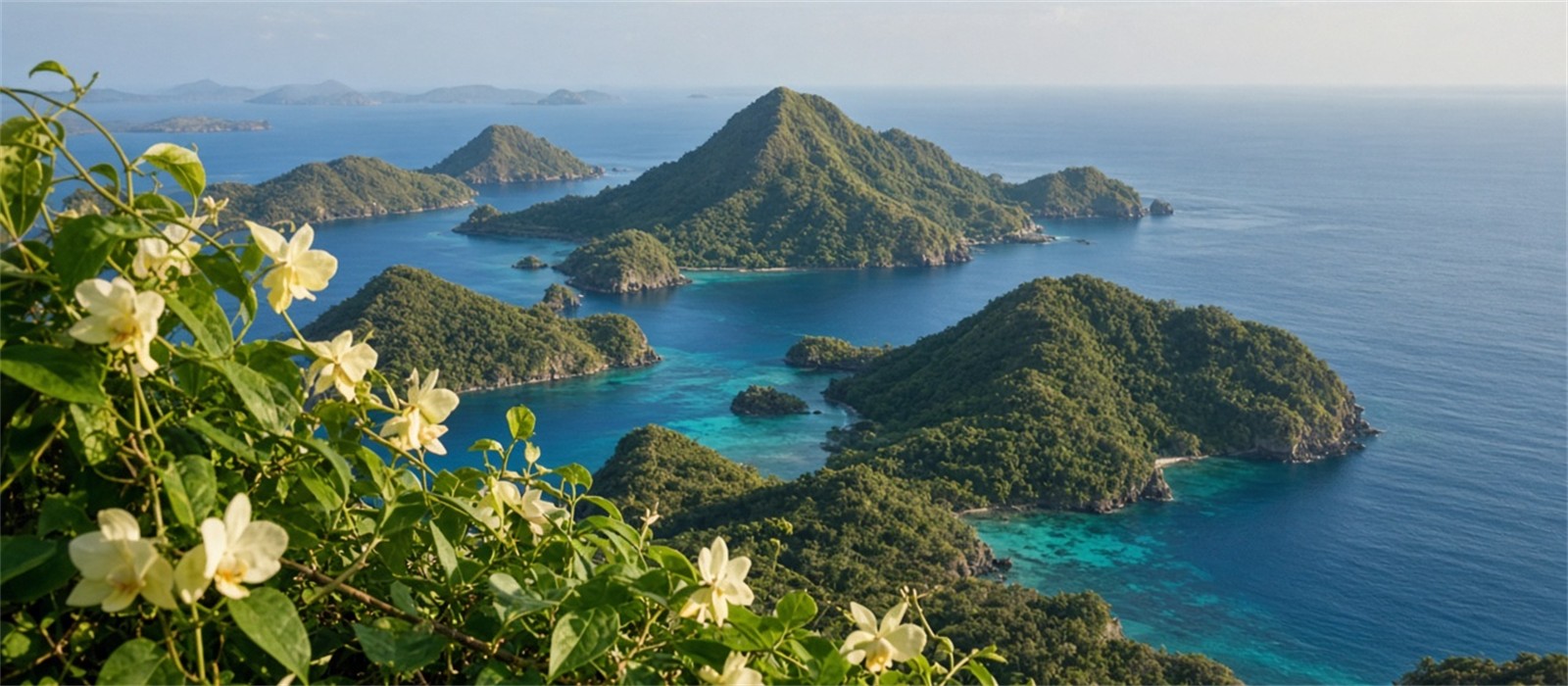


The Vanilla Islands comprise the states of Comoros, Madagascar, Mauritius and Seychelles, as also the islands of Mayotte and Réunion, which are departments of metropolitan France. Due to their proximity to important international shipping lanes, sea lines of communication and choke points, these island nations have increasingly attracted the world’s attention. China’s expansionist actions have influenced India in enhancing its own focus on the island states. These six island territories are significant repositories of the world’s natural resources and, due to the strategic location of each, there is greater competition developing among regional as well as extra-regional states to establish friendly relations with them. China, for one, sees these islands, and indeed the littoral states of East Africa, as an important facet of its Belt and Road Initiative. India too seeks to advance its own national and maritime interests by constructively and cooperatively engaging these ‘Vanilla Islands,’ while simultaneously counterbalancing China. The available literature on India and the Vanilla Islands is sparse and, as such, this article represents an attempt to fill the gap. India’s relations with the Vanilla Islands have been developing under the rubric of India’s vision of SAGAR (Security and Growth for All in the Region) and constructive engagement with France. The article attempts to understand not only India’s bilateral engagement of each of these islands, but also New Delhi’s efforts to transition the Indian economic model from a ‘brown’ to a ‘blue’ one.
“…ever since the sixteenth century, from which time the Indian Ocean became the scene of a struggle for the control of the sea, the future of India has been determined not on the land frontiers, but on the oceanic expanse that washes the three sides of India.”
— K. M. Panikkar1
Introduction
The Vanilla Islands is actually an archaic moniker for a group of vanilla-plantation islands located in the southwestern Indian Ocean. These islands — Comoros, Madagascar, Mauritius and Seychelles, as also Mayotte and Réunion — have grown in significance in recent years because of their strategic geography. Their continued geostrategic importance is mainly because they sit astride important international shipping lanes linking Africa to West Asia, the Indian subcontinent and East Asia. From the available historiography of these islands, it is evident that during the fight among Europeans for expansion into the Indian Ocean in the 15th century, these small island territories were objects of contestation amongst the several European countries that were, at that point in time, jockeying for colonies within the Indian Ocean region. Since the shipping lanes between Europe and the Indian Ocean passed close abreast of the Cape of Good Hope before veering northward through the Mozambique Channel, these islands became extremely important as staging and replenishment posts for visiting navies. Slowly but steadily, they became objects for power struggles as well.

Fig1: Distance between Mumbai to London (via the Suez Canal and the Cape of Good Hope)
Significance of the Mozambique Channel. (Figure is for representational purpose)
Source: The Centre for Economic Policy Research
For much of the 18th century, France had the upper hand in these Vanilla Islands. After the Napoleonic wars, the French continued to assert their influence in those islands — and this continues to date. However, after 1869, which marked the opening of the Suez Canal, connecting the Mediterranean Sea with the Red Sea and hence through the Bab el-Mandeb to the Indian Ocean, there was little need for seaborne merchandise traffic to go around the Cape of Good Hope and use the Mozambique Channel. Consequently, the strategic importance of these islands diminished quite sharply. However, it was the eight-year closure of the Suez Canal from 1967 to 1975 that led to the revival of the Cape route and hence the renewed significance of the Mozambique Channel.
In contemporary times, however, with the geopolitical uncertainty that has arisen in the Red Sea and the Bab el-Mandeb through the actions of states such as Djibouti and Somalia, shipping companies once again felt the need for an alternative route. For instance, the March 2021 incident of the MV Ever Given getting stuck in the Suez — amongst other factors — has led to a revival of the relevance and importance of the Cape of Good Hope shipping lane. The US Energy Information Administration estimates that about 5.8 million barrels a day of seaborne-traded crude oil and petroleum liquids moved around the Cape of Good Hope in both directions in 2016, accounting for about 9 per cent of all seaborne-traded oil.2 Adding to this are the resources from Africa which have become crucial to growing economies like China, India, Japan and many others in Asia, so that the shipping lanes passing near the east coast of Africa and the Vanilla Islands have once again come into the limelight. This is accentuated by the quite promising recent discovery of liquefied natural gas in the Rovuma gas field of Mozambique. It was then estimated that the project would produce 17 million tonnes per annum in Mozambique and pave the way for the country to become one of the leading exporters in Africa.3 On full-fledged operationalisation of commercial exploitation of natural gas, the area could be another West Asia in times to come. However, with unexpected delays in the project, the operational functioning of the Rovuma gas fields by 2025 seems unlikely. Apart from all this, these islands boast an extensive array of natural resources like fish, copra and cinnamon, and vast tracts of arable land.
Despite geostrategic swings, the importance of the Vanilla Islands has not yet diminished. The criticality of ports along the Mozambique shipping lane lies in their potential to affect regional stability, economic vitality and security dynamics. Open ports, when not adequately managed or monitored, could expose these vital maritime corridors to vulnerabilities such as piracy, smuggling and unauthorised entry. Such threats can disrupt the flow of goods, affect economies and compromise the safety of vessels navigating these waters. Furthermore, the strategic positioning of open ports along these shipping lanes could influence the broader geopolitical landscape. They could serve as potential focal points for diplomatic negotiations, international cooperation and security arrangements. Amongst other factors, ports can contribute to shaping alliances, security partnerships and responses to emergent challenges in the maritime domain.

Fig 2: The Vanilla Islands, Choke Point and the SLOCs
Source: Authors
As discussed, the significance of these islands and their control has been a consideration since the late 15th century. These nations are currently working to understand and define their economic goals and geopolitical importance, aiming to leverage them effectively. They are highlighting their priorities and challenges, engaging in negotiations with external parties to further their national and strategic interests. Recognising the strategic advantage of their geographical location, the political leaders of these island states are striving to make a mark in global politics amidst major powers seeking influence in the region.4
These nations’ leaders are channelling their efforts into connecting their maritime security needs, economic growth and global role with their geographical context. They are forging partnerships with maritime powers such as India, France, the United States and China, the latter being an emerging power after its economic opening.5 Notably, China is making substantial investments in infrastructural development within these small island developing states, signifying the islands’ openness to new actors to balance prevailing power dynamics and a readiness to move beyond their sub-regional spheres of influence.6 In this context, the traditional powers must therefore consider the interests and concerns of island nations while forming fair and innovative collaborations.
Speaking of China, its growing military and economic investments have spurred the Sino-Indian race for influence in the region. China, with its soft-power diplomacy, backed by hard power, aims to emerge as an authoritative player in the region by leveraging the Chinese diaspora present in and around the Vanilla Islands. China also directs its focus on carrying out, either unilaterally or with its alliance partners, counter-piracy operations and counter-terrorism activities in the region. It has also been attempting to gather intelligence in the Indian Ocean for its operational requirements under the garb of carrying out marine research activities. This is aimed at ensuring China’s effective and easy operability during times of conflict.
Strategic Significance for India
The growing Chinese imprints, as well as increasing Indian interests, spurred the Indian Navy to include the eastern coast of Africa in the ambit of India’s primary area of interest in the Indian Maritime Security Strategy of 2015.7 In the 1980s the western Indian Ocean islands had generally looked to India for some matters of their security. After excellent relations in the 1980s, the impetus for further improving relations gradually began in the 2010s by invigorating organisations like the Indian Ocean Rim Association. The first leaders’ summit was held in 2017. As mentioned before, the geographic location of these islands highlights their importance for India as well, since strategically these islands have a crucial and critical role to play to connect the Indian Ocean with continental Africa.8 Collaborating with these island nations to protect and patrol their own maritime zones and maritime choke points benefits all mutually.
The existence of an Indian diaspora and shared colonial histories in some of these islands makes for closer cultural connectivity and for India’s soft power. India is well placed to effectively amalgamate history with geography, and economics with shared prosperity, with partners in the Indian Ocean, and especially in the western Indian Ocean.
Indian Ocean Commission
Seeking to protect and promote their own national interests, the Vanilla Islands created an intergovernmental body in 1984, the Indian Ocean Commission, comprising Madagascar, Comoros, La Réunion, Mauritius and Seychelles. The Commission has five observers: India, China, the European Union, Malta and the International Organisation of La Francophonie. Defined in 2010 through the Commission, ‘Vanilla Islands’ aims to unify for tourism.9 The Commission addresses connectivity challenges, fostering interconnection.
Indian engagement with the island littorals will benefit India, aligning with the SAGAR initiative. Launched by Prime Minister Narendra Modi in 2015, SAGAR promotes trust, adherence to maritime laws and cooperation in the Indian Ocean. India’s central location in the region facilitates relationships by providing her with unrestricted access to the ocean.10
India aids the region through data sharing, tackling piracy, armed robbery and illegal fishing, mainly via inputs collated by the Information Fusion Centre–Indian Ocean Region.11 Moreover, the Indian Navy’s capacity for crisis response builds up mutual trust. This indicates India’s important role in the region in a transparent manner, with the help of her capabilities and capacities. As an example, Mission Sagar during Covid-19 reinforced India’s vision, providing aid to island nations, saving lives, building capacities, and supplying food and medicine consignments and equipment. Consignments of food items and medicines, including Ayurvedic medicines, were delivered to these states. A special 14-member medical team was deployed to Comoros and Madagascar during the pandemic.12 In January 2021, India sent vaccines to Mauritius and Seychelles, strengthening bonds, and the Indian Navy became the first and primary responder by sending lifesaving drugs to Mauritius and Seychelles.13 Overall, India’s actions align with the Vanilla Islands’ sustainable development.
Consonance with France
India’s presence in the western Indian Ocean states, and membership of the Indian Ocean Commission since March 2020, owe much to France’s support.14 India’s enhanced relationship with France in the Indian Ocean will help India achieve its ambition of creating increased maritime domain awareness. The 2018 agreement between India and France for reciprocal logistics support of the armed forces, and a shared Joint Strategic Vision of India–France Cooperation in the Indian Ocean Region, have been helping both countries foster a better maritime environment.15 To give a further boost to relations between the two countries in the western Indian Ocean, the concept of ‘smart islands’ — initially used by India with Japan — develops strategies, infrastructure and technologies, and looks for the effective management of those strategies for achieving the goal of smart islands.16
India’s Blue Economy and Other Initiatives in the Region
China focuses on economic investments and loans to several countries. India cannot, and need not, match China in the investment potential that the latter possesses. Therefore, India has tried, and must keep trying, different approaches.
In his address at the International Fleet Review in 2016, the Indian Prime Minister had referred to oceans “as the lifelines for global prosperity,” and, adding another metaphor, said that the blue chakra in the Indian national flag depicts India’s potential for a blue economy.17 The Indian Navy’s voluntary initiatives, like the Indian Ocean Naval Symposium, help in improving maritime frameworks in the region. Upgrading the existing coastal surveillance radar system and installing new ones in the island states is essential to enhancing maritime safety and security for these states and for integrating maritime domain awareness. India’s collaboration with island nations with limited capacities has benefited them in conducting exclusive-economic-zone surveillance, mapping their continental shelf and carrying out joint hydrographic surveys.
These islands can also suffer the consequences of natural disasters and climate change. Moreover, territorial disputes among some of these states hinder cooperation in resource exploration, fisheries management and maritime security, thereby affecting the livelihoods of many in the region. The undelimited boundaries of Comoros with Madagascar, and perhaps France, are complicated by the sovereignty dispute with France over Mayotte, and possibly the sovereignty dispute with France and Madagascar over the Glorioso Islands.18 On the other hand, in the matter of sovereignty over the Chagos Islands, India has endorsed United Nations General Assembly resolutions and judgments from the International Court of Justice that uphold Mauritius’s assertions. As is well known, the US base at Diego Garcia is within the Chagos group of islands.19
Effective governance in the maritime domain is crucial. India and France collaborate on maritime awareness through the Joint Strategic Vision and a white-shipping agreement.20 They are working in collaboration to augment their ship-tracking capabilities on a real-time basis in the Indian Ocean and thereby building a space-based automatic identification system.21
Human trafficking and smuggling networks pose challenges in the western Indian Ocean. Vulnerable populations, including migrants and refugees, suffer due to porous maritime borders. Environmental challenges, including pollution, habitat destruction and coral-reef degradation, harm marine life. As several other regions do, the western Indian Ocean also suffers the consequences of pollution from coastal development, shipping and poor waste management. Habitat destruction, such as mangrove deforestation and coastal erosion, also poses a threat to the littorals. After the environmental crisis due to the oil spill in August 2020, India sent aid to Mauritius, including equipment via Indian Air Force aircraft and a 10-member technical response team along with specialised equipment, which helped in cleaning and salvage operations.
Illegal, unreported and unregulated fishing is a significant challenge, threatening fish stocks and local livelihoods. For instance, there has been displeasure amongst the Comorians regarding China depleting fishing stocks in the region.22 It is the right time for India to develop strong ties with Comoros and promote sustainable fishing practices like aquaculture and mariculture.
Climate-change impacts, like sea-level rise and storms, require regional cooperation and sustainable practices in the western Indian Ocean. India can assist these nations by recycling wastewater, reusing water, bio-tourism, exploration of marine resources, harnessing renewable energy sources like tidal and solar energy, and marine-based green activities like ocean aquariums, coastal diversity parks and marine reserve areas.23
India and the Vanilla Islands
Though India had diplomatic and historical ties with all the littoral states in the western Indian Ocean, the Indian involvement with the Vanilla Islands before 2015 was predominantly with Mauritius and Seychelles, through cultural, economic and security ties. Various training programmes and student scholarships were, and still are, encouraged by the Indian government to improve bilateral relations with these countries. As mentioned earlier, the Indian diaspora in the Vanilla Islands has played a significant role in promoting Indian culture.
Comoros
Comoros, an Indian Ocean Rim Association member since November 2012, participated in the Defence Ministers’ Conclave in February 2021.24 In 2019, Vice President M. Venkaiah Naidu’s visit resulted in six memoranda of understanding, including one on defence cooperation.25 India pledged interceptor boats (USD 2 million) and a USD 20 million credit for high-speed interceptor boats to Comoros.26 From 20 September 2021 to 1 October 2021, twelve Comorian diplomats attended the first special course for diplomats in the Indian Ocean region at the Sushma Swaraj Institute of Foreign Service.27 The chief of the Comorian coast guard joined the Goa Maritime Conclave in November 2021, following earlier participation in a Goa Maritime Symposium.28 Responding to the Comorian coast guard’s request in 2021, the Indian Navy deployed INS Kesari in January 2022 for technical assistance to their coast guard’s grounded patrol vessel, P002 M’kombozi.29 In September 2022, External Affairs Minister Dr S. Jaishankar met the President of Comoros during the 77th United Nations General Assembly, strengthening their commitment to the maritime-security partnership.30
Government-to-government diplomacy has played a central role in enhancing the relationship between Comoros and India. The various engagements, agreements and practical assistance provided by India have not only bolstered Comoros’s maritime capabilities but have also solidified the mutual commitment to regional security. This maritime collaboration stands as a testament to the growing importance of naval diplomacy in shaping international relations in the Indian Ocean region.
Réunion
India–France relations have been reinforced by the 2018 Joint Strategic Vision for Cooperation in the Indian Ocean. India’s ties with the French territory of Réunion facilitate information exchange, and a 2018 agreement granted mutual access to military facilities.31,32 As a part of the strategic partnership, the last phase of the Varuna naval exercise in 2018 was conducted around the French Réunion islands, with the participation of INS Mumbai and INS Trikand. The week-long exercise included air defence, firing, manoeuvres and more. In 2019, the French President announced the deployment of the Indian Navy’s maritime patrol aircraft for surveillance missions in 2020 at Réunion, and the following year marked the first Indian and French naval maritime patrol aircraft conducting joint patrols, with the P-8I.33 Similarly, in November 2022, the navies of both countries again got together to undertake coordinated maritime surveillance and ocean-mapping operations in the southern Indian Ocean and the Mozambique Channel.34
Naval diplomacy has thus played a critical and ongoing role in increased Indo-French cooperation in the western Indian Ocean.
Madagascar
India and Madagascar share strong historical ties, fostering a cordial relationship. Indian Navy goodwill visits to Madagascar reflect this bond. In 2016, Madagascar participated in the Maritime India Summit organised by the Ministry of Shipping.35 In 2018, India and Madagascar signed two memoranda of understanding, including one for defence capacity-building and training of Madagascar’s defence personnel.36 In 2019, India appointed a defence attaché for Madagascar.37 A maritime symposium at the Information Fusion Centre in June 2019 included participation of the chief of the navy of Madagascar.38 During the 2020 defence expo, the Indian and Malagasy defence ministers discussed enhancing maritime-security cooperation.39 Madagascar’s defence minister also attended the India–Africa Defence Ministers’ Conclave in 2020. To benefit from efforts taken by Madagascar towards cooperative maritime domain awareness, India posted a naval liaison officer at their regional maritime information-fusion centre.40 nWhilst deployed in the southern Indian Ocean, INS Airavat was diverted on 26 January 2020 as part of Operation Vanilla to render assistance during Cyclone Diane.41 In February 2021, in order to further strengthen defence cooperation, a four-member Malagasy delegation attended the 2021 Indian Ocean Defence Ministers’ Conclave.42 Both navies jointly patrolled Madagascar’s exclusive economic zone and conducted a passage exercise in March 2021 at the port of Antsiranana.43 In March 2021, a five-member Indian Navy mobile training team, deployed onboard INS Jalashwa, imparted 14 days of special training to 50 Malagasy special forces, comprising personnel of their army and navy, towards enabling them to safeguard their coast, natural resources and biodiversity.44 In September 2021, ten diplomats from Madagascar also joined the first special course for diplomats in the Indian Ocean region.45 Another mobile-training-team visit was arranged in October 2022 to train the Malagasy special forces.46
Mauritius
India and Mauritius share a deep-rooted defence connection dating back to Mauritius’s independence in 1968. An important facet of this connection, and one mentioned earlier, is that India has consistently supported Mauritius’s sovereignty over the Chagos archipelago in the western Indian Ocean.
India helped establish its National Coast Guard decades ago. Over the years, India has assisted in installing the automatic-identification-system network and coastal surveillance radars, conducted hydrographic surveys, and conducted exclusive-economic-zone patrols with the Mauritian Coast Guard. Collaboration extends to training their military in maritime security, counterterrorism and disaster response. India has provided Mauritius various air-reconnaissance assets since 2001.47 In 2015, Mauritius commissioned the first Indian custom-built offshore patrol vessel for Mauritius during the Indian Prime Minister’s visit. The third ship constructed by the Indian defence shipyard was commissioned in the Mauritius Coast Guard in 2017.48
In 2017, during the Mauritius Prime Minister’s visit to India, a maritime-security agreement was signed.49 In 2018, India’s President, Ram Nath Kovind, witnessed the exchange of several memoranda of understanding between the two countries, including a USD 100 million line of credit for offshore-patrol-vessel procurement and an additional USD 5 million grant.50 India hosted the first India–Africa Defence Ministers’ Conclave in 2020 and the India–Indian Ocean Defence Ministers’ Conclave in February 2021, which had Mauritian representation.51 In February 2021, during the External Affairs Minister’s visit, two agreements were signed. One involves leasing maritime assets such as Dornier aircraft and the Advanced Light Helicopter Dhruv to Mauritius for safeguarding and monitoring its exclusive economic zone. The second agreement provides Mauritius with a USD 100 million line of credit to procure defence equipment.52
Seychelles
India’s maritime relations with Seychelles have evolved into a crucial strategic partnership in the Indian Ocean. This alliance, shaped by mutual interests and historical ties, holds significant implications for regional stability, economic development and security.
Both nations share a common interest in maintaining a stable and secure Indian Ocean. India has been a steadfast partner in strengthening Seychelles’s maritime-security capabilities. The joint efforts include coordinated patrolling, training of Seychellois personnel and information sharing. This cooperative approach has effectively combated piracy in the region, safeguarding vital sea lanes.
The process of capacity-building encompasses various strategic initiatives, including the provision of patrol vessels such as the Topaz, the Constant, the Hermes and the Zoroaster, among others.53 This includes the establishment of onshore facilities dedicated to the repair, refit and maintenance of the Seychelles Coast Guard. Additionally, there is a focus on creating a network of coastal radars and automatic-identification-system receivers to augment maritime domain awareness. The comprehensive approach extends to elaborate training programmes, extensive hydrographic surveys and routine patrols within the exclusive economic zone. Furthermore, the development efforts extend to the archipelago’s more remote atolls and islands, with specific attention given to locations like Assumption Island. These multifaceted measures collectively contribute to the enhancement of Seychelles’s maritime capabilities in a diplomatic and nuanced manner.
Seychelles’s security diplomacy with India represents a pragmatic and forward-thinking approach to securing its maritime interests. By partnering with India, Seychelles gains access to expertise, resources and technology that enhance its maritime capabilities and strengthen its position in the Indian Ocean. This partnership not only benefits Seychelles but also contributes to the broader goal of maintaining peace and stability in the region.
Conclusion
India’s strategic focus on the Vanilla Islands reflects its recognition of the Indian Ocean’s central role in shaping its future. The importance of these island nations cannot be overstated, given their vast natural resources, strategic location and potential to affect regional stability and security dynamics. This article briefly captures the historical context of European colonial competition in the region and how these islands have retained their strategic importance over time. India’s engagement with these nations, bolstered by its naval capabilities and diplomatic efforts, not only promotes its own interests but also contributes to the security, prosperity and changing geopolitical dynamics of the Indian Ocean. Naval diplomacy has proved to be a key instrument and continues to contribute mutually useful strategic dividends.54 India’s soft-power diplomacy, rooted in historical ties and a shared colonial history, complements its naval presence in the region. Moreover, India’s cooperative approach, information sharing and crisis-response capabilities have established it as a friendly, professional and well-intentioned security partner in this vital region.
Endnotes
- K. M. Panikkar, India and the Indian Ocean: An Essay on the Influence of Sea Power on Indian History (London: George Allen & Unwin, 1945).
- “World Oil Transit Chokepoints,” The Maritime Executive, 15 November 2014.
- “Rovuma LNG Project, Mozambique,” NS Energy, https://www.nsenergybusiness.com/projects/rovuma-lng-project-mozambique/. The body prints 17,000 million tonnes; the figure is rendered here as 17 million tonnes per annum.
- The printed note defines “emerging island identity” as the evolving sense of self, culture and identity forming within an island community, often from historical, geographical, social and cultural factors unique to that island. Darshana M. Baruah, “Geopolitics of Indian Ocean Islands in 2019: Takeaways for Traditional Powers,” South Asian Voices, 9 January 2020.
- Baruah, “Geopolitics of Indian Ocean Islands in 2019.”
- Baruah, “Geopolitics of Indian Ocean Islands in 2019.”
- Abhishek Mishra, “India–Africa Maritime Cooperation: The Case of the Western Indian Ocean,” Observer Research Foundation, November 2019.
- Baruah, “Geopolitics of Indian Ocean Islands in 2019.”
- “What are the Vanilla Islands?,” The Vanilla Islands, 2023, https://www.vanilla-islands.org/en/the-vanilla-islands/.
- Dhruva Jaishankar, “Indian Ocean Region: A Pivot for India’s Growth,” Brookings, 12 September 2016.
- Abhishek Mishra, “Africa Matters for India: Building Partnerships in the Western Indian Ocean,” South Asian Voices, 22 November 2019.
- “Mission Sagar: India’s Helping Hand across the Indian Ocean,” Ministry of External Affairs, 12 May 2020. The printed web address points to a Ministry press release.
- Nikunj Deep Singh, “Mission Sagar: Key to the Indian Ocean,” Observer Research Foundation, 8 October 2020.
- Mittal, “India and the Strategic Salience of the Vanilla Islands,” Indian Strategic Studies / Future Directions International, 6 February 2021.
- Mittal, “India and the Strategic Salience of the Vanilla Islands”; and “India–France Bilateral,” Ministry of External Affairs.
- Darshana M. Baruah, “Sister Islands in the Indian Ocean Region: Linking the Andaman and Nicobar Islands to La Réunion,” War on the Rocks, 20 March 2019.
- Mishra, “India–Africa Maritime Cooperation.”
- US Department of State, Bureau of Oceans and International Environmental and Scientific Affairs, “Limits in the Seas: Comoros — Archipelagic and Other Maritime Claims and Boundaries,” 28 March 2014.
- Parul Chandra, “India in the Crossfire over Strategic Chagos Islands,” Deccan Herald, 3 November 2022.
- Mishra, “Africa Matters for India.”
- Mishra, “Africa Matters for India.”
- Maitreyee Shilpa Kishor, “Under the Radar: China’s Growing Ties with Comoros,” Manohar Parrikar Institute for Defence Studies and Analyses, July–December 2018.
- Mishra, “Africa Matters for India.”
- “Bilateral Relations with Comoros,” Embassy of India, Madagascar.
- Ministry of External Affairs, list of memoranda exchanged during the Vice President’s visit to Comoros, 11 October 2019.
- Press statement by the Vice President on his visit to Comoros, 11 October 2019.
- “Bilateral Relations with Comoros,” Embassy of India, Madagascar.
- As note 27.
- As note 27.
- As note 27.
- Baruah, “Sister Islands in the Indian Ocean Region.”
- Rajeswari Pillai Rajagopalan, “What’s Behind the Rising India–France Maritime Activity in the Indo-Pacific,” Observer Research Foundation, 27 March 2020.
- Rajagopalan, “What’s Behind the Rising India–France Maritime Activity in the Indo-Pacific.”
- ANI, “Indian Navy Aircraft Arrives at La Réunion Island for Interaction with the French Navy,” 9 May 2022.
- Mishra, “India–Africa Maritime Cooperation.”
- Ministry of External Affairs, list of memoranda signed during the state visit of the President to Madagascar, 14–15 March 2018.
- Sachin Parashar, “Eye on China, India Appoints Defence Attaché in Madagascar,” The Times of India, 27 December 2019. The printed headline is truncated at “Wester.”
- “India–Madagascar Unclassified Bilateral Brief,” Embassy of India, Madagascar.
- Ministry of External Affairs, “Defence Ministers of India and Madagascar Reiterate Maritime Security Cooperation in Bilateral Talks,” Press Information Bureau, 6 February 2020.
- Dinakar Peri, “India Looks to Deploy Naval Liaisons at Madagascar, Abu Dhabi for Information Exchange,” The Hindu, 14 June 2020.
- Ministry of Defence, “INS Airavat Providing Humanitarian Assistance and Disaster Relief at Antsiranana, Madagascar,” Press Information Bureau, 1 February 2020.
- “India–Madagascar Unclassified Bilateral Brief,” Embassy of India, Madagascar.
- As note 42.
- Dipanjan Roy Chaudhury, “Indian Ocean Partnership: Growing Defence Ties between India and Madagascar,” The Economic Times, 30 March 2021.
- ANI, “India, Madagascar Join Hands to Amp Up Bilateral Ties,” The Print, 19 July 2022.
- “India–Madagascar Unclassified Bilateral Brief,” Embassy of India, Madagascar.
- Mishra, “India–Africa Maritime Cooperation.”
- Mishra, “India–Africa Maritime Cooperation.”
- “India Reaches Out to Mauritius with $500 Million Line of Credit,” The Times of India, 28 May 2017.
- “President of India Leads Delegation-Level Talks…,” Ministry of External Affairs, 12 March 2018.
- Ruchita Beri, “New Momentum in India–Mauritius Ties,” Manohar Parrikar Institute for Defence Studies and Analyses, 30 March 2021.
- Beri, “New Momentum in India–Mauritius Ties.”
- Pradeep Chauhan and Anum Khan, “The Vanilla Islands: Potential for a Pluralistic Security Community,” National Maritime Foundation, 25 May 2022.
- Srikant B. Kesnur, “Role of Defence Diplomacy in Enhancing Cooperation Between India and East Africa” (PhD diss., University of Mumbai, 2019).
