


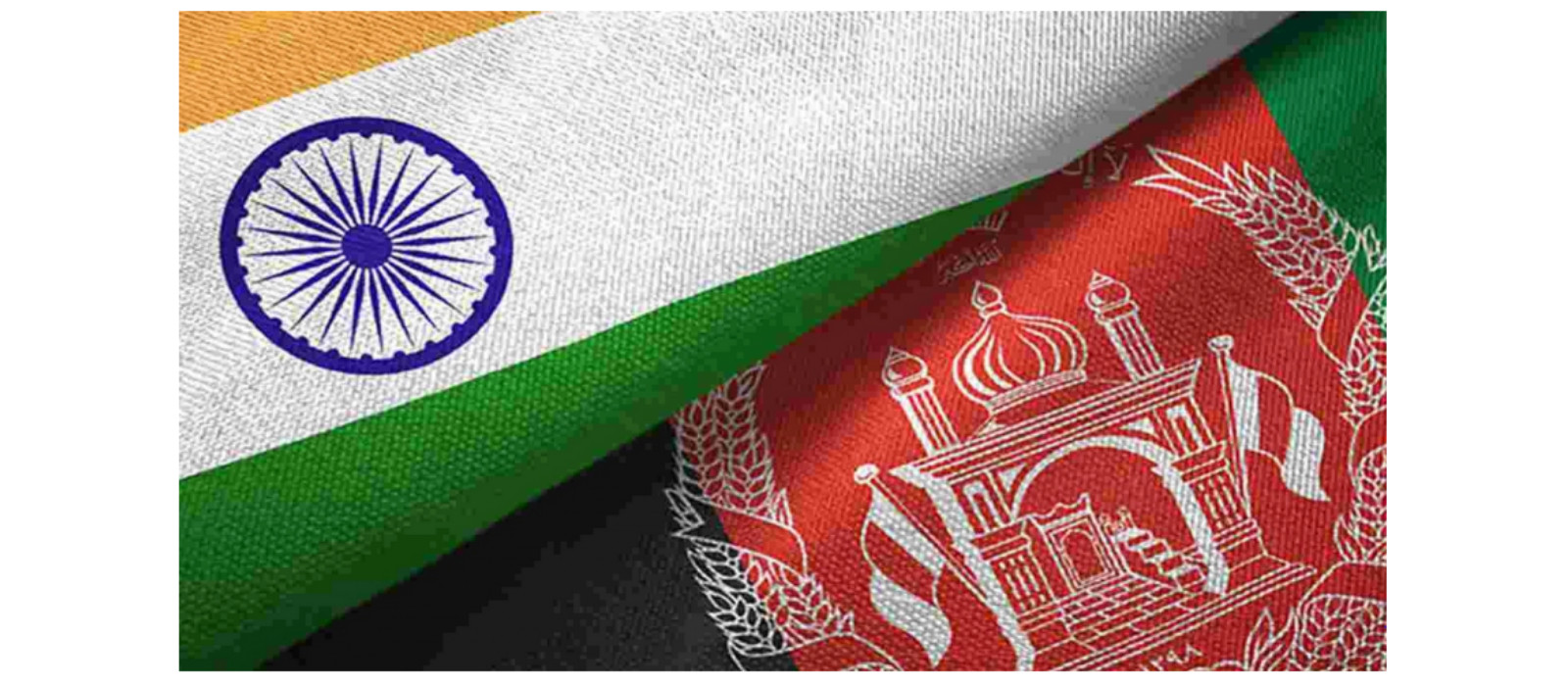


India’s Stakes in Afghanistan
India’s core interests in Afghanistan need to be viewed within the security paradigm in the context of undiminished concerns over terror emanating from the extremely volatile Pakistan-Afghanistan border region and spilling over into the country. A strong, stable and democratic Afghanistan had been construed as a bulwark to reduce the danger of extremist violence and terrorism destabilising the region. To accomplish this, New Delhi’s policy had broadly been in congruence with the US objectives of decimating the Taliban-Al Qaeda combine and instituting a democratic regime in Kabul. The broad thinking, as India unleashed its ‘soft power’ approach in Afghanistan 2001, was that the insurgents would be weakened and a democratic regime in Kabul would grow from strength to strength to establish stability and peace in the war-torn country.1 That ‘wishful’ thinking, however, is facing a litmus test in the wake of the ongoing peace talks by the US with the Taliban, which has unveiled the possibility of a return of the insurgents in some form, including power-sharing agreement between the civilian government and the Taliban. What impact can such scenarios have on New Delhi’s core security interests? Does it require a ‘reset’ to India’s policy towards Afghanistan? This article, while analysing the key factors in India’s relationship with Afghanistan since 2001, attempts to provide answer to these questions. It also provides a roadmap for improvements in the strategy pursued, thus far, to protect India’s core interests in that country.
Challenges to the Soft Power Approach
India’s soft power approach, since 2001, has included supporting Kabul’s nascent democratic regime through various infrastructure, economic, capacity building and small development projects. India is the fifth largest bilateral donor and largest regional donor country, having pledged more than $3 billion in diverse areas, including infrastructure, communications, education, healthcare, social welfare, training of officials, diplomats and security personnel.2 At home, India’s ‘aid only policy’ has generated intense domestic debate; given the vulnerabilities its projects and personnel face in Afghanistan. Despite serious attacks and threats on its interests, India has steered clear of any direct military involvement in Afghanistan, so as not to raise the ante for Pakistan, who perceives India’s involvement in Afghanistan as an attempt at strategic encirclement. Contrary to such perceptions, India’s aid provided on the basis of the needs of Afghans has been well received and there exists considerable support for Indian projects in Afghanistan.3 This approach, however, has faced challenges from two quarters - the policy of finding strategic depth by Pakistan and a policy of imposing an externally mediated solution of Afghanistan by USA.
The Pakistan military and intelligence establishment perceives the various wars in and around Afghanistan from the prism of its main institutional and national security interests, ‘first and foremost, balancing India.’ For Pakistan, an Afghanistan under Pakistani influence, or at least a benign Afghanistan, is a matter of overriding strategic importance.4 Fearing the increasing Indian influence in Afghanistan and beyond, Pakistan denies any overland trade and transit facilities for Indian goods to Afghanistan, thereby compelling India to rely on the Iranian alternative through Chabahar.
While India has been able to expand its footprint under the US security umbrella, repeated talks of US troop withdrawal by President Obama and President Trump, combined with the push for a peace deal with the Taliban, has led to considerable unease in New Delhi as well as the region. In his speech at the US Naval Academy at West Point, on 01 December 2009, President Barack Obama in addition to renewing his commitment to the Afghan war by increasing the troop numbers and terming it as a ‘just war,’ set a deadline of July 2014 for the conditional drawdown of forces. This led to the emboldening of the Taliban, who only had to ‘wait’ their time to renew the regional proxy warfare in Afghanistan.
Despite much ado during his election campaign of troop withdrawal from Afghanistan, Donald Trump's strategy for Afghanistan and South Asia, announced on 21 August 2017, was intended to highlight the novelty and surprise elements of a roadmap that purportedly sought little short of the decimation of terrorism. For all that, the 'new' strategy, its overheated semantics and studious ambiguity notwithstanding, it was a continuation of the American trial and error method that has kept insurgent aspirations of a victory alive, even 19 years after the US intervened in Afghanistan. A minor surge of 3,000 troops ordered by Trump notwithstanding, the total number of US troops is expected to be reduced to 4,500 by November 2020. Not surprisingly, such drastic troop reduction has raised concerns in New Delhi that Pakistan’s security establishment will attempt to regain its strategic depth in Afghanistan, and shift focus to the eastern borders with India having pacified the western border situation with Afghanistan.
In addition to the US troop withdrawal, the present efforts of the Trump administration’s reach out to the Taliban through a peace deal to demonstrate progress for his re-election bid, has left the door open for an insurgent takeover. Without a clear, integrated and Afghan-led reconciliation policy and adherence to red lines, the danger of the subversion of the democratic gains by radical elements runs high and could undermine India’s interest of maintaining a democratic regime. The return of the Taliban or the civil war like conditions of the early 1990s is clearly not in India’s interest. Indian policy makers are seeking to avoid such a scenario by a long-term international commitment in Afghanistan and strengthening the hands of the Afghan government that would prevent any future return of the Taliban to the seats of power in Kabul. This objective, too, appears unachievable.
Peace Deal and Political Polarisation
Amidst the spiralling violence and the battle fatigue that is developing in Afghanistan, the US reinitiated a peace process after the infamous announcement by President Trump that had derailed a similar attempt back in September 2019. The process bore fruit leading to a peace deal signed in Doha by the US representative and Taliban on 29 February 2020. The deal, which has interesting parallels with the previous Paris Accords, has been characterised clearly as a necessity sought by Trump for his re-election bid. Successful projection of efforts leading to the end of America’s longest war in Afghanistan and return of troops may boost his winning prospects. However, subsequent days have demonstrated the complexities of implementing the deal, particularly in building an intra-Afghan consensus. Much less is known of the details of the deal that have raised concerns not only in Kabul but also other capitals.
The deal, which has been hailed by many, missed the key point by not including the Afghan government in the early stages of the peace process. This has resulted in considerable level of distrust and tensions between the key stakeholders. Violence levels peaked immediately after the signing of the deal, amid Ghani’s initial reluctance to release upto 5,000 Taliban prisoners as agreed in the US-Taliban agreement. While the insurgents have stopped targeting the NATO forces, the Afghans did not witness any respite. It is evident that the Taliban is back to using their preferred tool of using violence to negotiate with the Afghan government from a ‘position of strength.’ That the ‘infidels’ are willing to retreat has emboldened the Taliban and their benefactors. On the contrary, the Afghan government’s position has been severely weakened.
India’s Position on the Peace Process
As the instability and violence in Afghanistan intensified and the exit strategies of Western nations gathered momentum, the Afghan government and international community initiated various steps to reconcile and reintegrate Taliban commanders and fighters. New Delhi, for long, has indicated its support for the ‘Afghan-led’ and ‘Afghan- owned’ process, as a means of finding a political solution to the Afghan war. In an interview with the Wall Street Journal on the sidelines of the UN General Assembly in New York, in September 2009, the then Indian External Affairs Minister SM Krishna said that, India did “not believe that war can solve any problem and that applies to Afghanistan too.”5
At the same time, there were indications of New Delhi’s support for President Karzai’s overtures of a reintegration process and outreach towards the Taliban. Foreign Secretary Nirupama Rao, addressing a closed-door international seminar on Afghanistan in October 2009, declared that India would support the process of reintegrating individuals into the national mainstream - code for dialogue with the ‘moderate’ Taliban who agree to renounce violence. She said, “We support the Afghan government’s determination to integrate those willing to abjure violence and live and work within the parameters of the Afghan constitution.”6 This change in stance, however, came with a caveat. Pakistan, which is widely believed to support the Taliban and provide shelter in Quetta to its leaders, would need to cease assistance to the Taliban. During his visit to Kabul in the summer of 2011, the then Indian Prime Minister Dr Manmohan Singh went a step further to state that India’s Afghan policy recognised the need for an ‘Afghan-led’ and ‘Afghan-owned’ peace process.
In contrast to New Delhi’s support for the nascent peace process inside Afghanistan, the peace deal between USA and Taliban on 29 February 2020 in Qatar was seen as an externally mediated deal with almost no involvement of the Afghan government. Moreover, the contested election results and the parallel swearing in ceremonies in Kabul, combined with the sharp political polarisation, has thrown up stark policy choices for New Delhi, testing its ‘soft power’ and ‘middle of the road’ policy. New Delhi’s gains may face the prospect of reversal if the political turmoil and future negotiations allow the Taliban to share power in Kabul. The signing of the peace deal and the narrative of defeating a superpower has emboldened anti-India groups, like JeM, LeT and others, which may have implications for Kashmir. The presence of the Islamic state in Afghanistan has further complicated the situation. A reset in its Afghan policy may still help secure India’s interests in the country.
Securing the Fragile Gains
In the past years, the talk of US down-scaling its operations has found resonance among certain sections of the Indian government and diplomatic circles, who view it prudent to wind up India’s development activities. There has been scathing criticism of India’s aid diplomacy and soft power approach each time the Indian mission or personnel are targeted. At such times, the talk of sending in the Army and putting ‘boots on ground’ gain credence, particularly in military circles. There have been calls from various quarters for India to play a more active role and that, as a “first tier global economic power, India needs to accept the responsibilities and risks that come with that stature.”7 At the other end of the spectrum are analysts who have internalised Pakistan’s concerns and call for the downsizing of India’s presence to assuage Pakistan’s fears and concerns.8
Nonetheless, New Delhi mostly pursued a ‘wait and watch’ policy, the primary content of which was reactive measures to deal with evolving challenges. It was mostly hinged on the prospects that the international community will discover reason in resisting a Taliban return to Kabul and instead, would continue its support to strengthen the civilian government’s capacities to govern and also to keep the insurgents at bay. In view of the radically changed ground realities, the ‘wait and watch’ policy is bound to impinge on India’s interests in the country and region. There are early warning signs of India’s goodwill in Afghanistan beginning to evaporate, with anti-India demonstrations and flag burning events organized in provinces like Kabul, Herat, Kapisa and Parwan. The parliament building -an edifice of democracy, which India built - may eventually be occupied by the forces it tried to defeat. Beyond such symbolic structures and aid giving, India will have to play a larger role in enabling Afghans to take charge of their own affairs, if it is to help prevent Afghanistan’s further slide into instability and chaos.
As Afghan elites get to the negotiation table to talk peace with the insurgents, New Delhi has to move beyond its ‘wait and watch’ policy and get proactive in developing long-term tools to prevent Afghanistan’s slide into chaos. While recognising the Taliban as a responsible stakeholder for the future of peace and stability in Afghanistan remains an important question, New Delhi’s policy will have to be well calibrated and long term, aiming to build Afghan institutions, self-sufficiency and minimizing external interference. Flushing funds and the consequent elite buy-in will not help New Delhi achieve its national security objectives. Similarly, to be encouraged by odd statements of the Taliban leadership appreciating India’s role may not be enough.
As the international community seems to be in a rush to bring its ominous gamble in Afghanistan to an end, India has a limited window of opportunity for enabling Afghans to play a lead role in their stabilisation efforts. To secure its national security objectives, India will have to deepen its levels of engagement in aiding the Afghans in their nation building process at various levels.9 The following set of recommendations can form the core content of New Delhi’s new Afghan policy: -
-
Security Sector. India can expand its role in training Afghan national security forces (particularly the police and officer corps of the army), and help develop the security sector. As the process of reintegration gains momentum, India’s experience of building a counter insurgency grid in Jammu & Kashmir and reintegrating the militants could have some important parallels and lessons for security sector reform in Afghanistan.
-
Political Sector. India’s experience of the parliamentary system, political parties, electoral processes, space for opposition, federal system, could have important lessons for political sector reform. The past presidential and parliamentary elections in Afghanistan, and the present political impasse, have brought to fore the problems of a highly centralised presidential system. India can also help in the conduct of free and fair elections to avoid the political contestation and polarisation of contested electoral results of previous years.
-
Peace Processes. While India has indicated support for the Afghan-led, Afghan-owned, Afghan-controlled peace process, adherence to ‘red lines,’ including respect for the Afghan constitution, human and women rights, would be crucial to prevent subversion from within. Afghanistan’s attempts at reconciliation needs to be supported by larger political and constitutional reforms, which would necessitate provisions for dialogue, autonomy and special representation of minorities, women and marginalised groups.
-
Economic Opportunities and Revenue Generation. In the economic realm, there is an immediate need for developing of alternative livelihood programmes, as well as reviving Afghanistan’s traditional artisan and agricultural base. Saffron cultivation in poppy growing areas could be a useful alternative livelihood project. Natural resource exploitation, thermal power generation and industrial development in the relatively stable North and West could provide opportunities for employment for the youth. Moreover, it would help Afghanistan to graduate from being an externally dependent ‘rentier state’ to a ‘self-sustaining economy.’
The complex and rapidly changing dynamics in Afghanistan pose a great challenge to policy making. The task of India is even more difficult. Expansion of its economic footprint is in New Delhi’s long-term strategic interests, but continued vulnerabilities would make the pursuance of such a policy unsustainable. As developments in Afghanistan will directly impinge on India’s security, New Delhi will have to strengthen its position as a serious stakeholder and reliable partner in the long-term stabilisation of Afghanistan. A national security strategy, with clear vision for a proactive involvement at multiple levels in Afghanistan, is essential to protect India’s national security interests in that country and the region.
Endnotes
-
Shashi Tharoor, “Indian Strategic Power: Soft,” The Huffington Post, 26 May 2009.
-
Ministry of External Affairs, Government of India. Field visit to the provinces in Afghanistan in May-June 2007, October 2010, October 2011 and August 2016 brought to light the challenges of aid delivery that India faces in the complex, conflict-ridden circumstances of Afghanistan, particularly of increasing aid effectiveness. Also see, Shanthie Mariet D’Souza, “India’s role in the economic stabilisation of Afghanistan,” Friedrich-Ebert-Stiftung Afghanistan, Kabul, 2016.
-
Interviews with the Afghan government officials and persons on the street, discussions with locals in Afghan provinces in Herat, Kabul, Balkh, Parvan, Baglan, Samangan, Kapisa, and Nangarhar indicates an appreciation of India’s role in rebuilding their country, May-June 2007. Subsequent field visits by the author in October 2010, June 2011, October 2011, February 2012, June 2012, September 2013, August 2014, June 2015, February 2016, August 2016, May 2017 to Afghanistan reinforced this perception. For further details Shanthie Mariet D’Souza, “India's Aid to Afghanistan: Challenges and Prospects,” Strategic Analysis vol. 31, no. 5 (September 2007); and “Change the Pattern of Aid to Afghanistan,” IDSA Strategic Comments (28 June 2007).
-
Barnett R. Rubin, “Saving Afghanistan,” Foreign Affairs (January/February 2007). George Friedman, “WikiLeaks and the Afghan War,” Stratfor, 27 July 2010. www.stratfor.com/weekly/20100726_wikileaks_and_afghan_war, accessed 25 August 2010
-
“Indian Minister Urges Afghan Political Settlement,” Wall Street Journal, 23 September 2009.
-
Ajai Shukla, “India supports reconciliation with Taliban,” Business Standard, 08 October 2009.
-
Frank Schell, “The U.S. Needs a New Af-Pak Strategy,” The Far Eastern Economic Review, 10 November 2009.
-
Barnett R. Rubin and Ahmed Rashid, “From Great Game to Grand Bargain: Ending Chaos in Afghanistan and Pakistan,” Foreign Affairs (November-December 2008).
-
These views and perceptions were gathered from author’s interactions and discussions with senior government officials, governors, policy makers, key interlocutors, academia, media personnel, non-governmental organisations, security personnel and locals during a field visits to Afghanistan in October 2010, March 2011 and May-June 2011, October 2011, June 2012, September 2013, August 2014, June 2015, February 2016, May 2017.
