




Abstract: This essay critically examines China’s strategic approaches during the Korean War (1950-53) and argues that its intervention was not merely a defensive reaction but based on careful assessment of strategic trends encompassing political, military, and diplomatic dimensions. It analyses how Mao Zedong, drawing on China’s traditional strategic culture and revolutionary nationalism, was able to orchestrate mass mobilisation and leverage asymmetry to confront a much better equipped foe. This war eventually strengthened control of CPC domestically, enhanced their international standing and reshaped Cold War dynamics in Asia. More importantly, this conflict reflects on the criticality of harmony between political intent and military execution and also focuses on precepts of asymmetry and realpolitik that remain enduring lessons for practitioners of strategy and war.
Introduction
The Korean War was a pivotal moment in spreading the Cold War to Asia, which was otherwise considered Eurocentric since its apparent beginning in 1948.1 The North Korean invasion on South Korea on 25 June 1950 triggered a swift U.S.-led UN intervention. What happened next was a series of actions and subsequent participation of Communist China with the tacit support of the Soviet Union which not only changed the tide of the conflict but resulted in a protracted war for three years in a region, which was otherwise considered as a peripheral area of little interest to both Soviet Union and the USA. William Steuck cites the Korean War as “a substitute for World War III” as it intensified the nascent Cold War to an unprecedented level to what could have led to a “hot” war.2
The Chinese military intervention in Korea, initially viewed as a mere reactionary response to defend their borders, was actually based on multiple strategic calculations encompassing political, military, and diplomatic dimensions. This essay seeks to critically examine the strategic approaches adopted by China during the Korean War. The main strategic approach adopted by the Chinese was military action comprising mass mobilisation of troops and pre-emptive attack against a relatively stronger opponent using asymmetric techniques drawn from their earlier experience in what they termed the Revolutionary Civil War (RCW). This military strategy was backed by diplomatic efforts along with protracted negotiations for a ceasefire and an intense domestic campaign to garner support for the war-waging efforts that would be required. Mao Zedong’s leadership played a central role in shaping these strategies. He was driven by both ideological interests as well as realpolitik. The essay will also identify the political environment leading to the Chinese intervention, which was closely associated with the strategy adopted by China.
China’s Strategic Motivations for Intervention
To begin with, the seeds of Chinese participation in the Korean War were sown much earlier due to the pre-existing Sino-American tensions, primarily driven by ideological differences and US support for the Nationalists based in Taiwan. The Americans also attempted to prevent China’s alignment with the Soviets during the later part of the Civil-War, but Mao’s Treaty of Friendship with the USSR in February 1950 had solidified China’s stance towards the communist bloc.3 As a result, both the U.S. and China perceived each other as dangerous rivals before the onset of the Korean crisis.4 Upon its onset, prompt intervention by the US-led forces and positioning of the 7th Fleet in the Taiwan Strait, along with their ongoing involvement in Indochina and the Philippines, was perceived by the Chinese as an existential threat to their national security in terms of the weiqi concept (attempt at strategic encirclement), which had to be prevented at all costs.5 Furthermore, the Chinese felt betrayed by the change in the earlier American stance of non-involvement in their internal affairs, after Truman made a public announcement on 27 June 1950 to prevent the Chinese Government’s efforts to liberate Taiwan. To Mao, this was akin to an act of war, and the stage was getting ready for the same.6
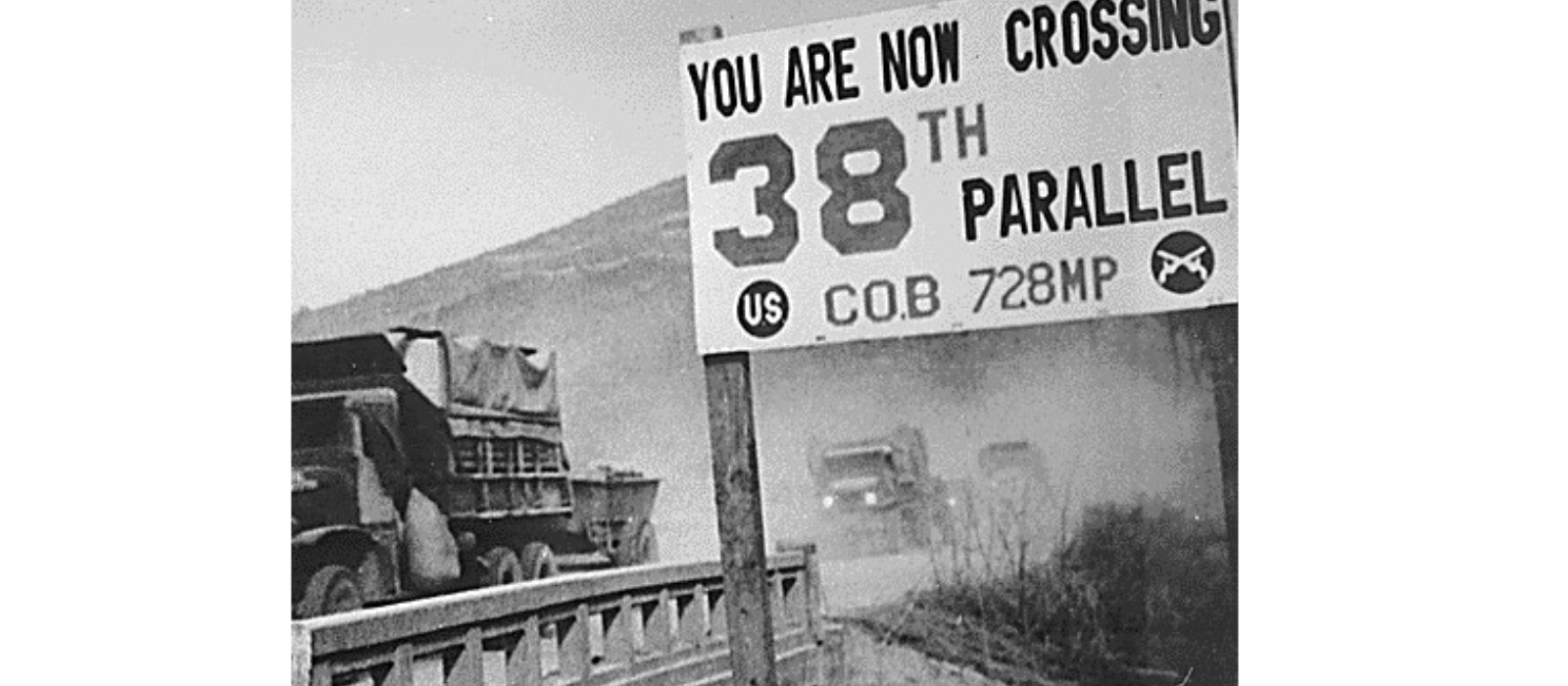
In his 1960 book, Whiting highlighted that China’s participation in this war was primarily aimed at defending their territorial integrity, which the CPC believed could be threatened should UN forces cross the 38th parallel and close the Yalu frontier.7 This was the commonly held belief until more wartime documents were declassified. However, Jian Chen highlights that treating China’s intervention as a mere reactionary measure, especially by the nation that historically perceived itself as the “Central Kingdom”, may not have been appropriate.8 To understand the context, Jian outlines three interrelated factors that governed the thinking of the Chinese foreign policy and security strategy at that time. First was the Communist Party’s “revolutionary nationalism”, which led to their victory over Nationalists and was thought of as a means to restore their status as a “Central Kingdom” in the new world. Mao was convinced about the moral and cultural superiority of China over other states, which he thought would eventually restore their proper status in the world. The second factor was to liberate other oppressed communities, support to fellow communists was considered a solemn duty in this regard. Korean peninsula was as such considered within the “traditional sphere of influence” of China, and it was important to restore this influence by supporting them.9 The third and most critical factor was the inner play of the communist movement within China. Although the CPC had won the civil war in 1949, this was just seen as the “first step in its long march”, and plenty of reactionary elements opposed to the Communist Government were still present in the mainland.10 Mao was thus worried about political consolidation in the mainland. In light of these factors, and taking a leaf out of the Chinese strategic culture, which defines crisis as a “combination of danger and opportunity”, Mao treated this war not only as a challenge but also as an opportunity to consolidate both CPC’s domestic hold over the mainland as well as advance international objectives.11 These factors reflect a mix of traditional, ideological, and realpolitik considerations adopted by China that shaped their strategic approaches to the intervention.
Chinese Strategic Approaches during the Korean War
The PRC’s initial strategy upon the outbreak of hostilities was to amass a large number of troops in northeast China based on the advice of his military commanders in keeping with the Chinese maxim, “One should open an umbrella before it starts to rain”.12 Within two weeks of the conflict, Mao issued orders to establish a dedicated Northeast Border Defence Army (NBDA) comprising three Armies. This number was subsequently increased to 12 Armies over the next two months. Separately, in mid-July 1950, CPC launched an intense mass public campaign, viz., “Great Movement to Resist America and Assist Korea” to mobilise the whole nation into the war effort.13 During meetings with the Politburo in early August 1950, Mao urged his associates to take a long-range view of the crisis as he was concerned that Korea could be used as a stepping stone for further ingress into China similar to what Japan did decades earlier. These views were seconded by Zhou Enlai and accordingly, orders were given for war preparations to be completed within one month. These actions were incidentally done when the military situation was still favourable to North Koreans and much before the Incheon landings.14 This reflects Mao’s military foresight as well as his lack of confidence in the DPRK troops to achieve successful outcomes in South Korea.
From a military point of view, an assessment was made by the PLA that Washington would not be able to deploy more than 500,000 troops owing to their other commitments They would thus face four million troops available to the PRC, that too with much shorter supply routes, giving them immense logistical advantage. The morale of Chinese soldiers was considered superior since they would be fighting a just war against imperialist forces, which would also find better acceptance worldwide giving them a psychological advantage.15 Notwithstanding these factors, it was assessed that the Chinese would find it extremely difficult to face the technically superior US forces with better firepower and manoeuvrability. Here, the Chinese relied on Mao’s earlier experience based on Sun Tzu’s strategic precept of a weaker force beating a physically superior enemy by adapting to the circumstances and using better tactics. Mao considered human aspects and individual willpower as critical factors, which he had successfully used in the civil war. American troops on the other hand were perceived to lack political motivation due to fighting in a foreign country.16 These subjective considerations were used most effectively along with other military aspects during the training of Chinese troops before intervention. Further, based on the request of the PLA field commanders, one additional month (till end September 1950) was approved by the CPC to enable better preparations of the ground forces before intervention.17 This highlights that the Chinese leadership was not in a hurry to intervene in the conflict and laid emphasis on focused preparation, including mental and ideological conditioning of the troops. This also counters the argument of a few other analysts, who claim that China was ready to intervene militarily in July itself.18 This period was also utilised to tactfully negotiate military support from Stalin including training for Chinese pilots. Furthermore, the threat of American atomic weapons was examined but allayed by Mao in the politburo meetings citing their alliance treaty with the Soviets as also his belief that these weapons would be of little use against large numbers and spread of the Chinese population.19
From a diplomatic perspective, Zhou twice cautioned the US to avoid crossing the 38th Parallel in early October 1950 through the Indian Ambassador, failing which, he conveyed that China would be forced to intervene in the conflict.20 Principally, the Chinese leadership viewed that this caution strengthened their position both to their domestic audience as well as to the world to showcase that military intervention was the last option.21 Subsequently, he was deputed to the Soviet Union to garnermilitary support and air cover for the Chinese troops. During this visit, Zhou had to do some tough bargaining with Stalin to convince him that Chinese intervention in Korea would be to their overall advantage at this stage especially since the Soviets had backtracked on their initial offer to provide military support. Stalin finally agreed to provide urgent military assistance to the Chinese with an assurance to provide air-cover only after their troops entered Korea.22 Once the decision to intervene was finalised by Mao, and it was clear that the UN forces would cross the 38th Parallel, a deliberate and calculated decision was taken by the Chinese leadership to engage the UN forces in the mountains of Korea, where the terrain would not only impede the mobility of US mechanised columns but the overwhelming numbers of Chinese troops could offset their superior firepower also.23 The name for intervening troops was carefully chosen as Chinese People’s Volunteers (CPV) to avoid formal participation of China in the war. This was done ostensibly to prevent escalation and keep the conflict limited to the Korean Peninsula while also allaying Stalin’s concern against a formal invoking of the Sino-Soviet treaty.24 In hindsight, it is clear that neither USA nor Soviet Union wanted to expand the conflict, and the naming of intervening troops as volunteers perhaps contributed in restraining the conflict to some extent.
Mao selected one of his most able Generals, Peng Dehuai, to command the CPV. He had experience of commanding a large number of troops in mountainous regions, a terrain similar to that in North Korea.25 Furthermore, Peng was fully supportive of Mao’s military intervention against a more powerful foe, which gave a boost to Mao’s overall strategy and more importantly helped convince the remaining naysayers in the politburo for military intervention.26 During the intervention, Mao continuously guided the actions of Peng, which is evident from the analysis of telegrams exchanged between them. Mao’s advice on CPV troops to cross the Yalu in dark hours and his issuance of separate directives to the senior party officials to impose a strict news blackout led to the successful element of surprise during the first two campaigns as it was more than a month later that the US got to know about the scale of the Chinese intervention.27 Mao further directed that the CPV must observe strict discipline and show respect towards the Korean people and their communist leaders, which would be a critical enabler in accomplishing the objectives.28 Separately, Mao advised Kim II Sung to retain 40-50000 troops in South Korea to open a second front against the rear of UN forces, which was weakly defended.29 Based on inputs received from the Chinese Political Counsellor stationed in Pyong Yang on logistical problems likely to be faced by the advancing Chinese troops concerning supplies and inadequate transportation, a dedicated rear base was established to provide logistics to CPV and the Korean comrades.30 This reflects an in-depth appreciation of the situation and associated challenges among the Chinese apex leadership that they were trying to mitigate before intervention. Furthermore, during the conflict, everything in China was made subordinate to their war efforts in Korea, and the defence expenditure was raised to about 42.5% of total government expenditure by 1951.31 This reflects the near-total commitment of the CPC to the Korean War.
For the campaign planning, Mao reverted to his revolutionary planning and tactics drawing from his earlier lessons. He surmised three values for a successful counter-attack, viz., “the first battle must be won”;, it's important to plan for complete intervention;, and subsequent stages must also be taken into account.32 Based on these values and Sun Tzu’s principles, Mao prepared his broad plan of attack with Peng, which predominantly focused on defensive tactics in the beginning whilst attacking isolated and weaker sections of enemy troops.33 Moreover, it was decided to induct all six Corps (18 Divisions) across the border to achieve numerical superiority and ensure victory in the first engagement, which incidentally went against the advice of Stalin who suggested the initial deployment of only 6 divisions ostensibly to prevent major retaliation.34 These plans and subjective considerations were reiterated by Peng to his senior subordinates on 14 October 1950, along with an emphasis on combining mobile warfare with positional warfare to weaken the enemy’s core fighting strength.35 Keeping in line with this strategy, CPV inflicted heavy losses on the advancing South Korean troops during their first campaign by attacking them from their rear and flanks in the Unsan area before pulling back.36 This displayed complete harmony between policy guidance set by Beijing and the strategy adopted by the Field Commanders during the initial part of the intervention, which set a favourable tempo for Chinese operations as was envisaged by Mao. It can also be surmised that Mao was tactfully able to mobilise his politburo, military as well as the populace in the national war-waging efforts during the intervention thus achieving some harmony of the Clausewitzian trinity between reason, chance, and passion.37
On the contrary, riding on the success of Incheon landings, and having been authorised to move troops beyond the 38th Parallel with certain conditions, Gen MacArthur’s northern offensive in mid-November 1950 to terminate the war met with a bitter end. Peng, in consultation with Mao, had adopted a strategy to retreat for some distance to feign weakness and occupy a favourable position to counterattack. This strategy proved highly successful and the advancing UN forces were trapped by the CPV which led to heavy losses to the former, followed by a hasty retreat to much south of the 38th parallel. The success of these first two campaigns convinced Mao that the CPV was capable of achieving total victory in the Korean peninsula, and he accordingly pushed Peng to continue the offensive. Although they regained Seoul in a subsequent campaign, Peng’s troops had to undertake a tactical retreat in the wake of a heavy counteroffensive by the UN forces in early 1951.38
Here it’s important to note, as Clausewitz explains, that the progress of war also shapes politics, and it does affect the psychology of decision-makers to make a much larger commitment than what their forces are capable of, notwithstanding associated high costs.39 This can be said to be true for both the Americans, when McArthur’s forces were granted permission to close the Yalu frontier after Incheon's success, as well as for the CPV troops attempting to continue their offensive southwards after initial successes. Nonetheless, based on further inputs from Peng on the necessity to consolidate their positions, Mao acknowledged that the conflict would get protracted and their best approach would be to hold ground and rotate the troops. Subsequent attempts by CPV to force UN forces out of Korea remained largely unsuccessful and led to a war of attrition in the vicinity of the 38th Parallel. This led to the beginning of protracted negotiations between both sides commencing in July 1951, and the declaration of ceasefire after two years with both sides holding territory almost similar to that held at the beginning of the conflict.40
On a separate note, this intervention convinced Stalin about Chinese support for the communist cause even in the face of heavy odds, and he became more forthcoming with military aid. The Chinese received equipment for 64 infantry divisions and 22 air divisions along with most of the replacement ammunition during this war. Not only that, the Soviets deputed ten tank regiments and 13 air divisions to North and East China per their treaty, to afford some measure of security to the Chinese mainland. Above all, the successful intervention by China resulted in a relationship of equals between both nations rather than that of “father and son” as described by Mao.41
During the Korean War, China suffered tremendous losses in terms of the lives of soldiers, huge financial expenditure at the cost of national reconstruction, and it prevented their plans to recover Taiwan (efforts for which continue to this day). Nonetheless, from Mao’s perspective, this conflict was observed to be a tremendous success for China as they had pushed back the UN forces from near the Yalu frontier to the 38th parallel and held back a most formidable military to a ceasefire. This war contributed in enhancing China’s international status in the revolutionary struggle against Western dominance, with the PRC playing a pivotal role in the Bandung Conference of 1955. Furthermore, the CPC’s intense mass campaign to assist Korea and resist America for three years strengthened their administrative control over the mainland like never before, leading to the suppression of counter-revolutionaries and the completion of the land-reforms.42 This was in keeping with the gains that Mao had anticipated before the conflict.
Conclusion
The considerations of China entering into the Korean crisis bring forth multiple factors, which went much beyond the defence of their frontiers, and were based on a careful assessment of the strategic trends.43 China took pre-emptive actions in positioning some of its best troops along the Yalu frontier, much before the Incheon landings in September 1950. To that extent, the Chinese leadership rightly appreciated that the DPRK alone may not be able to control the favourable tide of battle, especially after the intervention of the UN forces. Mao’s experience and personality played a critical role in shaping their strategic approaches. Along with Zhou Enlai, he was able to tactfully gain military support from the Soviet Union, as well as overcome resistance from within his politburo to fight a much stronger foe. The Chinese further correctly assessed that UN forces would not stop short at the 38th parallel, whereas the US side incorrectly appreciated the scale of Chinese involvement in the Korean War. Diplomatic options were also exercised by the Chinese, ostensibly to justify military intervention as the last resort. There is little evidence to support the hypothetical situation whether China would have entered the conflict had UN forces not crossed the 38th Parallel.44 Nonetheless, the Chinese prepared thoroughly for intervention at the time and place of their choosing using their traditional elements of mass, surprise, and deception, which caught UN forces off-guard. Adequate emphasis was given to the logistics and subjective considerations that allowed the CPV to fight against a technically superior force without antagonising the local populace. Mao’s close involvement in the campaign planning in coordination with Peng ensured complete harmony in policy directions and military strategy, which led to significant success in the first two campaigns. This also reflects the art of military strategy in the CPC at that time, which was driven by the political leadership rather than solely by the military generals. Mao in this case was completely involved not only in setting the objectives (ends) but also played an important role in determining the approaches (ways) and allocation of resources (means). This was in contrast with Washington’s approach to strategy, where substantial autonomy was delegated by the political leadership to MacArthur at the beginning of the conflict.45
The Korean intervention was perceived in China as a tremendous success as they held the Western powers at bay for the first time in modern history, which helped China regain its predominant position in East Asia. Post Korean War, the Chinese realised the importance and the need to modernise their military, preparations for which began in full earnest. More importantly, the reluctance of the Soviets to provide critical military support at an important juncture pushed the Chinese for greater self-reliance and sowed seeds of subsequent split between both countries in less than a decade.46 As far as Mao was concerned, he emerged much more powerful than before with greater freedom of action. His subsequent mass mobilisation campaigns such as the “Great Leap Forward” demonstrated ideological overreach. Nonetheless, the Chinese intervention in Korea had a significant restraining effect on the U.S.’s strategy in Vietnam.47 It is a moot point that had North Korea not invaded South Korea in 1950, could China have used its then available resources to invade Formosa (Taiwan)? One cannot say, except to note that statecraft may be about handling the unexpected and experiencing or even creating unintended consequences. For the world at large, the most significant effect of the Korean War was the intense militarisation of the Cold War at a global scale with significant increase in defence budgets and thrust on the nuclear weapons program on both sides.48
Endnotes
-
John Lewis Gaddis, We Now Know: Rethinking Cold War History, 1st paperback ed. (Oxford: Clarendon Press, 1998): 54.
-
William Whitney Stueck, Rethinking the Korean War: A New Diplomatic and Strategic History (Princeton, N.J: Princeton University Press, 2004): 1.
-
Gaddis, We Now Know, 65-69.
-
Jian Chen, China’s Road to the Korean War: The Making of the Sino-American Confrontation, The U.S. and Pacific Asia: Studies in Social, Economic and Political Interaction (New York:Columbia University Press, 1995): 216-18.
-
Henry Kissinger, On China (London: Penguin, 2012): 103-104,131. Steuck, Rethinking the Korean War, 107-108.
-
Sergej Nikolaevič Gončarov, John Wilson Lewis, and Litai Xue, Uncertain Partners: Stalin, Mao, and the Korean War (Stanford: Stanford University. Press, 1995): 215, 270-71.
-
Stueck, Rethinking the Korean War, 107.
-
Jian, We Now Know, 213-214
-
Stueck, Rethinking the Korean War, 108.
-
Jian, China’s Road, 213-215.
-
Jian, China’s Road, 128-129, 215.
-
Gaddis, We Now Know, 78.
-
Jian, China’s Road, 218.
-
Kissinger, On China, 135.
-
Jian, China’s Road, 144.
-
Steuck, Rethinking the Korean War, 109-110.
-
Jian, China’s Road, 145-146.
-
Kim Donggil, “New Insights into Mao’s Initial Strategic Consideration towards the Korean Wa r I n t e r v e n t i o n , ” Cold War History 1 6 , n o . 6 ( J u n e 0 6 , 2 0 1 6 ) : 1 – 1 6 ,10.1080/14682745.2016.1190 339.
-
Jian, China’s Road, 144-145. Steuck, Rethinking the Korean War, 109-110.
-
Gončarov, Lewis and Xue, Uncertain Partners, 216.
-
Jian, China’s Road, 181.
-
Gončarov, Lewis and Xue, Uncertain Partners, 192-195.Steuck, Rethinking the Korean War, 107.
-
Gončarov, Lewis and Xue, Uncertain Partners, 216.
-
Gončarov, Lewis and Xue, Uncertain Partners, 175 & 177-179.
-
Jiye Kim, “China’s Wars and Strategies: Looking Back at the Korean War and the Sino-Indian War,” Strategic Analysis, (March 04, 2018): 122, https://www.tandfonline.com/doi/full/10.108 0/09700161.2018.1439329.
-
Steuck, Rethinking the Korean War, 106-07.
-
Gončarov, Lewis and Xue, Uncertain Partners, 198-199 & 290-291.
-
Gončarov, Lewis and Xue, Uncertain Partners, 184-185.
-
Gončarov, Lewis and Xue, Uncertain Partners, 280.
-
Gončarov, Lewis and Xue, Uncertain Partners, 173 & 184-186.
-
Jiye, “China’s Wars,” 124.
-
Gončarov, Lewis and Xue, Uncertain Partners, 196.
-
Gončarov, Lewis and Xue, Uncertain Partners, 282-283.Steuck, Rethinking the Korean War, 110-111.
-
Hao Yufan and Zhai Zhihai, ‘China’s Decision to Enter the Korean War: History Revisted’, The China Quarterly 121 (March 1990): 94–115, 112, 10.1017/S0305741000013527.
-
Gončarov, Lewis and Xue, Uncertain Partners, 284-289.
-
Gončarov, Lewis and Xue, Uncertain Partners, 199. Jian, China’s Road, 211.
-
John Stone, “Beyond Clausewitz: Better Ways of Thinking Strategically,” Comparative Strategy 36, no. 5 (October 20, 2017): 468–78, 472, 10.1080/01495933.2017.1379840U+002e.
-
Jian, “China’s Road,” 211-212.
-
Kenneth Payne, “Fighting on: Emotion and Conflict Termination,” Cambridge Review of International Affairs 28, no. 3 (July 03, 2015): 480–97, 494, 10.1080/09557571.2014.888539.
-
Jian, “China’s Road,” 211-213.
-
Gončarov, Lewis and Xue, Uncertain Partners, 200-201.
-
Jian, “China’s Road,” 220-222.
-
Kissinger, “On China,” 137.
-
Gaddis, “We Now Know,” 81.
-
‘Echoes of War: Deciphering Chinese Military Strategy through the Lens of US Intelligence,” Air University (AU), May 08, 2024, https://www.airuniversity.af.edu/JIPA/Display/Article/ 3768288/echoes-of-war-deciphering-chinese-military-strategy-through-the-lens-of-us-inte/https%3A%2F%2Fwww.airuniversity.af.edu%2FJIPA%2FDisplay%2FArticle%2F376828 8%2Fechoes-of-war-deciphering-chinese-military-strategy-through-the-lens-of-us-inte%2F.
-
Jian, “China’s Road,” 220-223.
-
Kissinger, “On China,” 146.
-
Odd Arne Westad, The Cold War: A World History (London: Allen Lane, an imprint of Penguin Books, 2017): 181-182.
