


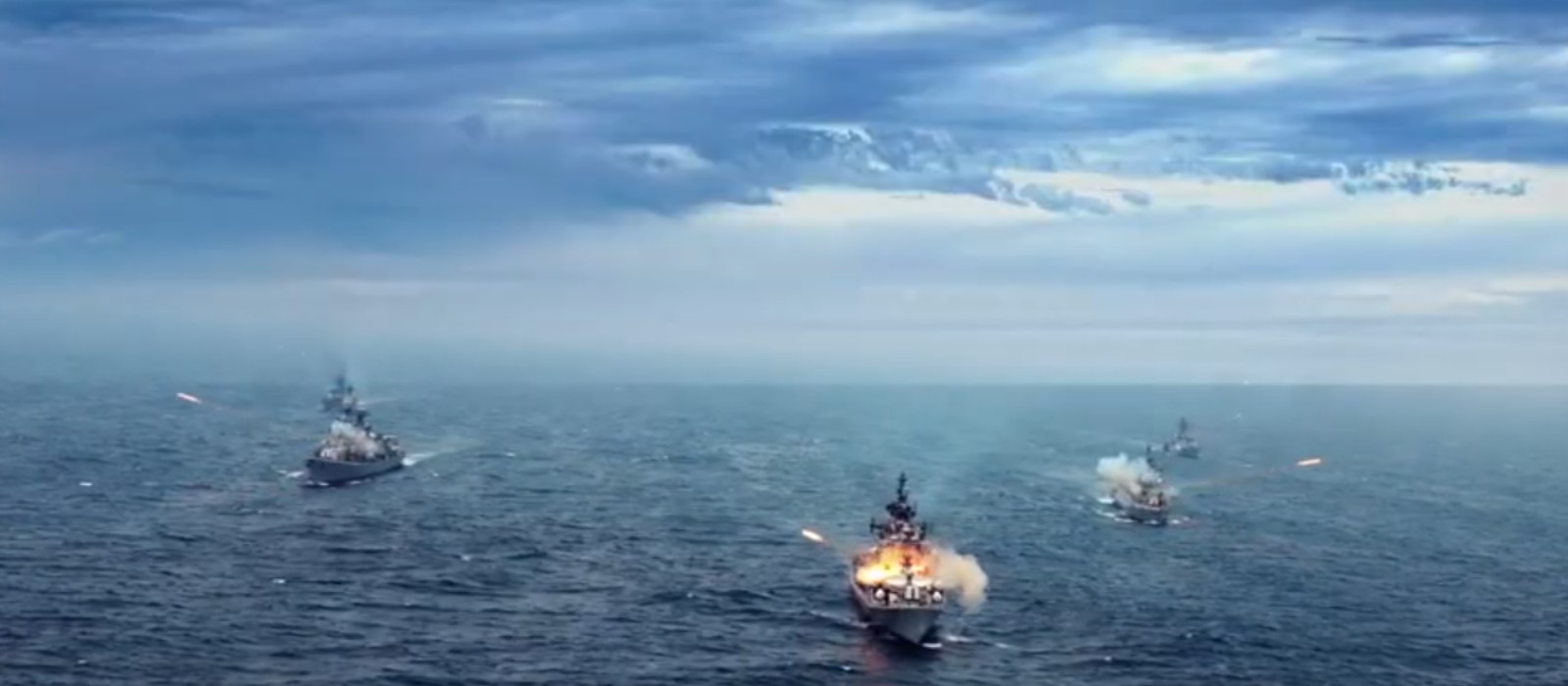


Time is a pivotal factor in warfare, which can be used to overturn other factors of space, force and information, if used appropriately. Time has been getting compressed in modern warfare, generating nee possibilities and vulnerabilities, which require to be addressed in the operational enablers of organisation, equipment, training and education as well as in the planning and conduct of the operations.
INBR 8, Indian Maritime Doctrine, p 4-10
Introduction
Technological advancements are leading to development of new-age weapons which in turn affects decision-making cycles of nations and their militaries. Hypersonic weapons, capable of travelling at a speed greater than Mach 5, are one such category of weapons. Although hypersonic weapons have been known to exist since World War II, advancement and development of associated technologies have aided their increased induction in military arsenals.1 They are broadly categorised into Hypersonic Glide Vehicles (HGVs) and Hypersonic Cruise Missiles (HCMs). Due to their sheer speed and manoeuvrability, these weapons have the potential to impact the warfare including the disruption of existing missile defence capabilities.
Performance Capability of Hypersonic Weapons
The nuclear bomb was considered one of the single greatest risks to human survival in the twentieth century, and media and expert conversations about national security have mostly focused on the threat of global nuclear conflict in recent years. However, advances in hypersonic flight technology have spawned an altogether new class of weapons that will poses a new threat to international peace and security. Hypersonic weapons have been known to exist since the early 1930s. Germany had developed a hypersonic weapon during World War II that laid the foundations for research in this field in the post-war era.2 These weapons aredifferent from the space entry vehicles because of the extended flight duration for which they have to fly. Two types of hypersonic weapons are currently under development viz. HGVs and HCMs. Both these weapons are capable of delivery of conventional and nuclear payloads.
Hypersonic Glide Vehicles. HGVs, also called boost-glide weapons, employ a booster rocket to take the glide vehicle into outer space. On reaching an altitude of 40-100 km, they are released from the booster rocket.3 The release conditions are determined by the intended trajectory, which includes downrange and cross range, and the lift and drag forces which the vehicle will experience. Post release, the vehicle glides at hypersonic speed propelled solely by its momentum and is kept aloft by its aerodynamic shape.4 The ranges for such vehicles are dependent on their aerodynamic design. During the glide phase the vehicle can be manoeuvred with the help of the control surfaces.5 The manoeuvrability factor provides accuracy and a level of trajectory masking thus making tracking and future interception geometry more challenging. This leads to a reduced reaction time between detection and defensive action.
Hypersonic Cruise Missiles. HCMs are cruise missiles which operate at hypersonic speeds. They can be launched independently or released from a bomber aircraft.6 They are accelerated to Mach 4 or 5 and subsequently powered by a scramjet engine.7 These engines do not use any moving parts for combustion and are highly efficient over long ranges. They are powered throughout their flight and in order to achieve required pressures for combustion of the scramjet engine they fly at an altitude of 20-30 km.8 The comparative flight paths of HGVs, HCMs and ballistic missiles are shown in Fig 1.

Fig 1: Comparative Trajectories of Ballistic Missiles, HCMs and HGVs9
Advantages of Hypersonic Weapons. The key advantages of these weapons are speed, manoeuvrability and difficulties in detection and interception. The ‘speed’ at which these weapons operate reduces the reaction time for defence against these weapons as well as reduces the probability of interception while increasing the chances of a successful strike. The high operating speeds provide excessive kinetic energy to the weapon that overrides the advantages which a payload/ warhead can provide since the kinetic energy is sufficient to destroy the target and provides a possibility of the vehicle itself as a weapon i.e. minus a warhead.10 Another potent advantage of these weapons is their ability to manoeuvre whilst they are in flight. This ability to ‘manoeuvre’ at high speed provides a lethal combination and adds to the potency of the weapon.11 The high speed and manoeuvrability combined makes it difficult for these weapons to be predicted. Hypersonic weapons are likely to be detected on launch because of the large rocket motors used. Due to their enhanced Infra-red (IR) signature they are susceptible to be tracked in their mid-course flight by space-based sensors and high-altitude flying aircrafts. Attack assessment in case of hypersonic weapons is much more difficult because of their ability to manoeuvre in cross range during their glide phase. Hence, even though the vehicle is under track, the target which is under attack remains an uncertainty until the terminal phase.
Limitations of Hypersonic Weapons. Even though the development of hypersonic weapons is being progressed extensively, there are several technical challenges. The speeds at which these weapons operate leads to ‘enormous heat’ generation due to excessive air friction.12 The heat degrades the elastic properties of the materials used thus leading to buckling, which further reduces structural integrity and increases the drag and friction.13 The heat thus generated will make it difficult for the weapon to be stealthy. The resulting IR signature will make it easy to be picked up by IR sensors. Another major factor which needs to be taken care of is ‘drag.’ Drag on an aircraft acts opposite to the velocity vector and increases in proportion to the square of the velocity.14 The lift of an aircraft acts perpendicular to the velocity vector. The lift to drag ratio is what keeps the aircraft aloft and helps it manoeuvre. Hence, claims of being able to significantly steer the weapon in mid-flight may be overstating the case. The navigation and target update, might require the weapon to reduce speeds. This would be due to the current sensor and guidance system limitations to perform at hypersonic speeds. Even if this limitation is overcome, the physical properties for the material to perform at varying speeds will add to the challenges of weapon design.15 ‘Guidance’ of these weapons will pose a significant challenge on conventional guidance systems, like inertial navigation, as they would be less effective over long ranges. The very turbulent layer at high temperature results in the formation of plasma around the vehicle that interferes with vehicle communication and exploitation.16 Extreme skin temperatures would have a negative impact on the operation of these components, which are close to the surface. Whilst the weapons are being designed with the ‘capability of manoeuvring’ in flight, the change is direction will require lift forces for imparting horizontal velocity to the weapon. The additional lift required, will be obtained by the weapon by travelling in denser environment, which would cause extra drag in lieu and thus reduce the speed of the weapon, in turn reducing the effective range.17 Design concerns and compatibility with existing launch equipment would determine the vehicle’s mass and dimensions. This would have an impact on the aerodynamics and fuel capacity, affecting range and endurance, as well as the weapon payload that could be carried.18 Current testing facilities and computer simulations are unable to fully replicate the operational environment of hypersonic weapons. As a result, real flight testing is required for further development, which increases developmental expenses and technical requirements significantly.19
Consequences of Hypersonic Weapons Development. The deployment of hypersonic missile systems will transform the global strategic environment. Today's hypersonic weapon programmes appear to be influenced at least in part by technological advancements rather than explicit military goals. This generates dynamics in which one country's development encourages others to follow suit, even if the military use of the technology under development is unclear.20 The implications of hypersonic weapons are as follows: -
-
The most noticeable change in the strategic landscape is due to increased speed and reduced visibility of hypersonic weapons when compared to the ballistic missiles. Many existing radars will be unable to monitor the weapons due to their speed, making vital components of a layered air-defense system ineffective. The limited time to identify the launch, differentiate the target, and launch countermeasures could overload command-and-control systems.
-
Hypersonic weapon systems introduce many ambiguities that could lead to adversary miscalculations owing to their launch and in-flight manoeuvrability. The ambiguity could be in terms of warhead, destination and target. As a result of the ambiguity, attacked actors are prone to expect the worst, particularly when it comes to their second-strike capabilities and thus have the potential to lead to strategicmiscalculation or unintentional escalation.21 The agility of these weapons allows them to drastically alter defensive stances. Most modern air-defence systems have the capability to determine the location from which they can be fired and hence are positioned towards the expected direction of attack.22 Even if these weapons are upgraded for a 360o coverage, the manoeuvrability of a hypersonic weapon will increase the possible attack vectors and hence increase the burden on defensive coverage.
Defence Against Hypersonic Weapons. Current missile defence systems are considered to be incapable of defeating hypersonic systems. However, all is not lost and there are ways of countering the hypersonic threat. The probable defences are as discussed below: -
-
‘Area defence’ pertains to defence of a large territory whereas ‘point defence’ pertains to protection of a particular target or a group of targets. Area defence requires early detection of the weapon and tracking it continuously, which is difficult to achieve against hypersonic weapons, in view of their ability to avoid detection. However, recent scientific investigations based on computer modelling have shown that the benefits of the HGVs are limited as low-altitude atmospheric flight limits the claims of speed and invisibility.23 As HGVs glide and navigate down to their target, they lose energy and speed, thus the actual speed of impact is lower than a ballistic missile. This makes the countering of hypersonic weapon by a point defence system feasible.24
-
In view of the ranges over which the hypersonic weapons are intended to be deployed, they are likely to use GPS navigation along with inertial navigation for reaching the intended target. This makes these weapons vulnerable to GPS jamming thus, making a case for own GPS constellations.
-
The heat generated by the weapons because of their speed produces a very high IR signature. Hence, these weapons are susceptible of being tracked by space-based sensors.25
-
Directed Energy Weapons (DEW) such as lasers and high-power microwaves are a plausible defence against hypersonic weapons. DEWs operate at speed of light and are easier for countering hypersonic weapons using DEWs. With DEWs, the approach is to defeat the technology that makes these advanced weapons so threatening. Lasers have the potential to be effective as defence against hypersonic weapons, however they are limited by range, line of sight and power requirements. High-power microwave has a wider beam width compared to a laser, hence is more suitable for defence against a hypersonic weapon.26 However, even high-power microwave systems also have their own drawbacks. Their ranges depend on the effective power impacting on the target weapon. This is affected by various factors like transmitter power, losses, antenna parameters, effective radiated power etc. Technological advancements in DEWs would enable development of a counter to hypersonic weapons.
-
Deployment of space-based laser weapons to interdict hypersonic weapons in their initial flight phase is also a realistic possibility.27 These sensors can detect a hypersonic weapon as they emit as much heat in their boost phase as a traditional ballistic missile. However, complexity increases during glide phase since temperatures are more difficult to measure because they fly at a relatively lower height compared to ballistic missiles. Hence, these satellites have to be closer to earth to detect weapons, and probably a constellation of satellites in Low Earth Orbit (LEO) is the answer. These satellites with below-the-horizon sensors can make detection of hypersonic weapons possible, assuming that sensors are sensitive enough to detect small but hot targets.28 Missile tracking depends largely on the number of satellites deployed and sensors’ ability to penetrate lower layers of the atmosphere, whilst maintaining sufficient sensitivity.29
-
Over the Horizon (OTH) radars may prove effective in detecting and tracking hypersonic weapons as they are not affected by the curvature of the earth. Developments are in progress in this field by countries like Russia and China.
Current Developments of Hypersonic Weapons
Currently many countries either possess or are developing hypersonic weapons. Of these, the US, Russia and China, are foremost in pursuing the development of hypersonic weapons and are making significant investments. Each of them has started various programs in the field of hypersonic weapons.
The United States is developing hypersonic weapons under the Conventional Prompt Global Strike Program (CPGS). CPGS is capable of delivering conventional weapons which would be able to target any place in the world within an hour.30 Among the aims of CPGS is to deny adversaries the use of nuclear weapons, to destroy/disable the anti-satellite facilities, to engage deep inland targets and to counter Anti-Access/Area Denial (A2/AD) capabilities of the adversary.31 The US is not only developing such strike capabilities but also developing defences against such strikes.32 As per reports available, substantial funds have been allocated to the US Missile Defence Agency (MDA) for development of hypersonic weapons.33 On 19 March 2020, the US successfully tested a hypersonic weapon which was launched from the Pacific Missile Range Facility in Kauai, Hawaii.34
Russia is upgrading its existing legacy weapons by incremental integration of force-multiplier technologies. It successfully tested its “Avangard” hypersonic glide vehicle on 27 December 2019.35 Russia has also developed the “Kinzhal,” an air-launched hypersonic ballistic missile that can be deployed from the MiG-31 and Su-34 fighters. Efforts are also being made to deploy this on Tu-22M3 bomber. This missile has the capability to targets upto 2000 km with speeds ranging from Mach 5 to Mach 10. As part of Russia’s A2/AD strategy, this missile can be used to target missile defence capabilities and carrier strike groups.36 The “Tsirkon” hypersonic cruise missile being developed is a ship/submarine launched missile with a solid-state first phase and a scramjet second phase. The missile is said to have a range of 500 km and can achieve a speed upto Mach 6. Both “Kinzhal” and Tsirkon” have been successfully tested and efforts are on to deploy these weapons.37
The US’s CPGS program has been viewed with concern by China. China seeks freedom of operations in the South and East China Seas and aims at deterring US from regional interference and reduce its influence as a regional security guarantor. China is developing its hypersonic weapons capabilities. However, the state of these programmes is unclear. China sees the Western Pacific as its preferred sphere of influence and the major push for this program is to deter the US. It has developed infrastructure to aid its hypersonic program with the development of wind tunnels capable of testing upto speeds of Mach 25. In a military parade in October 2019, the DF-17 missile was displayed, which is said to have a range of 1500 km with probable speed of Mach 15.38 China is also developing DF-ZF HGV (previously referred as WU-14) which can be deployed on the under-development DF-17 or the existing arsenal of DF-21 and DF-26 missile to underpin its regional A2/AD posture.39 With the US mainland as a target, it is also developing DF-41 ICBM capable of carrying a conventional or a nuclear HGV.40 Beijing is also conceptualising development of a hypersonic weapon which could, on impact, create an electromagnetic impulse which could ‘burn out’ key electronic devices in a radius of 2 km. This could cripple the entire communication infrastructure and power supply lines within a matter of a few seconds.41
India has commenced its hypersonic programme under the aegis of Defence Research and Design Organisation (DRDO). The details of the programme remain classified and limited information is available. DRDO successfully demonstrated the hypersonic air-breathing scramjet technology with the flight test of Hypersonic Technology Demonstration Vehicle (HSTDV) from Dr APJ Abdul Kalam Launch Complex at Wheeler Island, off the coast of Odisha on 07 September 2020.42 The vehicle was launched using a solid rocket motor and at an altitude of 30 km the cruise vehicle was separated from the launch vehicle and subsequently propelled by a scramjet engine. The vehicle achieved a speed of Mach 6 and the test parameters were achieved as planned. In addition, India’s private sector enterprise, Brahmos Aerospace is developing the Brahmos II hypersonic missile in joint venture with Russia. The missile is likely to have a range of 1000km with the capability of attaining speeds upto Mach 8.43
Effect on Strategic Stability
Strategic stability refers to the inter-state relations between two or more states. It is an act of dynamic balancing of superiority and inferiority amongst adversaries. Weapons can be deployed for both offensive and defensive purposes. Hypersonic weapons, which are designed in a regional context, are likely to be used primarily as a first strike capability for neutralising the adversaries’ high-value assets including the command-and-control infrastructure. While the dual-use of ballistic missiles already exists (capability of carrying conventional or nuclear warhead), the hypersonic capability of the weapons could make this ambiguity even more difficult to deal with. Added to this is the reduced reaction time which the decision makers will get once a hypersonic strike has been detected. They would be working in a degraded environment of compressed timelines and warhead ambiguity. This could prompt nations to keep their militaries at a higher state of readiness. It could also lead to a tendency to undertake pre-emptive strikes against states possessing the hypersonic capabilities. The risk of rapid escalation is more likely with hypersonic weapons, as possession of these weapons may tempt the leaders to escalate the conflict at the very beginning with a belief that use of hypersonic weapons in the initial stages would be advantageous, while the same may reduce the chances of keeping the conflict limited.
The capability of hypersonic weapon systems to disturb the equilibrium and their development, both reflects and contributes to broader contemporary strategic trends. As such there is interplay between developments in this domain and broader concerns, especially about missile defence capabilities and related space-based infrastructure. Nuclear-armed nations are keenly observing the development of hypersonic strike capabilities, carefully considering whether or not it might constitute a threat to their nuclear retaliatory capabilities. In this background there is a possibility that nuclear doctrines could be amended, and the conditions considered necessary for the use of nuclear weapons be amended by nations, in view of the threat against hypersonic weapons.44
Hypersonic Weapons and Deterrence
Deterrence provided by strategic ballistic missiles towards strategic stability has already been explored and documented. War avoidance is the primary motive of nuclear deterrence. With the availability of hypersonic missiles, which can be nuclear armed, an imbalance exists as these weapons could also be considered for first strike. The speed and manoeuvrability of a hypersonic weapon increases a nation’s capability to deliver a highly potent first strike in non-nuclear form and de-capitate the adversary’s second-strike capabilities.
A lack of understanding of the intentions coupled with unclear understanding of doctrines of respective states would complicate the escalation matrix. Hence even if states have equal hypersonic capabilities, it would be more of a status quo condition rather than strategically stable environment. Even if it is assumed that only conventional hypersonic weapons will be developed, use of these to degrade opponent’s nuclear arsenal would require a large number of such weapons. Mobilisation of such a scale will give enough preparation time to the opponent to get his nuclear forces on a high alert. Hence, the potential of hypersonic weapons to degrade the adversaries C4I facilities, command and control structures, missile defences and early warning facilities should be explored, rather than portraying them as first-strike potential. However, in future, if conventional hypersonic weapons are deployed as deterrence with forward missile defences, with the intention of threatening the adversary of disabling his key defence assets, it will have a destabilising effect on strategic stability. The very use as deterrence might force the adversary to consider asymmetric options to counter the uncertain threat of hypersonic weapons.
Effect on Maritime Operations
The development of hypersonic weapons and the impetus being given by nations to possess such capabilities will make these weapons a reality. The ranges provided by these weapons provide an expanded geographical space, with compressed timelines for shorter range systems. With the extended ranges promised by hypersonic weapons, accurate targeting will be a challenge. The challenge is even more complex when the target is mobile as the time for detection, identification, and actual launch is very limited and if the same is not achieved with precision the whole advantage of weapon’s calibre is lost. However, maintaining the advantage would provide more flexible rules of engagement with the risk of escalation always pertinent.
The primary deployment of hypersonic weapons could be that for Anti-Access/Area Denial (A2/AD).45 Another important use of these could be for naval applications where in hypersonic weapons could replace sub/supersonic missiles. However, the main issue for long range effectiveness of hypersonic weapons is that of effective terminal guidance for achieving successful target destruction.
The US, Russia and China, with their current development programs, will have hypersonic strike capabilities within a few years, which will be impossible to interdict till such time a defensive mechanism against them is developed. Both Russia and China envisage these weapons as a credible deterrence. Russia has successfully completed trial of the hypersonic “Tsrikon” missile both from a surface and a sub-surface platform.46 China on the other hand is continuously developing long range hypersonic weapon capabilities. The DF-ZF weapon has the capability of reaching the Andaman Sea and the areas of Bay of Bengal depending on the launch site.47 China has also claimed that the DF-17 series of missiles are capable of sinking aircraft carriers. According to official statements from the People’s Liberation Army Rocket Force (PLARF), a targeted salvo of eight Hypersonic Glide Vehicles (HGVs) set aloft by DF-17s would “swamp a surface vessel’s close-in point defenses and annihilate it through incredible transfers of kinetic energy.”48 The eastern parts of India are vulnerable to Chinese action as they fall within the ranges of its long-range hypersonic weapons.
Deployment of these weapons on ships and submarines will provide great advantage for neutralising land-based assets. A hypersonic weapon launched from sea will provide multiple target options as the same can be manoeuvred during the flight. Ship/submarine launched weapons will also have an added deception advantage as the launch site will be difficult to trace. Hence, once deployed onboard warships, hypersonic weapons will present a new challenge in maritime operations.
With such potent strike weapons available, the way naval operations are conducted needs to be reconsidered. Threats to Carrier Battle Groups (CBGs) have existed from Anti-Ship Cruise Missiles (ASCMs) and Anti-Ship Ballistic Missiles (ASBMs). However, hypersonic threat to such high value assets makes them more vulnerable as currently there is no immediate counter available against these weapons. It will not only be the aircraft carrier but also critical components like fleet support ships and fleet tankers which would be susceptible to attack from hypersonic weapons. These ships are crucial components for prolonged fleet operations. With the Chinese claim of successful deployment of hypersonic long-range vectors and the defensive mechanisms being developed against them still at trials stages, the Navy will have to devise mechanism to counter this threat at sea. Hence, there might be a requirement to review the surface operations doctrine.
One such option could be to disperse the concentrated formation of CBGs by widespread deployment of the Surface Action Groups (SAGs). This would spread the forces in a large area thus, making it difficult for the adversary to launch a concentrated hypersonic attack. However, in order to enable cohesive operations in a wide spread area seamless network centric operations will be required.
Another possible option is to increase the underwater dominance by development and deployment of submarines and unmanned underwater vehicles. Underwater assets will enable field missile strike and reconnaissance assets closer to an adversary’s coastlines without exposing surface assets to attack from hypersonic weapons. This option is also a credible deterrence and can be used to portray an offensive posture by the Navy.49
Indian space-based surveillance capabilities need to be enhanced for an effective vigil over the IOR. Launch of hypersonic weapons can be detected similar to that of ballistic missiles, but capability to track these weapons throughout the course of its flight by LEO satellites also needs to be developed.
Recommendations
India’s threat from hypersonic weapons will be mainly from China. As claimed by China, its arsenal will be capable of undertaking strikes in the Bay of Bengal and also on the Indian mainland. Whilst the Chinese claims may have an element of exaggeration, they should not be dismissed. Some recommendations to counter hypersonic strikes are enumerated below: -
-
The first and foremost capability to be developed should be a robust surveillance system. India has a very successful space programme and the same can be utilised to develop and deploy LEO satellites which have a capability of detecting and tracking hypersonic weapons from launch till terminal stage. This constellation of LEO satellites will also enhance the ISR capabilities of the nation. Giving a boost to the “Atmanirbhar Bharat” programme, private entities can be involved towards development and deployment of such satellite constellations with adequate security yardsticks.
-
An OTH radar needs to be developed and deployed on the eastern sea front and also the A&N islands in order to keep track of Chinese activities. ISRO has developed and deployed a Multi-Object Tracking Radar, completely indigenous, which is used to track space-based targets and debris. The same technology can be modified suitably to develop an OTH radar.
-
Directed Energy Weapons could play a key role in defence against hypersonic weapons. High energy lasers and high-power microwave weapons should be developed as defensive mechanisms. Efforts are in place by DRDO to develop these capabilities. The Navy should include these weapons in future platforms as a credible deterrence against hypersonic weapons. The development costs of these weapons are high but once developed the cost per shot of direct energy weapons will be much lesser than that of a current kinetic weapon. Developments in the commercial industry of high-end processors and laser sub-systems should be harnessed to achieve this military capability.
-
In the short term, the Navy needs to evaluate the threat from hypersonic weapons and assess the changes to be brought about in the doctrines, tactics and fleet composition and operations. High value assets like the aircraft carrier, fleet tankers and fleet support ships are potential targets for hypersonic weapons. With the growing technological advancements, the unit cost for development of short and medium range hypersonic weapons will stabilise. There might be merit in considering the option of investing in a potent hypersonic arsenal as compared to an aircraft carrier. Such an arsenal would provide greater first-strike capability and will be a strong deterrence. These weapons will decide the precise and the prompt force in the 21st Century and India’s best chance against China is to hold it to equivalent risk by development and deployment of a potent hypersonic arsenal.
-
The capabilities of China in hypersonic missiles needs to be incorporated as an effective enemy ORBAT and should be included in all the future wargames to develop credible response and strategy for defence against such a weapon.
-
The requirement to train men and equipment to defend against hypersonic weapons is difficult as it is tough to duplicate their speed in real-world settings. Simulating their high degrees of manoeuvrability and abrupt changes in direction, which generate unpredictable flying patterns, causes further issues. In order to enable efficient training of a real time scenario should be created. A hypersonic training missile, “Evader” aerial target system, is being developed by an Australian company, Grollo Aerospace.50 As per open-source data, the training missile is likely to cost $250,000 per unit and each unit can be used ten times before the need for replacement.51 The Navy should consider procurement of this training missile as it will provide a realistic target towards training of men and ascertaining efficacy of our equipment.
Conclusion
The expansion of hypersonic systems, both qualitatively and quantitatively, is becoming visible, to the point where they are becoming a symbol of power for those who own them, as well as an ambition for others. Whilst their effectiveness can be a matter of debate, many countries, including India, are investing large amounts in the research and development of these weapons. With their advantages of speed, manoeuvrability and compressed timelines, HGVs and HCMs can provide numerous strategic and military advantages. Their ability to penetrate missile defences make them a potent force for influencing A2/AD and counter A2/AD strategies. They can also be deployed as effective first-strike capabilities to degrade the strategic assets of the adversary and also to deliver such a potent punch such that retaliation is difficult. The warhead ambiguity factor coupled with shortened decision-making timelines are the most destabilising for strategic stability. The operationalisation of these weapons will influence national security strategies and military doctrines thus driving a change in organisations and force structures. Effective wargaming with plausible scenarios needs to be undertaken in order to evaluate the possible threats and the mitigation measures against these potent weapons.
Endnotes
-
David M Van Wie, “Hypersonics: Past, Present and Potential Future,” John Hopkins APL Technical Digest vol. 35, no. 4 (2021).
-
Travis Hallen and Michael Spencer, “Hypersonic Air Power,” Beyond the Planned Air Force Series, Royal Australian Air Force Air Power Development Centre, 25 June 2018.
-
Mark Mcwhinney, “The Risks of Hypersonic Weapons,” Ploughshares Spotlight, December 2020.
-
Michael T. Klare, “An ‘Arms Race in Speed’: Hypersonic Weapons and the Changing Calculus of Battle,” Arms Control Association, June 2019.
-
Puneet Bhalla, “Hypersonic Technology and Weapons: A New Arms Race,” CLAWS Journal (Winter 2017).
-
Klare, Op Cit., n.4.
-
A Scramjet (Supersonic-Combustion Ramjet) is a Ramjet Engine in Which the Airflow through the Engine Remains Supersonic, or Greater than the Speed of Sound. Scramjet Powered Vehicles are Envisioned to Operate at Speeds up to at least Mach 15.
-
Bhalla, Op Cit., n.5.
-
SR Aarten, “The Impact of Hypersonic Missiles on Strategic Stability,” Militaire Spectator Jaargang vol. 189 no. 4, 21 April 2020.
-
Mcwhinney, Op Cit., n.3.
-
Defense Primer, “Hypersonic Boost Glide Weapons,” Congressional Research Service, 08 June 2021.
-
Dean Wilkening, “Hypersonic Weapons and Strategic Stability,” Survival vol. 61, no. 5 (2019, October- November).
-
Hallen and Spencer, Op Cit., n.2.
-
David Wright and Cameron Tracy, “The Physics and Hype of Hypersonic Weapons,” Scientific American, 01 August 2021. https://www.scientificamerican.com/article/the-physics-and-hype-of-hypersonic-weapons/, accessed 12 September 2021.
-
Hallen and Spencer, Op Cit., n.2.
-
Klare, Op Cit., n.4.
-
Wright and Tracy, Op Cit., n.14.
-
Ibid.
-
Shcutz and Torben, “Technology and Strategy: Hypersonic Weapon Systems Will Decrease Global Strategic Stability - and Current Control Regimes Won't Do,” DGAP Kompakt no.4 (2019,March).
-
United Nations Study, Hypersonic Weapons: A Challenge and Opportunity for Strategic Arms Control (New York: UN Institute for Disarmament Research, 2019).
-
Ibid.
-
John T. Watts, Christian Trotti and Mark Massa, “Hypersonic Weapons in the Indo-Pacific Region,” Scowcroft Center for Strategy and Security (2020, August).
-
Dominika Kunertova, “Weaponised and Overhyped: Hypersonic Technology,” Center of Security Studies Analyses in Security Policy no. 285 (2021, June).
-
James Acton, Silver Bullet? Asking the Right Questions about Conventional Prompt Global Strike (Washington, D.C.: Carnegie Endowment for Peace, 2013), 73-77.
-
Ibid.
-
Heather Venable and Clarence Abercrombie, “Muting the Hyper Over Hypersonics: The Offence Defense Balance in Historical Perspective,” Commentary, 28 May 2019. https://warontherocks.com/2019/05/muting-the-hype-over-hypersonics-the-offense-defense-balance-in-historical-perspective, accessed 15 September 2021.
-
Henry Trey Obering, “Directed Energy Weapons are Real and Disruptive,” NDU Prism no. 8 (2020, January).
-
Gosnold, “Detecting Hypersonics,” 15 November 2018. https://satelliteobservation.net/2018/11/15/detecting-hypersonics/#current, accessed 08 October 2021.
-
Ibid.
-
Acton, Op Cit., n.24.
-
Matteo Frigoli, “The Implications of the Advent of Hypersonic Weapon Systems for Strategic Stability,” Pugwash Conference on Science and World Affairs, 17 December 2019.
-
Chiriac Catalin, “The Challenges of Hypersonic Missiles,” Security and Military Strategy no. 01/2020.
-
Ibid.
-
John Hursh, “How to Mitigate the Risk of Hypersonic Weapons,” Just Security, 06 May 2020.
-
Ibid.
-
Watts, Trotti and Massa, Op Cit., n.22.
-
Ibid.
-
Alan Cummings, “Hupersonic Weapons: Tactical Uses and Strategic Goals,” War on the Rocks, 12 November 2019. https://warontherocks.com/2019/11/hypersonic-weapons-tactical-uses-and-strategic-goals/, accessed 10 September 2021.
-
Hursh, Op Cit., n.34.
-
Sayler, “Hypersonic Weapons: Background and Issues for Congress, 13,” Congressional Research Service, 25 August 2021.
-
Stephen Chen, Chinese Scientists Eye Hypersonic Weapon Able to ‘Fry’ Telecoms Systems in 10 Seconds’ South China Morning Post,” South China Morning Post, 26 September 2021. https://www.scmp.com/news/china/science/article/3150168/chines e-scientists-eye-hypersonic-weapon-able-fry-telecoms, accessed 06 October 2021.
-
DRDO Newsletter, vol. 40, no. 10 (2020, October).
-
Anil Chopra, “Hypersonic Weapons: Reality and Challenges,” Centre for Air Power Studies Issue Brief, 23 July 2021.
-
Alessandro Gagaridis, “The Strategic Implications of Hypersonic Missiles,” 11 April 2020. www.strategikos.it, accessed 30 September 2021.
-
Joseph Henrotin, “ Hypersonic Weapons: What are the Challenges for the Armed Forces?” Briefings de lIfri (2021, June).
-
“Russia Test Fires Submarine-Launched Hypersonic Missile For First Time,” NDTV.com. https://www.ndtv.com/world-news/tsirkon-missile-russia-russia-test-fires-submarine-launched-hypersonic-missile-for-first-time-2563047, accessed 19 October 2021.
-
TK Balasubramaniam and AK Murugesan, “China’s Rising Missile and Naval Capabilities in the Indo-Pacific Region,” Journal of Indo-Pacific Affairs (Summer 2020).
-
Jon Isaac, “The Emerging Hypersonic Threat,” The Maritime Executive, 23 April 2019. https://maritime-executive.com/editorials/the-emerging-hypersonic-threat, accessed 24 September 2021.
-
Jon Issac,“The Emerging Hypersonic Threat,” Centre for International Maritime Security, 15 April 2019.
-
Robin Hughes, “Grollo Aerospace Looks to Finalise Development of Evader Aerial Target System,” Janes News, 24 February 2021. https://www.janes.com/defence-news/news-detail/grollo-aerospace-looks-to-finalise-development-of-evader-aerial-target-system, accessed 27 October 2021.
-
“How will Navies Train for Hypersonic Weapons Defence?” Global Defence Technology no.119 (2021, January). https://defence.nridigital.com/global_defence_technology_jan21/how_will_navies_train_for_h ypersonic_weapons_defence, accessed 27 October 2021.
