


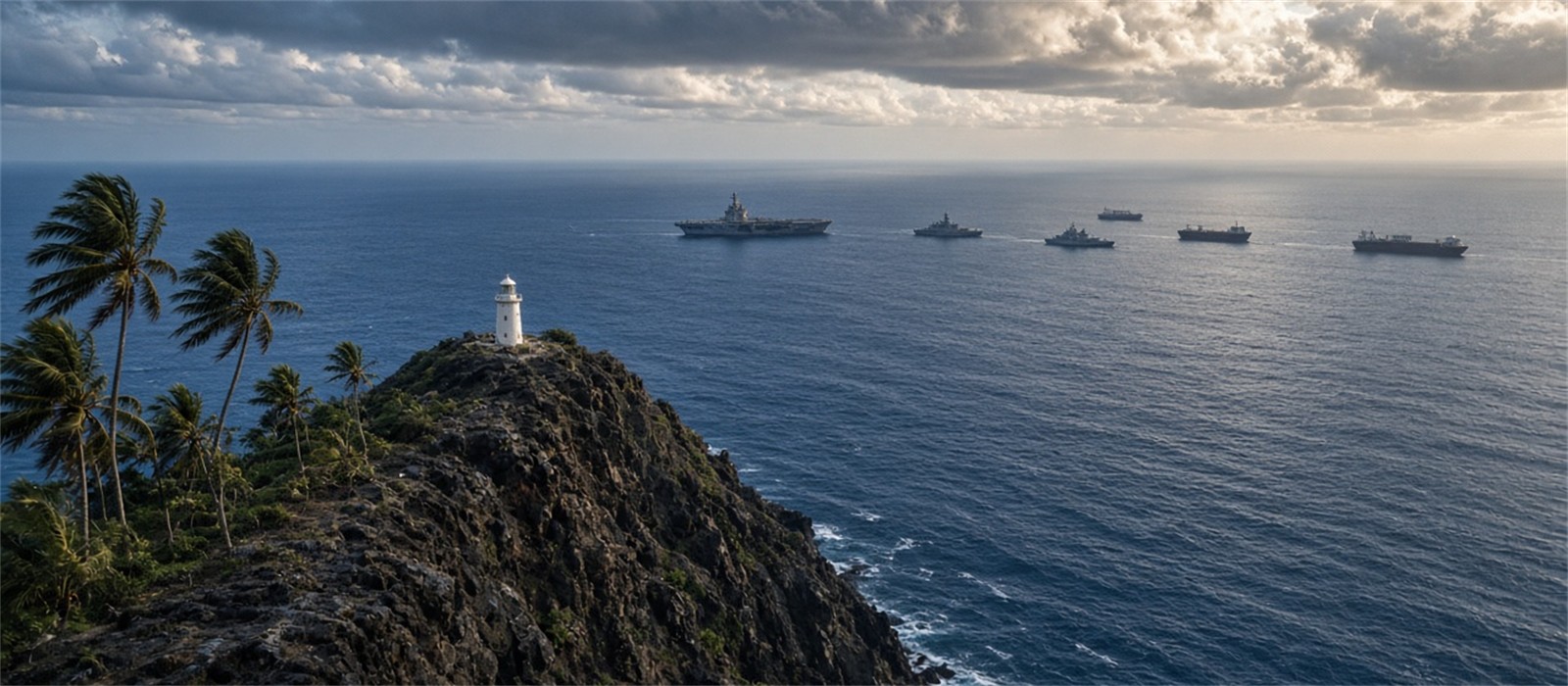


Abstract: The Indian Ocean region has been progressively taking centre stage on the global maritime map since the dawn of the 21st Century. India, by its natural geographical centrality, has a vital role to play in all aspects relating to the Indian Ocean. The continued presence of the navies of extra-regional countries – particularly of the US and China – in the Indian Ocean, with the similar stated motives of ‘SLOC security’ but diametrically opposite ways of thinking, may significantly affect the regional ‘power balance.’ India, as a resident power in its own right, adds a third dimension to this matrix. Against this potentially unstable backdrop, the Indian Navy, with a self-assigned mandate of ‘first responder and preferred security partner,’ has its task cut out by the tenets of its 2009 Maritime Doctrine. It will, therefore, have to play its rightful role in furtherance of the Indian national interest, however difficult the task at hand, may be.
Introduction
The Indian Ocean Region (IOR) has been garnering greater prominence, particularly since the post-Cold War era in the 1990s. It is the most populous region of the world. Major international sea lanes (ISLs) — through which a large quantum of global energy and commodities flow — run across the length and breadth of the Indian Ocean. The Indian Ocean connects many countries with wide-ranging political systems, modes of governance, economic status and social systems. To illustrate its diversity, democratic states like India and Australia co-exist with military junta-ruled Myanmar. Prosperous Arab nations endowed with large oil and gas reserves at one end share this geographical space with economically distressed countries such as Somalia, Yemen and Pakistan, as well as with the underdeveloped nations of coastal Africa. Iran’s domestic politics and nuclear ambitions continue to raise concerns. Its long-standing animosity with Israel, which has historical disputes with neighbouring Lebanon, Syria and the Palestinian Authority, renders the region quite prone to intermittent conflagration. Other threats and concerns such as terrorism, piracy, drug smuggling, arms trafficking and illegal, unreported and unregulated (IUU) fishing plague parts of the littoral. Some of these could suddenly erupt as new crises, within the IOR and its sub-regions.
Widespread effects of climate change are being felt in the IOR, which is already counted among global high-impact regions. Consequently, the IOR littoral countries are prone to some of the most serious environmental risks.1 A US National Intelligence Council (NIC) report of 2021 has particularly identified 11 countries that are highly vulnerable to the adverse effects of climate change.2 Major portions of the Indian sub-continent figure in the list. Even though other South Asian countries like Nepal, Bhutan, Bangladesh and Maldives are not mentioned in the report, the adverse effects of climate change-related extreme weather phenomena are quite evident in these countries too. Climate change will certainly aggravate the existing risks to the maritime security of the region. The resultant socio-economic issues could reduce the coping capacities of many countries and increase the prospects of clashes. The NIC report has identified cross-border water tensions and conflict, as well as cross-border migration attributed to climate impact, and ungoverned unilateral geo-engineering changes, as some issues of discord.3 The resultant deterioration in human security and social indices in some littoral states in Africa and West Asia often requires various forms of humanitarian intervention or even peacekeeping operations.
The Centrality of India in the Region
In this dynamic region with underlying issues of friction, India is geographically and economically quite well-placed to play a greater part in the management of various affairs related to peace and security therein. K. M. Panikkar, an Indian maritime historian of great repute, explained the connection between India and the IOR thus:
The vital feature which differentiates the Indian Ocean from the Atlantic and the Pacific is not the two sides, but the sub-continent of India which juts far out into the sea for a thousand miles to its tapering end at Cape Comorin. The geographical position of India changes the character of the Indian Ocean.4
Therefore, given its naturally endowed central position, India just cannot stay out of its rightful participation in the affairs of the Indian Ocean. To prioritise its inter-se objectives, India has broadly divided its maritime areas of interest into primary and secondary areas.5 While the primary areas encompass the proximate waters extending up to the entry and exit choke points in the Indian Ocean, secondary areas spread out well into the Western Pacific Ocean.
India has suffered in the past on account of its proverbial ‘sea-blindness,’ as Admiral Arun Prakash, former Chief of the Indian Navy — and others earlier too — terms it.6 It is, therefore, important that the country exploits its natural advantage of a central location in the IOR, as it has a direct bearing on its security, development and economic growth. The importance of the Indian Ocean to India and the world is too well-appreciated to be repeated here.7
Acts of terror emerging in, from or through the sea — often with state support — and associated illegal acts such as gun-running and the smuggling of weapons of mass destruction (WMD), constitute grave security threats for all globally interconnected economies. Having suffered the horrendous Mumbai terror attack by Pakistan-based non-state actors in November 2008, India must ensure that such acts never recur in future.
Major Extra-Regional Presence
The vast Indian Ocean region — extending from Australia to the Horn of Africa and from the Cape of Good Hope to the Indonesian Lombok Strait — has progressively seen greater power play since the Cold War days. This has gradually led to the increasingly larger presence of numerous extra-regional navies in the region. The increase in this trend has been particularly noticeable since the start of the new millennium. The main drivers for such presence possibly range from ensuring the free flow of trade by ensuring the safety and security of the ISLs, as also the hidden agenda of retaining hegemony and influence in this natural-resources-endowed littoral.
US Naval Presence — A Given
The United States of America (US) now maintains a near-permanent presence in the region. An official US Navy document, ‘A Cooperative Strategy for 21st Century Sea Power’ (2007), had formally articulated this intent by stating that “credible combat power will continuously be postured in the Western Pacific and the Arabian Gulf/Indian Ocean to protect [the American] vital interests and deter potential adversaries and peer competitors.”8 Three strategic priorities for the US in the region, as per an American analyst, are: preserving a minimum level of maritime security; keeping the sea lines of communication (SLOCs) open; and maintaining presence via considerable deployments in support of US interests ashore in the region.9
Towards fulfilment of these objectives, the US Central Command based in Tampa, Florida, exercises operational control over the Bahrain-based Commander US Naval Forces (NAVCENT) — comprising the US Navy’s Fifth Fleet — and other US Army and US Marine Corps formations. NAVCENT is responsible for the conduct of security and stability operations along a volatile sea area stretching from the Horn of Africa to Karachi, which encompasses the Strait of Hormuz and the Persian Gulf. This operational task is largely being carried out by the US Navy-led Combined Maritime Forces (CMF), with specific areas of responsibility being allocated to different Combined Task Forces (CTF) as follows:10
- CTF 150 — Maritime Security Operations (MSO) outside the Persian Gulf
- CTF 151 — Counter-piracy missions
- CTF 152 — MSO inside the Persian Gulf
- CTF 153 — Red Sea maritime security
- CTF 154 — Maritime security training
In addition, the US has a large naval and air base at Diego Garcia, due south of Maldives, in addition to an operational airbase at Djibouti.
Limited European Naval Presence
Certain European countries also deploy their naval ships, particularly in the northern part of the Indian Ocean. France has a large naval base at Reunion Island in the south-western Indian Ocean, with its ALINDIEN naval command stationed there. Another smaller naval base is in Mayotte, in the Comoros group of islands near Madagascar. The French Navy has been a regular contributor to multinational anti-piracy efforts in the Gulf of Aden. French ships and submarines are also deployed to other parts of the Indian Ocean to support France’s objective of ‘contributing to regional security through military and security cooperation,’ as mentioned in the French Indo-Pacific Strategy 2022.11
Naval ships and aircraft of other European countries also operate in the Gulf of Aden and off Somalia under the umbrella of the EU Naval Force (EUNAVFOR). Its Operation ATALANTA, involving anti-piracy convoy escort and World Food Programme ships’ protection, has been on for over a decade and a half. The latest mandate for its continuation was extended in December 2022 for two more years — till 31 December 2024.12 European countries are also contributing ships as part of the US-led CTF 151.
Of late, warships of the United Kingdom (the Queen Elizabeth aircraft carrier group in 2021), Germany (the Bayern frigate in 2022) and Italy (the Francesco Morosini patrol vessel in 2023) have been on long-duration deployment in the Indian Ocean as an annual feature. These ships often transit the IOR on the way to the Pacific Ocean, in support of their Indo-Pacific positions and pronouncements.
Chinese Efforts towards Permanent Naval Presence in the IOR
There are real concerns about the intentions of China in the IOR. As the world’s second-largest economy, China’s import dependency on oil and gas, largely from the Persian Gulf and western Africa, continues to increase. Since this energy has to, perforce, transit through the main ISLs of the Indian Ocean, it becomes imperative for Beijing to ensure the safety and security of its energy SLOCs. A more important reason perhaps is that China, as a rising power, feels obliged to first expand its economic interests far and wide, including in the Indian Ocean, and thereafter seeks to protect such interests by leveraging its increasingly robust maritime security apparatus.13
Thirdly, the expanded scope of Chinese investments and infrastructure projects running along most of the Indo-Pacific littoral under the ambitious Belt and Road Initiative (BRI) — also variously referred to as the One Belt One Road (OBOR) — now forms a major part of its overseas interests. The comprehensiveness of Chinese BRI engagement can be gauged from the very fact that Beijing’s total financial commitment to these projects since 2013 adds up to US $962 billion — with about US $573 billion in construction contracts, and US $389 billion in non-financial investments.14 The imperative for the People’s Liberation Army (PLA) Navy to ensure risk mitigation for these BRI investments and projects would be an equal, if not a bigger, driver for it to aim at a permanent presence in the IOR.
Therefore, Chinese efforts towards ensuring a permanent presence in the Indian Ocean can be said to manifest in three main tasks for the PLA Navy, not entirely exclusive to each other. These are the traditional military-related roles; non-traditional activities; and actions in support of its overseas interests. To be able to undertake these tasks in ‘distant waters,’ the PLA Navy is building ‘blue water’ forces, developing overseas logistical facilities, and enhancing capabilities to undertake diversified military tasks.15
The PLA Navy’s overtly visible presence of at least 8–10 ‘grey’ hulls in the IOR, and relatively more covert deployments of submarines, has become a norm of sorts. Such military presence relates to the following activities:
- Anti-piracy escort mission in the Gulf of Aden since 2008, comprising two frigates or destroyers and a replenishment ship. At present, the 43rd Task Force is in station.
- Continual submarine deployment in the IOR since December 2013.
- ‘Aman’ and ‘Sea Guardian’ series of maritime exercises hosted by Pakistan.
- ‘Joint Sea’ maritime exercise series with Russia in the Mediterranean and the Baltic Sea.
- Symbolic exercises south of Java Island, Indonesia.
- Joint maritime exercises with Russia and South Africa in April 2023.
- Establishment of the Djibouti military base in 2017 and support to anti-piracy task forces therefrom.16
Such PLA Navy units deployed in the ‘far seas’ would arguably be at an operational disadvantage during and in the run-up to hostilities due to the non-availability of integral air defence. Even in peacetime, if they try to display a coercive intent — like enforcing a temporary maritime exclusion zone or commandeering or boarding a suspect ship having state affiliations — they may not be able to ensure sustenance without protection from the air. However, couched in stated ‘benign intent,’ such ships would — and indeed do — engage in military operations other than war (MOOTW) in peacetime. Such non-traditional activities keep these Chinese forces well-trained, equipped and operationally agile while enabling the country to project its supposedly ‘humanitarian face’ as a consequential benefit. Some such activities of the PLA Navy are as follows:
- Joint anti-piracy drills, interactions and exchange of best practices with US, NATO and EU ships.
- Extended-duration visits to IOR littorals and beyond, post anti-piracy deployments. The total number of days away from the base port averages more than six months.
- Evacuation of Chinese non-combatants from Libya, Yemen and Sudan.
- Extensive search for missing Malaysian airliner MH370.
- Deployment of LPDs and mobile landing platforms (MLPs) to support Djibouti naval base’s construction and operation.
- Occasional visits of the Zheng He ‘Training Ship Group’ to IOR littorals.
- Repeated ‘Mission Harmony’ medical duty voyages by the Peace Ark hospital ship.
- Search for the crew of a capsized Chinese fishing boat about 900 nm south of India in May 2023 (the location information was provided by Indian Navy assets).17
Since safeguarding ‘overseas interests’ is a crucial part of China’s ‘national defence’ aims, one of the main missions of the PLA Navy is to effectively protect the rights and interests of overseas Chinese people, organisations and institutions.18 Some such overseas interests of China in the IOR — for the safeguarding of which the PLA Navy may have to pitch in as per their mandate — are mentioned below:
- Extensive transit of Chinese energy and trade through IOR SLOCs.
- Progression of ‘maritime silk road’ infrastructure projects along the IOR littoral.
- Construction of ports and related facilities in Sri Lanka, Bangladesh, Myanmar, Oman, the UAE and some East African countries.
- Management of ports in Pakistan and West Asian nations.
- Deep-sea exploration in the International Seabed Authority (ISA) allocated site in the Southwest Indian Ocean Ridge (SWIR), south of Madagascar.
- Oceanographic survey off the Makran and East African coasts. Sri Lanka has also invited the Shiyan-6 survey vessel in October 2023 for a coastal survey.
- Intelligence collection activities by dedicated Chinese ships.
- Deployment of space telemetry and tracking ships (Yuanwang class) to Mauritius and Sri Lanka.
- Presence of a large Chinese diaspora, peacekeeping forces and citizens in IOR littorals.19
It can, therefore, be plausibly surmised that the permanent presence of the naval forces of China and the US in the Indian Ocean — with the similar overt objective of providing security to the ISLs, but the hidden agenda of one party trying to retain its hegemony while the other aiming at displacing it — does provide grounds for occasional muscle-flexing. For instance, the US naval forces in and around the Persian Gulf — as well as some crude oil tankers which generally bank on the perceived safety factor in the presence of UN naval forces — have often been harassed by the naval boats of the Iranian Revolutionary Guards.20 In the grand game of perception management, Iran draws notional strength from the presence of PLA Navy forces in the vicinity.
The rising capabilities of the Indian Navy add a third dimension to the regional power matrix. India, on its part, has also been deploying its naval ships under Operation SANKALP since June 2019, after attacks on oil tankers in the Persian Gulf and the Gulf of Oman, to signal its intent to secure its energy SLOCs — as the word ‘Sankalp’ suggests.21 The tasks of the PLA Navy are to “…effectively protect the security and legitimate rights and interests of overseas Chinese people, organizations and institutions…”22 When these overlap with those of the Indian Navy, there is likely to be some conflict of interest. With the Quad mechanism getting renewed traction in recent times, and MALABAR exercises also being regularly conducted in the Arabian Sea and the Bay of Bengal, China has reasonable apprehensions about the naval forces of these two countries — in addition to those of Japan and Australia — cooperating, to potentially counter its growing presence in the IOR.
The resultant jostling for shaping the common environment to suit respective national interests would certainly deepen the underlying fault lines. Subsequently, these could lead to eventual confrontation. In the emerging geopolitical wrangling, maritime analysts posited as early as 2009 that most of the IOR littorals — which have been hitherto hedging their chances — might be left with little option other than to align with either the US or China, thus causing a significant impact on the regional ‘balance of power.’23
Impact on the Indian Maritime Domain
In such a potentially unpredictable regional environment, Indian maritime interests and activities would surely be impacted to a considerable degree. With eight PLA Navy ships — and possibly an equal number of other associated vessels — visiting ports of considerable Chinese investment, control and therefore influence, like Chittagong, Kyaukphyu and Yangon in the Bay of Bengal, or Hambantota, Karachi, Gwadar, Chabahar, Djibouti and others in the Arabian Sea regularly, they would lie in the middle of an area which is considered to be of vital importance for India. These warships and research and intelligence-collection vessels would surely undertake activities like seawater and atmospheric profiling, weather-pattern observation, routing and navigational familiarisation during their passage. With the increase in quantum and density of data so collected, and its technology-assisted management, the PLA Navy would be able to derive operationally and tactically useful information that could be significantly useful during operations.
The institutionalisation of the Aman series of multilateral exercises and Sea Guardian bilateral drills have also enabled the PLA Navy to be present in the proximate seas around India regularly. The level of the Chinese Navy’s participation has also been increasing with every exercise. While only one Chinese ship engaged in basic naval drills in Exercise Aman 2007, at least three PLA Navy ships have been participating since then, and engage in more complex joint manoeuvres like interception exercises, anti-surface, anti-air and anti-submarine drills.24
The PLA Navy is steadily progressing its aircraft carrier programme, with the Liaoning and Shandong aircraft carriers having been operational for 11 and five years respectively, and the Fujian carrier likely to be inducted into service by the end of 2023. A logical projection of this development suggests that it will eventually lead to the Chinese aircraft carrier formation deploying in the Indian Ocean by about 2030. The nuclear attack submarine accompanying such an aircraft carrier formation will certainly alter the threat matrix for the Indian Navy. A Chinese scholar insists that “China should send more submarines to the Indian Ocean to make concerned countries get used to their presence in that region.”25 The concerns voiced during deployments of Chinese submarines in the Indian Ocean between 2013 and 2017, as well as their berthing at Colombo and Karachi, are indicative of the challenges they could pose to Indian Navy ships in these waters. The Indian media has also highlighted these concerns, reportedly citing sources from the Indian Defence Ministry in these terms:
… the implicit focus of the Chinese navy appears to be on undermining the Indian Navy’s edge to control highly sensitive sea lines of communication.26
In addition to Chinese nuclear attack submarines, the Chinese ships, whether operating as surface action groups (SAGs) or as components of the aircraft carrier formation, will surely impact the operational employment pattern of the Indian Navy. For instance, a considerable amount of Indian naval air- and ship-based reconnaissance effort is being invested in shadowing the PLA Navy ships — from the Andaman Sea to the Gulf of Aden — proceeding for anti-piracy escort missions and returning therefrom. With Chinese ships frequently transiting across the northern Indian Ocean either for joint exercises, joining anti-piracy patrols, visiting ports in the littoral, HADR and NEO missions or returning to China, India’s plans for gainful exploitation of proximate maritime space for operations, training and research activities in furtherance of its national interests would be adversely affected. The reported postponement of Indian missile launch tests in the Bay of Bengal in November and December 2022 — not once but twice — on account of the presence of the Yuanwang series of Chinese space tracking and telemetry ships in the Indian Ocean, is an apt example of such constraints.27 The visit of Yuanwang-5 to Hambantota earlier in August 2022 had also caused similar consternation within the Indian maritime security establishment.28 For that matter, even the current Chinese force level always present in the Arabian Sea for anti-piracy escort missions possesses certain combat capabilities in terms of anti-ship, air defence and ASW ordnance. This base-level capability — whether of great significance or not — must nevertheless be taken cognisance of by the Indian Navy.
The acquisition of Type 054A (Jiangkai) missile frigates and fast attack craft by Pakistan, and the proposed supply of eight Hangor-class air-independent propulsion (AIP) enabled submarines by 2028, will facilitate greater interoperability between their navies. The handing over of Gwadar port for operations to a Chinese company could further facilitate its eventual usage by the PLA Navy for operational purposes. The Indian armed forces would need to jointly factor in this possibility when planning joint operations and missions, and accordingly alter their doctrines, operational plans and tactics. In any period leading to eventual hostility, the possibility of direct cooperation between the naval forces of Pakistan and China, or tacit support, would also need to be considered because of the greater commonality of platforms.
Implications for the Indian Navy
The 2009 Indian Maritime Doctrine has laid out the task of “safeguarding India’s national interests encompassing sovereignty, territorial integrity, a secure maritime environment conducive to safety, security and development of the nation and its citizens.”29 This would require the Indian Navy to credibly showcase its proactive presence in its backyard and assiduously build upon the national image of ‘first responder and preferred security partner,’ particularly in India’s primary areas of maritime interest.30 Towards that end, it is imperative that the Indian Navy vigorously pursues a two-pronged strategy as mentioned below:
- Strengthen its capacity and capabilities by way of the acquisition of high-technology-enabled assets, consolidate its maritime domain awareness (MDA) architecture, and integrate the two, to gain operational advantage, when required, over an adversary.
- Adopt mutually beneficial collaboration with friendly extra-regional forces, while retaining flexibility of approach through deft defence diplomacy, to preserve our own vital operating space and strategic autonomy in decision-making.
Since capacity accretion is a precursor to the development of credible capability, the Indian Navy must seek to induct more high-technology-enabled blue-water ships, increase the number of telemetry, intelligence-collection and research ships, and procure long-endurance aerial, surface and under-sea unmanned systems including sea gliders. Even though India has been proactively pushing its ‘Atmanirbhar Bharat’ agenda, the country should not fight shy of collaborating with like-minded extra-regional partners, to concurrently acquire or co-develop high-technology platforms and combat systems where required, to maintain operational effectiveness.
As for generating more comprehensive MDA, laying of seabed sensor chains, particularly at choke points; augmentation of space-based surveillance, communication and data-relay systems; as also the integration of a common operational picture with better data collection, analysis, fusion and dissemination methodologies would have to be taken up with a greater sense of urgency.
Towards fulfilment of these objectives, three countries and/or groupings with whom India must actively collaborate — and is already doing so with varying intensity — towards generating effective responses to the emerging Chinese challenge in the IOR, are particularly relevant. These are the US and the European countries present in the IOR as one bloc, ASEAN as a group, and the Quad grouping.
India can seek greater assistance from the US and relevant European countries for procurement, laying and operationalising underwater sensor chains in operationally relevant sea areas. It is speculated that India is already collaborating in some way towards the extension of the American-Japanese ‘fish-hook’ project — which runs through the Indonesian Sunda Strait — into the Indian Ocean.31 The ASEAN countries as a whole could also be great partners towards participating in the widest possible ways in the MDA architecture being envisaged for mutual security.
Specific avenues of cooperation between the navies of Quad countries towards engendering common security for the IOR can also be progressed within the under-mentioned frameworks, which have already been agreed to by the constituent countries:32
- The Critical and Emerging Technology Working Group looks at sharing technologies required to ensure a free, open, inclusive and resilient Indo-Pacific.
- A cooperative framework on space for sharing the strengths and expertise of their space programmes.
- The ‘Indo-Pacific Partnership for MDA’ mechanism, to provide an integrated maritime picture of the Pacific Islands, Southeast Asia and the IOR. The feasibility of greater cooperation on underwater domain awareness (UDA) — possibly involving seabed sensors and related hardware — with partners across the Indo-Pacific could also be explored within the larger rubric of IPMDA.
- The Quad partnership on HADR in the Indo-Pacific, and avenues for greater cooperation.
Conclusion
While the suggested tasks for India and the Indian Ocean appear to be quite sound conceptually, the implementation of collaborative ventures between numerous stakeholders — who would surely have their strategic interests, inner motivations and ends in mind — would certainly be the difficult part. For instance, while there is reasonably robust cooperation between the navies of India and the US — built over many MALABAR series of exercises since the 1990s — the scope of existing cooperation needs to progress to the next higher level. The author has argued elsewhere that it could include the engagement of India and the US in joint operational scenario-building and simulations at the regional level against evolving and hypothetical challenges. These could then be played out by the two navies in theatre-level exercises at sea — in the Indian Ocean Region, to start with.33
As for addressing the prospects of the PLA Navy’s permanent presence in the region, the jury is still out on whether India should cooperate with, challenge or confront the Chinese in the region, particularly in a large peacetime scenario. To be sure, there have been a few elements of cooperation between India and China in the IOR. The Indian Navy has been coordinating with the PLA Navy while escorting merchant ships across the Internationally Recognised Transit Corridor (IRTC) along the Arabian Peninsula for more than a decade, and has also provided SAR support when requested by China, as in the case of a capsized Chinese fishing boat in May 2023. An Indian Navy Tu-142 reconnaissance aircraft managed to dissuade the pirates from boarding a Chinese freighter, MV Full City, in 2011 after persistent effort.34 While the need to challenge or confront the PLA Navy ships in the Indian Ocean has not yet arisen, the undermentioned quote from Rear Admiral K. Raja Menon, a noted Indian maritime thinker, does indicate that India will eventually have to do so in the interest of its national security:35
… after Galwan and Pangong Tso, we will clearly approach the larger picture from a position of tactical inferiority, unless we develop some punitive capability, which it seems could only be in the Indian Ocean…
The Chinese thought process on this issue, though, appears to be quite clear, and does not inspire confidence about the rules they would play by, should such a contingency occur. This mindset was on display when the PLA Navy purportedly challenged the Indian landing ship Airavat in the South China Sea in 2011, even though the ship was undertaking a legitimate passage through the EEZ of Vietnam and was not in Chinese territorial waters.36 Further, the aggressive, and often overtly hostile, challenge mounted by the Chinese maritime security forces and maritime militia in the Western Pacific Ocean against Japan, Taiwan, the Philippines and Vietnam, as well as against US Navy ships engaging in freedom of navigation (FONOP) missions — all during peacetime — should also be quite instructive for the Indian maritime security establishment. So unambiguous guidelines for engaging with the Chinese in the maritime domain will have to be conceptualised, played out and framed with due deliberation before they can be implemented.
Given this situation in the IOR wherein the two major extra-regional navies — the US Navy and the PLA Navy — are vying for greater influence in the region by virtue of permanent presence, India will have to dispassionately make such choices that best serve its national interests and maritime security requirements. These could manifest in either a more visible slant in partnership with the Western powers while standing up to the Chinese naval challenge in its backyard by preparing accordingly, or adopting a nuanced ‘middle’ position while retaining its strategic autonomy and independence of decision-making. The choices are, of course, hard to make. Either way, the Indian Navy as the primary instrument of maritime security for India — whose centrality in and for the Indian Ocean is self-evident — will have to take on this onerous task in earnest, however difficult the task at hand may be.
Endnotes
- David Michel and Russell Sticklor, eds., Indian Ocean Rising: Maritime Security and Policy Challenges (Washington: Stimson, 2012), 72.
- The 11 countries specifically mentioned are: India, Pakistan, Afghanistan, Myanmar, Iraq, North Korea, Haiti, Columbia, Guatemala, Honduras, and Nicaragua. See National Intelligence Council, “Climate Change and International Responses: Increasing Challenges to US National Security Through 2040,” (NIC-NIE-2021-10030-A), https://www.dni.gov/files/ODNI/documents/assessments/NIE_Climate_Change_and_National_Security.pdf, accessed 23 August 2023.
- National Intelligence Council, “Climate Change and International Responses: Increasing Challenges to US National Security Through 2040.”
- K. M. Panikkar, India and the Indian Ocean (London: George Allen & Unwin, 1945), 19.
- For the extent of India’s primary and secondary areas of maritime interest, see Indian Navy, Ensuring Secure Seas: Indian Maritime Security Strategy (New Delhi: Integrated Headquarters, Ministry of Defence (Navy), 2015), 32.
- ‘Sea-blindness’ implies the inadvertent inability of a land-centric nation to register the importance of its surrounding maritime domain and appreciate the vulnerabilities to national security and economic well-being that may arise therefrom. See Admiral Arun Prakash, “China Has Become a Maritime Power: It’s Time India Caught Up,” The Indian Express, 21 June 2021, https://indianexpress.com/article/opinion/columns/india-china-rivalry-maritime-power-navy-7367947/, accessed 24 August 2023.
- For a detailed explanation of the importance of the Indian Ocean to India, see the Indian Maritime Doctrine 2009 (INBR 8) and the Indian Maritime Security Strategy 2015.
- US Navy, Coast Guard and Marine Corps, A Cooperative Strategy for 21st Century Sea Power, October 2007, 7. Words in box brackets have been added by the author to impart clarity to the statement. The term Arabian Gulf is used by the Americans because they do not like to use the approved term Persian Gulf. India continues to call it the Persian Gulf.
- Thomas Bowditch, “Maritime Threats, Risks, and Priorities in the Indian Ocean: A US Perspective,” in C. Uday Bhaskar and Kamlesh K. Agnihotri, eds., Security Challenges Along the Indian Ocean Littoral: Indian and US Perspectives (New Delhi: Matrix, 2011), 80.
- Combined Maritime Forces (CMF), “What We Do,” https://combinedmaritimeforces.com/, accessed 25 August 2023.
- France Diplomatie, “France’s Indo-Pacific Strategy,” https://www.diplomatie.gouv.fr/IMG/pdf/en_dcp_a4_indopacifique_022022_v1-4_web_cle878143.pdf, accessed 26 August 2023.
- “Operation ATALANTA, EUTM Somalia and EUCAP Somalia: Mandates Extended for Two Years,” Council of the European Union, 12 December 2022, https://www.consilium.europa.eu/en/press/press-releases/2022/12/12/operation-atalanta-eutm-somalia-and-eucap-somalia-mandates-extended-for-two-years/, accessed 27 August 2023.
- Kamlesh K. Agnihotri, Leveraging High-Technology Developments in the Chinese Military and Maritime Domains (New Delhi: Knowledge World Publishers, 2022), 16.
- Christoph Nedopil Wang, “China Belt and Road Initiative (BRI) Investment Report 2022,” Green Finance & Development Centre, 3 February 2023, https://greenfdc.org/china-belt-and-road-initiative-bri-investment-report-2022/, accessed 15 September 2023.
- State Council of the People’s Republic of China, “The Diversified Employment of China’s Armed Forces,” Chinese Defence White Paper 2013, April 2013, http://english.www.gov.cn/archive/white_paper/2014/08/23/content_281474982986506.htm, accessed 15 September 2023.
- Wang Xuejing, “China’s First Overseas Military Base Opens in Djibouti,” CGTN, 1 August 2017, https://news.cgtn.com/news/3d6b7a4e3241544e/share_p.html, accessed 15 September 2023.
- “Indian Navy’s P-81 Aircraft Locates Capsized Chinese Fishing Vessel in Indian Ocean,” ANI News, 19 May 2023, https://www.aninews.in/news/national/general-news/indian-navys-p-81-aircraft-locates-capsized-chinese-fishing-vessel-in-indian-ocean20230519205959/, accessed 15 September 2023.
- Xinhua, “China’s National Defense in the New Era,” China’s Defense White Paper 2019, Xinhuanet, July 2019, Section III, http://www.xinhuanet.com/english/2019-07/24/c_138253389.htm, accessed 28 August 2023.
- For instance, China presently has more than 2,000 peacekeepers in 10 peacekeeping missions in West Asia and Africa. See Jiang Zhenxi, “UN Peacekeeping Operations and China’s Participation in the Time of Great Changes,” UN Association of China, https://www.unachina.org/en/article/781. Similarly, there are close to 100,000 Chinese persons currently working in Africa, though pre-COVID levels ranged from 170,000 to 200,000 people. See China-Africa Research Initiative, “Data: Chinese Workers in Africa,” April 2023, http://www.sais-cari.org/data-chinese-workers-in-africa, accessed 15 September 2023.
- Sam LaGrone, “Iranian Patrol Boat Harasses Pair of U.S. Warships, Says CENTCOM,” USNI News, 6 December 2022, https://news.usni.org/2022/12/06/iranian-patrol-boat-harasses-pair-of-u-s-warships-says-centcom. For a later incident, also see Jon Gambrell, “US Navy says Iran Revolutionary Guard Fast-Attack Boats ‘Harassed’ Ship in Strait of Hormuz,” AP News, 5 June 2023, https://apnews.com/article/iran-tanker-seizures-us-uk-navy-revolutionary-guarda8996a3dccccc82f8fa8d8bf263c9cfb, accessed 15 September 2023.
- “Op SANKALP: 3rd Year of Indian Navy’s Maritime Security Operations,” Press Information Bureau, 19 June 2022, https://pib.gov.in/PressReleaseIframePage.aspx?PRID=1835382, accessed 15 September 2023.
- State Council of the People’s Republic of China, “The Diversified Employment of China’s Armed Forces.”
- Raja Menon and Rajiv Kumar, The Long View from Delhi (New Delhi: Academic Foundation, 2009), 38.
- Liu Xuanzun, “China-Pakistan Joint Drills Strengthen Ties, Enhance Interoperability Between the Two Navies: GT Exclusive Interview with Pakistani Naval Chief,” Global Times, 9 January 2023, https://www.globaltimes.cn/page/202301/1283501.shtml, accessed 15 September 2023.
- Sun Wenyu, “Concerned Nations Should Get Used to China’s Naval Presence in Indian Ocean: Expert,” People’s Daily Online, 18 July 2017, http://en.people.cn/n3/2017/0718/c90000-9243240.html, accessed 29 August 2023.
- Rahul Singh, “China’s Submarines in Indian Ocean Worry Indian Navy,” Hindustan Times, 7 April 2013, https://www.hindustantimes.com/delhi/china-s-submarines-in-indian-ocean-worry-indian-navy/story-0Fjcrc7s9jlHwg1ybpiTsL.html, accessed 30 August 2023.
- “Chinese Surveillance Vessel ‘Yuan Wang 5’ Re-enters Indian Ocean,” The Hindu, 6 December 2022, https://www.thehindu.com/news/national/chinese-spy-ship-yuan-wang-5-re-enters-indian-ocean/article66231546.ece, accessed 15 September 2023.
- “Chinese Surveillance Vessel ‘Yuan Wang 5’ Re-enters Indian Ocean,” The Hindu.
- Integrated Headquarters, Ministry of Defence (Navy), Indian Maritime Doctrine 2009 (INBR 8), 6.
- The phrase “first responder and preferred security partner” was mentioned by Shri Ram Nath Kovind, President of India, at Visakhapatnam on 21 February 2022. See “Address by the President of India on the Occasion of Presidential Fleet Review – 2022,” https://presidentofindia.nic.in/speeches-detail.htm?900, accessed 15 September 2023.
- “The Undersea Web – Future of Indian Submarine Surveillance?,” Defence Forum India, 17 April 2016,https://defenceforumindia.com/threads/the-undersea-web-future-of-indian-submarine surveillance.76185/, accessed 15 September 2023.
- “Quad Joint Leaders’ Statement,” The White House, 24 May 2022, https://www.whitehouse.gov/briefing-room/statements-releases/2022/05/24/quad-joint-leaders-statement/, accessed 15 September 2023.
- Kamlesh K. Agnihotri, “India–US Maritime Cooperation: Strengthening Security Arrangement in the Indian Ocean Region for Mutual Benefit,” Chanakya Forum, 21 December 2020, https://chanakyaforum.com/india-us-maritime-cooperation-strengthening-security-arrangement-in-the-indian-ocean-region-for-mutual-benefit/, accessed 27 September 2023.
- “Indian Navy Rescues Chinese Merchant Ship from Pirates,” Indian Defence Review, 6 May 2011, http://www.indiandefencereview.com/news/indian-navy-rescues-chinese-merchant-ship-from-pirates/, accessed 20 September 2023.
- K. Raja Menon, “Our Larger China Picture: A New Strategy, Combining Diplomatic and Military Means, is Needed to Counter Beijing,” The Indian Express, 17 September 2020, https://indianexpress.com/article/opinion/columns/india-china-border-dispute-galwan-valley ladakh-6598913/, accessed 20 September 2023.
- Ministry of External Affairs, “Incident Involving INS Airavat in South China Sea,” 1 September 2011,https://www.mea.gov.in/media-briefings.htm?dtl/3040Incident+involving+INS+Airavat+in+South+China+Sea, accessed 20 September 2023.
