


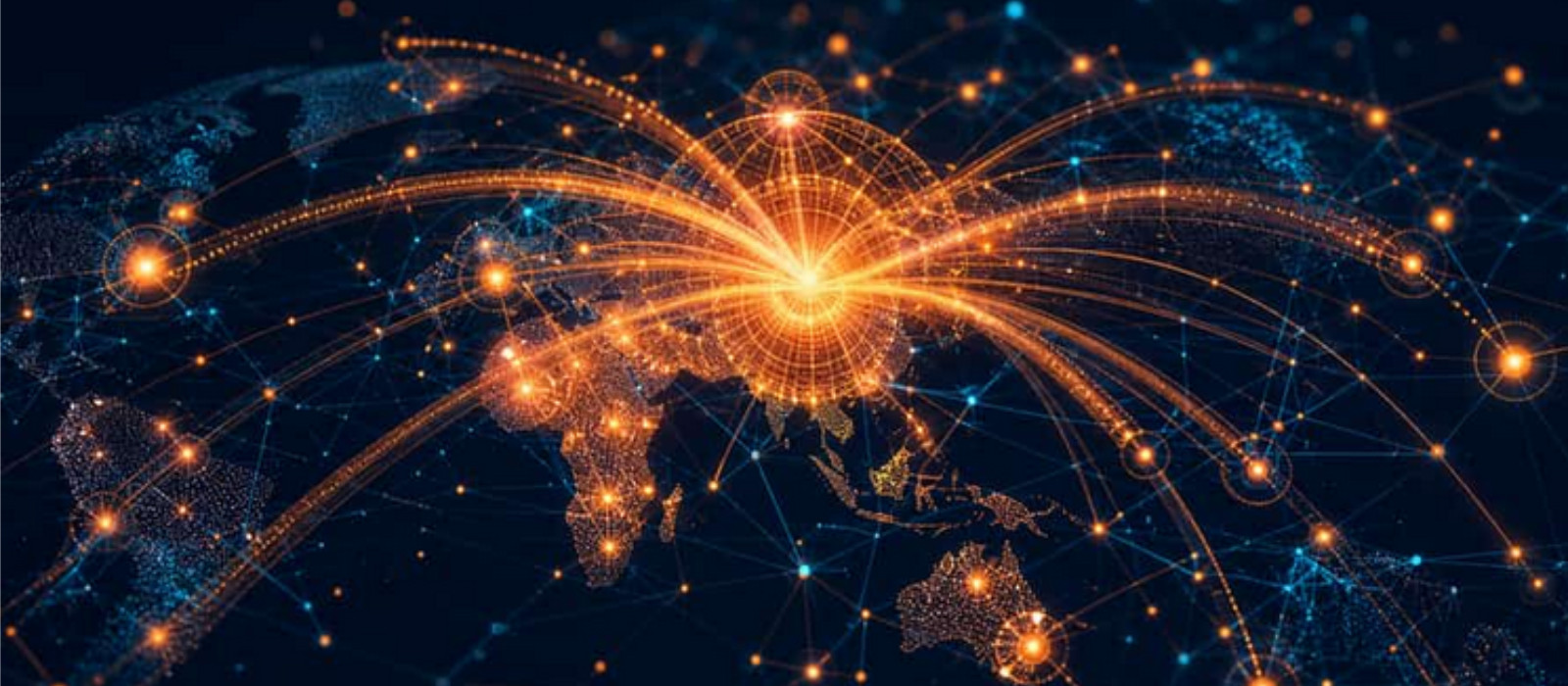


In the post-1945 period, Regionalism emerged as a political-security-economic variant and dominated the latter half of the 20th Century. Regionalism witnessed the formation of the NATO alliance led by the United States on one side and the Warsaw Pact led by the erstwhile USSR on the other side. With bitter competition to expand their sphere of influence, there was a continuous effort by both sides to engage with smaller countries. The US formed a number of other alliances like SEATO, CENTO, ANZUS etc.; whilst the USSR engaged increasingly with other countries like Cuba and parts of Africa.
In the globalisation and ‘post globalisation’ phase, in the aftermath of the global financial crisis of 2008, the dominant paradigm that has redefined the global and regional environment has been the emergence of a relatively nascent concept called ‘New Regionalism.’ Bjorn Hettne & Frederik Souderbaum elucidated the New Regional Approach as “an eclectic and explorative effort to understand the regional phenomenon in the context of economic globalization.”1 This New Regionalism has been gaining ground as a mid-level theory and marks a major shift from the traditional Regionalism of the Cold War era.2
If the ‘old regionalism’ was dominated by the bipolar Cold War structure, ‘new regionalism’ is driven by globalism and formed in a developing multi-polar world order. The ‘old regionalism’ was a direct product of superpower intervention, imposed directly or indirectly, and created from ‘above,’ in contrast to ‘new regionalism,’ which is a more spontaneous process that develops from within the region and whose seeds were already sown in the late 1980’s. If the ‘old regionalism’ was guided by a single objective, namely to maximise security or gain economically, the ‘new regionalism’ is a more comprehensive and multi-dimensional process. It marks a departure from the Westphalian nation-state system.3
From the International Relations Theory that is based on the English School of International Society, the old and new waves of regionalism may have been demonstrated in the European experience.4 Yet there is great divergence in its elucidation across the world as it has become a dominant theoretical proposition in understanding world politics. The concept of New Regionalism may seem like it is a local phenomenon that covers a particular region. Rather, it is a foundational concept on the larger globalisation process that we are already witnessing.
The global economic crisis of 2008 served as the catalyst to speed up the process of New Regionalism. With the established Bretton Woods global economic and financial system being subjected to systemic challenges, the rise of ‘New Regionalism’ by the Asian powers seemed inevitable. It is manifesting itself through sub-regional cooperation endeavours proposed and sustained by the rising powers of China and India. These are being created with the intent of building their respective cultural-civilisational identities, economic-commercial endeavours, connectivity corridors, and are essentially infrastructure-centric. The New Regionalism Approach (NRA) seeks to spur economic growth, commercial expansion and the sustenance of dominant political influence on a competitive basis.5
As a manifestation of the New Regionalism Approach, the Indian and Pacific Oceans are witnessing the “crisscross” of Asian powers that are spreading their influence, building access and utilising their economic and integration networks that are symbolic of their civilisational greatness. The competitive dynamics of balancing and engagement by India and China is shaping the Indo-Pacific economic and security architecture and presents serious implications for the littorals and island states of the IOR.
This paper aims to understand the concept of New Regionalism, the cultural - civilisational context for its emergence, its distinct maritime focus and the implications of the New Regionalism Approach by India and China on the littorals and island states of the IOR.
The Asian New Regionalism Construct
The Global Financial Crisis of 2008 was a defining moment for Asian powers - particularly India and China. Whilst most of the world was reeling under the pressure of the crisis, these two powers were relatively insulated from the contagion.
Many scholars have argued that the vortex of political and economic activity has shifted to the Asia Pacific, in an arc stretching from East Asia through the Malacca Strait, spanning across the Indian Ocean all the way to the African coast. In the new international political economy, China and India are expected to play a major role in the reconstruction of the international order.6 Consequently, their policies and strategies are increasingly reflective of their own world view, driven largely by realpolitik and their distinct cultural-civilisational identities.
New Regionalism in the Post-Globalisation Phase
The evolving theoretical enterprise of New Regionalism in its unique Asian salience is bench marked on the civilisational-cultural contexts of China and India . Consequently, international relations theory that i s premised on the English School can no longer be assumed to be the normative determinant of Asia's civilisational powers and their “rise” in the post globalisation period.7
China’s International Relations Theory has its roots in Tianxia (a Chinese term literally meaning, ‘all under heaven’) and reflects the historical experiences of Chinese dynasties since the so-called warring states period. In the China-centric hierarchical world system under Tianxia theory, China and the world are understood as one and the same, with other states being engaged in a tributary system.8 China’s ancient as well as contemporary exercise of its foreign policy and diplomacy have often invoked the social, cultural and civilisational aspects of the tributary system in its engagement with East Asia, Southeast Asia and South Asia.9
India’s international relations theory has been reflective of the Raja Mandala system that was characterised by economic trade, cultural and religious exchanges and military expeditions that went from Southern Asia into Southeast Asia.10 India’s Raja Mandala approach to international and strategic affairs was an eclectic blend of philosophical, social, cultural and political stratagems.11 It had elements of realism and social tenets of identity and culture as means to identify India’s enduring engagement with East Asia.
As Lawrence Prabhakar, a leading Indian strategic thinker posits, “It is this context of civilisational and cultural constructivist prism that converges India and China into the Indian Ocean and their intrinsic linkages with the littoral powers and island states of the Indian Ocean region.” Both Tianxia and Mandala theories emphasise economic connections as factors in providing welfare for people.12 Both countries have cited their ancient pre-colonial historical, cultural contacts, linkages of trade and commerce, and people movement to justify their greater involvement in the region.13
The Maritime Basis of New Regionalism in the China - India Context
Ancient Indian civilisation dates back to over 5000 years ago, when the Indus valley people adopted the western sea routes to trade with Sumeria, Babylonia, the Mediterranean and the Levant. Similarly, the Eastern Indian Ocean sea routes facilitated the spread of Buddhism and Hinduism on one hand, and an active trading system that expanded outwards towards South East Asia and into the South China Sea, on the other.14
In contrast, China has always been primarily a ‘continental power,’ with trade routes running through Central Asia that connected ancient China to the Roman Empire, in what was traditionally called the ancient Silk routes. From a maritime perspective, owing to prevailing wind patterns and geography, Chinese vessels operated largely within the South China Sea and Chinese trade flourished with South East Asia.15 In the Eleventh Century, the Chola Empire had intensive trade connections with China. It was these close relations with the Cholas that facilitated Chinese commercial connections over the waters of the Indian Ocean to Africa and Europe.16 In the 15th century, Chinese presence became more apparent in the Indian Ocean, most notably with the seven voyages of Zheng He that spanned right up to the East coast of Africa. However, China withdrew from the seas after that interlude.17
It is therefore, apparent that in these centuries, India and China had a strong connection with the seas in establishing trade networks and spreading their influence across the oceans. The influence was not just commercial, but also cultural. These commercial networks remained for centuries, even though various empires rose and perished, until European colonialism marginalised them.
In the post colonial period, India and China have come a full circle, overcoming the interregnum of the imperial-colonial period and have been able to position in terms of economic rise, cultural and civilisational renaissance and the attendant derivatives of science and technology, industrial power, military power projected through varying matrices of National Power and Comprehensive National Power (CNP), which is now being witnessed in the Indian and Pacific oceanic theatres.18
Additionally, they have begun to look at their civilisational roots to re-conquer their historic pre-eminence. New Regionalism in the globalisation and post-globalisation phases has emerged as economic, commercial and trade interdependence that has a strong maritime trade and connectivity conundrum. The exponential increase of maritime trade and port connectivity in the age of globalisation has also spawned new relationships in Asia. China and India have built in maritime sea lines of communication that have had vital impacts on regional economic integration and maritime security, which are the derivatives of maritime trade and connectivity. These initiatives have a strong historic flavour and hark back to the time when both countries were predominant powers in the world. These initiatives also stress on the increasing importance of the Indo-Pacific continuum, the Asia Pacific and the Indian and Pacific Oceans in world politics.
From a Chinese perspective, Tianxia theory highlighting China centrism is deeply embedded in these initiatives and in its elucidation. These initiatives provide for a ‘China centric peaceful order,’ access to natural resources and to markets that foster the growth of the Chinese economy. This is most clearly enunciated in the Chinese Belt and Road Initiative and its two arms the Silk Road Economic Belt (SREB) and the 21st Century Maritime Silk Road Initiative (MSRI). The MSRI commences from the SCS and extends across the Indian Ocean to the coast of Africa and the Mediterranean.19 The SREB is the continental arm of the BRI. However, the overland routes of the CPEC and the BCIM are part of the SREB, and seek to connect continental China to the Indian Ocean. These overland routes link with the MSRI, thus highlighting the importance of the maritime element to the fruition of the ‘China Dream.’20
From an Indian perspective, the strong maritime connect from the beginning of recorded civilisation and the ancient Mandala theory is being demonstrated as India builds closer maritime sinews across the oceans and strengthens her capabilities.21 These initiatives emphasise the ancient cultural connect across the region when India was a predominant power that interspersed trade and commerce with the spread of religion and culture.
Besides India’s Look East - Act East policy, Project Mausam is also a major initiative that seeks to remind regional states about the salience of a common culture and history that spanned the Indian Ocean region. It is thus, important to recognise that the New Regionalism approaches of both China and India have a strong maritime connect that provide determinate markers of the rise of the ancient powers in the contemporary era.
Implications for the Littorals and Island States of the IOR
Whilst China has focussed on economic inter-dependence and security convergence with the littorals and island states, India has sought to use diplomacy and the building of economic partnerships. To reiterate, both countries simultaneously seek to leverage their ancient civilisational connect in furthering their aims.
The 21st Century MSRI is a direct effort by China to establish a permanent footprint in the region through an aggressive push for access, infrastructure and connectivity. The large number of projects in these countries, especially in infrastructure and port in development is proof of China’s deep involvement and strategic aims in the region. This very same infrastructure has the potential for military use.22 On the other hand, India has focussed more on diplomatic engagements and economic partnerships on a bilateral basis, with the belief that functional and neo-functional spill overs will eventually lead to closer dependencies.
The India-China balance of power dynamics is transforming the political, economic and security imperatives of the states in the region. Added to this is the presence of the US, which though a relatively weakened power, is still the largest and most important player in the region, with which many smaller states have strong linkages. The fact that the US has been able to maintain a stable regional order over the past several decades, and possesses the wherewithal to continue to do so either by itself or through its many strategic partners, implies that it could continue to be a dominant force in the region.
In this backdrop, the island states and littorals have been engaging with India, China and other large powers through essentially two approaches of omni-enmeshment and balancing of influence. Whilst both these approaches may appear to be self-contradictory, they eventually seek to preserve a stable order in the region.
Omni-Enmeshment
In order to ensure their own security, the littorals and island states have employed a ‘strategy of enmeshment,’ by which small states seek to engage actively with large states and rising powers, through a ‘web of sustained exchanges and relationships’ with the ultimate aim of involving and making each actor an active stakeholder in the security of the region.23
Omni-enmeshment arises from the concept of enmeshment and is used by the smaller states of the Indian Ocean to hedge against the possibility of violent rivalry and great power aggression among the major powers into which they may get sucked by engaging with all states. These states have therefore, sought to maintain good relations with both India and China though deep and preferential trade relationships and significant dialogue, whilst retaining a close relationship with the US.
Balancing of Influence
The second approach employed by smaller states is defined under the theme ‘balancing of influence,’24 by which smaller states seek to simultaneously engage with both India and China in order to maintain the ‘balance of power,’ without either of the two countries gaining undue leverage in the affairs of the region. Such balancing behaviour is not restricted to only military power but extends, more importantly, to the economic and political arena to create a balance of influence. This includes close military to military contact, ship visits, military training, military assistance and also preferential economic and trade ties. Enhanced military relations, with attendant military assistance are particularly relevant, as the littoral and island states are grappling with increased challenges that threaten ‘good order at sea’ and directly impinge on their security. In the process, these states have also been able to build their own constabulary and military capabilities. At the same time, while band wagoning with China to some extent, there is a tacit message to the US to continue its engagement in the region or risk the loss of pre-eminence that it presently enjoys, to the Chinese.
The growing confluence of the smaller states with India is driven often by geographical necessity wherein the first responders to many of the environmental challenges faced by these states is met by India. The closer relationship between India and the US also ensures that ‘balance of influence’ vis-a-vis China is maintained, and the latter remains forthcoming with developmental assistance to the states of the region.
It is thus, evident that through the deft employment of diplomatic-economic and security engagements with India and China, the IOR littorals have been able to leverage their interests. This dynamic has catalysed India-China competition, whilst simultaneously keeping the US and other large powers actively involved in the region.
Conclusion
The island states have often been able to connect with the two civilisational powers in terms of the past historical connect, a shift from their colonial linkages and the quest to be able to adopt suitable diplomatic policies and postures with the ultimate aim of maintaining a stable regional order.
In the post globalisation phase, New Regionalism has become a dominant theoretical construct to describe the changes taking place in the international political economy. The New Regionalism approach builds on the globalisation process but seeks to spur economic growth, commercial expansion and the sustaining of dominant political influence on a competitive basis. This is reflected in the actions of India and China. In the case of India it builds on the liberal international order, and in the case of China, it leverages the same environment despite an authoritarian set up within. Both use their ancient civilisational connect to spread their influence across the region harking back to the ancient Chinese Tianxia theory and the Indian Mandala system.
The competing India-China templates of balancing and inter-dependence in the Indian and Pacific oceans have influenced the political, economic and security dynamics of the states in the region. The littoral and island territories in the IOR have demonstrated the ability to absorb assistance from all the players in the region, and follow a deft foreign policy of their own. They have been able to leverage their strategic location by offering maritime and naval access and simultaneously derive assistance and security guarantees for themselves in the face of increased risk to good order in the maritime domain. Through omni-enmeshment and balancing of influence with both regional and extra-regional powers, the small states have been able to maintain a stable and peaceful order for themselves in the Indian Ocean whilst building their own maritime capability, infrastructure and constabulary and military capabilities. This in turn has enhanced India - China competition as each seeks to extend their influence with the states of the region. Only time will tell how the strategic contours of the region will change in the future!
Endnotes
-
Bjorn Hettne and Fredrick Soderbaum, “The New Regionalism Approach,” Politeia vol. 17, no. 3 (1998), 6-21. https://papers.ssrn.com/sol3/papers.Cfm?Abstract_id=2399180, accessed 19 September 2021.
-
Sanjay D’Cunha, “New Regionalism in the Indian Ocean Region: Imperatives of India and China,” Naval War College Journal: A Journal of Maritime Defence and Strategic Studies vol. 32 (Annual Issue 2020), 57-68.
-
IB Neumann, “A Region-Building Approach,” Theories of New Regionalism. International Political Economy Series, eds. F. Söderbaum and TM Shaw (London: Palgrave Macmillan, 2003). https://doi.org/10.1057/9781403938794_9.
-
John Ackerman, Carlson Barak and Han Young, “Constructivism and Security,” Air Command and Staff College (ACSC) Distance Learning Program (Maxwell: ACSC, 2010).
-
D’Cunha, Op Cit., n.2.
-
W. Lawrence S. Prabhakar, “India - China in the Indian Ocean: The Imperatives for Island States in the Region,” INSSL Defence Review (2017, January).
-
Ibid.
-
Jyrki Kallio, “Watching a Dragon’s Egg Hatch: The Making of Sino Centric World,” FIIA Working Paper 74, 08 April 2012.
-
Roger Epp, Translation and Interpretation: The English School and IR Theory in China in Robert W.Murray System, Society & the World: Exploring the English School of International Relations (UK: e-International Relations, 2013), 29-33.
-
ES Craighill Handy, “The Renaissance of East Indian Culture: It’s Significance for the Pacific and the World,” Pacific Affairs vol. 3, no. 4, (1930, April), 362-69.
-
Kanti Bajpai, “Indian Grand Strategy: Six Schools of Thought,” India’s Grand Strategy: History, Theory, Cases, eds. Kanti Bajpai, Saira Basit and V. Krishnappa (New Delhi: Routledge, 2014).
-
Käkönen, Jyrki. “Tracking the Past in the Chinese and Indian Regional Cooperation Initiatives” Shedding Light on a Changing International Order: Theoretical and Empirical Challenges, eds. Élise Féron, Marko Juutinen, Jyrki Käkönen and Karim Maïche, no. 104 (Finland: Tampere University, 2020).
-
Prabhakar, Op Cit., n.6, 86.
-
Sanjeev Sanyal, The Ocean of Churn - How the Indian Ocean Shaped Human History (New Delhi: Penguin Random House, 2016).
-
John Garver, “China’s Rise and the Eurasian Transportation Revolution,” China’s Maritime Silk Road Initiative and South Asia a Political Economic Analysis of its Purposes, Perils and Promise, ed. Jean-Marc F. Blanchard (Shanghai: School of Advanced International and Area Studies East China Normal University), 40-44.
-
Sanyal, Op Cit., n.14.
-
Edward A. Alpers, The Indian Ocean in World History (New York: Oxford University Press, 2014), 65.
-
Prabhakar, Op Cit., n.6, 81-82.
-
National Development and Reform Commission, Ministry of Foreign Affairs and Ministry of Commerce of the People's Republic of China, “Vision and Actions on Jointly Building Silk Road Economic Belt and 21st Century Maritime Silk Road,” March 2015.
-
MH Rajesh, China in the Indian Ocean- One Ocean Many Strategies (New Delhi: Pentagon Press, 2018), 7-10.
-
Marko Juutinen, “Emerging Dynamics of Conflict and Cooperation in Post-Hegemonic Age? A Kautilyan Perspective on ‘the BRICS Paradox,” Shedding Light On A Changing International Order: Theoretical and Empirical Challenges, eds. Élise Féron, Marko Juutinen, Jyrki Käkönen and Karim Maïche, no. 104 (Finland: Tampere University, 2020)
-
Manoj Joshi, “China’s Debt-Trap: Chance for India to Step up its Game?,” Commentaries, Observer Research Foundation, 21 January 2019.
-
Goh Evelyn, “Great Powers and Hierarchical Order in Southeast Asia: Analyzing Regional Security Strategies,” International Security vol. 32, no. 3 (Winter 2007-08), 113-157.
-
Ibid.
