




“Nobody is nobody’s friend, Nobody is nobody’s well wisher
Persons become friends or enemies only from motive of interest.”
- Bhishma, Shanti Parva, Mahabharata, Book xii. 138.1081
Introduction
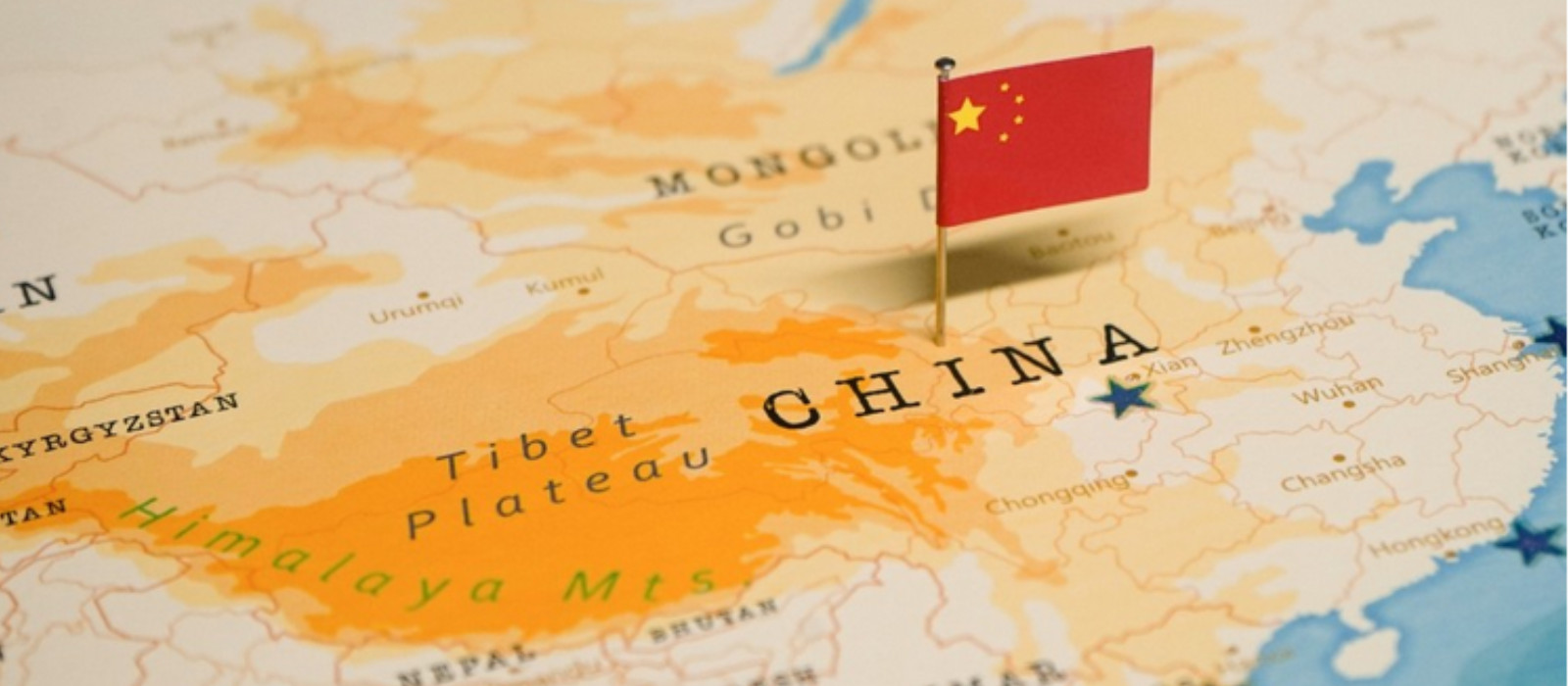
On June 15, 2020, army troops from India and China clashed in the Galwan Valley in the Himalayas for the first time in 45 years. The death of 20 Indians and an unspecified number of Chinese soldiers was precipitated by China’s seizing 60 square kilometres of Indian territory.2 The outcome was a change in the status quo with China advancing into and hindering area patrols by the Indian Army. The Galwan incident was a grave reminder of the fierce war fought in the same area between the two Asian giants in 1962 and one that India lost.3 The war had roots in the colonial legacy of the McMohan Line among other reasons. Then Prime Minister of India, Jawaharlal Nehru, famously described the region as a place where “not a blade of grass grows.”4 In 1954, he had expressed the hope of brotherhood with China by announcing the ‘Panch Sheel’ policy. Five principles of peaceful coexistence between nation-states drove the ‘Panch Sheel’ formally adopted by the United Nations (UN) in 1957. China rewarded this policy with war in 1962.5 Likewise, during an ‘informal summit’ with the Chinese premier at Wuhan in 2018, Prime Minister Modi also made a pitch for engagement with Beijing to foster co- existence.6 But similar to Nehru’s in the sixties, Modi’s aspiration was shattered by the June 2020 incident. The Galwan escalation coincides with China’s aggressive bid to build a land bridge across Asia and Europe to leverage internal, continental lines of communication suited to a land power. Beijing’s aggression then has a clear message for India - resign to the continental theory of security in Asia. Consequently, the India - China land dispute is part of a greater struggle for ‘balance for power’ in the broader Indo-Pacific Region (IPR). Therefore, India should explore options to counter China’s regional ambitions and defend its territorial integrity.
On the one hand, India can pursue non-alignment, also referred to as strategic autonomy.7 On the other hand, given its power deficit, India by itself cannot balance against China, and therefore, may wish to align with like-minded partners with converging interests in the region.8 Put another way, non-alignment would allow India to secure its vital national interests in a multi-polar world order by freeing itself from alliance commitments. New Delhi could thus, gain economic benefits from China and the European Union (EU), energy security from Saudi Arabia and Iran, infrastructural partnership with Japan, and technology from the United States or Russia. By way of contrast, New Delhi’s partnership with specific countries would best counter China’s aggression and regional influence while complementing efforts to foster a regional security architecture in Asia and groom India’s indigenous military capability. The question should India be willing to seek economic concessions from China amidst the growing Chinese aggression along the Himalayan borders, and would doing so not imply submitting to China in one way or another, remains. A strategic embrace of partners would continue to offer India many advantages associated with strategic autonomy, except perhaps the case of China because of its economic leverage in a highly globalised world. For India, a hybrid continental power with favourable maritime geography in the Indian Ocean Region (IOR), the preference to partner with the United States (a maritime power), thus makes for a better choice to counter the rising military aspirations of continental China. Given these circumstances, it would appear that an external balancing strategy with the United States is probably in India’s interest.
An Indo-US partnership in the IOR should enable India to negotiate China’s aggression from a position of strength, including contentious issues along the disputed land borders. The People’s Liberation Army Navy (PLAN) is the largest in the world and aspires to develop an Indian Ocean fleet in the near future to dominate the IOR.9 Defence cooperation especially in the maritime domain, between the United States Navy and the Indian Navy could deter Chinese coercion in the IOR or along the Sino- Indian land borders in the Himalayas.10 By establishing a symbiotic relationship, India and the United States could remain ahead of the game as both nations augment strategic asymmetries against all instruments of China’s national power in the region. India’s external balancing strategy with the United States would thus, ensure a regional counterbalance to China in the broader IPR.
To effectively balance China’s rising maritime aspirations, India could pursue an external balancing strategy by expanding the scope of its defence partnership with the United States. An India - US partnership should be most effective in the peripheral IOR, where China’s military power is relatively weak. First, India and the United States should prioritise mitigating capability gaps and study their joint maritime interoperability to deter any future domination of the Indian Ocean by the PLAN. Second, New Delhi and Washington could explore opportunities to cooperate in cyber, information and space domains to deny any potential competitive advantage enjoyed by the Chinese military in the IOR and across the competition continuum. Finally, given the nature of the threat posed by Beijing, both nations should invest in emerging military technologies to ensure a long-term warfighting advantage in a future conflict with China.
Indian Interests at Stake
China’s military threat along India’s land borders, the widening Sino-Indian economic differential and Beijing’s expanding maritime capabilities are among India's three primary national security challenges. Among other things, Beijing’s sovereignty over Tibet and the Dalai Lama’s succession are sources of constant friction between the two countries.11 In addition, China’s construction of dams across the Brahmaputra River might result in future water crises, including climate challenges and floods in lower riparian Indian states.12 As demonstrated in the most recent conflict in the Galwan Valley, Beijing is pursuing limited aims in a creeping conquest along the disputed land borders with India.13 Admittedly, a similar Chinese strategy to change geography incrementally in the South China Sea (SCS) by coercive tactics and fortification of disputed island structures has been highly effective. Eventually, China intends to exploit these territorial gains as pressure points against India to seek favourable outcomes on contentious economic or diplomatic issues.
Beijing’s economic power, the export of its political model and its influence within international organisations also present an impediment to India’s foreign policy. To begin with, the vast imbalance in bilateral trade between the two countries (upwards of $ 5 billion) is a challenge for India.14 Moreover, China is showcasing its political model as the “most successful and best-run” system and an alternative to democracy for increasing prosperity in the IOR.15 Beijing has also sought to shape international institutions to further its influence in the Eastern Hemisphere.16 Due to its diplomatic clout, China has stalled India’s efforts to join the United Nations Security Council (UNSC) as a permanent member and the Nuclear Suppliers Group (NSG).17 Suffice it to say, China aims to leverage its economic and political power, including strength in international institutions, to advance its sphere of influence in Asia, at India’s expense.
Finally, China’s expanding maritime capability in the IOR threatens India’s national and regional interests. Ninety-five percent of Beijing's trade with the countries in the African and European continent and the Middle East transits through the IOR. It is no surprise then, that China’s infrastructural investments in the IOR littoral nations under the Belt and Road Initiative (BRI) and overseas bases in Djibouti appear to be steps to contain India’s sphere of influence in South Asia.18 Most coastal countries in the IOR have traditionally leaned on India for their security needs. These requirements include tasks and missions for Search and Rescue (SAR) and Humanitarian Assistance and Disaster Relief (HADR). China’s forays into the IOR could shrink India’s influence in its immediate neighbourhood. Therefore, New Delhi should seize opportunities to seek and transform the national security challenges posed by China into competitive opportunities in the IOR global commons.
Hard Choices: Strategic Autonomy Vs Partnership Strategies
New Delhi’s foreign policy has evolved with changing circumstances since India’s independence in 1947. Until 1962, India pursued a policy of nonalignment in a bipolar world.19 The 1962 conflict with China however, forced New Delhi to look beyond non-alignment and seek limited cooperation albeit with both the United States and the USSR.20 After becoming a declared nuclear power in 1998 and in a post-Cold War era,
India once again reassessed its foreign policy aims and sought mechanisms to benefit from the United States and Russia concurrently. An excellent example to illustrate India’s dual approach during this period is signing the most important defence deal for India’s only aircraft carrier Vikramaditya in 2004 with Russia and the landmark civil nuclear deal with the United States in 2006. Since the signing of the 123 nuclear agreement in 2006 however, cooperation between India and the United States has expanded significantly across all national power domains. However, while India has been willing to cooperate, it has been reluctant to align strategically around a specific global military problem, in this case, China.
Non-alignment offers numerous advantages to India’s policymakers. By pursuing this policy, New Delhi can skip the domestic political debate over its alignment choices.21 In addition, non-alignment provides India the freedom to avoid the pitfalls of commitments in a multi-polar world.22 A policy of non-alignment minimises India’s friction with other great powers. After all, an alliance with the United States would not be viewed kindly by China and would adversely impact India’s gains from an economic relationship with China. Similarly, an alliance with Washington could also hurt New Delhi’s strong military relationship with Russia. Through non-alignment, India cannot only leverage its independence for benefits from the United States, China, and Russia, but it can also leverage from middle powers like the EU, Japan, Australia, Saudi Arabia, Iran, Brazil, United Kingdom and Israel.
That said, a policy of non-alignment is probably not the best choice for India to counter China’s aggression either along the land borders in the Himalayas or in the IOR. Non-alignment was an effective policy during the Cold War period, when the great powers, the United States and USSR, were geographically distant from India.23 Consequently, India should either seek to strengthen its military power independently or look for suitable partnership options to deter future Chinese aggression on Indian sovereign territory and across the IOR. However, with substantial socio-economic inequalities and a challenging fiscal situation, now further strained by the COVID-19 pandemic, New Delhi’s appetite for spending more on defence and security remains constrained. Thus, the most pertinent challenge for India’s strategic leadership today is to answer the question, “Given the military challenge posed by China and India’s domestic economic constraints, how to balance against the Chinese threat effectively?”
If not non-alignment, then India's best option is to adopt an external balancing strategy by enhancing the scope of its partnership and defence cooperation with the United States. In contemporary times, China’s rise presents a challenge to India. The same question, when posed for the United States, gets us to China.24 On the corollary, who is China’s primary adversary?25 In the global context, it is the United States, and, regionally, it is perhaps India. Because the United States and India share a common adversary in China and are pursuing policies to subdue and counter that common adversary, partnering together to balance, counter and resolve the threat makes good sense.
India’s external balancing strategy with the United States offers three distinct advantages. First, the United States is the most attractive partner because its power in the Diplomatic, Information, Military, Economic, Financial, Intelligence and Law Enforcement (DIMEFIL) spheres is greater than China’s. Second, its vital national interest in countering China’s rise aligns with India’s.26 Finally, Washington’s vision of a "Free and Open Indo Pacific” (FOIP) synchronises with India’s Act East Policy and Security and Growth for All in the Region (SAGAR) initiatives in the IOR.27 Given these points, the IOR is where a new Indo-US partnership ought to focus on. China’s main military force (land) is concentrated against India in the Himalayas and against the United States (maritime) in the SCS. Alternatively, and though it is expanding quickly, China currently has a weak military footprint in the IOR. As a result, the IOR's peripheral theatre presents the best opportunity for Indo-US defence cooperation to balance against China. India should seize the advantage of geography and act in time to emerge as a preferred security partner in the IOR's critical strategic areas. Therefore, maritime cooperation between India and the United States emerges as the ‘best performing area’ in balancing against China.
Way Ahead: Galvanising India-US Maritime Convergence for Restoring Balance of Power
Should India choose an external balancing strategy with the United States, this policy should focus on three Lines of Effort (LOEs) in the IOR's maritime theatre. First, mitigating capability gaps and sturdy joint maritime inter-operability should deter future opportunistic Chinese aggression in the IOR. Second, cooperating in cyber, information and space domains could rob China of any competitive advantage and asymmetry in the maritime environment upon the onset of a crisis. Finally, investing in emerging military technologies might ensure long-term strategic convergence between India and the United States' navies to bolster security cooperation. These LOEs may incrementally build on the initiatives advanced thus far between the two nations.28 From a US perspective, supporting India’s rise to balance China in the IOR might allow Washington to focus on the maritime areas in the Western Pacific, especially on Taiwan and North Korea.29 In addition, by pursuing maritime convergence with the United States, India could further its influence as the preferred security partner in the IOR.
Capability Gaps and Inter-operability
New Delhi and Washington should start with identifying critical capability gaps and expanding the scope of their interoperability. First, the United States Naval War College and its Indian counterpart at Goa could pursue classified war games simulating likely contingency scenarios in the IOR. Better strategies identified as an outcome of these war games can help focus on developing cooperative frameworks.30 Second, effective inter- operability in the future should mandate a robust networked grid across all domains.31 With the signing of all four foundational agreements completed in October 2020 (after over 20 years of negotiations), both countries might explore future structure and arrangements in other domains.32 For example, India and the United States may consider establishing a standing Joint Task Force (JTF) for coordinating Humanitarian Assistance and Disaster Relief (HADR) at India’s planned Integrated Maritime Command (IMC) at Karwar. Both nations could also set up bilateral working groups to oversee the implementation of the Logistics Exchange Memorandum of Agreement (LEMOA) and Basic Exchange and Cooperation Agreement (BECA). In the long term, these initiatives would ensure unity of effort between India and the United States towards optimising defence resource allocation amidst challenging fiscal constraints post-COVID-19. Further, by burden-sharing maritime missions, both countries could impose higher costs on any attempted coercion by China in this region.
As India and the United States strengthen their maritime inter-operability, both governments should carefully calibrate the adversestrategic effects of unilateral operational activities, such as the US Freedom of Navigation Operations (FONOPs) in the Indian Exclusive Economic Zone (EEZ). On 07 April 2021, USS John Paul Jones asserted its navigational rights and freedom inside Indian EEZ to contest India’s domestic regulation, which mandates prior consent for military activities in these waters.33 This operational activity by the United States Navy (USN) was poorly timed, coming weeks after the Quad 2.0 virtual meeting at which the political leadership of both countries had pledged unity of effort. While US FONOPs have been in vogue for many decades now, it would be pointless to coerce a strategic partner such as India, through intimidation. On the contrary, India and United States should use the Quad 2.0 forum to call together all signatories of United Nations Convention on the Laws of the Seas (UNCLOS) to review the provisions and differing interpretations of the UNCLOS. This initiative could also deter China from continuing its aggressive island-building strategy in the waters around the South China Sea (SCS).
Cyber, Information and Space Domains
Mitigating risks in the cyber, information, and space domains may ensure a united effort to counter China’s sophisticated capabilities in these three areas, which have the potential to degrade command-and-control over the battlefield across the competition continuum. China views cyberspace as the primary ‘battlefield,’ both in crisis and in conflict.34 The ways to confront this challenge include setting up a joint commission on cyber and space security under the aegis of the National Security Council (NSC) in the United States and the National Security Council Secretariat (NSCS) in India.35 This apex level committee could assist India’s newly created Defence Cyber Agency (DCyA) under the Department of Military Affairs (DMA) on cyber-defence issues and China’s offensive cyber capabilities. In addition, the USCYBERCOM and the Indian Navy could collaborate to establish innovative approaches for the inclusion of small tactical cyber teams for fleet-level warfare. These efforts might ensure that when the first rounds of salvos are fired in the cyber domain during a future conflict with China, the networks of the US Navy (USN) and the Indian Naval (IN) ships should survive and deliver credible results on the battlefield.
Both countries should also synergise communications strategies to counter China’s information domain and its three forms of warfare of psychological, public/ media and lawfare, in order to pressure China to moderate its behaviour. The Indian Navy’s strategic communication cell at New Delhi and INDOPACOM’s at Guam could establish such cooperative mechanisms by signing a Memorandum of Understanding (MoU) on this vital element of information warfare. In addition, both navies should publicise the true nature of China’s expansion into the Indian Ocean that Beijing is pursuing through the BRI. This narrative should employ all available means, be it joint statements by senior members of the defence establishment in India and the United States, social media including in Mandarin and Hindi languages, internet, radio, and television. These efforts would undermine China’s standing in international and domestic circles and increase the political costs of its continued predatory activities in the region.
In the space domain, collaborating around future kinetic energy Anti-Satellite (ASAT) technologies, developing frameworks against debris generation and enhancing satellite resilience against Chinese counter-space capabilities may benefit both India and the United States during a likely escalation in the IOR. Further, New Delhi and Washington could consider collaborating with other like-minded countries in the IOR towards developing a legal regime for promoting a code of conduct in space towards reducing space debris. Also, given the dual nature of space technology, India and the United States could coordinate rules for capabilities such as lasers, particle beams and microwaves in the IOR at the Indian Space and Research Organisation (ISRO). By collaborating in the “congested, contested and competitive” space environment, both India and the United States would deny the Chinese navy the ability to adversely impact battlefield domain awareness by its emerging space and counter-space technologies.
In all, by accelerating cooperation with the United States in the three domains of cyber, information and space, India would seize the initiative in the IOR. Moreover, the buy-in of the “China threat” theory, especially among the coastal nations on the rim of the Indian Ocean, is critical to deter China from expanding its influence in the IOR based on authoritarian and predatory policies. Consequently, by cooperating in these niche domains, both India and the United States would remain pre-eminent in the IOR and take the leading role in maintaining and expanding security in the IOR.
Emerging Military Technology
Cooperation in emerging military technologies should offset any future competitive advantage that China is likely to develop in order to win a maritime conflict in the IOR. Recent reports have highlighted the deployment of Chinese Underwater Unmanned Vehicles (UUVs) in the IOR.36 Indian and the United States should galvanise joint research in futuristic underwater technologies under the ‘Make in India’ policy and the Defence Technology and Trade Initiative (DTTI).37 In the short term, India and the United States could cooperate to share valuable intelligence about the underwater domain, mainly to track Chinese nuclear and conventional submarines transiting through the IOR. In addition, India may concurrently share the underwater profile of the IOR's waters with the United States. Over the long term, both countries could aspire to co-develop and commission a UUV suited for the Indian Ocean to bolster underwater Maritime Domain Awareness (MDA). Thus, India and the United States would lead with MDA as a key operational capability in the future fight against China.
Second, the Indian and US Navies should develop a joint operating concept to guide the US - Indian security cooperation in the IOR.38 The US Navy’s current warfighting concept of Distributed Maritime Operations (DMO) remains optimised for the Western Pacific region. DMO seeks to achieve concentrated fires from a distributed force connected by dispersed network architecture in conflict. Since the IOR may remain an awkward and uncomfortable space between conventional war and peace, India and the United States could develop an alternate joint operating concept to support sea lanes protection, anti-piracy, illegal fishing, narcotics and maritime terrorism. Coordination and enhanced cooperation between the two navies would thus, help foster a comprehensive shared vision of security in the maritime IOR.
Finally, cooperation in Artificial Intelligence (AI) and Machine Learning (ML) relevant to the IOR’s maritime domain could become a focus area. The two navies should establish a joint commission to pursue research on AI/ ML, including screening standards for preventing Chinese technologies onboard Indian and American warships. Robust cooperation in future technologies could lead to improved capabilities in dealing with China’s AI/ ML export in the region. A US - India AI coalition would prevent China’s AI export to the IOR's littoral nations and increase awareness amongst these nations towards Chinese AI-based subversion and exploitation. An AI coalition between India and the United States could also bolster New Delhi’s leadership in technology, innovation and a broader international collaboration in this niche area. Finally, advocacy of a win-win alternate AI/ ML model may also help promote responsible governance and aid economic development in the IOR. All these efforts should facilitate rebalancing of power in Asia in New Delhi’s favour.
Conclusion
In challenging post-COVID economic recovery, New Delhi’s capacity to prioritise its defence resource allocation over pressing domestic social programmes to narrow the gap between the ‘haves’ and the ‘have-nots’ may increasingly be strained by riding on a policy of nonalignment. Thus, an external balancing strategy with the United States offers both India and the United States the benefit to concurrently pursue prosperity for their people while at the same time bolstering defence cooperation in areas of common national security interests. China's strategy to escalate along the land borders in the Himalayas attempts to force India to focus on its continental security challenges and defer New Delhi's military modernisation in the maritime domain. India could seek to offset this Chinese strategy by pursuing external balancing with the United States. Cooperation between the Indian Navy and the United States Navy in the peripheral theatre of the IOR is best suited to mitigate this challenge. The focus areas of Indo-US maritime cooperation should include mitigating capability gaps and improving interoperability, collaboration in cyber information and space domains, and investments in emerging military technologies. Indian strategic leaders should however, remember that building a robust partnership takes time. Post-crisis dialling of an emergency 911 number to partners for help is risky and not a rational choice. The time to infuse trust and confidence in a long-term commitment with like-minded partners is now.
Endnotes
-
This admonition from Bhishma has since been paraphrased numerous times, and made popular by numerous thinkers.
-
S. Jaishankar, The Indian Way: Strategies for an Uncertain World (Noida: Harper Collins Publishers, 2020), 124.
-
Ibid., 124.
-
Branislav L. Slantchev, Military Threats: The Costs of Coercion and the Price of Peace (Cambridge: Cambridge University Press, 2011), 178-190.
-
JP Dalvi, Himalayan Blunder (New Delhi: Natraj Publishers, 2010), 36-38.
-
Shruti Dodbole, “Wuhan Summit: Important Signal of Intent by India and China,” Brookings India, 11 September 2020.
-
Rajesh Rajagopalan, “ India’s Strategic Choices,” Carnegie India , 2017 . www.cornegieIndia.org.
-
Editorial Board, “Asia: Drivers of Strategic Change,” Strategic Survey, 19 November 2020; also see, Editorial Board, “Chapter Six: Asia,” Military Balance, 13 February 2020.
-
Christopher Colley, “A Future Chinese Indian Ocean Fleet,” War on the Rocks, 02 April 2021, 4-6.
-
James Holmes, “Do Russia or China Have ‘Limited’ or ‘Unlimited’ Political Goals?,” 19fortyfive, 04 April 2021.
-
Ellen Bork, “Caught in the Middle,” World Affairs vol. 178, no. 3 (2015, May-June), 52-53.
-
Mirza Zulfiqur Rahman, “Infrastructuring Floods in the Brahmaputra River Basin: Hydrocracies, Hubris, Hazardscapes,” Economic and Political Weekly. www.contify.com, accessed 12 January 2021 and M. Taylor Fravel, “China’s Sovereignty Obsession,” Foreign Affairs, 26 June 2020.
-
Prakash Menon and Anirudh Kanisetti, “China, India and Doklam in 2020,” Takshashila Strategic Assessment 2021-01, 04 January 2021, 4-5.
-
Jiadong Zhang and Qian Sun, “China-India Relations: A Premature Strategic Competition between the Dragon and the Elephant,” Issues and Studies: A Social Studies Quarterly on China, Taiwan and East Asia Affairs vol. 55 (2019, September), 2-4.
-
Editorial Board, “Exporting Xi Jinping Thought: How the Party Trains Foreign Politicians,” The Economist, 12 December 2020.
-
Elizabeth Starr, “China’s New Revolution: The Reign of Xi Jinping,” Foreign Affairs vol. 97, no. 3 (2018, May-June), 60-74 and Thane Bourne, “China’s Intention for the Asian Infrastructure Investment Bank,” Quarterly Access: Australian Institute of International Affairs, 15 January 2015, 42-43.
-
Emmanuel Lenain (@FranceinIndia), “France Welcomes India as it Joins #UNSC,” Twitter, 01 January 2021. https://www.twitter.com.
-
Panjak Jha, “Countering Chinese String of Pearls, India’s Double Fish Hook Strategy,” International Affairs, 08 August 2020, 34.
-
Jaishankar, Op Cit., n.2, 72.
-
Shyam J. Kamath, “Foreign Aid and India: Financing the Leviathan State,” Cato Institute Policy Analysis, 06 May 1992. www.cato.org/publications/policy-analysis/foreign-aid-india-financing-leviathan-state, 4-5.
-
Nikolas K. Gvosdev, Jessica D. Blankshain and David A. Cooper, Decision Making in American Foreign Policy: Translating Theory into Practice (Cambridge: Cambridge University Press, 2019), 284-296.
-
Anita Inder Singh, “Unresolved Questions in U.S.-India Relations,” The Times of India, 31 M a r c h 2 0 2 1 , 8 - 9 . h t t p s : / / w w w. t h e t i m e s o fi n d i a / a r t i c l e s / 2 0 2 1 / 0 3 / 3 1 / u n r e solved_questions_in_us-india_relations_770633.html, assessed 12 April 2021.
-
Shivshankar Menon, “The Case for Allies: Coordinating a Response to China,” The Struggle for Power: U.S. – China Relations in the 21st Century, ed. Leah Bitounis and Jonathon Price (Washington, D.C: The Aspen Institute, 2020), 61-63.
-
U.S. National Security Council, United States Strategic Framework for the Indo-Pacific, 12 January 2020. https://www.whitehouse.gov/briefings-statements-national-security-advisor-robert-c-obrien-011221/, accessed 21 January 2021.
-
Christine Fair, Fighting to the End: The Pakistan Army’s Way of War (New York: Oxford University Press, 2014), 5-6.
-
Ken Moriyasu, “U.S. Navy Chief wants Indian Ocean 1st Fleet, in Singapore,” Nikkei Asia, 19 November 2020.
-
U.S. Department of State, “A Free and Open Indo-Pacific: Advancing a Shared Vision,” 04 November 2019. https://www.state.gov.in
-
Joshua T. White, “After the Foundational Agreements: An Agenda for U.S.-India Defence and Security Cooperation,” Foreign Policy (2021, January), 1-2.
-
Jim Fitzsiminds, “Contemporary Challenges to Sea Control,” United States Naval War College, 08 September 2020.
-
Vivek Mishra, “India-U.S. Maritime Cooperation: Crossing the Rubicon,” Maritime Affairs vol. 14, no. 2 (2018), 15-25.
-
Jon Grevatt, “Update: U.S. Highlights CAATSA Risk in Indian Fighter Procurement,” Janes, 29 June 2020.
-
Mark Rosen and Douglas Jackson, “The U.S.-India Defence Relationship: Putting the Foundational Agreements in Perspective,” Centre for Strategic Studies, February 2017, 6-7.
-
Arun Prakash, “US 7th Fleet’s Patrol in India’s EEZ was an Act of Impropriety,” The Indian Express, 12 April 2021.
-
Adam Segal, The Hacked World Order (Washington D.C: Hachette Book Group, 2017), 33.
-
White, “After the Foundational Agreements,” 17-18.
-
HI Sutton, “Chinese Submarine Drone Discovered Near Gateway to Indian Ocean,” Naval News, 29 December 2020.
-
Ajay Kumar (@drajaykumar), “Indian Company Bags Rs 140 Crore Army Deal for Tactical Drones,” Twitter, 15 January 2021. https://www.twitter.com.
-
U.S. Department of Defence, “A Design for Maintaining Maritime Superiority, Version 2.0,” 2018. https://www.media.defence.gov/2020/May/18/2002301999/-1/-1/1/DESIGN_2.0.PDF
