

Editor’s Note: This article is reproduced here with the permission of the Australian National University’s National Security College. It formed Chapter 11 of their publication, The Future of the Undersea Deterrent: A Global Survey, published in 2020. Given India’s efforts towards enhancing nuclear deterrence stability, SSBNs are likely to remain very central. Indian governments, the Indian Navy and DRDO and the later architectures created have all been important, visionary steps.
India does not gain anything by escalating the nuclear arms race in the region with INS Arihant.1
- Chinmaya Gharekhan
India is developing sea-based nuclear deterrence in accordance with its nuclear doctrine ... to reinforce nuclear deterrence, supported by corresponding operational capabilities and procedures for optimal deployment, in keeping with national policy.
- Indian Maritime Security Strategy2
Introduction
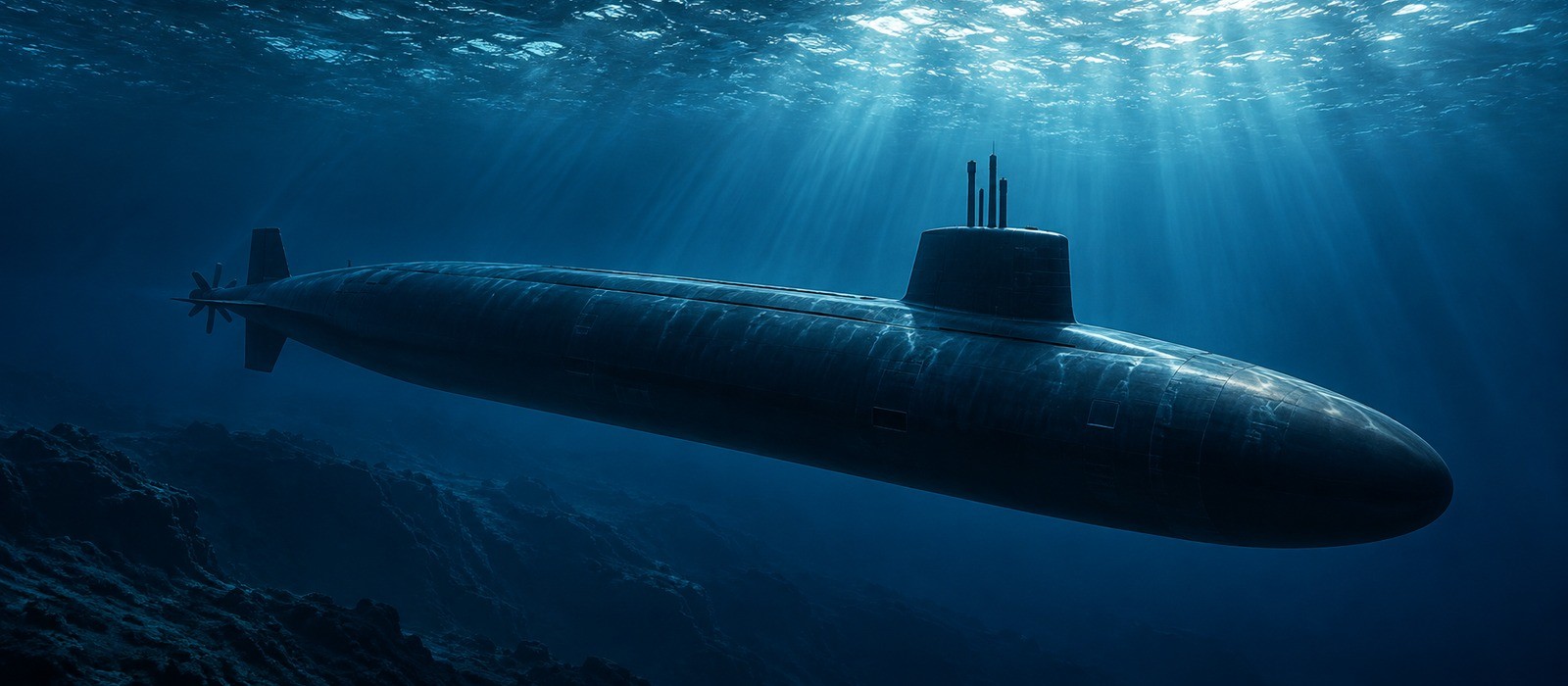
0n 5 November 2018, some of the crew of INS Arihant, India’s first nuclear-powered ballistic missile submarine (SSBN), were congratulated in New Delhi by Indian Prime Minister Modi after India’s first deterrent patrol. Indeed, it was an occasion to mark: “The surge of national pride at the recent completion of ‘deterrent patrol’ by the Indian Navy’s first home-built [SSBN] INS Arihant, is fully justified,” wrote Admiral Arun Prakash, though not without adding some cautions.3
India’s journey in building its own nuclear deterrence capabilities has been a long one - a bit too long and a bit too slow. Strategic indecision and perhaps inadequate cohesion more than technological impediments were factors that led to lost opportunities in terms of permanent membership of the UN Security Council; becoming a nuclear-weapon state (NWS) before the non-proliferation treaty of 1968; and, in general, finding a seat at the high table of world politics.4 Some scholars have thought of a nuclear India more as a matter of “prestige” than a necessity.5 This is a charge often made about those nations that play catch-up with early starters, as seen in the case of battleships, aircraft carriers, space flights, and even in winning Olympic medals.
Historical Rationale for Indian SSBN Construction
Space does not permit tracing the history of India’s SSBN program; however, a brief but authoritative account by Admiral Prakash can be recommended.6 We should draw out four key points from history as outlined below. First, it is difficult to agree that India stumbled into making an SSBN while trying to develop reactors for nuclear attack boats.7 Until the May 1998 nuclear tests, India had never admitted to a nuclear weapons capability at all. Therefore, to indicate that there indeed was a diesel-electric ballistic missile submarine (SSB)/SSBN program would have been ill-advised. One can imagine the effort put into the deception that led to beliefs that only nuclear-powered attack submarines (SSNs) were on the drawing board. The very name, Advanced Technology Vessel Programme (ATVP), seemed opaque, but less so than the Manhattan Project (1939-1946). There is insufficient understanding in the West about Indian deception strategies (and even stratagem) used to keep the SSBN and other programs covert. (Author’s additional note: This was due to the constraints and realities of the international strategic-diplomatic international environment in which India conducted its discourse.) Today, the ATVP remains focused on SSBNs, but SSNs could well follow. While deception strategies were largely successful, not all decisions on delivery vehicle development were cohesive and beneficial.
Secondly, we can infer that covert developmental strategies of the other legs of the triad were underway before the 1998 nuclear tests so that when India went overt with its capability, the tasks of operationalising delivery vehicles would be quicker. Therefore, while the grand vision and will for going nuclear may have been constrained, delivery development was relatively well-conceived. The problems lay in slow manufacturing and testing processes. The need to gain experience in operating nuclear submarines led to the leasing of the first SSN from the USSR in 1988. At this time, India’s defence strategy focused its energy on the maritime leg of the envisaged triad.
Thirdly, many features of the command and control (C2) framework necessary for sea-based nuclear deterrence to deploy operationally, survive tactically, and launch strategically were also applicable for C2 of conventional boats and the leased SSN. Accordingly, a Very Low Frequency (VLF) radio communications programme was put in place in the mid-1980s. The key partner for this was an American company.8
Fourthly, the assumed change of type from SSN to SSBN as the focus of India’s nuclear submarine program has been called an afterthought. As explained, this was not the case. Nonetheless, there are parallels elsewhere that underscore SSN/SSBN compatibilities.9 For example, the first US Navy SSBN, George Washington, and four follow-on Polaris boats were derived from the Skipjack SSN design. The George Washington (SSBN 598) was laid down as SSN 589 (Scorpion) on 1 November 1957, but re-designated SSBN 598 on 31 December 1957.10 On the contrary, the French began - like India - with SSBN construction. The Redoubtable was laid in 1963 and commissioned in 1971. However, France was not under any constraint to keep this covert.11
Towards Deterrence
In the weeks after Arihant’s launch in 2009 and its first deterrent patrol in 2018, the media in India (and its similarly raucous counterparts in Pakistan) did end up chest-thumping and fist-shaking. Chinese media were less noisy but angry and dismissive.12 This, along with high-pitched Indian political messaging in 2009 and 2018, ended up conveying that there was a game-changer on the scene. Shorn of the hyperbole, Arihant is not yet part of the deterrence architecture in a meaningful way. After all, for any nation, deterrence is about substance, not symbolism; spin is not necessarily nuclear signalling; and adversaries always have a vote on feeling deterred. Yet, the Arihant is an important first step towards establishing sea-based nuclear deterrence. An aspect this author examines in his doctoral research relates to the interplay of quantitative and qualitative factors that feed into the effectiveness of sea-based nuclear deterrence. This seems to be especially important in India where quantitative factors regarding the number of delivery vehicles possibly “pointed” towards India are a bit too easily explained away by the quality that Indian credible minimum deterrence, or even just credible deterrence, is supposed to provide.13 Hence, here are some aspects to consider as we later examine the impact of India’s SSBN fleet. It would be logical that in case of a single-front conflict with either Pakistan or China, the nuclear alert posture of the other non-engaged adversary would also be higher. In a two-front situation - good strategic planning implies that hardly any scenario should be off the table - the seriousness of the issue increases. Going by data from the Bulletin of the Atomic Scientists, the number of China’s warheads is 280-300 (say, “X”), Pakistan’s 140-150 (say, “Y”), and India’s 130-140 (“Z”). Pakistan and India are almost matched, but Pakistan’s accretion rate is presumed to be higher.14 The gap may grow. China alone or (X)+(Y) creates quantitative challenges for credible or credible minimum deterrence for India with Z vectors.
Deterrence stability is not about arithmetic, but vector numbers do matter. “Z as significantly lesser than X+Y, represented in a formulaic manner as (Z<< X+Y)” could be seen as a curious twist of the Royal Navy’s “two-power standard” for force structuring at the zenith of British power.15
Numbers matter, they always have, even when they reached high five digits at the peak of the Cold War. The Indian architecture of deterrence is weakened by the possibility of a counterforce first strike and the resulting loss of delivery vehicles. It is at such a time that the other adversary’s arsenal would be at a higher state of readiness - and therefore, a greater threat. With reduced capabilities and shrinking windows for retaliation, India’s quantitative disadvantage increases and the qualitative value of credible minimum deterrence declines, since massive retaliation or a variant (unacceptable damage) both rest on the evaluation of surviving retaliatory capability.16
Given the distinct possibility that either or both likely adversaries may launch a certain number of conventional missiles against nuclear and non-nuclear targets in India, the limited future ballistic missile defence capability may deplete rapidly. Is a non-nuclear strike against India’s nuclear forces to be a trigger for massive retaliation, especially when either adversary retains some capabilities for follow-on counterforce or counter-value strikes?
These are uncomfortable scenarios, but very much a part of strategic planning and force-structuring that actually feed into deterrence itself. Comforting as it may seem to think of nuclear weapons as political rather than military weapons, the stability of deterrence and effectiveness of any country’s nuclear arsenal depends on its organisation, C2, readiness, training, lethality, spread, and survivability. It is also useful to remember that even an assassin’s/commando’s bullet, grenade, or explosive vest is a political weapon in so far as some ends of political purpose were envisaged in its very existence and use.17
Bolstering Deterrence Stability
Therefore, India’s choice to build SSBNs before SSNs was wise, accepting the great cost, and technological and operational challenges. Doctrinally, the Indian Navy has long acknowledged the criticality of deployed SSBNs for deterrence stability.18 Undoubtedly, risks are inherent in nuclear deterrence architectures in any environment. Among others, these are argued well by Medcalf and Thomas-Noone. Yet, as they point out, Indian SSBNs could be part of long-term stability. One observation is particularly profound: “Not everything in geopolitics gets worse all the time. Assuming that lessons are learned and potential crises managed in the decade ahead, advances in Chinese and Indian SSBN and SLBM [submarine-launched ballistic missile] technology may eventually contribute to a new phase of relative strategic stability where the existence of nuclear weapons keeps the peace and prevents their use.”19
Deterrence instability requires watching, prevention, and sometimes even leveraging it for getting the upper hand in the deterrence matrix. Pakistan has used such leverage a few times. However, instability ought not to be conflated with either a collapse of deterrence or bringing matters closer to collapse. A collapse could occur even under conditions of stability and balance of nuclear power.
To Deploy Operationally, Survive Tactically, and Launch Strategically
For at least two more decades, India’s sea-based nuclear deterrence capability will fall short in qualitative and quantitative terms, unless India puts in more resources. Specifically, Arihant seems to have twelve very short-range K-15 SLBMs with a reported range of 700-1,000 kilometres.20 However, Medcalf and Rehman both mention that Arihant could be modified to launch four of the K-4 SLBMs of 3,000-3,500 kilometres range. Options to deploy Arihant periodically seem to be limited. It can only patrol against Pakistan and is at significant risk of being “marked” frequently.21 Therefore, four of the K-4s, rather than twelve of the K-15s, make for better deterrence capability and the sooner this is done the better. Yet, Arihant has its uses to hone skills, test C2 frameworks, and yet be boldly deployed when and where imperative.
Bastions for SSBN patrol seem inevitable for India until missile ranges go beyond intermediate-range ballistic missile (IRBM) to intercontinental ballistic missile (ICBM) levels.22 Bastions are not really a virtue. Soviet/Russian bastions in Northern waters and the Sea of Okhotsk, and for the Chinese in the South China Sea, remain vulnerable to offensive Anti-Submarine Warfare (ASW) operations. They remain preferable for these countries because maritime geography is/was a constraint, as were sonar barriers, like along the Greenland–Iceland–United Kingdom (GIUK) gap.23 As sketched by Rehman, it seems logical that deterrent patrols even for K-4 SSBNs would have to be within the Bay of Bengal.24 One hopes that the larger SSBN designs would be capable of doing well in qualitative and quantitative terms with SLBMs of 7,000 kilometres plus range, about sixteen capacity (desirably with Multiple Independently Targetable Re-entry Vehicles (MIRV)), and a refuelling cycle that permits about ten to fourteen-year intervals, thus giving about 40 years patrolling life with two interruptions for refuelling.25 Like the United States, India has geographic advantages for SSBNs to go on open ocean patrol, once they field long-range SLBMs. We need to move beyond bastions in which the enemy’s offensive ASW could be more effective, to beyond such confining areas where our own resources needed for defensive ASW, would be reduced.26
Continuous At Sea Deterrence (CASD) for India may need to be a bit different from the models that the United Kingdom and France follow.27 Their “one-in-four” systems put one of the four SSBNs on patrol. Their SLBMs have multiple warheads such that one single SSBN has the potential to launch several dozen warheads. This makes the “weight” of their deterrence with just one boat on patrol quite different from that of India’s SSBN. For India’s considerations, six to seven boats with a two-boat CASD and surge of up to four SSBNs could give a measure of deterrence effectiveness for two purposes: via retaliatory counter-value strikes; and, given increased accuracy, the threat of counterforce strikes. India’s No First Use (NFU) doctrine could change and potentially strengthen stability. In any case, no nuclear weapon state can really gain through nuclear high-handedness. Pakistan slowly will realise this. Its moves for getting its own low-cost, sea-based nuclear deterrent, based on nuclear-tipped cruise missiles are a major concern. India and its friends around the globe could cooperate in strategic ASW to keep Pakistani boats marked. Redundancy and survivability of the C2 systems including their cyber-hardening is probably an ongoing priority for the government and the Indian Navy. Talk in India, and occasionally elsewhere, about the risks of mated missiles in India’s SSBNs are just red herrings. One imagines that robust Permissive Action Links and safeguards are in place.28 Finally, for India, there is much work and expense ahead as the reliance on sea-based nuclear deterrence in terms of its quantitative and qualitative effectiveness is enhanced. There may be some phases of instability that need to be evaluated, countered, and even leveraged. On balance, Indian SSBNs could become the most critical leg of the “atoms for peace” triad.
Endnotes
-
Chinmaya R. Gharekhan, “Deterrence or Danger,” The Hindu, January 3, 2019, https://www.thehindu.com/opinion/op-ed/deterrence-or-danger/article25892848.ece.
-
Integrated Headquarters, Ministry of Defence (Navy), Ensuring Secure Seas: Indian Maritime Security Strategy, (New Delhi, 2015), 48.
-
Arun Prakash, “One Arihant Does Not Make for a Credible Nuclear Deterrence,” The Economic Times, December 21, 2018. Admiral Prakash was closely involved with the SSBN project as the Navy Chief and Chairman, Chiefs of Staff Committee. Later, as a member of the National Security Advisory Board and the Naresh Chandra Committee on Defence Reorganisation, he has written extensively on nuclear security issues. The author acknowledges Admiral Prakash’s generosity in sharing many of his personal papers.
-
See Bharat Karnad, Why India is Not a Great Power (Yet) (New Delhi: Oxford University Press, 2015), 10–13; Jasjit Singh, ed., Nuclear India (New Delhi: Knowledge World, 2007), 20–25.
-
Diana Wueger, “India’s Nuclear Armed Submarines: Deterrence or Danger?” The Washington Quarterly 39, no. 3 (2016): 80. However, Wueger does not necessarily hold this view. Her article and preceding Master’s thesis form comprehensive studies of the maritime leg of India’s deterrent and the Indian Ocean’s nuclear environment, which she generously shared with the author.
-
Arun Prakash, “The Arihant in Perspective,” Livefistdefence.com, September 18, 2009, https://www.livefistdefence.com/2009/09/admiral-arun-prakash-arihant-in.html. This was written soon after the launch of Arihant by the then prime minister. While no media were present, nor any pictures of the boat published, the event was given wide publicity.
-
Wueger, “India’s Nuclear Armed Submarines,” 80. She terms it more “accidental than intentional.”
-
G.M. Hiranandani, Transition to Eminence: The Indian Navy 1976–1990, Official History of the Indian Navy (New Delhi: Lancer Publishers LLC, 2004), 174. The US company was Continental Manufacturing Company.
-
Wueger, “India’s Nuclear Armed Submarines.” Yogesh Joshi’s inferences about this point as an afterthought need some rethinking. See Yogesh Joshi, “The Imagined Arsenal India’s Nuclear Decision-Making, 1973-76,” NPIHP Working Paper 6. June 2015, The Wilson Center, https://www.wilsoncenter.org/sites/default/files/wp6-the_imagined_arsenal_-_ver_2.pdf. That Joshi, in his considerable research, did not find evidence of SSBNs is more due to successful deception and disinformation than strategic blundering, which led not only scholars but even insiders to draw some off-the-mark inferences. For example, see Vijay Shankar, Covenant Sans Sword (2014), Lawrence Livermore National Laboratory, online video, 1:18:11, https://www.youtube.com/watch?v=OZpIrZvP0Co.
-
Norman Polmar and K.J. Moore, Cold War Submarines: The Design and Construction of U.S. and Soviet Submarines (Virginia: Potomac Books, 2004), 117, https://fas.org/wp-content/uploads/2016/12/Frances-Choice-for-Naval-Nuclear-Propulsion.pdf. In the US Navy, the classification SSGN (guided-missile submarine) came about again when decades later some SSBNs of the Ohio-class were converted to fire land-attack cruise missiles. In fact, the 24 silos were converted to carry 154 Tomahawks per boat, which is very high firepower and excellent role change of SSBNs being scaled back and modified into SSGNs. With the US actively considering re-introduction of newer variants of nuclear-tipped cruise missiles, and now the collapse of the Intermediate Nuclear Forces Treaty, interesting times surely lie ahead.
-
Alain Tournyol du Clos, “France’s Choice for Naval Nuclear Propulsion: Why Low Enriched Uranium was Chosen,” Federation of American Scientists, 2016, https://fas.org/wp-content/uploads/2016/12/Frances-Choice-for-Naval-Nuclear-Propulsion.pdf. France built SSNs later, and it seems that India too is mirroring that sequence. The French tested their first nuclear bomb in 1960. That the French also prioritised resources for SSBNs before SSNs is not widely known in India. For example, see Ajai Shukla, “India Debates, China Struggles,” rediff.com, September 2, 2010, https://www.rediff.com/news/report/nuke-subs-india-debates-china-struggles/20100902.htm.
-
Examples are too numerous for references.
-
India’s public nuclear doctrine is titled The Cabinet Committee on Security Reviews Operationalisation of India’s Nuclear Doctrine, dated January 4, 2003. See Manpreet Sethi, Nuclear Security: India’s March Towards Credible Deterrence (New Delhi: Knowledge World Publishers, 2009), 247–248.
-
Hans M. Kristensen and Robert S. Norris “Chinese Nuclear Forces, 2018,” Bulletin of the Atomic Scientists 74, no. 4 (2018): 289–295; Hans M. Kristensen, Robert S. Norris and Julia Diamond, “Pakistani Nuclear Forces, 2018,” Bulletin of the Atomic Scientists 74, no. 5 (2018): 348–358; Hans M. Kristensen and Matt Korda “Indian Nuclear Forces, 2018,” Bulletin of the Atomic Scientists 74, no. 6 (2018): 361–366.
-
Andrew Gordon, The Rules of the Game: Jutland and British Naval Command (Annapolis: USNI Press, 2012), 194. The Naval Defence Act of 1889 institutionalised the principle that the Royal Navy should be at least equal to the two largest navies combined. While neither fleet effectiveness nor deterrence is strictly about arithmetic, the Indian situation of having fewer vectors than either of the two adversaries is worrisome. The pace at which China seems to be closing the large gap with the United States in warheads is also something to think about. For China, too, quality–quantity (Q–Q) matters.
-
Arka Biswas, “Credibility of India’s Massive Retaliation,” Observer Research Foundation Commentaries, January 9, 2017, https://www.orfonline. org/research/credibility-indias-massive-retaliation/.
-
The idea of the prefix political to nuclear weapons in the Indian discourse comes from two related misconceptions. One, that its use can be only by exclusive political authority. That, of course, is very much so in India and shall remain. In most military matters, political control overrides, be it surgical strikes, mobilisation, etc. The second relates to the feeling that in Pakistan, it is the military that controls the arsenal. That may be so, but it is a matter of political detail in Pakistan that political power often originates from GHQ Rawalpindi than from Islamabad. That makes Pakistan’s nuclear weapons political as well. The argument could be applied to North Korea’s arsenal. It is under political control, albeit of one man. Deterring or fighting a war has to be about politics.
-
Wueger, “India’s Nuclear Armed Submarines.” It may be argued that the apprehensions she discusses are similar to those expressed at various stages of the Cold War. Her analysis has several useful points.
-
Rory Medcalf and Brendan Thomas-Noone, “Nuclear-Armed Submarines in Indo-Pacific Asia: Stabiliser or Menace,” Lowy Institute, September,2015, https://www.lowyinstitute.org/publications/nuclear-armed-submarines-indo-pacific-asia-stabiliser-or-menace. This is a very insightful analysis and, more than three years later, it retains great validity.
-
Prakash, “The Arihant in Perspective.” Iskander Rehman, in his very comprehensive study, puts the range of the K-15 SLBM at 750-800 kilometres in Iskander Rehman, “Murky Waters: Naval Nuclear Dynamics in the Indian Ocean,” Carnegie Endowment , 2015, https://carnegieendowment.org/2015/03/09/murky-waters-naval-nuclear-dynamics-in-indian-ocean-pub-59279
-
In terms of strategic offensive anti-submarine warfare (SOASW), marking would mean being aware of the enemy’s boats much of the time. In conflict, it would be feasible then for the adversary to target SSBNs with conventional ordnance (or nuclear as well in some cases) before launch.
-
Strictly speaking, India currently fields only IRBMs (i.e. less than 5,500-kilometre range). ICBMs of about 6,500-7,500-kilometre range at the lower end of the ICBM scale would indeed open up deployment options and enhance strategic defensive anti-submarine warfare (SDASW) for India’s SSBN fleet and contribute to deterrent stability.
-
It is in this context as well that if China succeeds in improving its maritime geo-strategic position, its SSBN fleets would move out of the bastion into more open waters. Among other matters, navies of Australia and Japan should expand their SOASW capacities for the vastness of the Pacific. GIUK is the Greenland–Iceland–UK gap used for transits of Russian SSNs and, earlier, SSBNs when their missile ranges were shorter.
-
Rehman, “Murky Waters,” 12–13.
-
Prakash, “The Arihant in Perspective.”
-
One of the concerns India should have is the number of Chinese People’s Liberation Army Navy (PLAN) diesel-electric attack submarine (SSK) and nuclear-powered attack submarine (SSN) boats, and SSK of other navies that could someday patrol in the Bay of Bengal and Arabian Sea. These other littoral nations need not be anti-India necessarily. Their submarines would pose “friend or foe” quandaries and loss of signatures issues.
-
Sudarshan Shrikhande, “India Completes Nuclear Triad,” Strategic News International (2018), online video, 12:21, https://sniwire.com/defence-security/india-completes-nuclear-triad/. In the UK and French case, their CASD Q–Q is also influenced by the deterrent cover provided by the United States.
-
Wueger, “India’s Nuclear Armed Submarines.” She observes that “India has not yet explained how it intends to retain active civilian control over its SLBM arsenal.” This author feels that India is not under any obligation to explain how civilian leadership exercises control over SLBMs. While general protocols may be inferred, the details would be highly classified for any navy that deploys nuclear weapons to sea. What can be taken for granted is that the safeguards are rigorous and would match best business practices.