


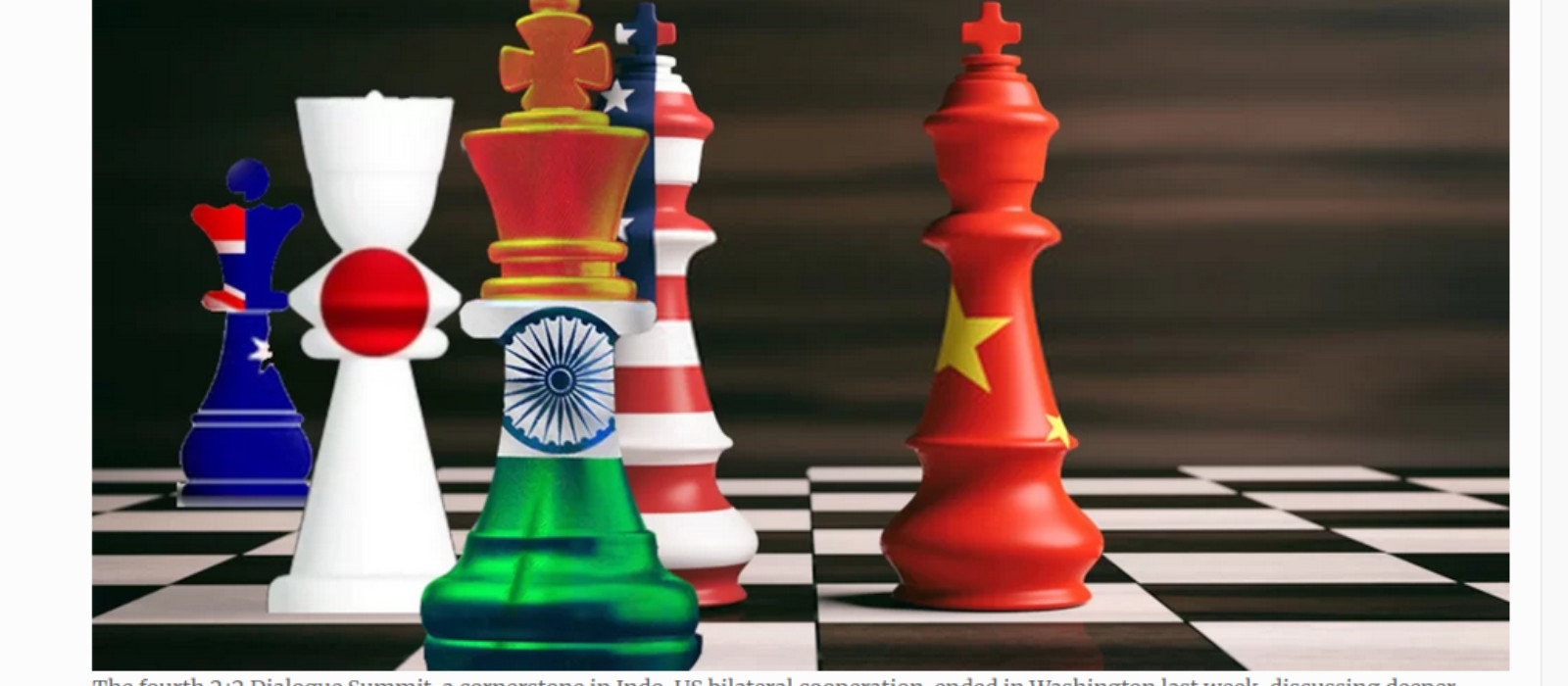


“The Greater Indian Ocean region...will be the centre of global conflicts, because most international business supply will be conducted through this route... it is in this region, the interests and influence of India, China and the United States are beginning to overlap... two key players in this region are India and China – India moving east and west while China to the south”
- Robert Kaplan (2010)1
Introduction
The Indian Ocean Region (IOR) has turned into a strategic hot spot in recent years. China’s growing presence and its increasing assertiveness pose serious challenges to India’s as well as to the region’s security. China continues to grow its naval presence in the area. It is increasing its geopolitical influence by building ports and other maritime infrastructure along the Indian Ocean periphery. As a rule, eight to ten ships of the Chinese Navy are deployed in the Indian Ocean (IO), including nuclear powered submarines.2 China has established a military surveillance facility on Coco Island (Myanmar) and a naval base in Djibouti. It may sell eight modern submarines to Pakistan and has given two older ones to Bangladesh.3 There are also indications that China might dispatch an aircraft carrier strike group to the region in the near future. Even during peacetime, its growing presence might have some impact on a few countries, which might tilt away from India towards China. India therefore, needs to shift strategic allegiances.
No single country in the region, by itself, can confront the challenges posed by China. A co-operative partnership among like minded nations is the better way to build a rules-based order. The revival of the Quadrilateral Security Dialogue or Quad in 2017, after a ten-year-long freeze, is expected to play an important part in the geopolitical and geo-economic discussions in the Indo-Pacific region in future. The Quad was widely regarded in 2007, its year of official birth, as mainly an effort at countering China without Summer 2021 140 mentioning it and without a clear vision. But Quad 2017 is increasingly being seen as a collective effort for regional order-building, especially in terms of maritime security and regional connectivity and with better legitimacy.4 The association is a unique opportunity for India to play a larger role in the Indo-Pacific region. India can take the responsibility for the security of the Indian Ocean, which it considers as its primary area of interest.
Although India’s recent statements and high-level speeches, have aligned closely with positions of other Quad countries on the Free and Open Indo-Pacific concept, there appear to be divergences in interests and capabilities that make it an outsider in this grouping. Additionally, the Indian policy of strategic autonomy has prevented it from embracing the full potential of Quad. While that policy may have held India in good stead so far, emerging concerns require flexibility in statecraft. India needs to identify areas of partnerships within the cooperative framework of the Quad to counterbalance increasing Chinese influence in the IO.
Challenges for India’s Engagement in Quad
The views professed by members of the Quad imply two important aspects: -
-
Despite claims from the White House that the term is not an effort to contain China’s influence, it is clear that the Indo-Pacific construct is a response to China’s hegemonic ambitions particularly in the maritime domain.5
-
Secondly, ‘Indo-Pacific’ overtly includes a rising India, whose democratic credentials and support of a rules-based order offer some comfort to the other members.
The external recognition of India’s growing influence and hopes for its cooperation in upholding freedom of navigation and overflight, undoubtedly resonate with India’s ambitions. However, there are clear limits to India’s enthusiasm for the Quad. For India, it may be the question of provoking China at a moment when US commitment to the security of the region is uncertain. Besides, India has its own historical aversion to multi-lateral arrangements that can be construed as alliances. The current Indian government also places great value on India’s relationships with ASEAN member states through a revamped ‘Act East’ policy. Moreover, India’s own idea of its maritime interests and strategy do not necessarily match the expectations of other Quad members.
Rationale Behind India’s Divergences
Avoidance of Conflict. India’s divergences from the centrality of Quad in the Indo-Pacific and preferring broad issues like natural disasters and non-state threats as the focus of Quad might be to avoid direct confrontation with China. This coupled with Australia’s decision to exit from the first version of Quad in 2007 may be the reason behind India’s reluctance to invite Australia to the Malabar naval exercise until end 2021. India may be facing a security dilemma where defensive mobilization could be perceived as offensive and trigger a competitive arms race, formation of counter-alliances and increase the probability of conflict. This is why India avoids competitive strategies altogether and the same was evident when at the Shangri La Dialogue in 2018, Prime Minister Modi expressed an inclination for cooperation over competition.6 This was followed by India’s refusal to join the US-Japan-Australia political-economic initiative to provide an alternative to China’s BRI.
Future Deterrence. As brought out by Sameer Lalwani and Heather Byrne, India might be keeping the militarisation of Quad as a reserve to counter future Chinese escalation. India believes that the deterrence value of a militarised Quad stems from its nominal existence and not from actual level of operationalisation.7
Challenges for India
China’s unstoppable rise, its uncompromising posture on territorial claims and its use of Pakistan as a cat’s paw, pose a dilemma for India. The options to counter China are limited. India currently lacks the economic clout, military muscle, nuclear punch and political cohesion to be able to effectively stand up to China. Thus, there is need to explore the cooperative security domain with like-minded countries. The construct of Quad emphasises assurance (rather than deterrence) with the understanding that security cannot be achieved at the expense of, or in isolation with, other players. The Quad encourages ad hoc, informal dialogue and inclusive participation. The major variables, which account for India’s divergences are derived from differing threat perceptions of other Quad members. A few variables are discussed below: - 8
-
Capability Gap. Although India aspires for blue water capability and power projection beyond the IOR, its real potential is restricted. This is due to major deficiencies in air defence, anti-submarine warfare and airborne early warning capabilities, amphibious platforms, land-attack capabilities for sustained strikes on shore and the likes. While India accrues significant advantages from her favourable geography, size and demography, when compared to other Quad members, it lags in an industrial base to generate advanced conventional combat platforms. The growing procurement of military hardware has failed to transform into military power due to shortfalls in major force transformations, jointness of its services and unreformed national security architecture. In short, India’s developing economy as well as its limitations on power projection hinders its ability to fulfill the vision for its role in the Quad.
-
Geography. India’s definition of the Indo-Pacific varies substantially from other Quad members mainly because of its geography. Indian economy and seaborne trade are more dependent on the western IOR viz., Middle East, Africa and Europe. On the other hand, for the United States, the Indo-Pacific Command has its borders till the East coast of India. While promoting a stable, secure and open maritime commons remains of paramount importance to India in alignment with other Quad countries, India is more susceptible to interferences in the Western IOR than any of its Quad partners due to its reliance on exports and critical energy resources. Unlike the Pacific Ocean and South China Sea, the ‘open geography’ of the Indian Ocean, subjects it to distinct vulnerabilities requiring different strategies. However, India’s land borders with Pakistan and China along with internal security threats ensure that India remains primarily a continental power, which has to invest in ground forces to defend its borders.9
-
India as a Developing State. India’s relative position in the world order offers another explanation for its divergence from the Quad. As a developing nation and a rising power, India prefers cooperation rather than confrontation to avoid jeopardising its own development. It is beneficial for India to let other countries confront the revisionist power while it supports from the side lines. This might be a major factor for India to refrain from forming an alignment or a military alliance.
-
Strategic Preference of Autonomy. India’s strategic preference of autonomy does not allow it to indulge in formal military alliances. To avoid dependency on any one country, India engages with diverse partners. The result of India’s preference for varied partners and non-alignment is that India remains unfamiliar with the likes of interoperable coalition warfare envisioned in strategies of ‘federated defence’ and also remains deeply suspicious of it. As brought out earlier, the possession of nuclear weapons and an assured second-strike capability guarantee its security and further reduce the incentives for such formal engagements.10
-
Economic Imperatives. India perceives China’s BRI as an encroachment to its traditional sphere of influence and regional economic dominance in the IOR. On the other hand, Chinese trade and investments as well as trade surplus with India is on the rise. Being a less developed country than its Quad counterparts, India possesses less bargaining power to withstand Chinese economic coercions in spite of having handled the same commendably till now. It therefore, professes and advocates a policy of ‘inclusivity’ in the Indo-Pacific strategy.
Analysis
While the other Quad members visualize this grouping as a quasi-military alliance, for India it is another multi-lateral alliance in furtherance of its ‘Act East’ policy. The divergences arise mainly because of its capability gaps, geography, relative position in the international system, economic imperatives and long-standing strategic preference of autonomy. However, foreign relations and geopolitics are constantly evolving and the changing dynamics in the IOR due to rise of a revisionist China may impel India to adopt innovation in order to maintain its regional power status in the region. India wants to be seen as a responsible state in the world order and collusion with like-minded democracies, which champion India’s cause, seem a natural derivative. Whether India takes the extreme step of shedding her strategic autonomy to form an ‘Asian NATO’ and militarise the Quad, is difficult to say. Nevertheless, an increased engagement with other Quad members seems likely.
India requires a Quad political-military strategy primarily because of its developing nation status, wherein it finds itself balancing internal and external economic/ military requirements. The multiple constraints put serious pressure on India’s limited national resources and there are limits to how much it can spend on defence to counter Chinese repositioning. Hence, forming a military alliance, shedding its strategic preference of autonomy may not be a choice, but a necessity. As brought out by Abhijnan Rej in Reclaiming the Indo-Pacific: A Political-Military Strategy for Quad 2.0, unless Indian diplomacy finds a creative modus vivendi with China, which is acceptable to both states, it will necessarily have to accept that playing a balance of power game is the only way out. A Quad with teeth will be a key card for India in that game.
Conclusion
Geo-politically, the world has seen the rapid rise of China as an economic, military and technological power. Economic growth over the last two decades, rapid military modernisation and stable governance coupled with an assertive foreign policy has enabled China to emerge as a key player in the Asia-Pacific region. The growing deployments of People’s Liberation Army Navy in the IOR, proximity of various projects under the BRI to India, Chinese ‘debt-trap diplomacy’ and ‘civil-military’ complicity (including the likely utilization of BRI projects/ ports for future military use) mandate an authoritative approach by India. India’s ‘Act East’ policy is the derivative of India’s revamped approach to re-establish itself in the IOR. The association is a unique opportunity for India to play a larger role in the Indo-Pacific region. India can take the responsibility for the security of the Indian Ocean, which it considers as its primary area of interest. The new US National Security Strategy states that it supports India’s leadership role in the security of the Indian Ocean and throughout the broader region. India along with the other Quad member countries - Australia, Japan and the United States of America, should look to drive and co-operate on four big dimensions - Diplomacy, Information, Economy and Military.
Diplomacy
Diplomatic consultation would be the most significant characteristic of the Quad. During the previous three Quad meetings since 2017, diplomats from across the Department of Foreign Affairs and Trade, Ministry of External Affairs, Ministry of Foreign Affairs, and Department of State have discussed and addressed broader agendas in the Indo-Pacific region alongside the other regional security meetings, namely the East Asia Summit (EAS) and the Shangri-La Dialogue.11 This is leading to better regional policy-coordination. Given the large number of issues in the region, including maritime security, connectivity, multi-lateralism, etc., coordination amongst like-minded states is becoming more crucial than ever before. With limited membership, India, Australia, Japan and the USA can quickly build confidence and enter the preventive diplomacy stage to discuss specific policy measures based on shared perspectives of regional security.
Additionally, India should encourage member countries to strive to be a result-oriented initiative. At present, the Quad’s institutional framework and ambitions are formally unstated and Quad members can work towards building an alliance unconstrained by the conventional principles of non-intervention and consensus-based decision making. Historically, the region has only seen the ASEAN way of collaboration and functioning, which has so far been indispensable for maintaining solidity amongst the multi-cultural and multi-diverse political entities in Southeast Asia.12 While ASEAN has enabled regional cooperation across East Asia and the Indo-Pacific, it has been constrained by process orientation and consensus management and runs the risk of being seen as ineffective. With intensifying power rivalry and emerging ambiguity over China’s adherence to the principles of the rule of law, there is a clear requirement for rapid actions and implementation of policies. The Quad can play an important role here, acting as an alternate and decisive instrument to bring out a workable policy whilst avoiding process oriented regional cooperation frameworks.
Having said this, India should in no way encourage the Quad to replace ASEAN as an alternative driver of regional security. ASEAN is, and will continue to be, the key forum for inclusive regional security dialogues across the Indo-Pacific region. With rising economic and geopolitical tensions between the USA and China, the role of ASEAN led institutions to drive inclusiveness and confidence-building initiatives across the region should only increase. The Quad should, on the other hand, act as a parallel avenue for the four large democratic and maritime states to exchange their views and coordinate their positions and responses. Additionally, it should also be welcoming towards any country which shares the same basic objectives and threat perceptions.13 The European Union, the United Kingdom and separate South East Asian countries, such as Vietnam, Indonesia, Malaysia, Thailand and Sri Lanka, should be embraced to occasionally participate in the forum in consultation with the Quad member states.
Information
Maritime peace and security in the Indo-Pacific region has come under immense Chinese threats, both across traditional and non-traditional channels. On the traditional front, China has, over the years, increasingly resorted to following aggressive grey zone tactics.14 It has gradually changed situations to its favour through covert and assertive ways as seen in multiple incidents such as their de facto control over the Scarborough Shoal in 2008,15 harassment of the USNS Impeccable in Mar 09,16 a Chinese warship approaching the USS Decatur sailing past the Gaven reefs in 201817 and the most recent foray into Indian waters by a Chinese research ship.18 Similarly, despite the arbitration awarded under the UN Convention on the Law of the Sea (UNCLOS), which had rejected China’s historical rights in the Nine-dashed line in Jul 16, it has not discouraged China’s assertiveness till date. The PLA had in fact, recently completed successful land reclamation and instalment of military equipment on the disputed maritime features.19 Parallelly on the non-traditional front, while piracy has been significantly reduced and the total number of piracy incidents have hit a record low in 2019, the issue continues to be a security concern with more than 180 incidents being reported in 2018. All these circumstances require maritime countries in the IOR to be collaborative in information sharing and be well equipped in their naval capabilities to cater for such contingencies.
With the Quad not having been declared as a formal alliance, intelligence and information sharing among its members is restricted, quite like Japan being excluded from the “Five Eyes” intelligence sharing cooperation framework.20 However, there are still avenues, which the member states can explore for information sharing as they have significant and large military assets across the IOR and the Indo-Pacific. With the existing Trilateral Information Sharing Arrangement (TISA) between Australia, Japan and the USA, and India setting up an information sharing mechanism with the USA and Japan, there is a possibility to develop a symbiotic and robust maritime information sharing agreement.21 Additionally, the four member states can also look to cooperate and enhance regional maritime security cooperation initiatives, such as the Regional Cooperation Agreement on Combating Piracy and Armed Robbery against Ships in Asia (ReCAAP).22
Economic
The economic dimension of the Quad covers economic integration and regional connectivity. For the former, there are hardly any bloc level discussions involving trade and investment liberalisation. There are a few existing multi-lateral partnerships such as the Regional Comprehensive Economic Partnership (RCEP), which includes Australia, India and Japan, and the Trans-Pacific Partnership (TPP), which now includes only Australia and Japan after the withdrawal of the United States. With India and the USA embracing somewhat protectionist economic policies like ‘Make in India’ or ‘America First,’ economic integration of the Quad seems improbable.
At the same time, regional connectivity is emerging as a new avenue, which could encourage cooperation amongst the Quad states. China’s BRI is driving investment with more than $1 trillion, of which according to one analysis, more than $210 billion has already been invested, the majority being in Asia.23 While some of the maritime states in the IOR such as Sri Lanka, Malaysia, Maldives and Myanmar have recently started to relook at these Chinese investments, most smaller countries still welcome the capital inflow from China.
To balance Chinese investments, Quad members have undertaken bilateral and trilateral initiatives to expand and enhance regional connectivity. India stands to gain the most here. India and Japan have dovetailed their “Act East Policy” and “Free and Open Indo-Pacific” aspirations respectively into the Asia-Africa Economic Corridor.24 At the same time, Australia, Japan and the United States have also agreed on a trilateral investment cooperation between Australia’s Department of Foreign Affairs and Trade (DFAT) and Export Finance and Insurance Corporation (EFIC), the Japan Bank for International Cooperation (JBIC) and the US Overseas Private Investment Corporation (OPIC).25 The region will see large scale investments from the Quad members with Japan proposing $50 billion infrastructure investment in 2018.26 Similarly, USA, under its Asia Reassurance Initiative Act 2018, has pledged $1.5 billion in infrastructure spending and Australia expressing $2 billion in funding for infrastructure and $1 billion in financial support to small and medium-sized Australian businesses to operate in the South Pacific.27,28
Military
Military cooperation is central for the association to be relevant for regional security. However, owing to the absence of security alliances between India and other nations and low likelihood for large scale and highly intensive military conflicts (due to the large density of nuclear capable states in the region), the Quad has a lower need for active military cooperation. Having said this, military cooperation among the Quad countries could apply to peacetime and for grey zone threats. India and the other member states should look to three main areas for military cooperation; interoperability, military technology and defence equipment transfer, and capacity building.
India and the other member states have already undertaken multiple exercises like the trilateral Malabar Exercises. These exercises have improved interoperability and have proved to be beneficial across multiple aspects of defence capabilities. India could also look to gain on favourable military hardware prices as it expands its purchase of American equipment and lowers its dependence on Russian military hardware. In addition, Communications Compatibility and Security Agreement (COMCASA) will open up the window for India to access more sensitive military technology from the USA.29 Similarly, India can look to gain significant traction on its US-2 amphibious aircraft deal with Japan.
To conclude, it is postulated that India should strive to create a coordination mechanism through the Quad for realizing functional cooperation across a range of areas. The Quad most likely will not develop an “anti-China policy,” but it should at least counter significant Chinese assertiveness in the IOR.
Endnotes
-
Robert D. Kaplan, “Center Stage for the Twenty-first Century: Power Plays in the Indian Ocean,” Foreign Affairs vol. 88, no. 2 (2009, March/April), 16-32. https://www.jstor.org/stable/20699491, accessed 04 June 2021.
-
Press Trust of India, “India Begins Project to Build 6 Nuclear-Powered Submarines,” NDTV, 01 December 2017. https://www.ndtv.com/india-news/india-begins-project-to-build-6-nuclear-powered-submarines-1782555, accessed 02 June 2021.
-
“Bangladesh, Pakistan Set to get Chinese Submarines,” Dhaka Tribune, 01 March 2014. https://www.dhakatribune.com/uncategorized/2014/03/01/bangladesh-pakistan-set-to-get-chinese-submarines, accessed 28 May 2021.
-
Ryosuke Hanada, “The Role of U.S.-Japan-Australia-India Cooperation, or the “Quad" in FOIP: A Policy Coordination Mechanism for a Rules-Based Order,” Centre for Strategic and International Studies. https://www.csis.org/programs/japan-chair/projects/strategic-japan, accessed 01 May 2021.
-
Louis Nelson, “In Asia, Trump Keeps Talking About Indo-Pacific,” Politico, 11 July 2017. https://www.politico.com/story/2017/11/07/trump-asia-indo-pacific-244657, accessed 01 May 2021.
-
Ministry of External Affairs, Government of India, “Prime Minister’s Keynote Address at Shangri La Dialogue,” 01 June 2018. https://www.mea.gov.in/Speeches-Statements.htm? dtl/29943, accessed 13 June 2021.
-
Sameer Lalwani and Heather Byrne, “The Quad: Alliance or Alignment?,” India Seminar. http://www.indiaseminar.com/2019/715/715_lalwani_and_byrne.htm, accessed 13 June 2021.
-
Sameer Lalwani, “Reluctant Link? India, the Quad and the Free and Open Indo-Pacific,” Stimson, 22 May 2019. https://www.stimson.org/content/reluctant-link-india-Quad-and-free-and-open-indo-pacific, accessed 01 May 2021.
-
Ibid.
-
Lalwani, Op Cit., n.8.
-
Ministry of Foreign Affairs of Japan, “Japan- Australia-India- U.S. Consultations,” 07 June 2018. https://www.mofa.go.jp/press/release/press4e_002062.html, accessed 21 May 2021.
-
ASEAN. https://asean.org/, accessed 21 May 2021.
-
The Heritage Foundation. https://www.heritage.org/the-Quad-plus, accessed 22 May 2021.
-
“Competing in the Gray Zone,” Center for Strategic & International Studies. https://www.csis.org/features/competing-gray-zone, accessed 23 May 2021
-
Michael Green et al., “Counter-Coercion Series: Scarborough Shoal Standoff,” Asia Maritime Transparency Initiative, 22 May 2017. https://amti.csis.org/counter-co-scarborough-standoff/, accessed 23 May 2021.
-
Michael Green et al., “Counter-Coercion Series: Harassment of the USNS Impeccable,” Asia Maritime Transparency Initiative, 09 May 2017. https://amti.csis.org/counter-co-harassment-usns-impeccable/, accessed 23 May 2021.
-
Ben Werner, “Destroyer USS Decatur has Close Encounter with Chinese Warship,” USNI News, 01 October 2018. https://news.usni.org/2018/10/01/37006, accessed 21 May 2021.
-
Press Trust of India, “Indian Navy Forces Chinese Naval Ship to Retreat from Andaman,” The Economic Times, 04 December 2019. https://economictimes.indiatimes.com/news/defence/indian-navy-forces-chinese-naval-ship-toretreat-from-andaman/articleshow/72352540.cms, accessed 24 April 2021.
-
Ben Dolven et al., “Chinese Land Reclamation in the South China Sea: Implications and Policy Options,” Congressional Research Service, 18 June 2015, 54. https://fas.org/sgp/crs/row/R44072.pdf, accessed 24 April 2021.
-
“Five Eyes,” Wikipedia. https://en.wikipedia.org/wiki/Five_Eyes, accessed 21 May 2021.
-
US Department of Defense, “Australia, Japan, U.S. Sign Trilateral Information Sharing Arrangement,” 27 October 2020. https://dod.defense.gov/Portals/1/Documents/pubs/2016-Australia-Japan-U-S-Trilateral-InformationSharing-Arrangement-Signing.pdf, accessed 28 October 2020.
-
“About ReCAAP Information Sharing Centre: Combating Maritime Robbery, Sea Piracy,” Recaap. http://www.recaap.org/about_ReCAAP-ISC, accessed 27 October 2020.
-
Lily Kuo and Niko Kommenda, “What is China's Belt and Road Initiative?,” The Guardian, 30 July 2018. https://www.theguardian.com/cities/ng-interactive/2018/jul/30/what-china-belt-road-initiative-silkroad-explainer, accessed 21 May 2021.
-
Anita Prakash, “The Asia-Africa Growth Corridor: Bringing together old partnerships and new initiatives,” Observer Research Foundation, 25 April 2018. https://www.orfonline.org/research/the-asia-africa-growth-corridor-bringing-together-oldpartnerships-and-new-initiatives/, accessed 21 May 2021.
-
Ministry of Foreign Affairs of Japan, “Joint Statement of the Governments of Australia, Japan, and the United States of America on the Trilateral Partnership for Infrastructure Investment in the Indo-Pacific,” https://www.mofa.go.jp/mofaj/files/000420368.pdf, accessed 21 May 2021.
-
Masayuki Yuda, “Abe pledges $50bn for infrastructure in Indo-Pacific,” Nikkei Asia, 11 June 2018. https://asia.nikkei.com/Spotlight/The-Future-of-Asia-2018/Abe-pledges-50bn-for-infrastructure-inIndo-Pacific, accessed 01 February 2021.
-
Ankit Panda, “Trump Signs Asia Reassurance Initiative Act into Law,” The Diplomat, 03 January 2019. https://thediplomat.com/2019/01/trump-signs-asia-reassurance-initiative-act-into-law/, accessed 01 February 2021.
-
“Australia to set up $2 Billion Infrastructure Fund for Indo-Pacific Region,” Mint, 08 November 2018. https://www.livemint.com/Politics/ANikTu6HaJRh8OhIbzABjP/Australia-to-set-up-2-billioninfrastructure-fund-for-Indo.html, accessed 01 February 2021.
-
Manu Pubby, “India, US Ink Comcasa Deal at 2+2 Dialogue,” The Economic Times, 07 September 2018. https://economictimes.indiatimes.com/news/defence/comcasa-india-to-get-access-to-real-time-encrypted-information-from-us/articleshow/65710975.cms, accessed 21 March 2021.
