




Abstract: The Africa-India Key Maritime Engagement (AIKEYME) initiative, launched in April 2025, represents a transformative multilateral approach to maritime security cooperation in the Indian Ocean Region. Co-hosted by the Indian Navy and Tanzania Peoples' Defence Force, this inaugural exercise brought together naval forces from nine nations to address shared maritime challenges through collective action. The initiative emerged from India's evolving maritime strategy, transitioning from the 2015 SAGAR framework to the more comprehensive 2025 MAHASAGAR vision, emphasising mutual cooperation across regions.
AIKEYME responds to escalating maritime threats including piracy, illegal fishing, narcotics trafficking, and environmental challenges that collectively threaten the region's blue economy. The exercise featured both harbour and sea phases, incorporating advanced training in anti-piracy operations, search and rescue, maritime interdiction, and information sharing through the Network for Information Sharing (NISHAR) platform. The exercise emphasised equal partnership with African nations, establishing an egalitarian framework in which participating states serve as active partners rather than passive recipients of security assistance, thereby fostering genuine ownership of maritime security initiatives and aligning with the African Union's 2050 Africa Integrated Maritime Strategy.
Running from April 13-18, 2025, AIKEYME's success establishes a foundation for sustained institutional frameworks, offering a viable model for comprehensive maritime security cooperation that emphasises capacity building, mutual respect, and shared responsibility across the Indian Ocean littoral states.
Introduction
In the vast expanse of the Indian Ocean, a significant initiative emerged in April 2025 that has the promise for reshaping maritime security cooperation between India and its African partners. The Africa-India Key Maritime Engagement (AIKEYME) initiative, derived from the Sanskrit word signifying “togetherness and unity”, brought together nations from across the Indian Ocean rim to address shared challenges through collective action. AIKEYME also closely resonates with the African philosophy of “Ubuntu.”1 Ubuntu philosophy embodies a communal ethos that emphasises shared responsibility, trust in each other, and interconnectedness among the community; the proverb umuntu ngumuntu ngabantu is central to Ubuntu which means “a person is a person through other persons” or “I am because we are”. AIKEYME in many ways epitomises this essential value as this Maritime Engagement seeks to ensure collective security and prosperity for all in the region through shared efforts and joint exercises and deployments.
The Genesis of AIKEYME
While wide-ranging diplomatic and economic engagement with several African states have progressed bilaterally with India, a composite maritime security arrangement in a multilateral way was a felt need. The idea of AIKEYME germinated during one of the discussions with India's Defence Attaché in Kenya, who made a pitch for expanding Indian Navy engagement in Africa. Later, this idea evolved into a comprehensive approach paper within the Foreign Cooperation Division of the Ministry of Defence. Having started as a basic thought, this idea gradually evolved into an important initiative proposal, titled AIKEYME later on. The journey required navigating complex bureaucratic processes both internally and externally, securing approvals across multiple government and military levels. Moreover, this phase demanded persistent diplomatic efforts, engaging with various stakeholders within both Indian and African governmental structures to build consensus and garner support for such an ambitious undertaking. One of the major developments was establishment of a new Defence Wing in Dar es Salaam, which acted as catalyst in ensuring the early transition of AIKEYME initiative from concept into reality through its dedicated on-ground coordination and collaboration with stakeholders.
Two individuals who deserve special mention are General Jacob John Mkunda, Chief of the Defence Forces, Tanzania, and Mr Bishwadip Dey, the High Commissioner for India. Their unwavering support, energised vision, and endorsement were instrumental in transforming this initiative from a strategic concept into an operational reality. Their leadership and frequent guidance provided the necessary backing and politico-diplomatic impetus to overcome logistical and administrative hurdles. The Tanzania Port Authority also played a crucial role, by generously providing berths for participating ships despite Dar es Salaam being an extremely busy port. This is a testament to Tanzania's commitment to regional maritime security and its role as a key partner in this collaborative endeavour.
Launched in April 2025, AIKEYME was co-hosted by the Indian Navy and the Tanzania Peoples' Defence Force (TPDF). This initiative represents another step in the evolution of India's 2015 SAGAR (Security and Growth for All in the Region) initiative to the more expansive 2025 MAHASAGAR (Mutual and Holistic Advancement for Security and Growth Across Regions) framework. While the inaugural exercise focused on East African coastal nations, future plans envision including all 34 African coastal states within a pan-African maritime security framework, thereby establishing a truly comprehensive and inclusive regional security architecture. This gradual expansion strategy is likely to ensure that lessons learnt from initial phase are integrated into subsequent operations to promote overall growth, efficacy and effectiveness.
Official Inauguration
The Final Planning Conference convened on 27 March 2025, at Dar es Salaam, with representatives from all participating countries finalising crucial operational details. This conference ensured close coordination and alignment of objectives among the diverse naval forces involved. On 13 April 2025, the official inauguration ceremony in Dar es Salaam was a landmark event, marking the formal commencement of this significant exercise. During the opening ceremony, the chief hosts and all distinguished guests interacted with the multinational crew from IOS SAGAR (represented by INS Sunayna), symbolising the integration of complementary maritime security initiatives and highlighting the broader vision of collective security in the Indian Ocean. This interaction underscored the human element of cooperation, fostering camaraderie and shared purpose among naval personnel from different nations.
Distinguished attendees of the event included Dr. Stergomena Lawrence Tax, Tanzania's Minister of Defence and National Service; Shri Sanjay Seth, India's Raksha Rajya Mantri (Minister of State for Defence); General Jacob John Mkunda, Chief of the Defence Forces, TPDF; and Admiral Dinesh K Tripathi, Chief of the Naval Staff of India.2 The presence of such high-ranking officials from both nations underscored the strategic importance and high-level commitment accorded to the AIKEYME initiative.
In his talk, Dr. Tax emphasised the “significance of working together” to tackle maritime threats, highlighting the interconnected nature of security challenges in the Indian Ocean.3 Her statement echoed the collective sentiment that no single nation can effectively address complex maritime issues alone. Reaffirming this assertion, the Indian defence minister quoted the well-known African proverb: "If you want to go fast, go alone; if you want to go far, go together." Indeed, these words capture the collaborative spirit underpinning AIKEYME thereby emphasising that enduring security and prosperity can only be achieved through sustained collective action and mutual support.
Responding to Regional Maritime Threats
These initiatives respond to rising maritime security challenges threatening both Indian and African interests, which have become increasingly complex and transnational. The Indian Ocean Region faces multiple threats such as piracy from the Gulf of Aden to the Gulf of Guinea; trafficking of illicit goods and narcotics; illegal, unreported, and unregulated (IUU) fishing which is depleting precious marine resources and undermining coastal livelihoods. In addition, environmental dangers, exacerbated by climate change, such as rising sea levels and extreme weather events are threatening the livelihood, food security and safety of life of coastal communities and populations residing closer to the seas in the IOR.
These challenges have intensified over the years, with renewed piratical activity off Somalia's coast, serving as a stark reminder of persistent maritime threats and the dynamic nature of criminal enterprises at sea. For India the stakes are profoundly significant; the Indian Ocean carries 80% of India’s oil imports worth $250 billion annually and petroleum product exports which are vital for its own and regional energy security. This underscores our immense economic reliance on secure sea lanes. By focusing on enhancing interoperability and maritime domain awareness and joint surveillance, the exercise AIKEYME 2025 intended to transform maritime security approaches from reactive responses to proactive and preventive strategies, with a renewed focus on early warning and coordinated interdiction. This shift from reactive to proactive approach is crucial for maintaining stability and safeguarding the blue economy.
African Maritime Security Challenges
Maritime security challenges for Africa's 34 Coastal and Island States are even more acute. Their vast Exclusive Economic Zones (EEZs) stretch like blue frontiers, rich in resources but often vulnerable to exploitation due to capacity constraints. Historically, limited naval capacity has left many African nations struggling to establish effective maritime governance, surveillance, and enforcement within their zones of maritime jurisdictions. African navies have traditionally focused resources on land-based threats, including insurgencies, terrorism, and internal conflicts. Understanding the realities of this continental security context, it is felt in many quarters that initiatives like AIKEYME would help in addressing the need of enhanced maritime capability and capacity needed by our African partners and friends. In future, the scope of interaction under the umbrella of AIKEYME can be enhanced to include targeted and effective partnership for optimum results.
In the backdrop of existing maritime challenges in Africa, the exercise held special significance for East African nations, including Comoros, Djibouti, Kenya, Madagascar, Mauritius, Mozambique, Seychelles, and South Africa, alongside co-hosts Tanzania and India. Such wide participation represents an important step forward in developing regional maritime security capabilities towards addressing critical gaps in surveillance, interdiction, and disaster response. AIKEYME also integrated smoothly into existing national maritime training programs to provide practical and real-world experience complementing theoretical knowledge. This integration enables the benefits of the exercise to extend far beyond its duration by paving the way for building and sustaining maritime security by improving the capacity, capability and overall readiness of the maritime agencies of the African nation.
Prioritising African Agency and Ownership
AIKEYME also aligns perfectly with the African Union's 2050 Africa Integrated Maritime Strategy (AIMS 2050), which talks about providing a broad framework for the protection and sustainable exploitation of Africa’s maritime domain, aiming to foster wealth creation, environmental sustainability, and regional stability through collaborative, concerted, cooperative, coordinated, trust-building multilayered efforts.4 AIKEYME approach adheres to the basic principle that sustainable security solutions must be owned and driven by those most affected by the challenges. It acknowledges the unique understanding and localised expertise that African nations possess regarding their maritime environment.
AIKEYME is an egalitarian construct where African nations are equal partners and not mere recipients of security assistance. In this way AIKEYME genuinely fosters ownership of maritime security initiatives and also builds indigenous capabilities. This collaborative model empowers African states to define their security needs and participate actively in shaping their own homegrown regional responses. Dr. Tax's endorsement of building an ‘enduring framework of maritime security ’during the inaugural ceremony is a positive acknowledgement of the success of AIKEYME. He hinted at their commitment to locally owned solutions and sustainable capacity development so as to ensure that the initiative creates lasting positive impacts.5 This reciprocal approach is germane to fostering mutual respect while strengthening long-term partnerships.
Building Trust and Confidence Through Cooperation
The foundation of successful multilateral initiatives lies in trust, mutual respect, and operational confidence built over time through consistent engagement. AIKEYME built upon decades of India's maritime engagement and cooperation with our regional partners in the form of port visits, bilateral exercises, and training programs. India furthered these established relationships to a new operational level through multilateral exercises and capacity building initiatives. This natural progression and deepening of our ties have ensured that AIKEYME will not be an isolated event but another epochal step towards cementing our long-standing diplomatic and defence ties.
Overview of Maiden AIKEYME
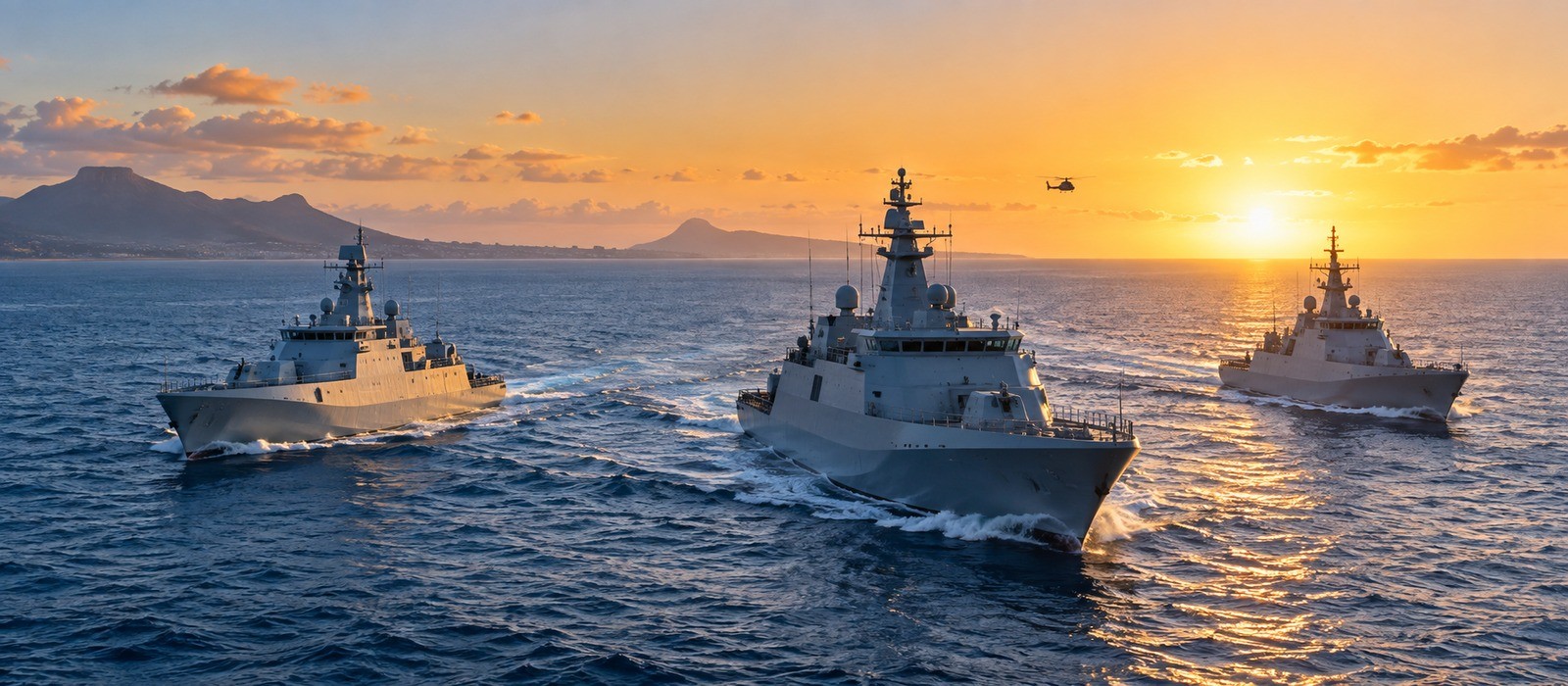
The waters off Tanzania bustled with activity as AIKEYME 2025 brought together navies from Comoros, Djibouti, India, Kenya, Madagascar, Mauritius, Mozambique, Seychelles, South Africa, and Tanzania. Running from April 13 to April 18, 2025, the exercise was meticulously divided into harbour and sea phases, each designed to address specific operational requirements and incrementally build capabilities. This phased approach allowed for foundational training and planning to occur before complex sea manoeuvres.
Participating vessels included a diverse array of naval assets, showcasing the collective strength and commitment of the involved nations. Indian naval platforms, which participated in maiden edition of AIKEYME, were INS Chennai (a potent guided-missile destroyer), INS Kesari (Amphibious Ship, LST) and IOS Sagar (INS Sunayna an OPV).6
While IN ships, being the bigger platforms participating took the lead, ships from other participating nations were also integrated into the exercise, demonstrating a broad spectrum of naval capabilities and contributing to a truly multinational fleet. The inclusion of various ship types allowed for versatile training scenarios ranging from complex combat operations to logistical support, interdiction of trafficking and humanitarian missions.7
Exercises in Harbour (Dar es Salaam)
The harbour phase established crucial operational foundations through a series of intensive activities. This included joint planning sessions; tabletop exercises on piracy response, which simulated various scenarios to test decision-making and coordination; and the establishment of robust information sharing protocols. Seamanship training was conducted to enhance basic and advanced navigation and vessel handling skills, alongside Visit, Board, Search, and Seizure (VBSS) drills, essential for maritime law enforcement and counter-piracy operations. These activities were critical for establishing common protocols, improving communication channels, and building personal relationships among officers and crew members from different navies.
Unlike standard bilateral exercises, AIKEYME's multilateral harbour phase specifically focused on creating standardised procedures across different naval scenarios, a complex but vital undertaking. This collaborative effort was aimed at building standard operating procedures and protocols for effective coordination and interoperability during the sea phase. The diverse participation necessitated innovative approaches to training for all participants, in spite of occasionally different operating procedures.
Sea Phase (Western Indian Ocean)
During the Sea Phase, ships sailed into the Western Indian Ocean where the training from the harbour phase was put into practical application. This phase included simulated search and rescue operations, anti-piracy drills involving realistic scenarios, small arms firing practice to enhance marksmanship, and complex helicopter operations (including deck landings and vertical replenishment). Maritime interdiction operations against simulated trafficking and contraband carrying vessels were conducted, testing the navies' ability to detect, intercept, and board suspicious vessels. Coordinated tactical manoeuvres were performed to improve fleet-level coordination and tactical proficiency in various naval formations. An Indian Navy P-8I long-range maritime patrol aircraft, operating from Indian bases, provided critical maritime domain awareness capabilities for all participating forces, demonstrating the importance of aerial surveillance in modern maritime security operations.8 This integration of air assets provided an enhanced surveillance umbrella, improving situational awareness for all surface units and provided an opportunity for participating nations to understand the nuances and limitations of Air support for MDA build up on high seas.
Sailing Together: The IOS SAGAR
Adding significant depth to AIKEYME's pan-Indian Ocean vision, the Indian Ocean Ship (IOS) SAGAR, represented by INS Sunayna with its multinational crew, participated in the opening ceremony and subsequent engagements. This parallel initiative, running from 5 April to 8 May 2025, involved multinational crew members from Comoros, India, Kenya, Madagascar, Maldives, Mauritius, Mozambique, Seychelles, Sri Lanka, and Tanzania operating together in that ship.
Sunayna's composite crew, comprising officers and sailors from the member states, undertook joint surveillance of regional Exclusive Economic Zones, building interoperability through practical, and gaining real-world experience in a collaborative environment. While India has conducted EEZ surveillance with partner countries for decades, IOS SAGAR represented the first 10-nation joint deployment of this nature, demonstrating collaborative maritime security in practice and setting a new benchmark for multinational cooperation in the Indian Ocean. This longduration deployment allowed for extensive training and real-time application of shared protocols, significantly enhancing the collective maritime domain awareness and response capabilities of the participating nations.
NISHAR – Advanced Shared Awareness
AIKEYME's approach to information sharing through the Network for Information Sharing (NISHAR) created a credible conduit for information sharing for building regional maritime domain awareness. The exercise extensively tested protocols for real-time information exchange and joint surveillance operations, enabling participating nations to monitor vessel movements across vast ocean areas. This integrated network is a significant leap forward from fragmented national systems.
This collaborative approach built upon India's experience in establishing coastal radar stations in Maldives, Mauritius, and Seychelles, providing a practical blueprint for genuinely regional solutions to maritime surveillance. NISHAR helps address a critical gap in regional maritime security capabilities: comprehensive awareness of all elements within the maritime environment that could impact security, safety, economic interests, or environmental protection. By fostering a shared operational picture, NISHAR significantly enhanced the ability of partner nations to detect, track, and respond to threats effectively, promoting greater security and stability across the Indian Ocean.
Capacity Building: A Classroom Without Walls
For decades, the Indian Navy has offered comprehensive training opportunities for African and Indian Ocean Region naval personnel. This has helped in building strong bilateral ties while enhancing professional capabilities. AIKEYME expanded our commitment through an innovative approach of ‘classroom without walls’ where naval personnel from participating navies trained alongside Indian personnel in operational settings. This immersive, practical training provided invaluable hands-on experience and enabled direct mentorship. This ‘train-the-trainer’ model ensures that the benefits of the exercise disseminate throughout participating navies. This would create a multiplying effect on capacity development as newly trained personnel can then impart their knowledge to their colleagues.
Indian naval trainers shared extensive expertise in Humanitarian Assistance and Disaster Relief (HADR) operations, crucial for responding to natural calamities; anti-smuggling operations, to combat illicit trade; and anti-IUU fishing operations, to protect vital marine resources—areas where African navies specifically sought capability enhancement. Importantly, even smaller African maritime services contributed their valuable operational and tactical experience, particularly in their understanding local maritime dynamics and coastal security challenges, from which Indian officers and sailors significantly benefited. This mutual learning approach underscored the partnership's reciprocal nature and enriched training for all participants.
Cementing Coordination Mechanisms
The foundation established by AIKEYME has the potential to evolve into established institutional frameworks for ensuring sustained and deeper cooperation. Such frameworks would build upon cooperation developed through exercises, thereby ensuring sustained focus upon maritime security challenges while providing a platform for continuous collaboration and policy development. This institutionalisation in form of AIKEYME holds key to moving beyond ad-hoc exercises to a more robust, long-term regional security architecture, providing a consistent mechanism for addressing emerging threats and shared challenges.
Resource and Sustainability Considerations
Despite AIKEYME's overwhelmingly positive outcomes and its role as a catalyst for cooperation, there are some challenges to such efforts. Resource constraints in terms of available vessels, advanced equipment, and adequately trained personnel could limit some participants' full engagement during complex operations. However, this can be mitigated by pooling and combining resources through multilateral cooperation, as demonstrated by AIKEYME, can create regionally beneficial cumulative effects, maximising the impact of limited individual resources. This collective approach helps overcome individual limitations.
Conclusion: A New Chapter in Indian Ocean Maritime Security
Long-term success requires sustained political and financial commitment from all participants to institutionalise AIKEYME beyond periodic exercises. Without this consistent commitment, the initiative risks becoming another short-lived security arrangement that might fail to achieve its full potential. Ensuring sustainability depends crucially on demonstrating concrete participation benefits, creating robust institutional mechanisms for ongoing cooperation and information exchange, and maintaining strong political support across governmental changes in participating nations. This multifaceted approach is essential for AIKEYME to become a permanent fixture in the Indian Ocean's security landscape.
When the inaugural AIKEYME exercise concluded on April 18, 2025, it marked not an end but the beginning of a transformative approach to regional cooperation in the Indian Ocean. AIKEYME is a beacon of a practical, actionable framework for regional maritime security, emphasising local ownership, capacity building, and mutual respect among participating nations. It is a testament to the shared vision of a secure and prosperous Indian Ocean.
For Africa, AIKEYME provides a platform for building genuine maritime security capabilities, empowering coastal nations to protect their vast blue economies and secure their maritime frontiers. For India, it effectively operationalises the MAHASAGAR vision, reinforcing its role as a cooperative and responsible regional partner committed to collective security and growth. As AIKEYME evolves with expanding participation and increasingly complex exercises, it offers a viable and highly appropriate alternative for strengthening maritime security cooperation across the entire Indian Ocean region which would provide stable and prosperous maritime environment for all.
Endnotes
- Maup Van De Kerkhof, “I Am Because We Are: Introducing Ubuntu Philisophy,: The Collector, January 20, 2024, https://www.thecollector.com/ubuntu-philosophy-introduction/.
- Nancy Mawole, “India-Tanzania Maritime Drill Attracts 9 Nations,” Daily News, April 03, https://dailynews.co.tz/india-tanzania-maritime-drill-attracts-9-nations, accessed May, 24
- TRT Galbol, “Indian Navy Launches Maiden Naval Drill with 10 African Nations,” Afrika, April 14, 2025, https://trt.global/afrika-english/article/04d4fca53ed0, accessed 24 May 25.
- AIM Strategy, “2050 Africa’s Integrated Maritime Strategy,” https://au.int/sites/default/files/do cuments/30929-doc-2050_aim_strategy_eng_0.pdf.
- Patrick Kenyette, “India’s Largest-ever Joint Naval Exercise in Africa Begins,” Military Africa, April 19, 2025, https://www.military.africa/2025/04/indias-largest-ever-joint-navalexercises-in-africa-begins/.
- Ministry of Defence, “Africa India Key Maritime Engagement (AIKEYME) 2025 Inauguration,” PIB Delhi, April 13, 2025, https://www.pib.gov.in/PressReleasePage.aspx? PRID=2121521.
- Shivani Sharma, “India, 10 African Nations Set for First Naval Joint Exercsie “AIKEYME’ in April,” India Today, https://www.indiatoday.in/india/story/india-10-african-nations-set-for-firstnaval-joint-exercise-aikeyme-in-april-2698493-2025-03-24.
- Patrick Kenyette, “India’s Largest-ever Joint Naval Exercise in Africa Begins.”
